

Victorian Carved Console Desk
When you handle a victorian carved console desk, you notice the heavy timber and deep ornamentation that define nineteenth-century furniture.
Victorian Carved Console Desk
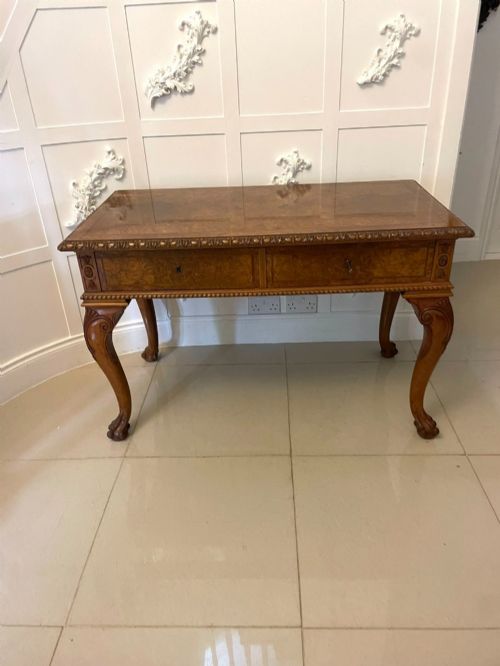
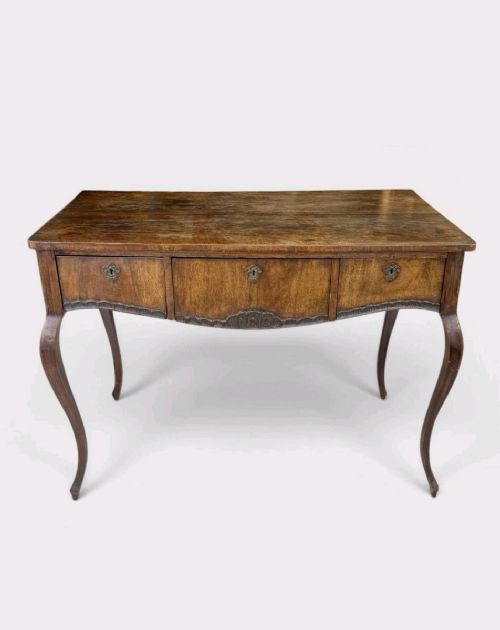
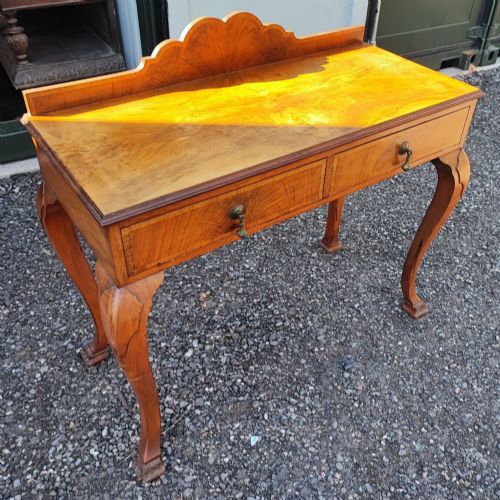
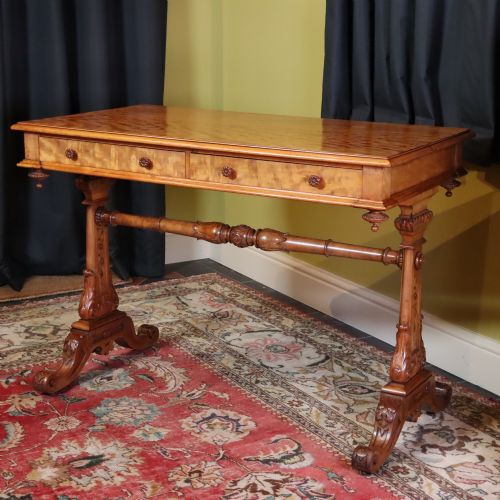
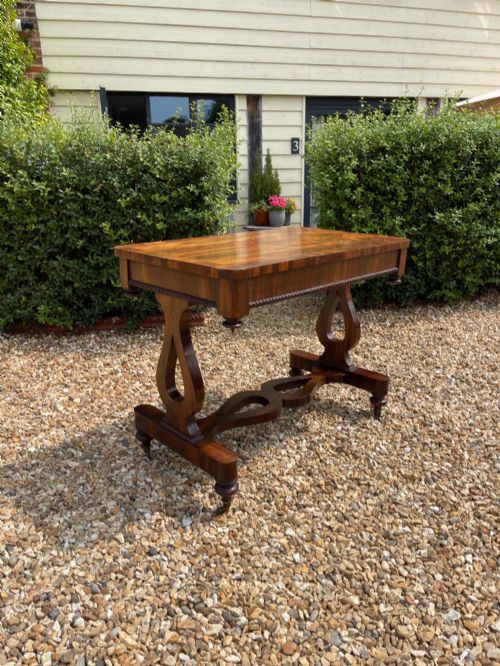
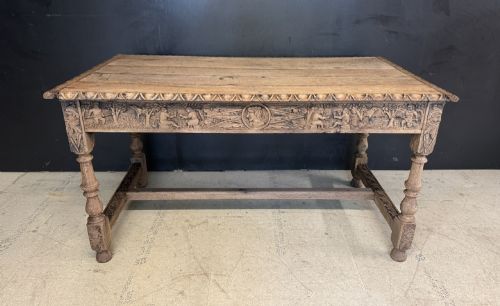
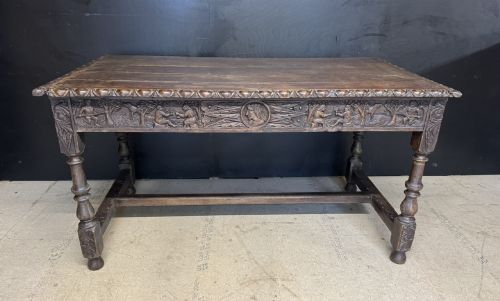
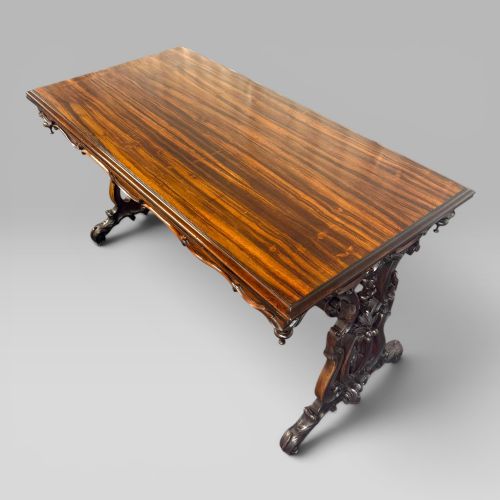
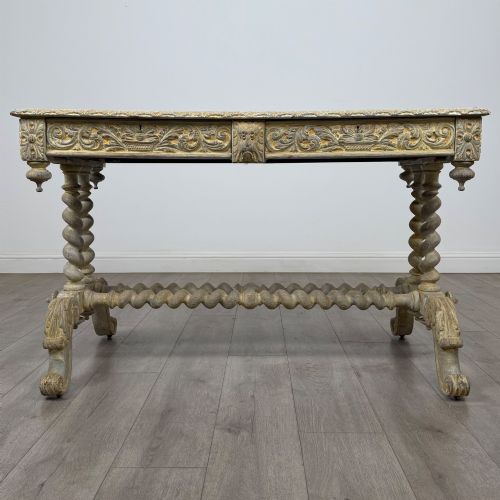
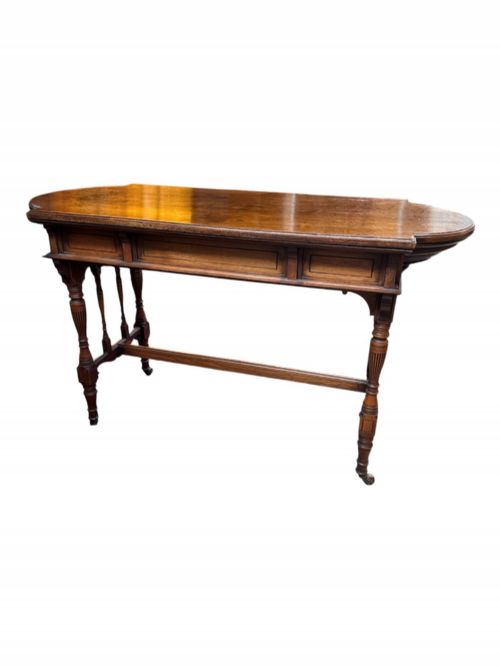
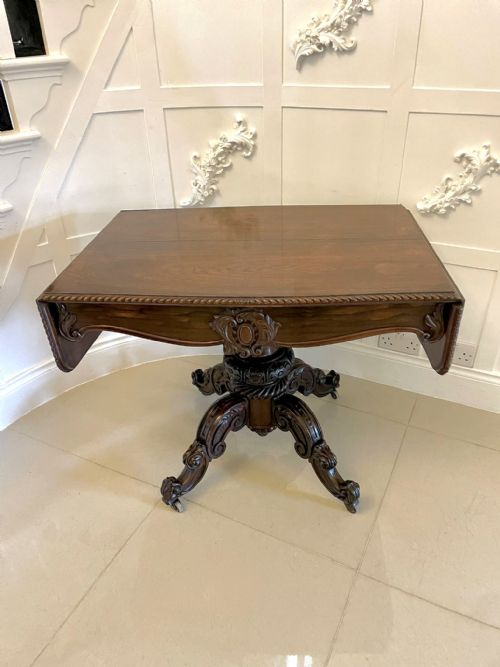
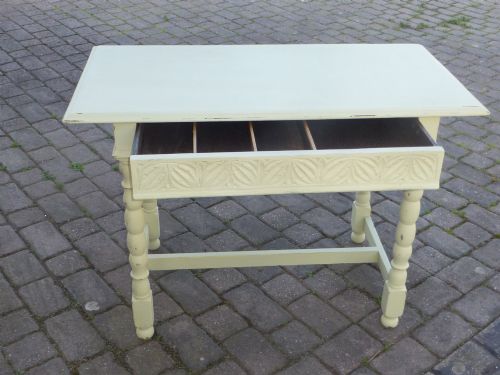
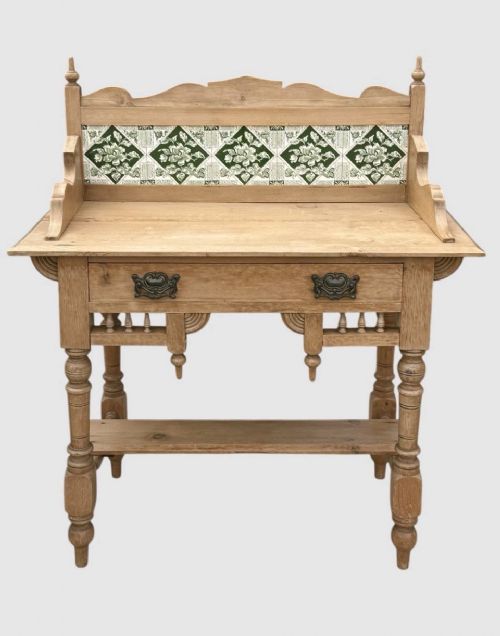
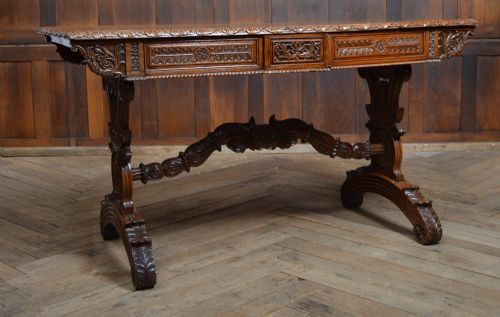
A victorian carved console desk combines the wall-anchored form of a console with the surface and storage of a writing table, appearing most frequently in sturdy oak or figured walnut. These pieces emerge from nineteenth-century workshops in varied guises, serving as functional writing surfaces or decorative hall tables with single or twin drawers.
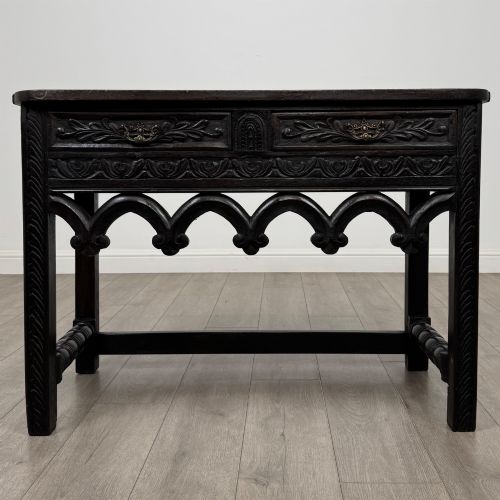
The inventory on this page shows heavy reliance on Victorian and nineteenth-century periods, alongside related forms like side tables, library tables, and writing tables. You will encounter pieces featuring Gothic Revival motifs, heavy carving, and rich timbers such as mahogany and rosewood.
The typical specimen balances utility and display, often featuring turned legs or heavily carved stretchers that anchor the piece to a hallway or study. While some items explicitly carry desk configurations, others function interchangeably as serving tables, console tables, or writing desks depending on their drawer depth and knee clearance.
Materials and Construction
Cabinet makers utilised dense hardwoods like oak, mahogany, and rosewood, frequently employing burr walnut and satinwood for visible decorative veneers on tabletops and drawer fronts. These timbers were selected for their ability to take deep, sculptural hand-carving without splitting.
Joinery relied on traditional dovetail construction for drawers and sturdy tenon joints for frames, ensuring stability under heavy use. Secondary woods like pine appear in internal framing and drawer linings, hidden beneath the primary show timbers.
Design styles span the Victorian era, William IV, Regency, and Gothic Revival forms.
Evaluating Craftsmanship and Preservation
Quality rests primarily in the crispness of the hand-carving and the selection of timber figures, where burr walnut or figured oak display superior grain patterns. Lesser pieces feature shallow, mechanical carving and plain, utility-grade softwoods or poorly matched veneers.
Structural integrity also separates examples, evident in smooth drawer action, tight joinery, and the retention of original brass hardware or stretchers. Alterations to height, replaced drawer linings, or heavily sanded surfaces diminish the integrity of the piece.
The Victorian Carved Console Desk Glossary
- Console Table
- A table designed to stand against a wall, frequently secured to it for stability. These pieces often feature decorative carving on the front and sides while the back remains plain.
- Burr Walnut
- A specialised wood cut from walnut tree growths, prized for its swirling, highly figured grain patterns. It is frequently applied as a veneer on high-status Victorian tabletops.
- Library Table
- A large freestanding table designed for central placement in a room, usually equipped with one or more drawers. They offer finished surfaces on all sides for access from any angle.
- Gothic Revival
- An architectural and decorative style popular in the nineteenth century, characterised by pointed arches, trefoils, and heavy medieval motifs. It appears frequently on carved oak tables from this era.
- Stretcher
- A horizontal support beam connecting the legs of a table to increase rigidity. On nineteenth-century pieces, these are frequently turned or heavily carved.
Victorian Carved Console Desk: Frequently Asked Questions
Where should I place a console desk?
These pieces suit entrance halls, living rooms, or home studies where wall space allows the table to sit firmly. Freestanding library variations also function effectively in the centre of a room.
Ensure the height permits comfortable seating if you intend to use the piece for writing, as nineteenth-century dimensions often sit lower than modern standard desks.
How do I care for antique wood?
Maintain timber surfaces by applying quality beeswax periodically and avoiding direct sunlight or excessive heat sources that dry out old veneers. Gentle dusting with a soft cloth prevents accumulation without harming the finish.
Keep humidity levels stable in the room to prevent the solid hardwoods and delicate burr walnut veneers from cracking or warping over time.
Were these tables used for writing?
Many tables featuring drawers and flat tops served dual purposes as writing desks or hall tables depending on the household needs. The addition of fitted drawers indicates a storage requirement for papers and writing implements.
Drawer depth varies significantly, with some providing generous space for manuscripts while others offer shallow storage suited only for small documents.
How can I tell the period?
Examine the secondary woods inside the drawers, tool marks on the timber, and the style of the hardware and carving motifs. Victorian pieces often display distinct revival styles such as Gothic or Renaissance influences.
Look closely at the construction methods, as hand-cut dovetails and traditional joinery point directly to nineteenth-century workshop practices rather than modern production.