
Victorian Carved Buttons
Victorian carved buttons describe substantial seating furniture with deep button-tufted upholstery, offering both firm support and period elegance.
Victorian Carved Buttons
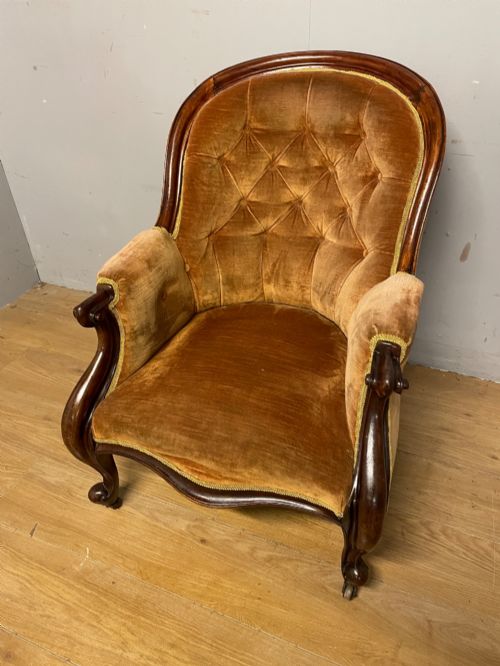
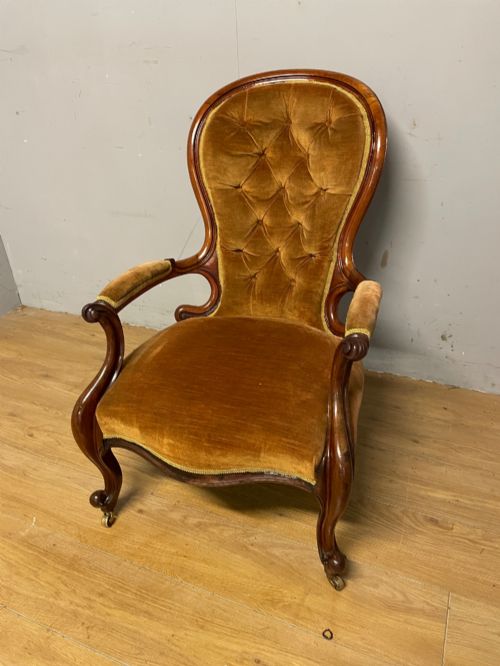
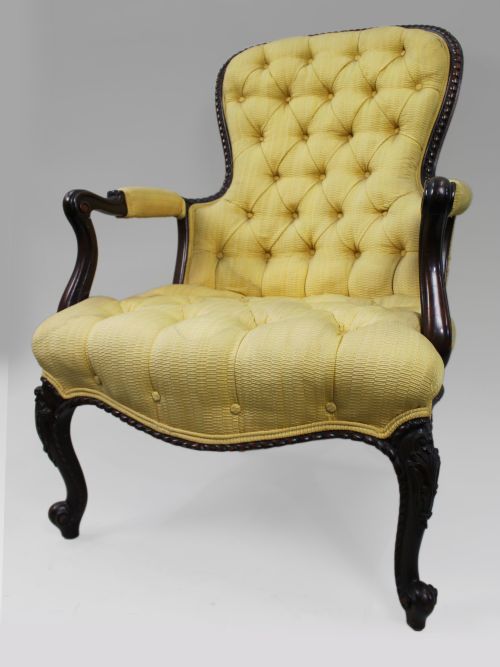
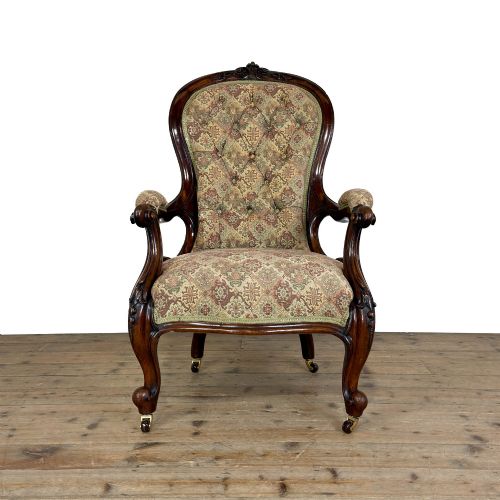
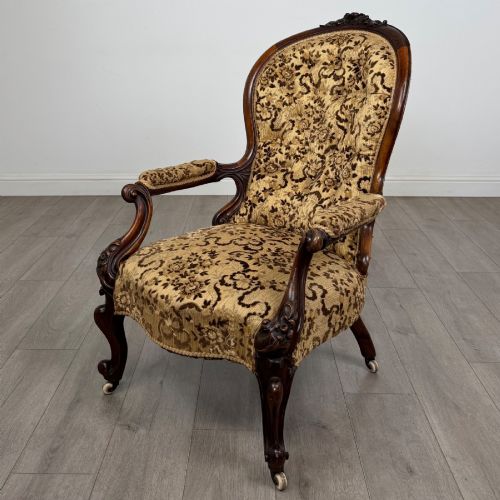
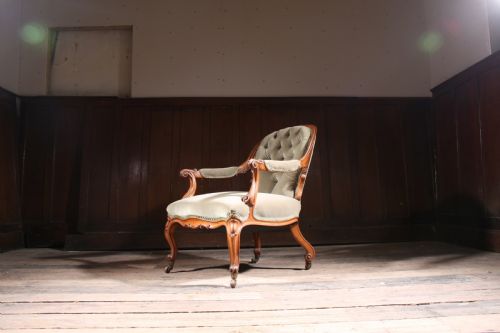
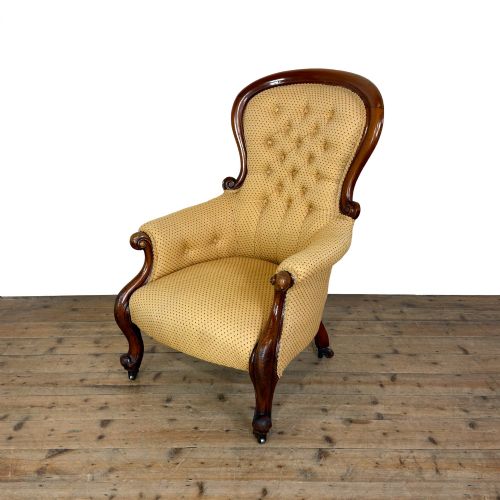
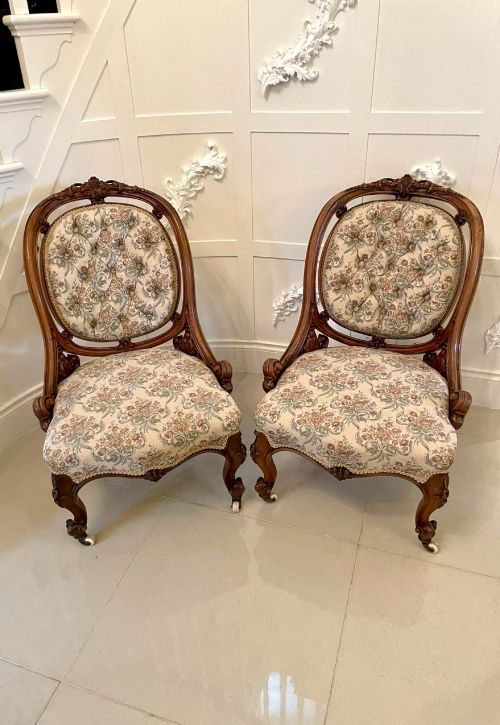
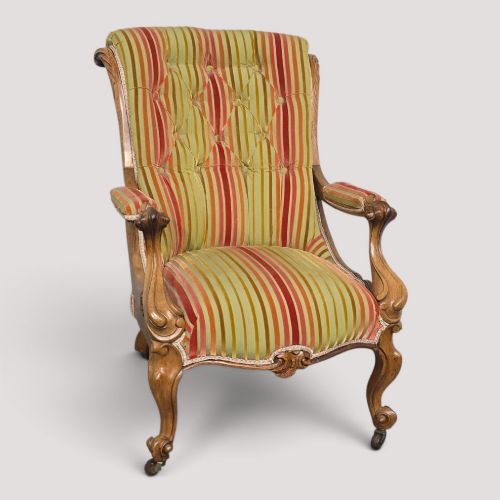
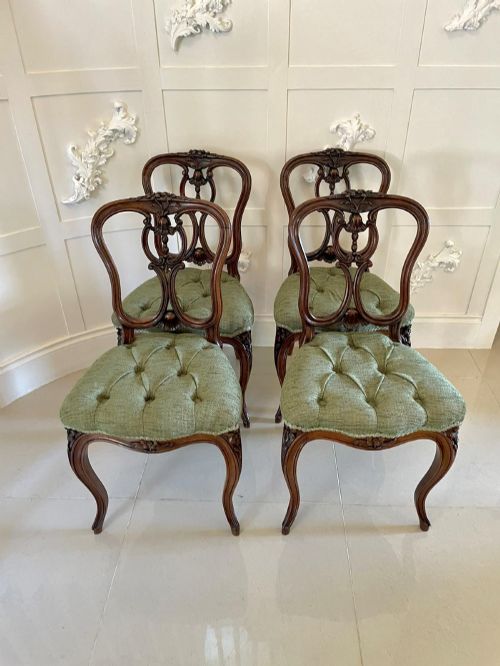
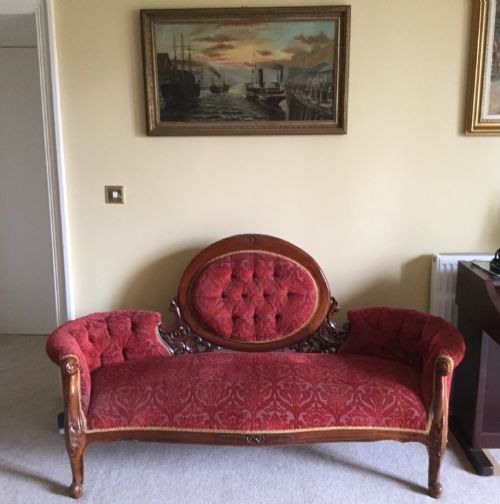
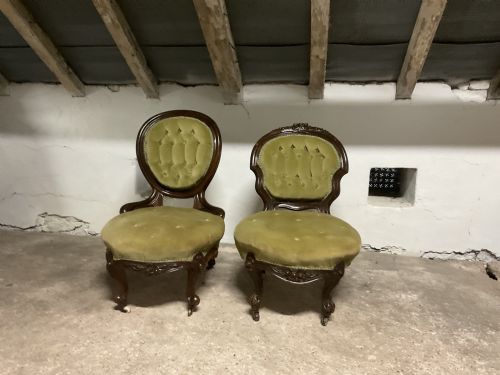
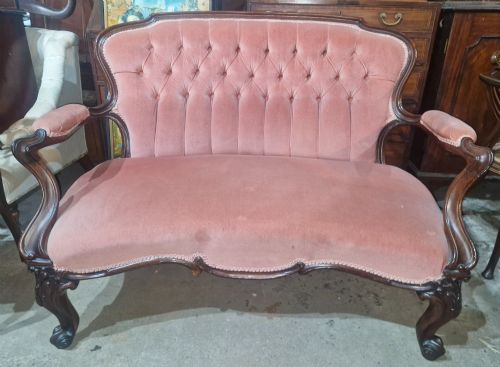
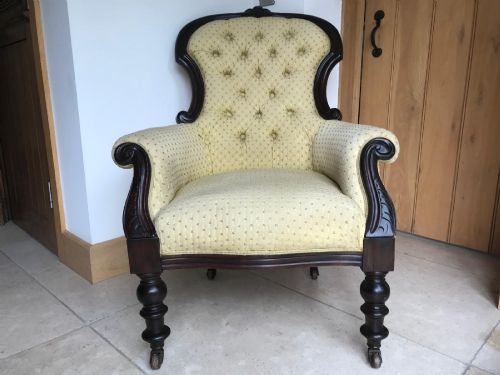
Victorian carved buttons designate seating furniture featuring button-tufted upholstery set into carved wooden frames. Buyers searching for victorian carved buttons encounter large upholstered forms including armchairs, nursing chairs, side chairs, chaise longues, and settees.
The pieces on this page span the Victorian period alongside Regency and early twentieth-century revivals. Forms range from library armchairs and gentleman's chairs to bedroom chairs and multi-piece salon suites.
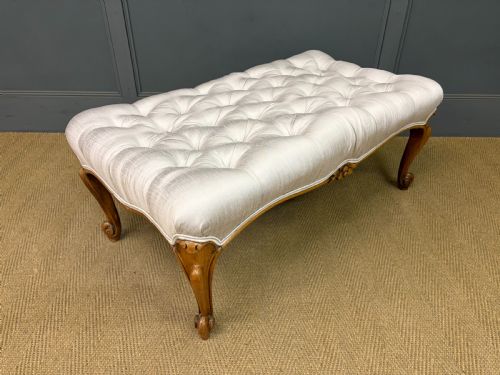
Rosewood, walnut, and mahogany dominate the timber frames, frequently accompanied by leather, velvet, fabric, or brocade upholstery. Stools, ottomans, and window seats also appear alongside larger sofas and double-ended settees.
Materials and construction
Makers constructed the structural frames from hardwoods such as mahogany, walnut, and rosewood, applying hand-carved details to cabriole legs, frames, and crest rails. These dense timbers provided the rigidity needed to support sprung seat bases and heavy frames.
Upholstery involved securing deep-pile fabrics, leather, velvet, or brocade over sprung bases using traditional stuffing techniques. Deep buttoning was pulled tight to create the characteristic tufted surface pattern across backs and seats.
Listings feature seating in rosewood, walnut, mahogany, oak, and brass, spanning the Victorian period through to early twentieth-century revivals.
Quality variations
Distinction in quality arises from the crispness of the hand-carving on the timber frames and the selection of primary woods like figured walnut and rosewood. Superior examples exhibit balanced proportions and integrated structural joinery rather than plain framing.
The execution of the upholstery work, including the symmetry of the button tufting and the grade of the leather or textile covering, separates exhibition pieces from standard parlour seating.
Hindley & Sons
The Victorian Carved Buttons Glossary
- Cabriole leg
- A furniture leg that curves outward at the knee and tapers inward to an ankle, common on mid-Victorian walnut seating. This design originated from classical furniture forms.
- Spoon-back
- An upholstered chair back shaped like the bowl of a spoon, designed to fit the human contour. This silhouette defines many Victorian rosewood and walnut armchairs.
- Chaise longue
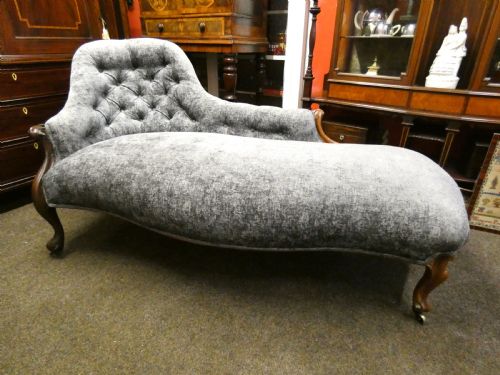
- An upholstered sofa in the form of a chair with a seat long enough for the legs. These pieces feature single or double scrolled ends.
- Brocade
- A class of richly decorative shuttle-woven fabrics, often made with coloured silk and metallic threads. It appears on reupholstered nineteenth-century settees.
- Library armchair
- A sturdy, padded armchair designed for reading rooms, frequently finished in dark leather. They utilise robust mahogany or walnut frames.
Victorian Carved Buttons: Frequently Asked Questions
What is a nursing chair?
A nursing chair is a low-seated Victorian chair designed to allow a mother to feed or tend to an infant comfortably. They often feature carved wooden frames and upholstered backs.
These chairs sit lower to the ground than standard parlour chairs and frequently appear in walnut or mahogany with cabriole legs.
How do I identify a Victorian chaise longue?
A Victorian chaise longue is an elongated upholstered seat intended for reclining, usually featuring one raised scrolled end or two rounded ends. They utilise mahogany, walnut, or rosewood frames.
Many examples showcase carved wooden rails and deep button-tufted upholstery matching the period's grand salon suites.
Where should I place a library armchair?
A library armchair suits studies, living rooms, or home offices where durable seating is required. Their solid mahogany or walnut construction provides sturdy support for daily use.
Pairing one with a desk or placing it beside a bookshelf highlights its traditional nineteenth-century proportions and leather or fabric upholstery.