

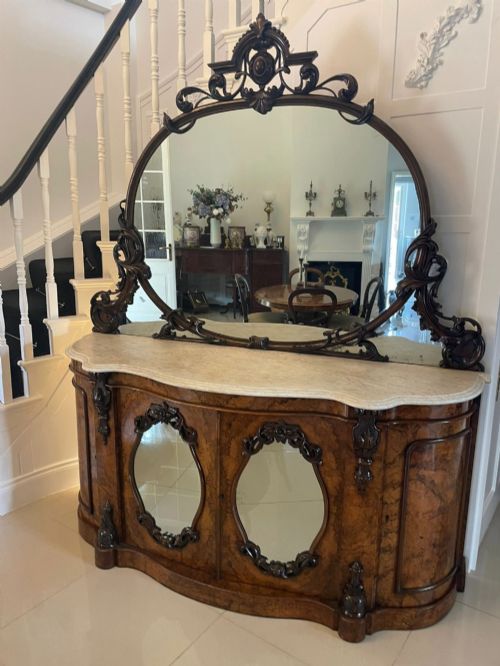
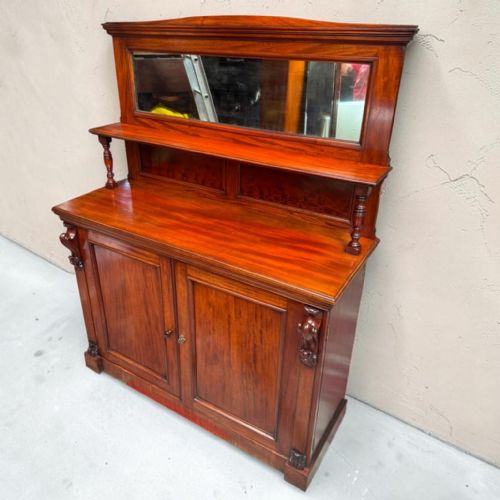
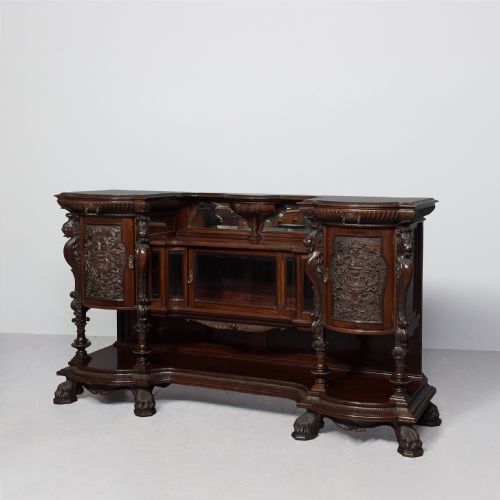

Victorian Carved Back Buffet
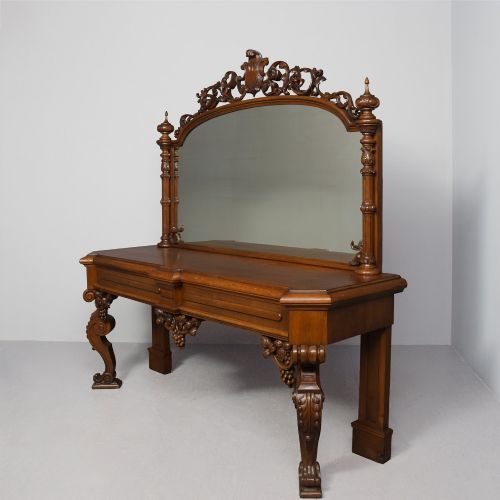
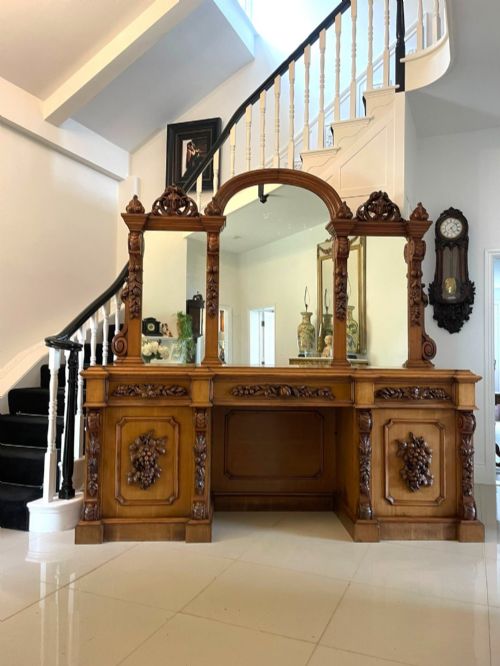
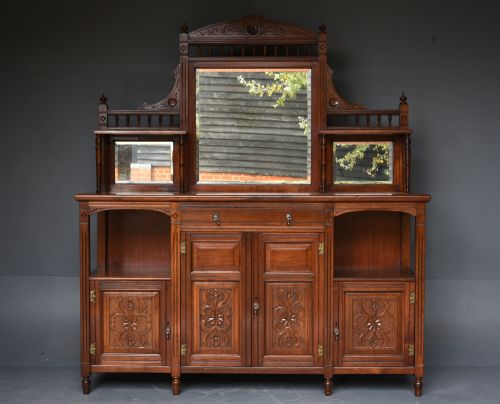
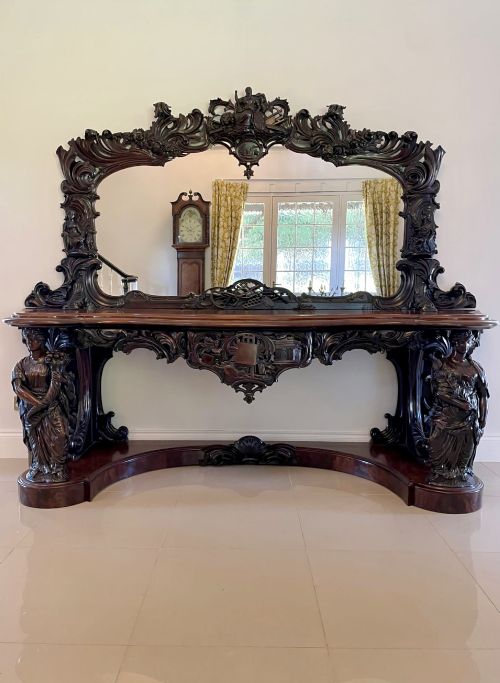
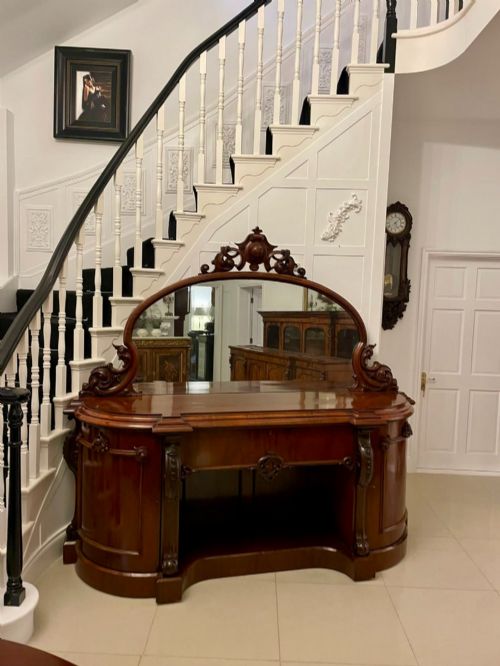
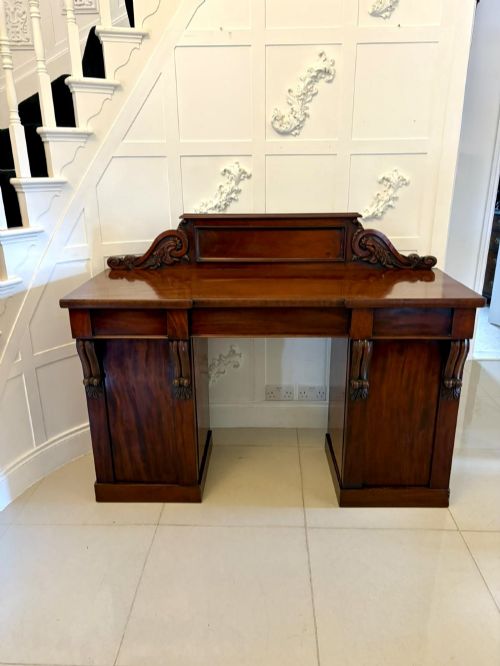
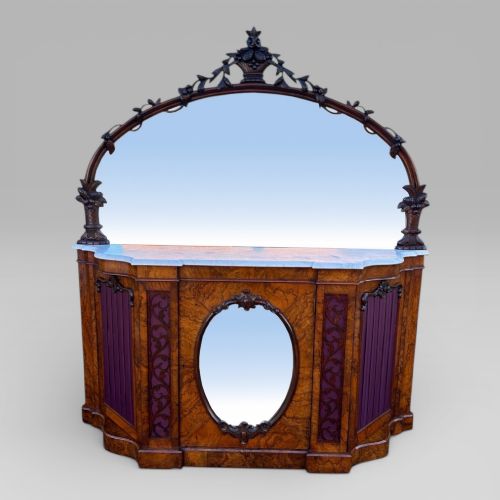
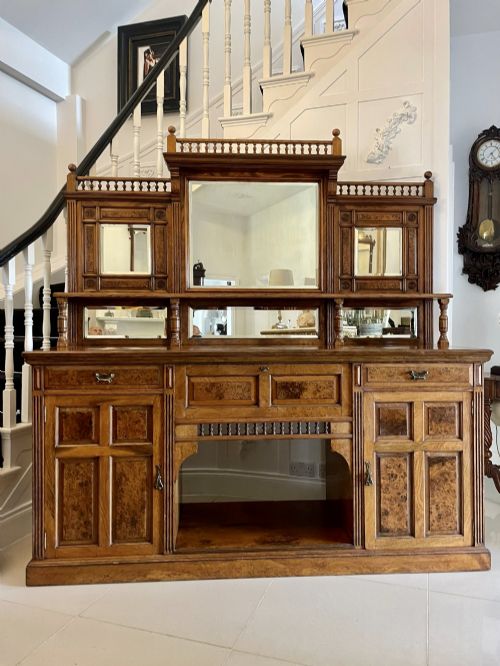
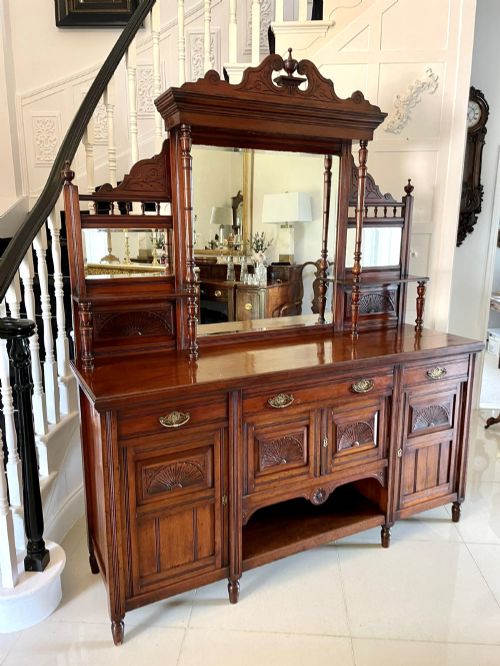
A victorian carved back buffet brings substantial timber and mirror glass to a dining room, offering deep cupboards for storage and display.
Victorian Carved Back Buffet
A victorian carved back buffet combines deep timber storage with an upright mirror back, forming a substantial focal point for the dining room. These pieces appear primarily from the nineteenth century, spanning decades from eighteen fifty through to eighteen eighty.
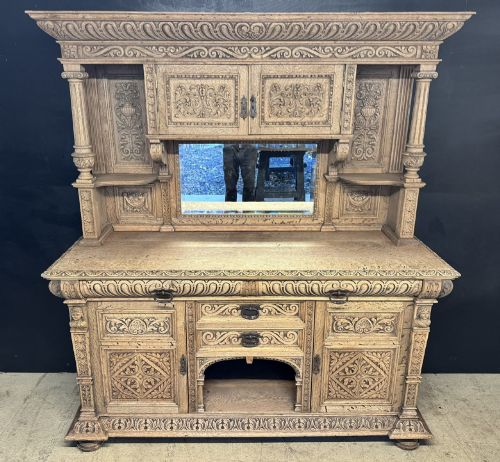
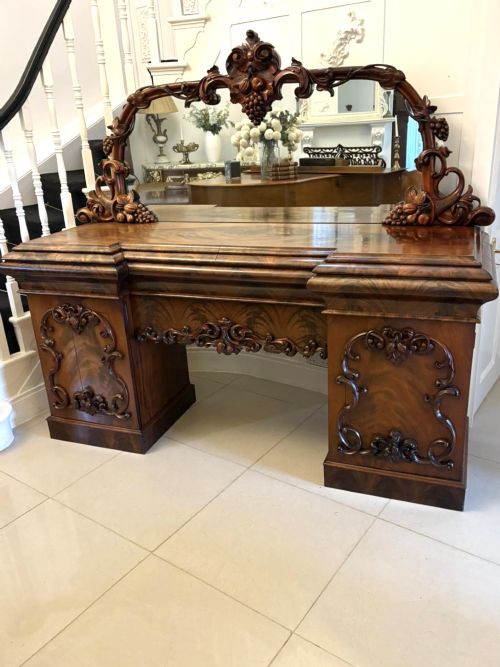
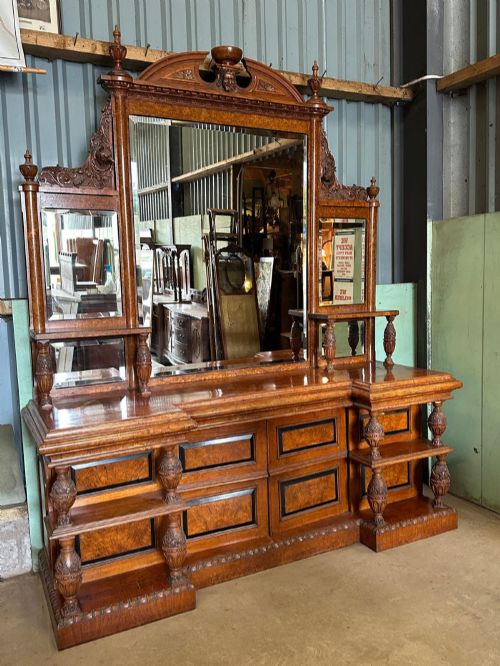
The form shifts between pedestal sideboards, credenzas, and mirror-backed chiffoniers. Buyers meet heavy mahogany and oak iterations most frequently, often featuring carved detail and upright mirror plates.
Factors separating tiers of quality
The refinement of the hand-carved detail distinguishes standard production from exhibition pieces, where deep relief work takes on sharper definition. Timber selection also governs quality, with figured mahogany and burr walnut commanding greater visual depth than plain stock.
Victorian Carved Back Buffet Retail Price Guide 2026
Typical asking prices for victorian carved back buffet among the pieces listed under this phrase on Sellingantiques today, from the lower quarter to the upper quarter. They describe what is for sale here now, not the wider market.
Certain heavy oak iterations hide carved Green Man masks amongst their foliage, watching over the dining room.
T Simpson and Son
The Victorian Carved Back Buffet Glossary
- Buffet
- A sideboard or low cabinet utilised for serving food and storing dining ware. This form sits centrally in Victorian dining spaces.
- Credenza
- A sideboard or cabinet designed for display and storage, frequently incorporating glass doors or an upright mirror back. Walnut and mahogany examples often display marquetry inlay.
- Chiffonier
- A compact sideboard equipped with cupboards and shelves, often topped by a small mirror or tier. The form developed during the nineteenth century for smaller reception rooms.
- Pollard oak
- Oak timber derived from trees that were cut back to encourage a dense crown, producing a heavily knotted and burr-like grain pattern. Cabinetmakers prized this material for its distinct texture.
- Green Man
- A sculptural architectural motif depicting a human face entwined with foliage, leaves, or vines. This pagan symbol recurs frequently in nineteenth-century oak carving.
Victorian Carved Back Buffet: Frequently Asked Questions
What rooms suit a mirror-backed sideboard?
These substantial pieces find a natural home in traditional dining rooms or large reception spaces where their length and height command the wall.
The reflective mirror glass opens up the room while the deep cupboards swallow dining linen and heavy tableware.
How do I distinguish walnut from mahogany?
Mahogany presents a rich reddish-brown tone with a straight, tight grain that often catches the light with a ribbon effect.
Walnut displays a darker, cooler brown with more complex swirling figures and darker grain lines running through the timber.
What is pollard oak?
Pollard oak comes from trees pruned specifically to create a dense network of branches, which produces a tightly speckled and clustered grain pattern.
Cabinetmakers valued this figured wood for the striking mottled texture it brought to large cabinet doors.
How do I care for marble tops?
Marble surfaces require gentle cleaning with a damp cloth and mild soap to protect the polished stone from acidic spills.
Avoiding harsh chemical cleaners preserves the natural sheen and prevents dull patches from forming on the stone.