




Victorian Caricature Art
Victorian caricature art captures public figures and social types through witty graphic humour, offering a sharp visual record of the era.
Victorian Caricature Art
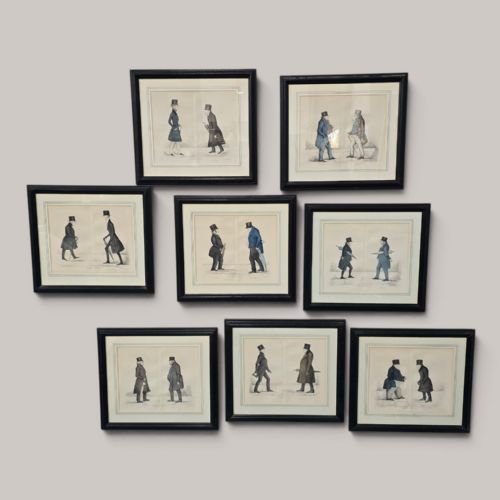
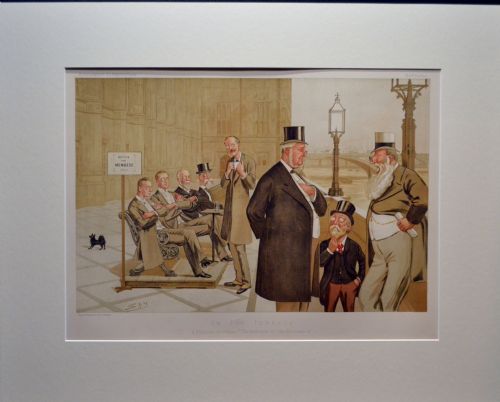
Victorian caricature art centres primarily on published prints and watercolours that satirise notable personalities from politics, society, law, and military life. These pieces capture the distinctive traits of public figures through exaggeration and sharp observation.
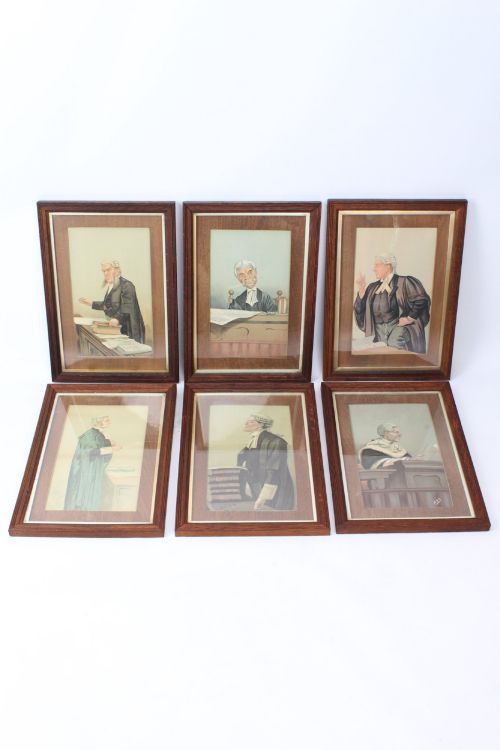
Buyers frequently encounter works originating from the Victorian and Edwardian eras, often presented as framed prints or double-page chromolithographs. Sets depicting political figures, royalty, and sportsmen dominate the available selection.
The material record includes framed prints, wall art, and original watercolours on paper and card, occasionally accompanied by related items such as folk art swagger sticks.
Materials and production methods
Makers utilised paper, card, and mount board as the primary substrates for these satirical works, applying ink and watercolour by hand or employing chromolithography for multi-coloured mass publication. The printing technique defines the visual texture of the published plates.
Framed works incorporate wood, glass, and metal fixtures to protect the delicate paper components, with many examples preserved behind original or period-appropriate glazing. These framing choices reflect standard framing practices of the nineteenth and early twentieth centuries.
Victorian Caricature Art Retail Price Guide 2026
Typical asking prices for victorian caricature art among the pieces listed under this phrase on Sellingantiques today, from the lower quarter to the upper quarter. They describe what is for sale here now, not the wider market.
A nineteenth-century swagger stick allows a collector to carry their satirical edge right down the pavement.
Factors of distinction
The preservation of the paper substrate and mount board dictates the overall condition of the piece, with clean margins and minimal fading separating superior examples from heavily weathered items.
The Victorian Caricature Art Glossary
- Chromolithograph
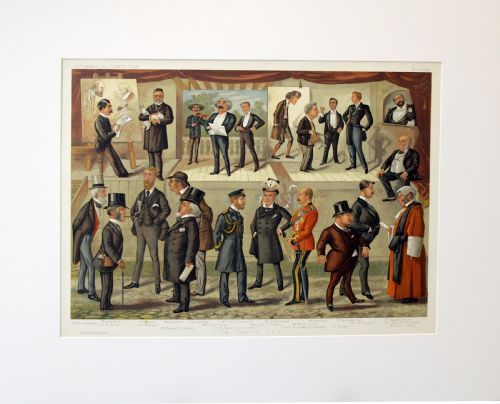
- A multicoloured print produced through a specialised lithographic process using multiple stone plates. This technique allowed for vivid reproduction of original watercolour caricatures.
- Spy
- The pseudonym used by artist Leslie Ward for his famous satirical portraits published in Vanity Fair. His work forms a major portion of nineteenth-century caricature output.
- Double page
- A larger print format spanning the centre fold of a periodical. These wider compositions often feature multiple subjects or larger group scenes.
- Folk art
- Objects created by traditional craftsmen outside mainstream academic art training. This category includes carved wooden walking sticks and swagger sticks bearing satirical motifs.
Victorian Caricature Art: Frequently Asked Questions
What is Victorian caricature art?
Victorian caricature art encompasses satirical prints, watercolours, and illustrated plates that poke fun at prominent figures in politics, society, and sport during the nineteenth century.
These pieces document historical personalities through humorous graphic exaggeration and social commentary.
How were these prints originally published?
Many of these works appeared as weekly plates within nineteenth-century periodicals and satirical magazines, notably through chromolithographic printing.
Publishers released both single sheets and double-page spreads for subscribers and collectors to frame.
How should I display framed prints?
Display framed caricature art away from direct sunlight to protect the fragile paper substrates and coloured inks from fading.
Maintain stable indoor humidity levels to preserve the integrity of the antique paper, card mounts, and wooden frames.
Can I identify different print periods?
Print periods are identified through paper stock quality, printing technology, and specific editorial formats associated with nineteenth and early twentieth-century publications.
Stylistic cues in clothing and the specific signatures or monograms of the artists also help date the work.