


Victorian Cane High Chair
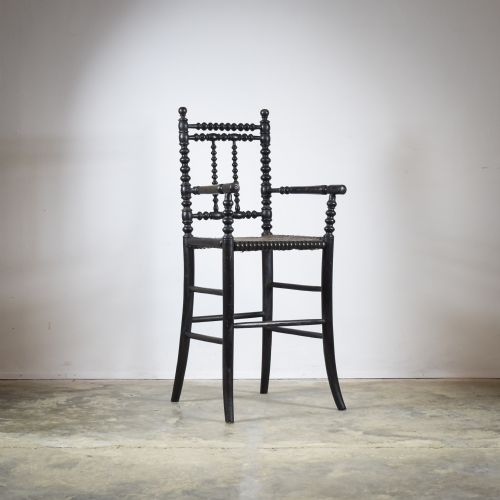
A victorian cane high chair brings the rich timber frames and woven seats of the nineteenth-century nursery directly into a modern family home.
Victorian Cane High Chair
A victorian cane high chair sits among a broader selection of nineteenth-century children's seating, armchairs, and dining chairs built in oak, walnut, mahogany, and beech. These pieces span several decades of the nineteenth century, including specific dates across the mid-to-late Victorian era alongside earlier Regency and later transitional forms.
The primary focus rests upon children's high chairs and children's chairs constructed with woven cane, bergu00e8re, or timber seats. Alongside dedicated high chairs, the listings include rocking chairs, armchairs, and dining chairs that share matching revival styles.
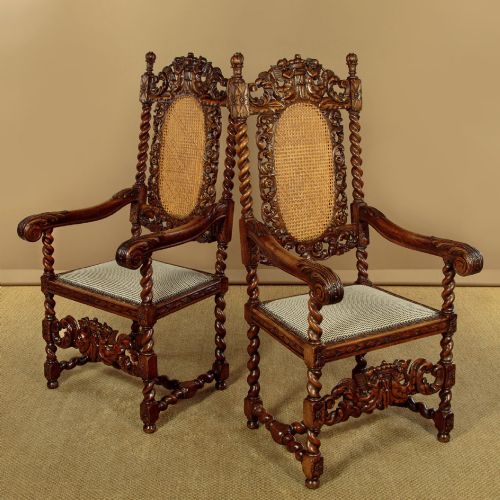
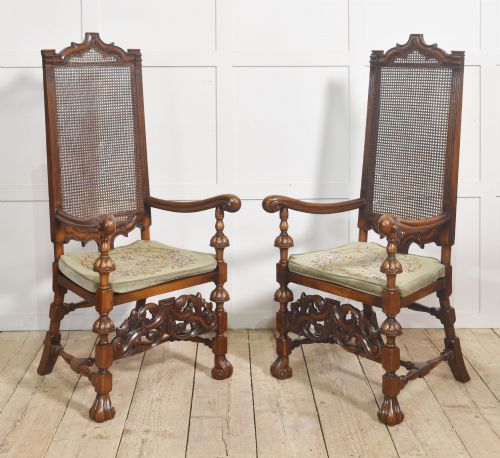
Makers drew on diverse design vocabularies ranging from English Country and Carolean Revival to Jacobean Revival, Renaissance Revival, and Victorian Faux Bamboo. This mix reveals how cabinetmakers adapted grand adult seating styles for miniature nursery furniture.
Distinguishing quality in nineteenth-century seating
Quality reveals itself in the depth and crispness of the timber carving, particularly on heavily carved walnut and oak frames. Finer pieces display deliberate hand-tooling rather than soft or shallow surface decoration.
The integrity of the woven cane work marks a significant division between standard and superior examples. Tight, uniform weaving integrated smoothly into the wooden channels demonstrates higher craftsmanship than loose or hastily repaired mesh.
Proportion and structural balance separate simpler utilitarian items from pieces designed with greater ambition. Well-proportioned children's furniture maintains the architectural harmony of adult revival styles while scaling down for nursery use.
Materials recorded across the selection include cane, oak, walnut, mahogany, fabric, wood, beech, and tapestry.
The Victorian Cane High Chair Glossary
- Cane
- A material woven from stripped rattan plants to create light, flexible seating panels. It provides a breathable surface commonly found on seats and backs.
- Bergu00e8re
- An upholstered or caned enclosed armchair featuring wooden frames. This French-derived style appears within nineteenth-century children's seating.
- Bobbin turned
- A style of furniture turning that resembles a string of bobbins or spools. Craftsmen shaped the wooden components on a lathe to create repeating rounded nodes.
- Faux bamboo
- A decorative finish where wood is carved or painted to imitate natural bamboo stalks. This technique gained popularity during the Victorian era due to an interest in exotic global aesthetics.
Victorian Cane High Chair: Frequently Asked Questions
How were high chairs used?
These chairs elevated young children to table height during family meals within Victorian households. They functioned as dedicated seating for feeding and keeping infants secure.
Over time, many nursery pieces transitioned from daily utility to decorative items or collector's display pieces. Their sturdy wooden frames allowed them to survive generations of domestic use.
Are these chairs safe for children?
Most antique high chairs were built before modern safety standards existed. They often lack contemporary harness systems or enclosed safety trays.
Collectors generally acquire these pieces for display, interior styling, or gentle domestic use rather than active daily parenting tasks.
How do I date a high chair?
Dating relies on examining the timber species, construction techniques, and stylistic revival influences present in the frame. Walnut and mahogany were favoured at different points than oak or beech.
Matching the carved motifs to recorded nineteenth-century design movements helps narrow the decade of production. Faux bamboo and ebonised finishes also point toward specific Victorian decades.
How should I clean cane seats?
Cane requires gentle maintenance to prevent the natural fibres from drying out and snapping. Light dusting with a soft brush keeps debris from settling in the weave.
Occasionally wiping the cane with a damp sponge helps maintain moisture levels. Avoid soaking the material or placing it near direct heat sources.