



Victorian Cameo Pendant
A victorian cameo pendant brings classical carving and precious metal together, offering wearers a portable piece of miniature sculpture.
Victorian Cameo Pendant
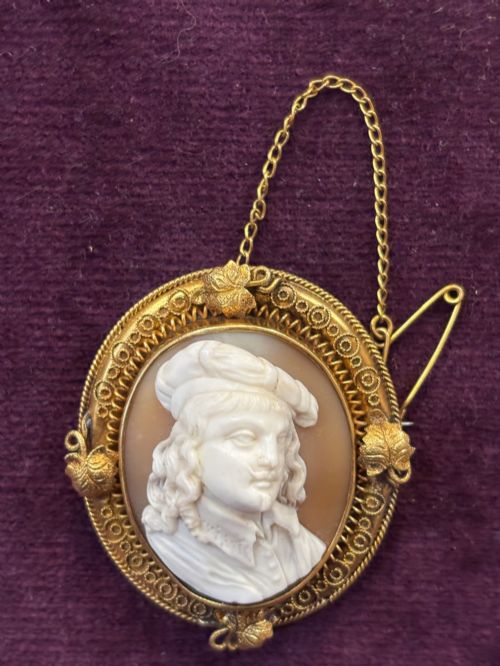
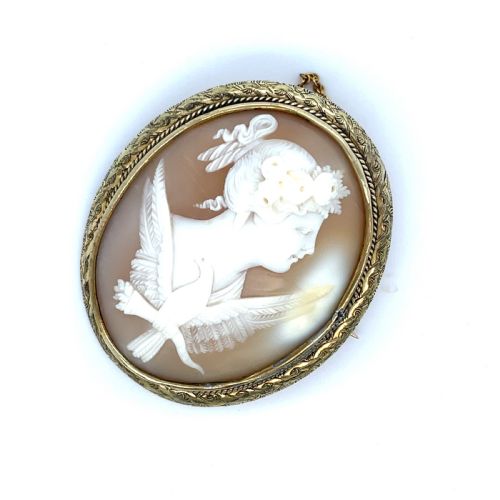
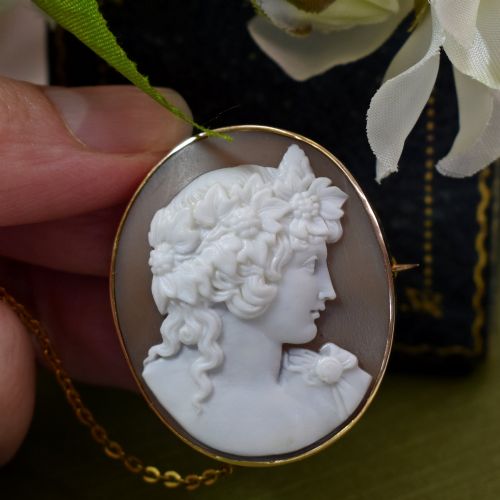
When you search for a victorian cameo pendant, you encounter miniature relief carvings mounted as jewellery, frequently designed to double as both brooches and necklaces. The pieces on this page span the Victorian era, alongside related examples from the Edwardian period, the mid-twentieth century, and the eighteenth century.
Shell is the material most commonly met for the carved relief, often paired with yellow gold, nine-carat gold, eighteen-carat gold, or fourteen-carat gold. Designs frequently draw on classical mythology, depicting figures such as Aphrodite, Antinous, Psyche, and Cupid.
Many items combine dual functionality, featuring hinged loops or pin stems that allow a single mount to serve as a pendant or a brooch. You also find matched sets comprising drop earrings alongside the main pendant or brooch.
What varies in quality
Mount construction similarly distinguishes the range, where heavy gold frames, detailed wirework, and secure integrated hinge mechanisms indicate higher workshop standards than simple rolled metal bezels.
Victorian Cameo Pendant Retail Price Guide 2026
Typical asking prices for victorian cameo pendant among the pieces listed under this phrase on Sellingantiques today, from the lower quarter to the upper quarter. They describe what is for sale here now, not the wider market.
The site records items spanning the eighteenth century, the Victorian era, the Edwardian period, and the nineteen-fifties.
The Victorian Cameo Pendant Glossary
- Cameo
- A method of carving an object where the relief image stands higher than the background. This technique relies on layered materials to create contrast between subject and field.
- Pinchbeck
- An alloy of copper and zinc invented in the eighteenth century to imitate gold. It provides a warm yellow tone without precious metal content.
- Grand Tour
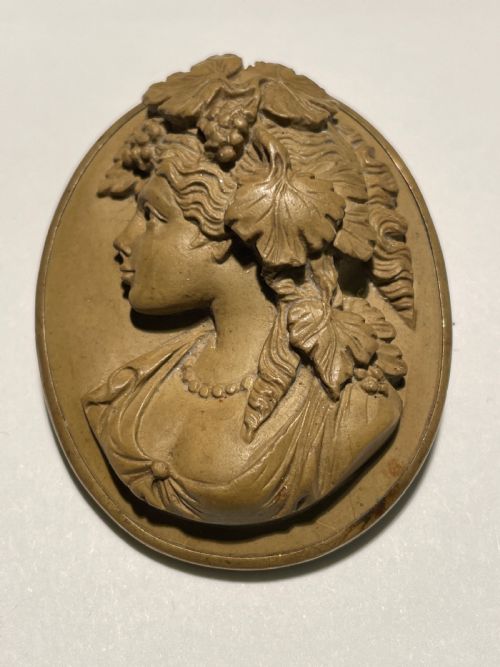
- A cultural journey undertaken by wealthy young Europeans visiting historical sites in Italy. Souvenirs from these travels frequently included lava or shell carvings.
- Foxtail
- A flexible jewellery chain formed from curved interlocking metal links. It drapes smoothly against the skin and often terminates in decorative tassels.
Victorian Cameo Pendant: Frequently Asked Questions
How do I wear a convertible piece?
Many examples feature a hidden fold-down loop alongside a pin stem on the reverse. This allows the mount to slide onto a chain as a pendant or fasten directly to garments as a brooch.
Ensure the pin latch secures firmly if you wear the item as a brooch to prevent loss during movement.
What materials are cameos carved from?
Carvers utilised conch shell, helmet shell, lava, coral, and layered agate. Shell provides translucent depth, while stone and lava offer solid monochromatic tones.
Each substance requires specific carving techniques suited to its natural hardness and thickness.
How do I date a pendant?
Dating relies on the style of the metal mount, the clasp mechanism, and the subject matter of the carving. Early Victorian pieces often feature heavy closed-back settings and naturalistic motifs.
Later Victorian and Edwardian examples introduce lighter gold standards like nine-carat alongside tubular hinges and safety catches.
How should I clean my pendant?
Shell and coral require gentle care using a soft dry cloth to remove dust. Avoid submerging shell jewellery in water or chemical cleaning solutions.
Gold mounts can be wiped carefully with a specialist polishing cloth while avoiding contact with the carved surface.