

Victorian Button Tufted Chair
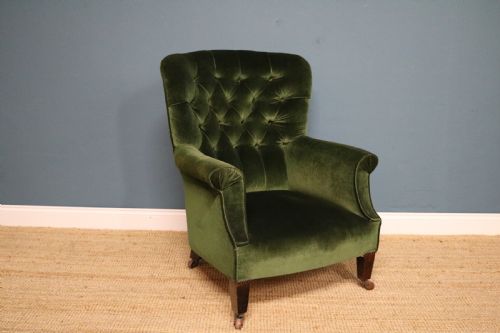
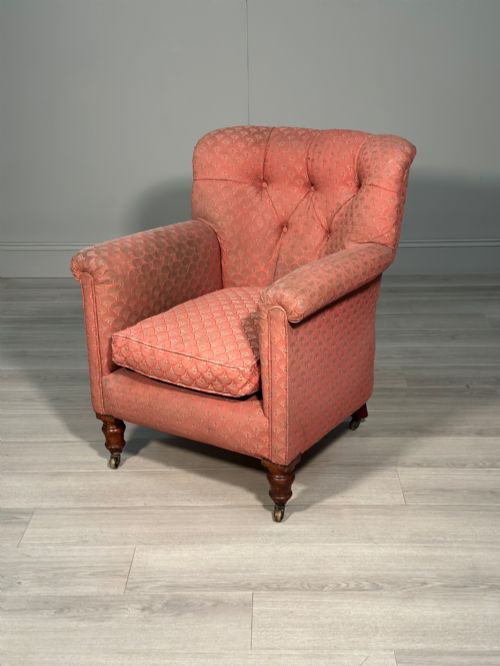
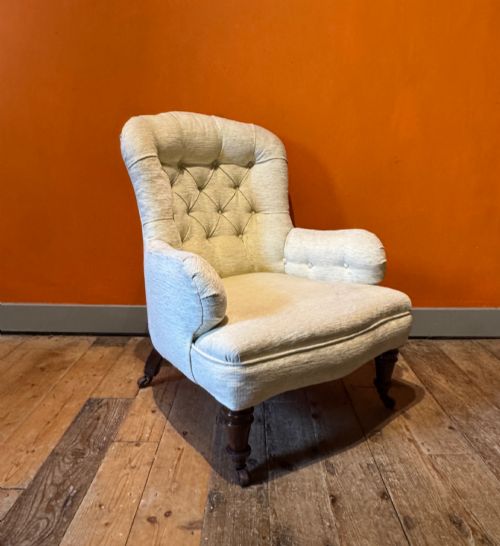
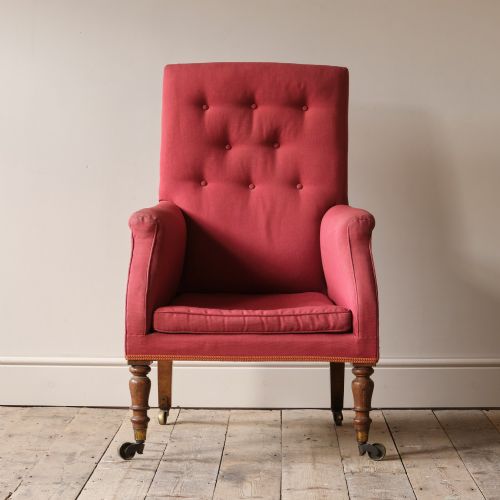
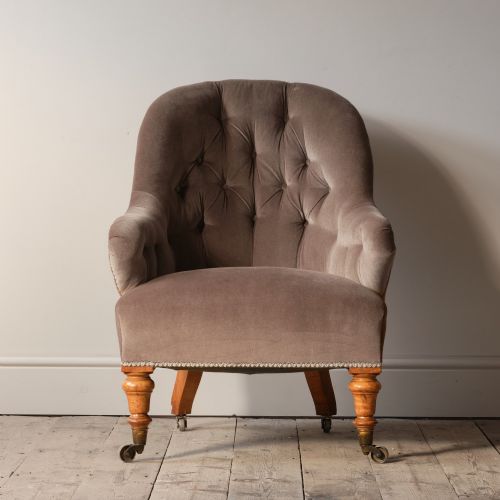
A victorian button tufted chair brings deep upholstery and distinct low-slung seating into a room, offering both comfort and strong nineteenth-century character.
Victorian Button Tufted Chair
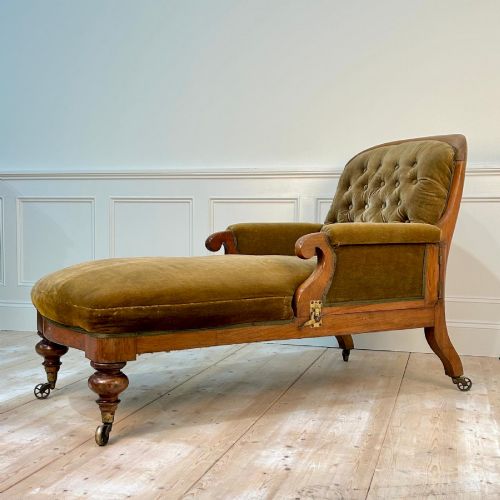
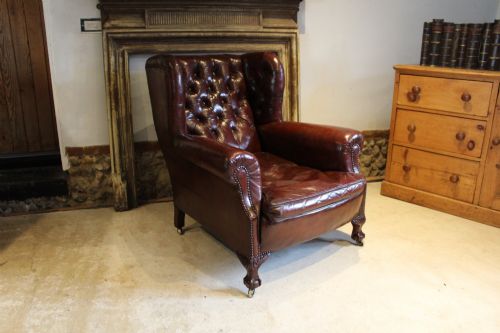
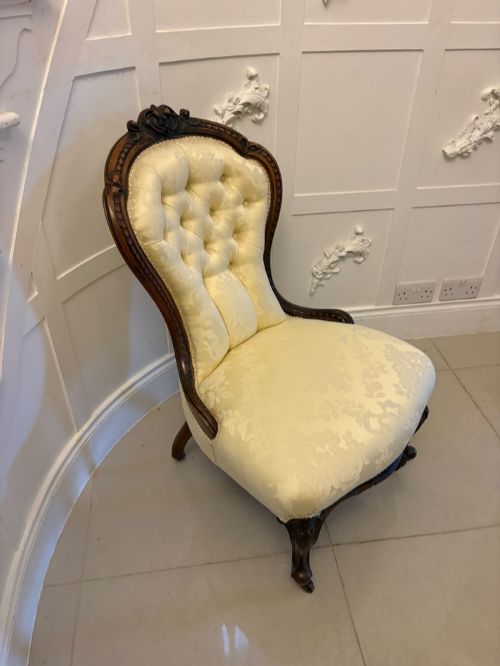
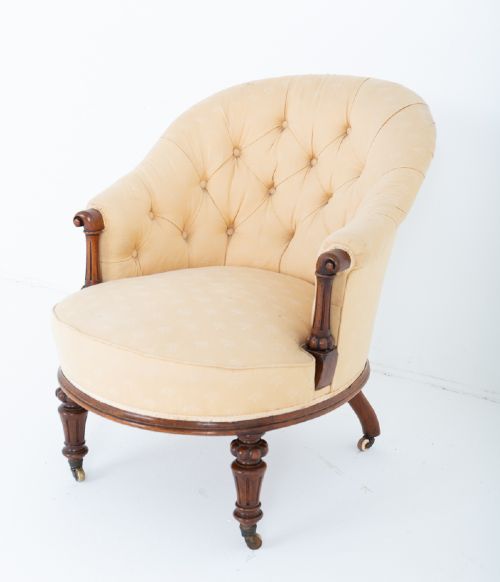
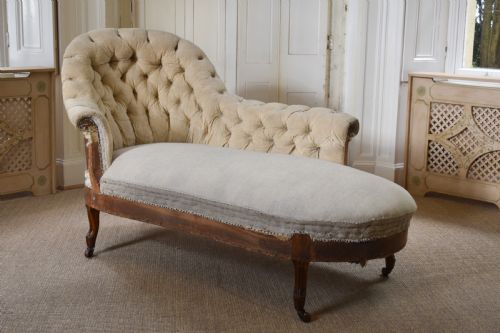
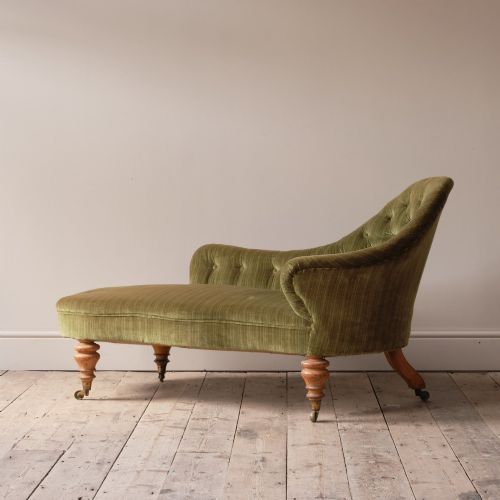
A victorian button tufted chair spans several distinct seating forms, including low library armchairs, gentleman's chairs, and chaise longues. These items appear across the nineteenth century, with strong representation from the 1850s to the 1890s in various regional British and French styles.
Buyers will most frequently encounter mahogany and walnut framed armchairs featuring deep tufted upholstery. Alongside these standard armchairs, the selection includes revolving desk chairs, bedroom chairs, and occasional side chairs bearing the characteristic buttoned finish.
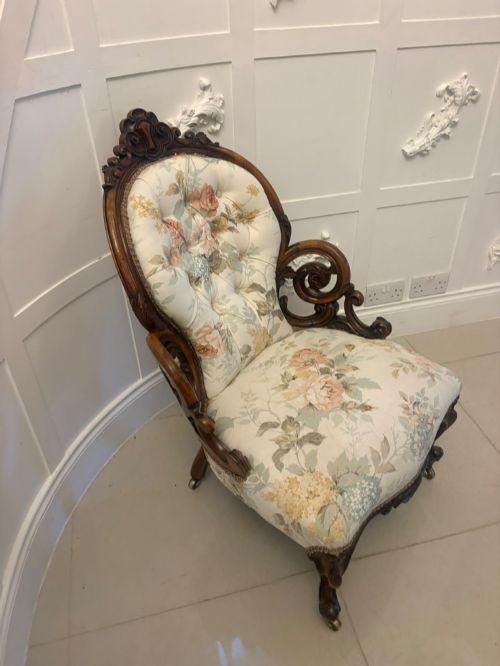
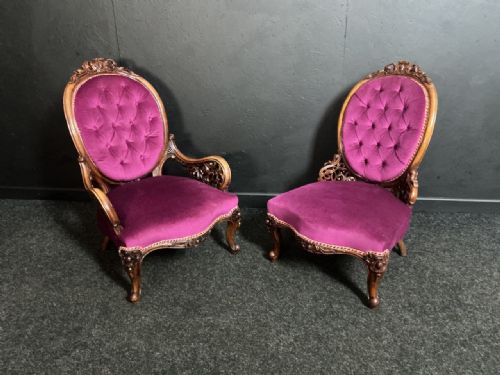
The aesthetic reaches from English country house interpretations to ornate French Rococo Revival and Napoleon III designs. This variety allows collectors to choose between sturdy mahogany frames and more decorative carved walnut structures.
Materials and Construction Methods
Makers built the structural frames primarily using solid hardwoods such as mahogany, walnut, oak, and occasionally rosewood. These timbers provided the necessary strength to support the heavy internal padding and tension required for deep buttoning.
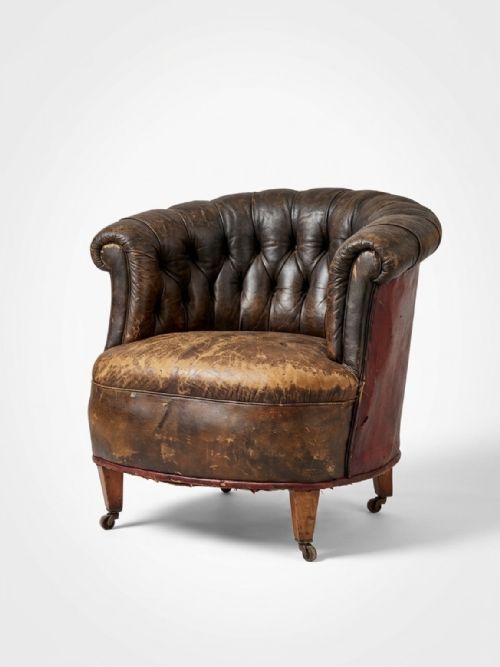
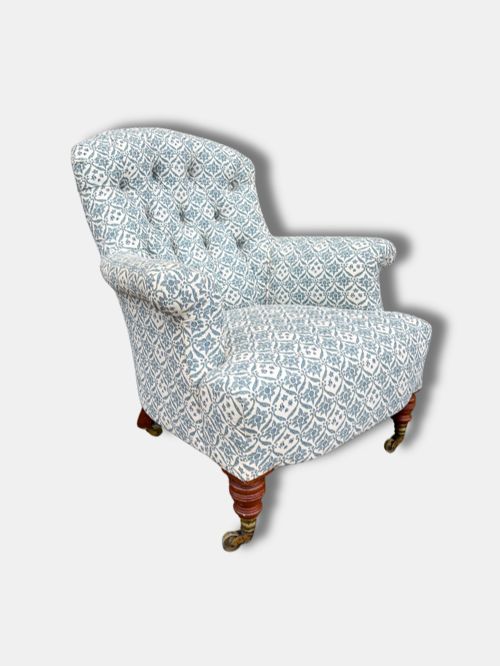
Upholstery relies on traditional textiles including wool velvet, supple leather, and calico foundations, accented with brass fixings. The signature tufting technique involves pulling twine tightly through the padding to secure the buttons in a uniform diamond pattern.
Victorian Button Tufted Chair Retail Price Guide 2026
Typical asking prices for victorian button tufted chair among the pieces listed under this phrase on Sellingantiques today, from the lower quarter to the upper quarter. They describe what is for sale here now, not the wider market.
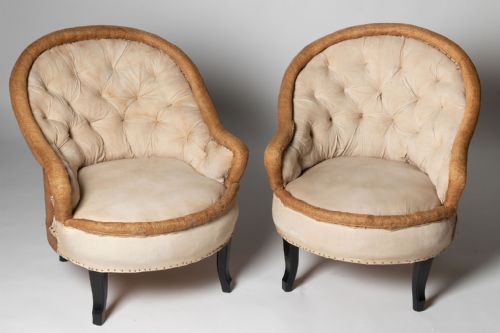
One resourceful Victorian sitting arrangement even includes a bonus offer of a free second chair.
Markers of Distinction
Quality rests significantly in the execution of the timber frame and the precision of the upholstery work. Finer examples display crisp hand-carved details on walnut or mahogany woodwork rather than plain, simplified mouldings.
The integrity of the button tufting and the choice of covering material dictate the upper tier of the range. Uniform diamond patterns in high-grade leather or rich velvet demonstrate superior craftsmanship compared to loose or uneven padding.
Howard & Sons
The Victorian Button Tufted Chair Glossary
- Button tufting
- An upholstery technique where twine is pulled through padding and secured with buttons to create a diamond pattern. This method keeps internal stuffing firmly distributed.
- Chaise longue
- An elongated upholstered chair designed for reclining, combining a chair back with an extended seat. Many nineteenth-century versions feature buttoned backs.
- Spoon back
- A padded chair back shaped like the bowl of a spoon, curved to fit the human spine. It is frequently seen on walnut open armchairs from the mid-nineteenth century.
- Library armchair
- A sturdy, low-slung seat designed for reading rooms, often upholstered in leather or heavy fabric. These pieces prioritize seated comfort.
- Rococo Revival
- A mid-nineteenth-century decorative style inspired by French 18th-century design, characterised by curved organic lines and carved floral motifs.
Victorian Button Tufted Chair: Frequently Asked Questions
How do I style a button tufted chair?
These chairs work well as reading seats in studies or as statement pieces in living spaces. Pair them with neutral surroundings to let the deep upholstery and timber frame stand out.
They also mix comfortably with contemporary furnishings, adding texture and historical weight to a modern room.
Were these chairs used in bedrooms?
Smaller variations, such as low French bedroom chairs and side chairs, were frequently placed in private chambers for dressing or quiet reading. Their compact scale suited intimate domestic spaces.
Larger library and club armchairs remained in public rooms like studies, libraries, and smoking rooms.
How do I distinguish between decades?
Early nineteenth-century pieces often reflect Regency influences with simpler lines, while 1850s and 1860s examples tend toward heavier Victorian mahogany and Rococo Revival curves. Later pieces from the 1880s and 1890s frequently incorporate oak or incorporate maker stamps.
Finer carving and specific wood choices help narrow down the manufacturing decade.