


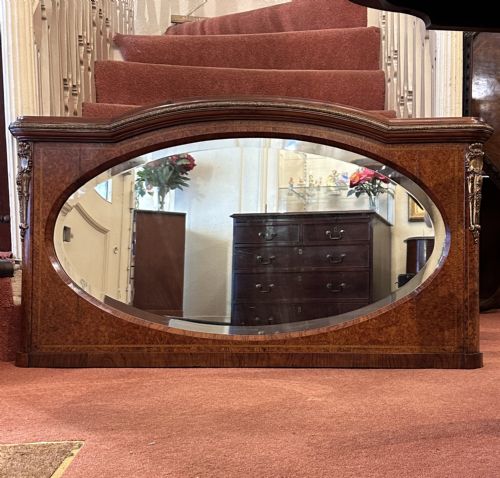


Victorian Burr Wood Mirror
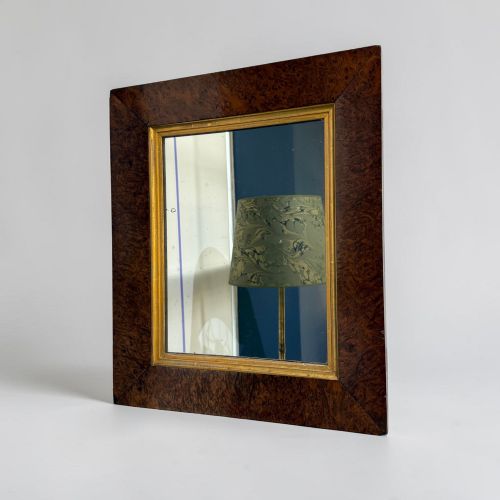
These Victorian burr wood mirror pieces bring striking grain and nineteenth-century character to an interior.
Victorian Burr Wood Mirror
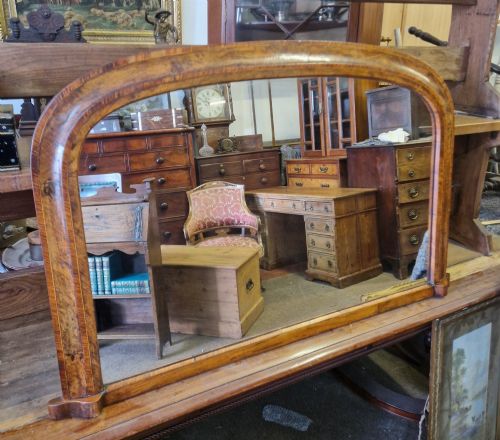
A victorian burr wood mirror combines nineteenth-century craftsmanship with the distinctive, swirling patterns found in timber growths. Buyers searching this phrase look for wall-hung glasses, dressing table fittings, and overmantel mirrors designed to sit above a fireplace.
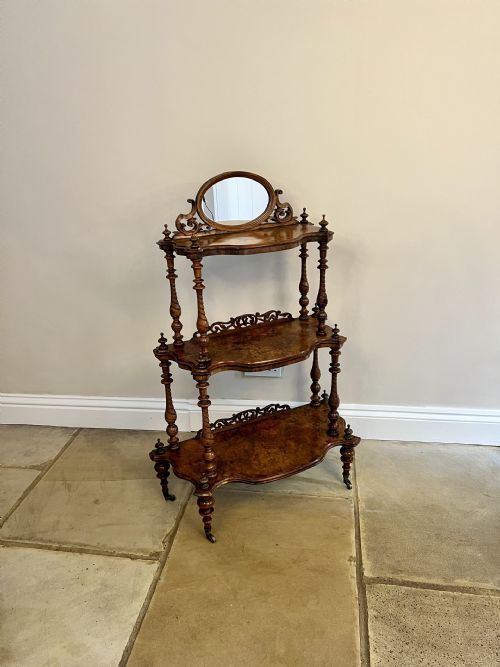
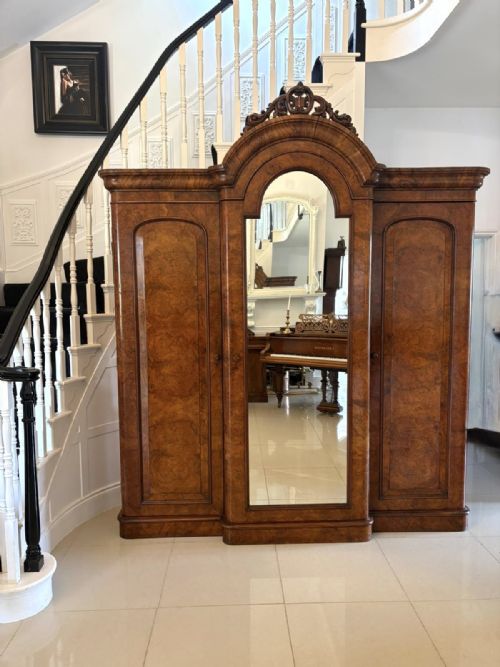
The pieces on this page span the Victorian era, drawing on periods from eighteen-sixty to eighteen-eighty and broader nineteenth-century traditions. They appear both as standalone wall mirrors and as mirrored components integrated into larger pieces like credenzas, wardrobes, and sideboards.
Makers of the period utilised richly figured veneers to catch the light and add depth to a room. Walnut and yew feature prominently in the surviving examples, often complemented by contrasting ebonised wood or gilt details.
How they were made
Cabinetmakers constructed these frames using solid timber carcases overlaid with thin slices of burr walnut or burr yew veneer. This technique allowed workshops to display the complex, knotted grain patterns of the wood across wide surfaces without splitting.
Mirrors incorporated into these designs relied on silvered mirror glass, occasionally framed with brass mounts, ormolu, or parcel gilt accents. Ebonised wood details were frequently added to create sharp visual contrast against the warm, mottled tones of the burr timber.
What varies in quality
Quality in a victorian burr wood mirror rests upon the selection and matching of the veneer figures across the frame. Master craftsmen ensured the swirling grain mirrored itself symmetrically, creating a balanced and harmonious visual composition.
The integration of secondary materials also marks the division between standard production and exceptional workshop output. Finer examples feature crisp parcel gilt, finely cast brass or ormolu mounts, and precise marquetry inlay rather than plain mouldings.
The Victorian Burr Wood Mirror Glossary
- Burr wood
- Timber taken from a tree growth where the grain has grown in a deformed, swirling manner. This produces highly decorative patterns filled with numerous small knots and eyes.
- Overmantel mirror
- A large mirror designed specifically to be hung or placed on the mantelpiece above a fireplace. They frequently feature architectural pediments or domed tops.
- Ebonised wood
- Timber treated with a finish or stain to imitate ebony. It provides a dense black contrast against lighter woods like walnut.
- Ormolu
- Gilded bronze or brass applied as decorative mounts to furniture and mirror frames. It became popular for adding metallic highlights during the nineteenth century.
- Marquetry
- The art of applying pieces of veneer to a structure to form decorative patterns and pictures. It requires precise cutting and fitting of various woods.
Victorian Burr Wood Mirror: Frequently Asked Questions
How do I date a Victorian mirror?
Dating relies on examining the timber veneer, construction joints, and framing style. Pieces from the eighteen-sixties and eighteen-eighties often incorporate specific revival styles or aesthetic movement influences.
Looking at the backboards and mirror glass fixings also helps establish the period. Hand-bevelled glass and original brass screws provide reliable clues to the age of the piece.
Where should I hang an overmantel mirror?
These large mirrors are traditionally hung directly above a fireplace mantelpiece to reflect light around the room. Their proportions are designed to anchor the visual weight of the hearth.
They also work effectively on expansive blank walls in reception rooms or dining areas. Ensure the wall structure can support the substantial weight of the timber frame and glass.
How do I care for burr wood?
Keep nineteenth-century burr wood surfaces away from direct sunlight and excessive moisture to prevent the veneer from warping or fading. Gentle dusting with a dry cloth is usually sufficient for routine maintenance.
Avoid modern chemical polishes that can build up a residue over the historic finish. Apply a quality beeswax sparingly only when the timber appears dry.