
Victorian Buffet
When you search for a victorian buffet, you are looking at substantial timber sideboards and credenzas built to anchor nineteenth-century dining rooms.
Victorian Buffet
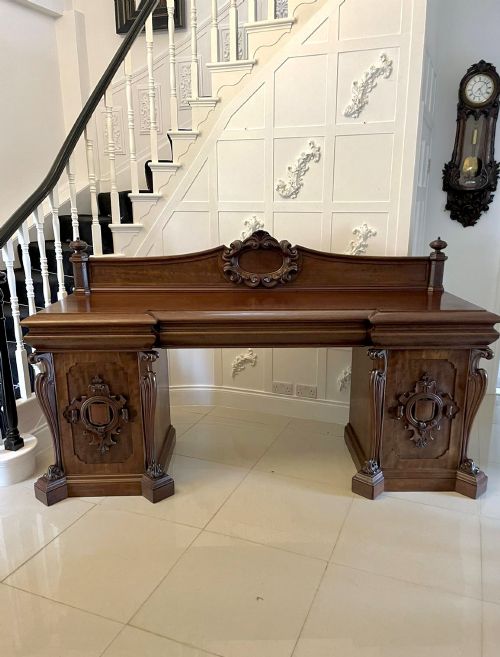
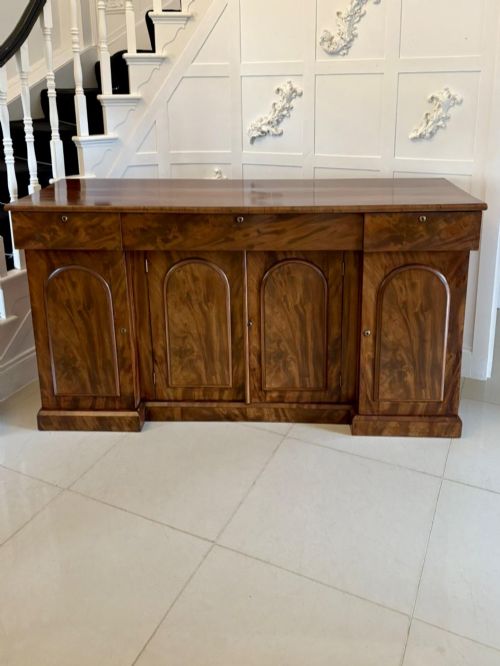
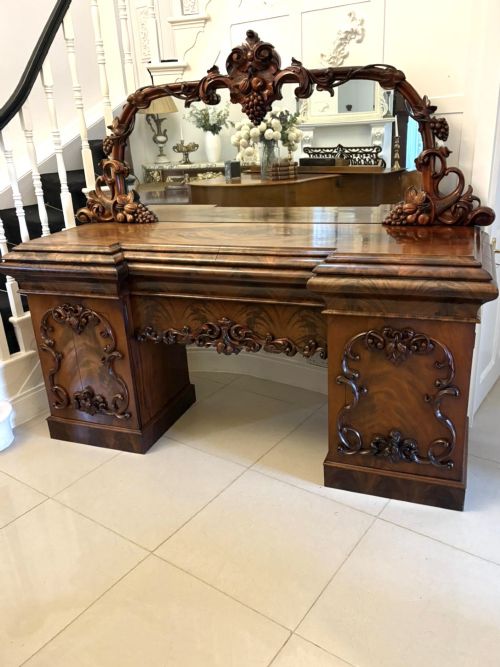
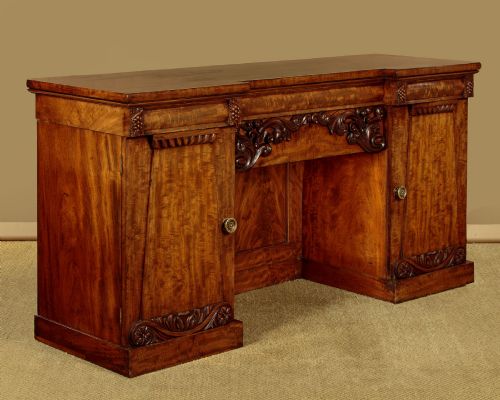
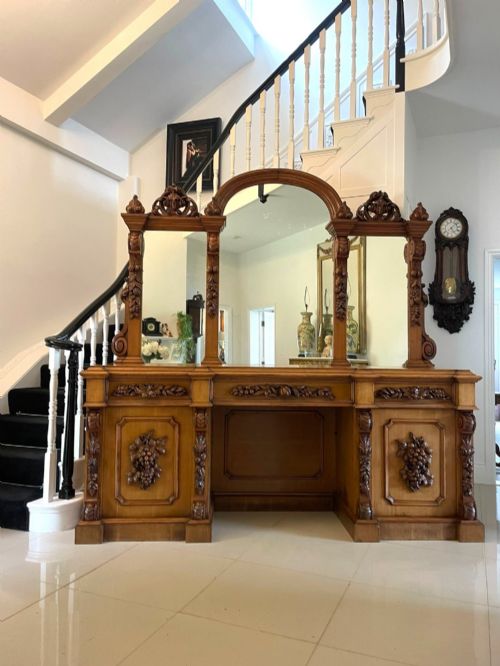
A victorian buffet most commonly appears on this page as a heavy sideboard, credenza, or mirrored cabinet rooted in the nineteenth century. These pieces served dining rooms and reception rooms, providing surface space for serving food and deep cupboards for storing silver and linen.
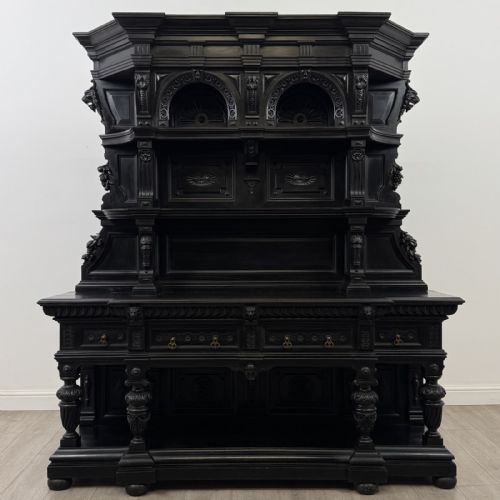
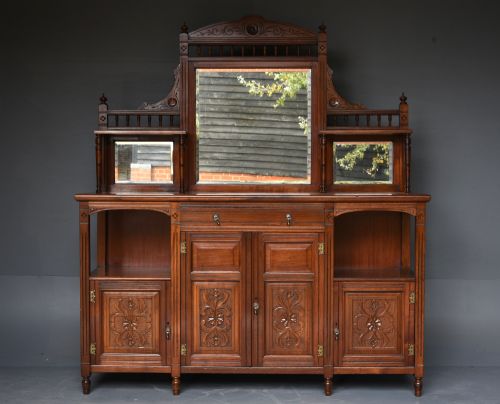
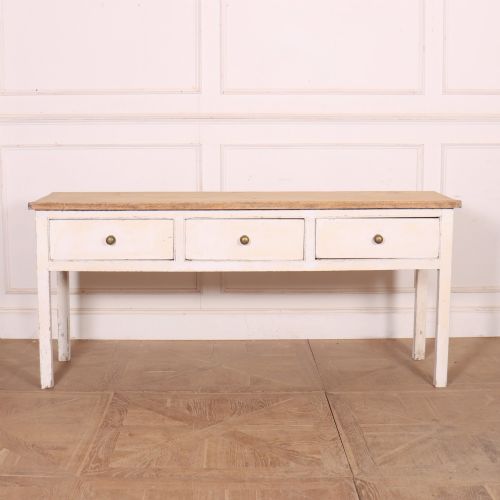
The selection ranges from robust oak and carved walnut pieces to grand mirrored back sideboards and smaller pine dresser bases. Makers of the period drew upon Renaissance Revival, Gothic Revival, and Arts and Crafts styles to shape these large dining room pieces.
Timber Construction and Metal Mounts
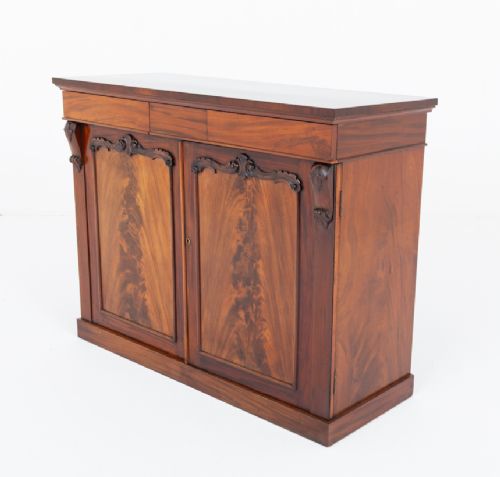
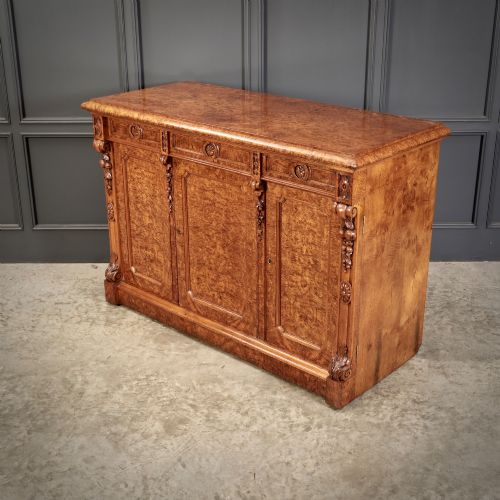
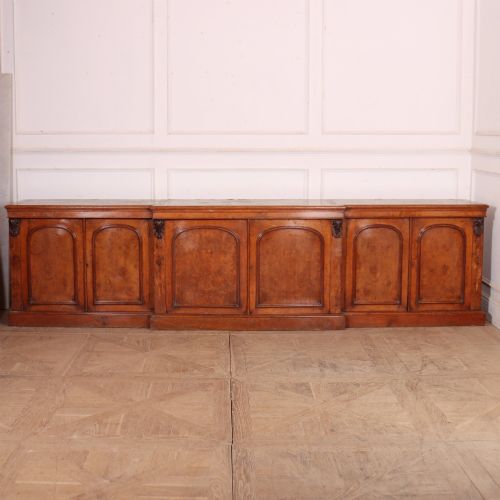
Makers constructed these pieces around solid frames of mahogany, oak, or walnut, frequently applying figured veneers like burr walnut, flame mahogany, and pollard oak to the primary surfaces. These timber choices gave the furniture its deep grain patterns and varied natural colour.
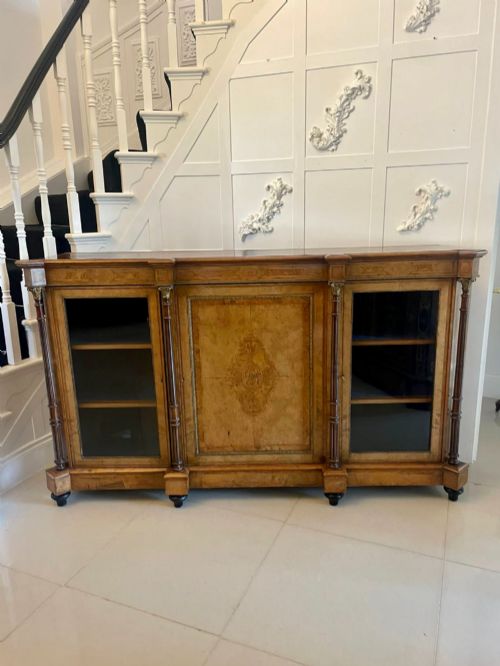
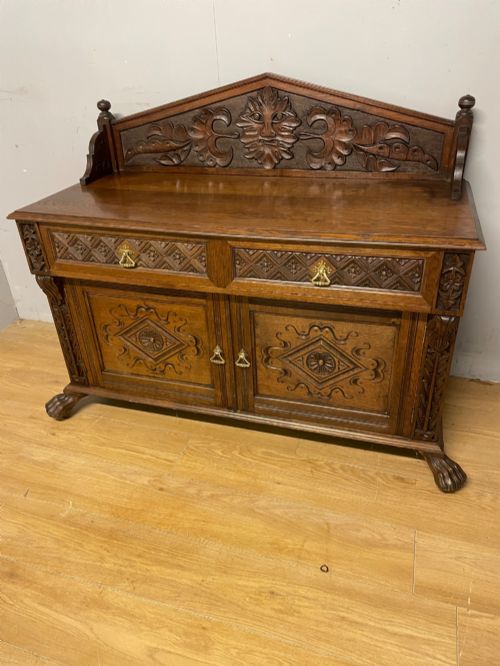
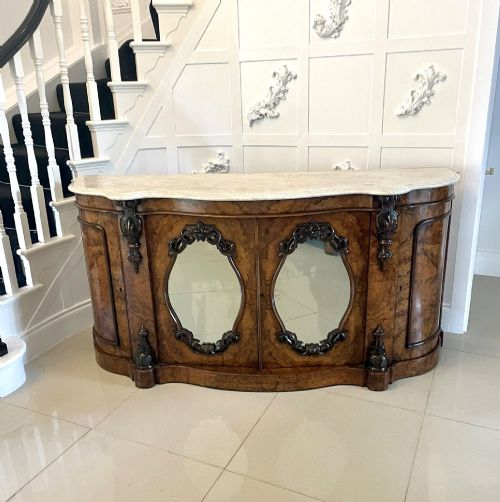
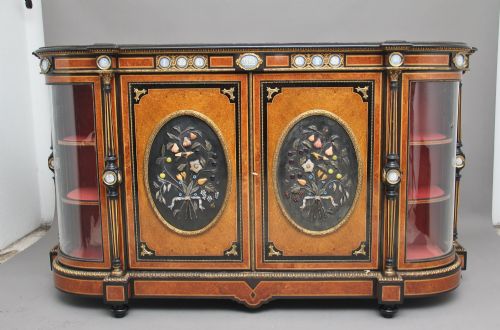
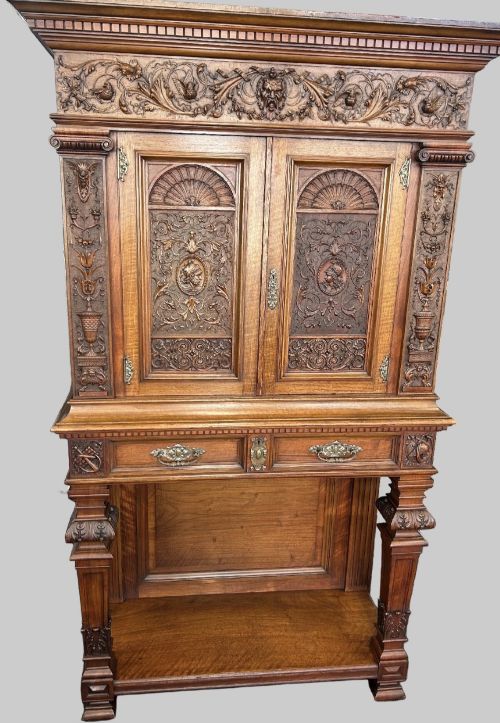
Craftsmen enriched the woodwork with brass hardware, ormolu mounts, and inlaid marquetry, while incorporating marble tops on specific credenzas. Carved details such as lion masks, green man motifs, and mirror frames demonstrate the depth of nineteenth-century workshop techniques.
Carved green man faces peer out from nineteenth-century oak woodwork, bringing woodland folklore directly into the dining room.
Substance and Detail in Construction
The standard of a piece rests upon the selection of its timber veneers and the crispness of its carved elements. Higher quality examples utilise richly figured burr walnut, flame mahogany, or pollard oak with deliberate grain matching across doors and drawer fronts.
Execution of decorative details marks the difference across the range, from plain pine farmhouse bases to heavily carved Renaissance Revival oak cabinets bearing maker signatures. Heavy brass mounts, integrated marble slabs, and original bevelled mirror glass elevate the construction.
Gillows·Hewetsons London
The Victorian Buffet Glossary
- Credenza
- A low cabinet or sideboard, frequently featuring glass doors and ormolu mounts, designed for display and storage.
- Chiffonier
- A compact sideboard or side cabinet fitted with a raised shelf or small mirror on the upper surface.
- Ormolu
- Gilded bronze or brass mounts applied as decorative trim to cabinet doors and cornices.
- Marquetry
- Decorative patterns formed by inserting thin veneers of different coloured woods into a solid wood background.
- Pollard Oak
- Timber taken from trees that have been pollarded, producing a dense, knotty burl grain prized for cabinet fronts.
Victorian Buffet: Frequently Asked Questions
What is a victorian buffet used for?
These pieces function as heavy dining room storage furniture, designed to hold heavy serving dishes, cutlery, and glassware within enclosed cupboards and drawers.
The wide top surface also acts as a serving counter during formal meals or as a display platform for silver and ceramics.
How do I identify a credenza from a sideboard?
A sideboard typically stands taller with deep central cupboards and large flanking pedestals, sometimes featuring an integrated mirror back.
By contrast, a credenza is lower to the ground, frequently fitted with curved glass side cabinets and ornate ormolu mounts.
Where does pollard oak come from?
Pollard oak derives from trees that were cut back above livestock height to encourage dense, branching growth.
This pruning method creates a swirling, knotty grain pattern within the timber that cabinetmakers used for decorative veneering.
How do I style a large mirror back sideboard?
Place the piece against a long dining room wall where the heavy timber frame and carved details can command the space without crowding the room.
Keep the top surface balanced with ceramic lamps or simple metal tableware to reflect light into the mirror glass.