





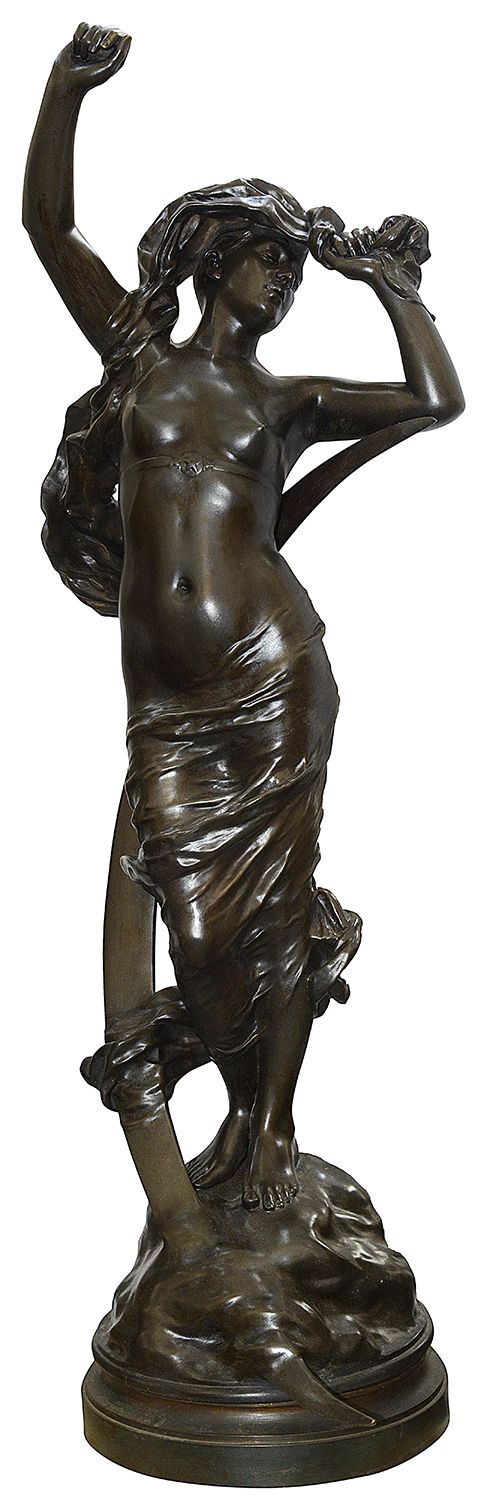


Victorian Bronze Female Figure
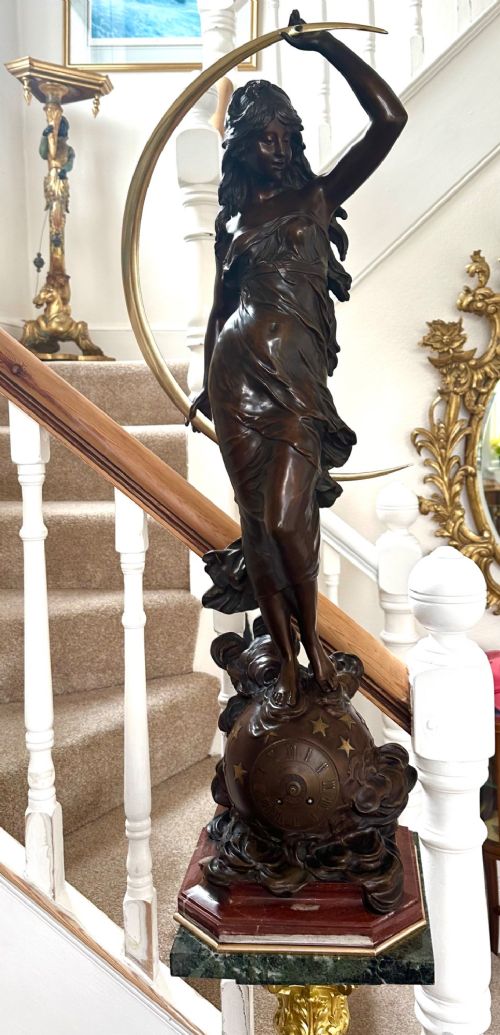
A victorian bronze female figure brings classical grace and nineteenth-century foundry skill directly to a mantelpiece or side table.
Victorian Bronze Female Figure
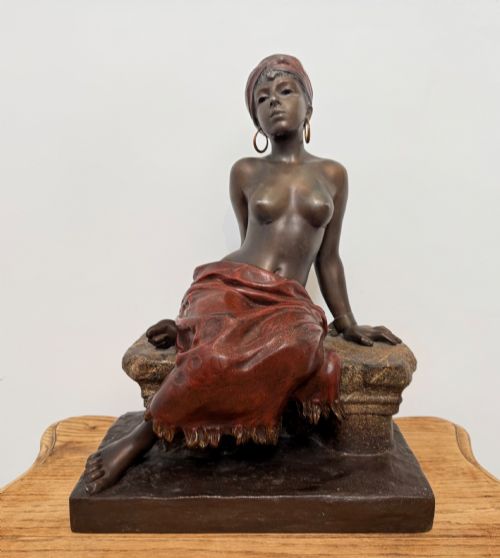
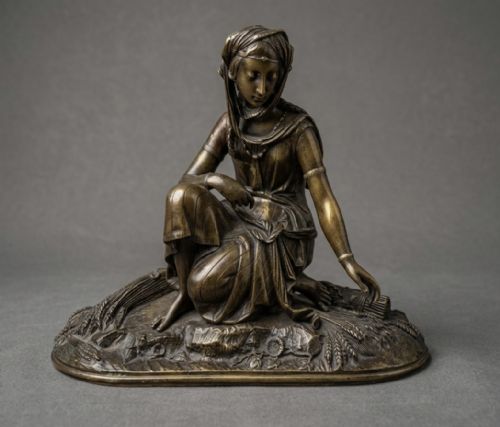
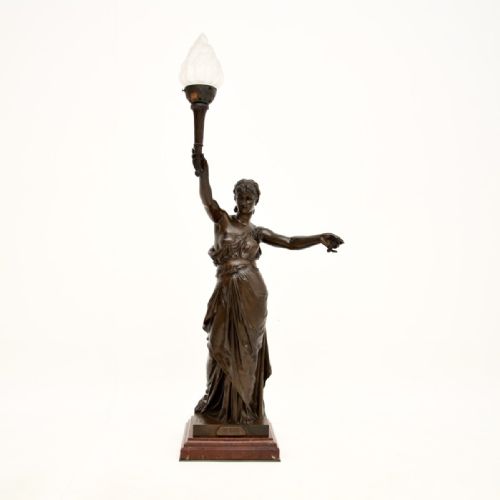
A victorian bronze female figure encompasses freestanding sculptures, portrait busts, and figural components of clocks, lamps, and mirrors produced across the nineteenth century and into the early twentieth century. Buyers seeking these pieces encounter distinct subjects drawn from mythology, Orientalism, and classical antiquity, alongside allegorical representations such as peace or modesty.
The selection on this page demonstrates strong French influence, alongside Austrian and British examples, ranging from cabinet-sized nudes to substantial statues set on marble stands. Makers often utilised alternative mediums such as spelter or bronzed plaster alongside traditional cast bronze, offering varied price points and weights for domestic display.
Evaluating Quality and Craftsmanship
The integrity of the foundry mark or artist signature adds considerable weight to a piece, distinguishing signed studio works from anonymous commercial productions. Additionally, the quality and weight of the supporting marble base or associated clock and lamp mechanisms indicate the original tier of manufacture.
Victorian Bronze Female Figure Retail Price Guide 2026
Typical asking prices for victorian bronze female figure among the pieces listed under this phrase on Sellingantiques today, from the lower quarter to the upper quarter. They describe what is for sale here now, not the wider market.
Materials extend beyond traditional cast metal to include marble, glass, wood, and silk elements integrated into lamps and clocks.
August Moreau·E Villanis·Jean-Jules Cambos·Arthur Waagen·Eutrope Bouret
The Victorian Bronze Female Figure Glossary
- Patinated bronze
- A treated metal surface that develops a coloured chemical finish over time. This process enhances the depth and visual warmth of the sculpture.
- Spelter
- A zinc alloy commonly utilised as a less expensive substitute for bronze during the period. It often receives a bronze-coloured coating to mimic true metal.
- Cold painted
- A colouring method where paint is applied to unheated metal and allowed to dry naturally. This technique appears frequently on Austrian figural work.
- Grand tour
- A nineteenth-century travel tradition where collectors acquired small-scale bronze reductions of classical antiquities. These souvenirs served as educational display pieces in homes.
- Chasing
- The manual finishing process where a metalworker refines a raw casting using chisels and punches. Skilled chasing defines fine surface details and removes casting flaws.
Victorian Bronze Female Figure: Frequently Asked Questions
Where should I place a bronze figure?
These sculptures suit stable, level surfaces away from direct moisture and strong heat sources. A sturdy mantelpiece or heavy side table provides appropriate support for the weight of metal and marble.
Allowing adequate clearance protects protruding elements like outstretched arms or draped fabric from accidental knocks during daily movement.
How do I clean patinated bronze?
Dust the surface gently using a soft, dry lint-free cloth to prevent the accumulation of abrasive particles. Avoid using commercial metal polishes, water, or chemical solvents, as these substances can strip the original patina.
Professional conservation advice should be sought if the metal requires deeper cleaning or shows signs of active corrosion.
What is the difference between bronze and spelter?
Bronze is a durable copper alloy that takes fine detail and develops a rich natural patina over centuries. Spelter is a softer zinc-based metal that feels lighter and requires careful handling to avoid bending.
Examining the underside or base often reveals the paler grey metal of spelter where the surface coating has worn away.
Why do some figures have marble bases?
Foundries added heavy stone plinths to provide structural stability for taller or top-heavy compositions. Marble also introduced a refined architectural element that elevated the status of the sculpture for domestic interior display.
These integrated stands frequently feature moulded edges characteristic of nineteenth-century design tastes.