
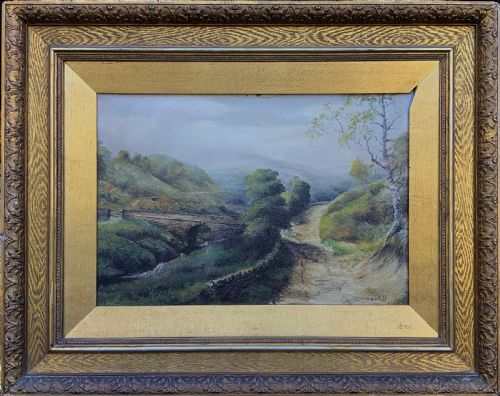
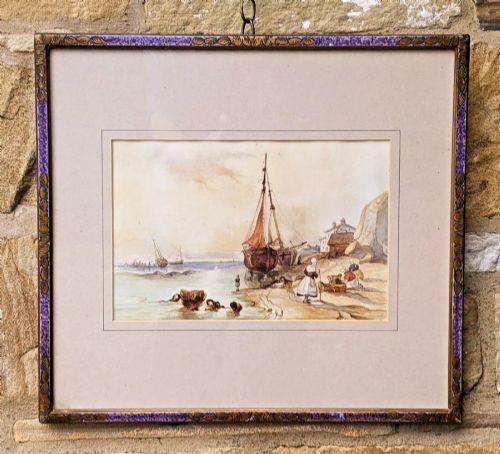
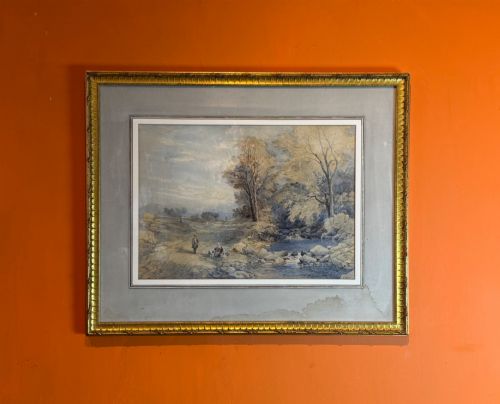
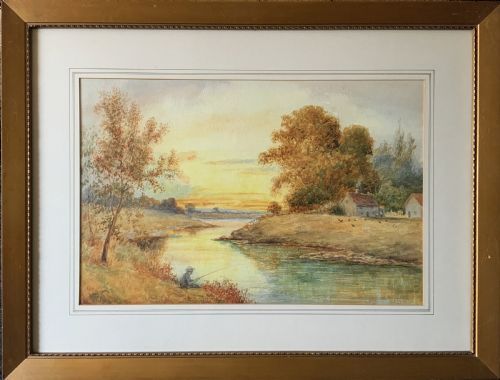
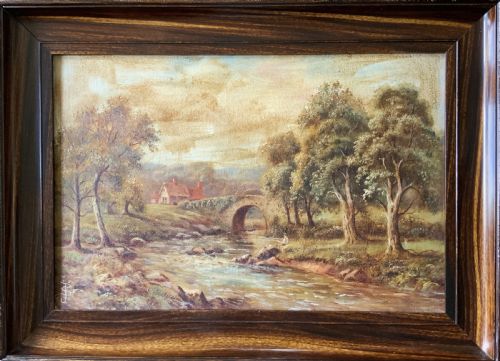


Victorian British School Painting
A victorian british school painting captures the varied landscapes, coastal scenes and portraiture produced across the nineteenth century.
Victorian British School Painting
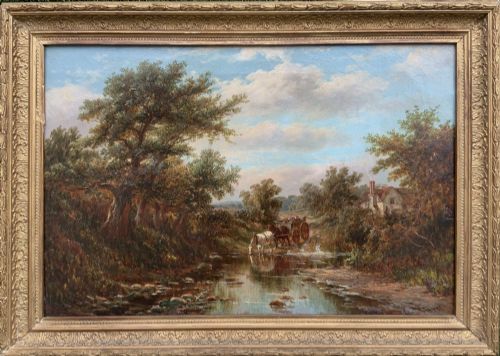
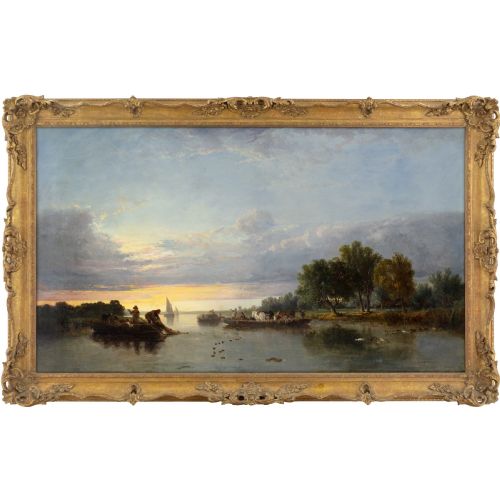
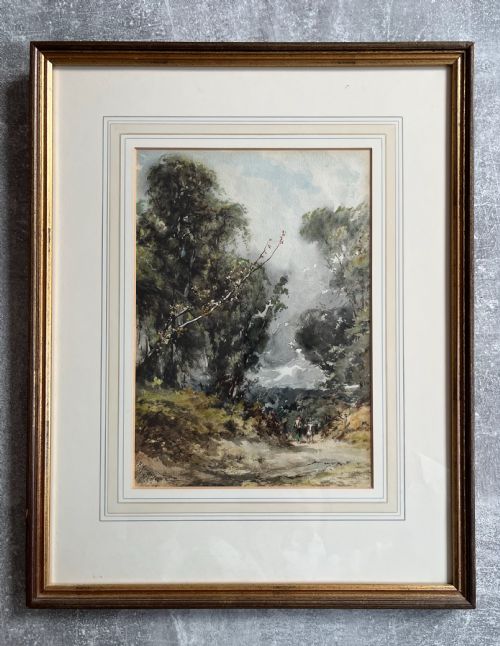
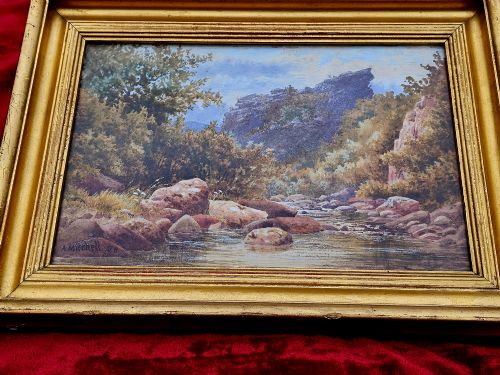
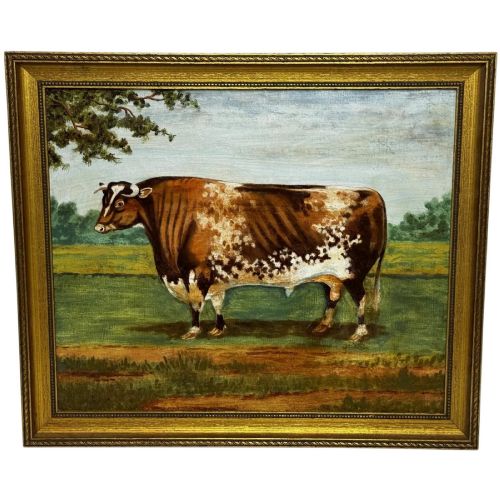
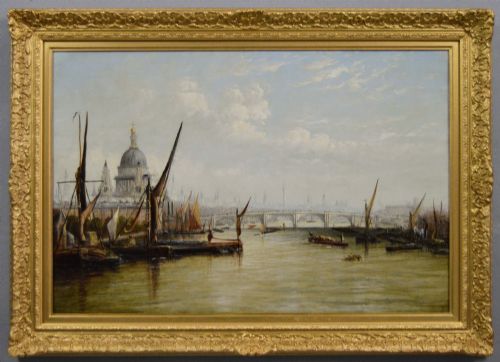
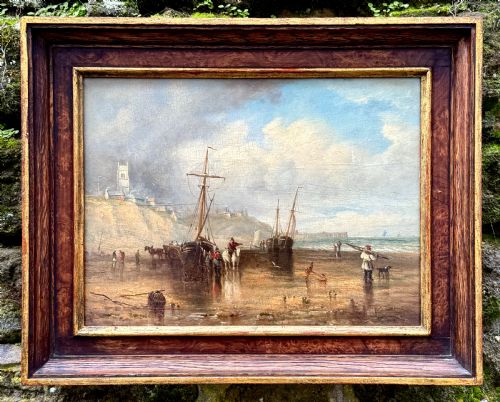
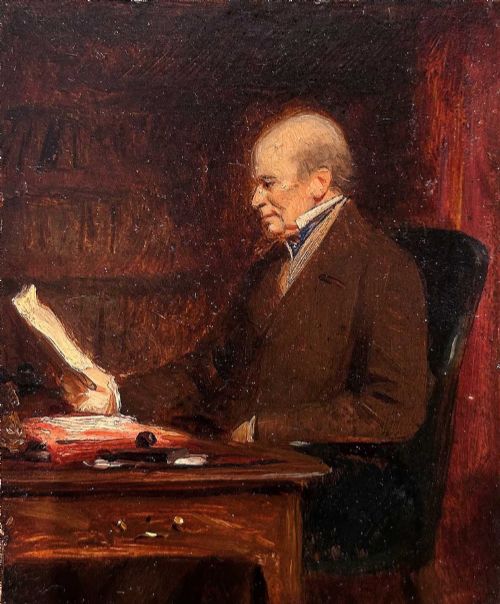
A victorian british school painting encompasses works created by artists working within Britain during the nineteenth century, ranging from academic portraits to rural landscapes and marine scenes. The most common examples met on this page include oil on canvas and watercolour paintings depicting pastoral views, river landscapes and coastal harbours.
Many of these works are unsigned or attributed to followers and circles of known painters, while others bear the signatures of recognised Royal Academy exhibitors and regional artists. Subjects stretch from tranquil English countryside views to dramatic maritime weather and detailed portraiture.
How They Were Made
These works were created primarily using oil on canvas, oil on board, or watercolour on paper, supported by wooden stretchers and frequently housed in original giltwood or gilt wood frames. Artists utilised traditional pigments layered to achieve depth in landscapes, while watercolourists applied washes on paper to capture light and movement.
The physical build often includes framing with glass for watercolours and heavy moulded frames for oils, occasionally bearing period inscriptions, artist biographies or studio stamps on the reverse of the canvas or card.
Listings span the nineteenth and twentieth centuries, incorporating oil on canvas, watercolour, card and giltwood framing.
What Varies in Quality
The quality of a nineteenth-century painting rests on the confidence of the brushwork, the handling of light and shadow, and the anatomical or topographical accuracy of the subject matter. Superior examples demonstrate a sophisticated command of atmospheric perspective and tonal balance, whereas simpler naive works rely on direct, unpretentious charm.
Condition and originality also dictate standing within the period, with untouched surfaces, legible inscriptions and period giltwood frames retaining greater historical integrity than heavily restored or later re-framed canvases.
George Fotherly Hargitt·Francis Moltino·Thomas Creswick·Stephen Pearce·Sydney Yates Johnson·William Frederick Settle·Thomas Baker·William Henry Knight·Henry John Boddington·James Hardy·George Hilditch·Robert Finley McIntyre·James Thomas Linnell·Peter Deakin·Frederick Waters Watts·John Wright Oakes·William Wyld·Will Anderson·Thomas Sidney Cooper·Sir Edwin Landseer·George Chinnery·Henry Barlow Carter·Thomas Lound·William Robert Dickinson·George Turner
The Victorian British School Painting Glossary
- British School
- A term used to describe artists trained or working in Britain, often applied when an exact individual hand is anonymous or part of a wider artistic circle.
- Giltwood
- Wood that has been coated with gold leaf or gold paint, frequently used for traditional nineteenth-century picture frames.
- Watercolour
- A painting method in which the paints are made of pigments suspended in a water-based solution, typically executed on paper.
- Barbizon Influence
- An artistic approach derived from the French landscape movement focusing on realism, tonal subtlety and working closely from nature.
- Provenance
- The documented history of ownership of an artwork, which can include exhibition labels, inscriptions on the reverse, or archival records.
Victorian British School Painting: Frequently Asked Questions
What defines a british school painting?
A british school painting is a work produced by an artist active in Britain whose specific identity might be lost, or whose style aligns with the broader academic and regional traditions of the era.
These pieces often reflect prevailing artistic movements without carrying the signature of a major master.
How should these paintings be displayed?
These works are best housed in rooms with stable humidity and away from direct sunlight to protect vulnerable watercolours and oil pigments.
Pairing them with their original giltwood frames enhances their historical context within a domestic interior.
Are most of these works signed?
Many pieces bear signatures, monograms or contemporary inscriptions on the reverse, while a significant portion remains unattributed as part of the wider british school.
Documentation, artist biographies and period framing often help contextualise unsigned examples.
What subjects are most common?
Landscapes, rural pastoral scenes, river views and coastal shipping watercolours form the core of the available material.
Portraiture and still life also appear, reflecting the diverse output of nineteenth-century studios and academies.