


Victorian Breakfront Shelves
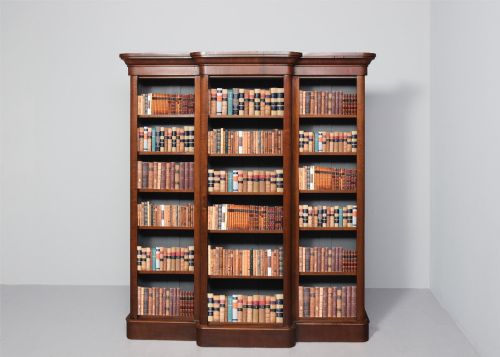
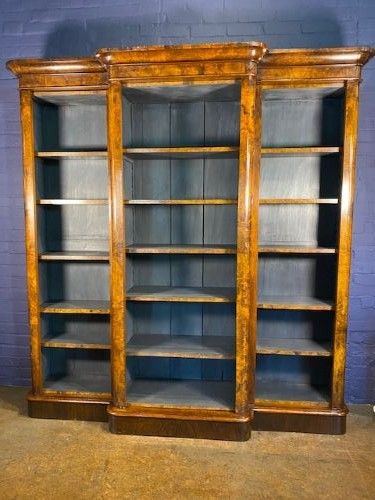
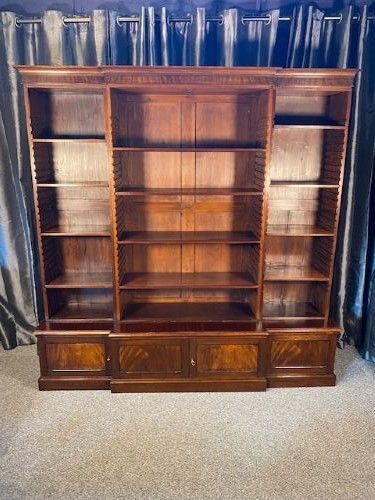
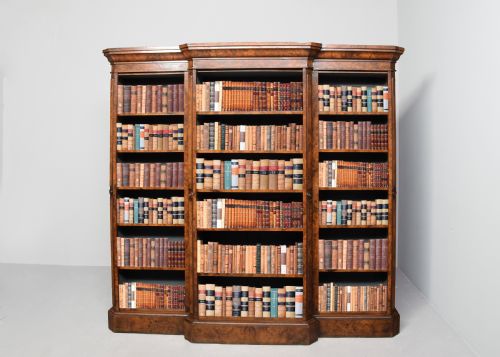
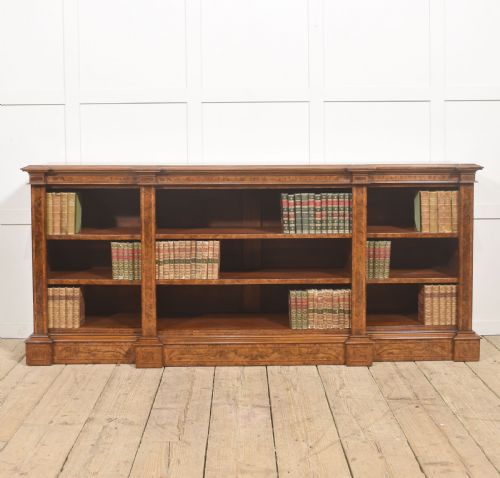
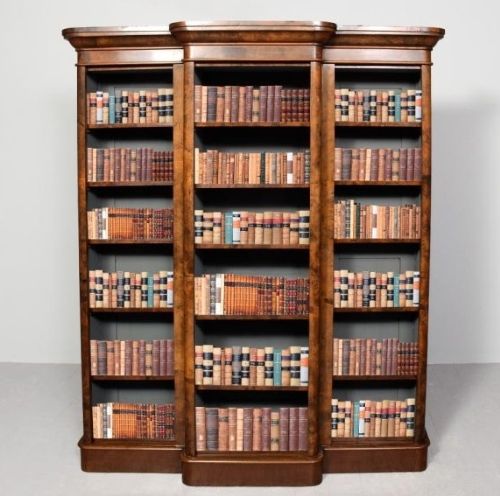
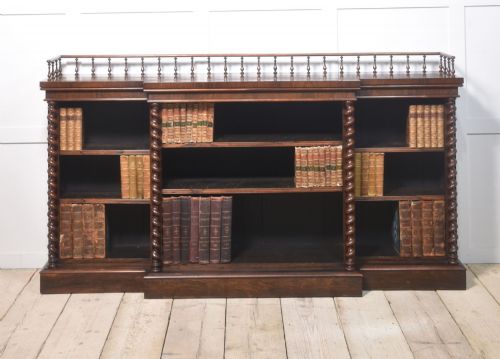
Victorian breakfront shelves project forward in the centre section to anchor a room and house large collections of books.
Victorian Breakfront Shelves
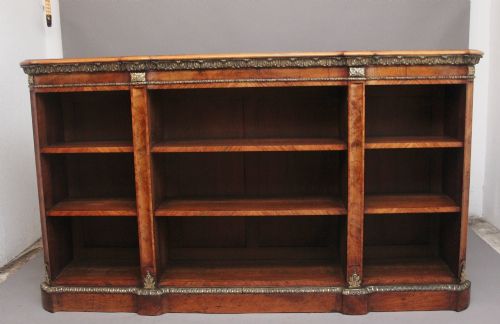
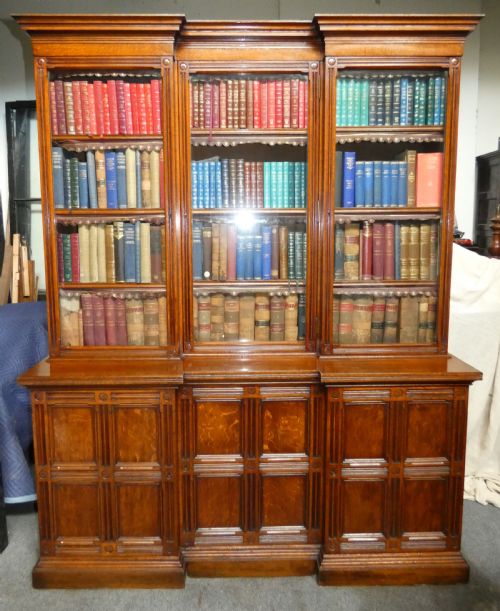
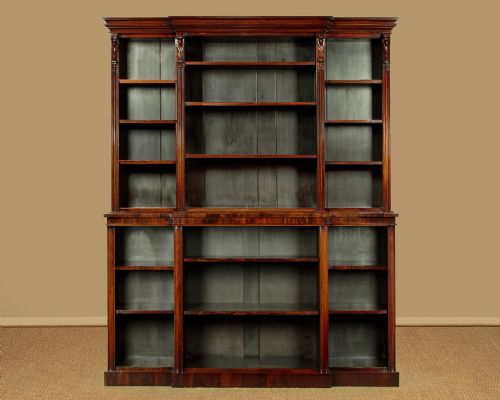
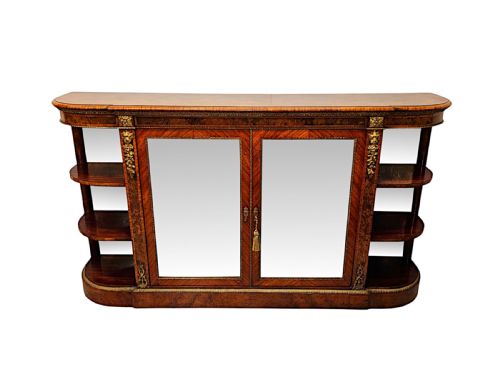
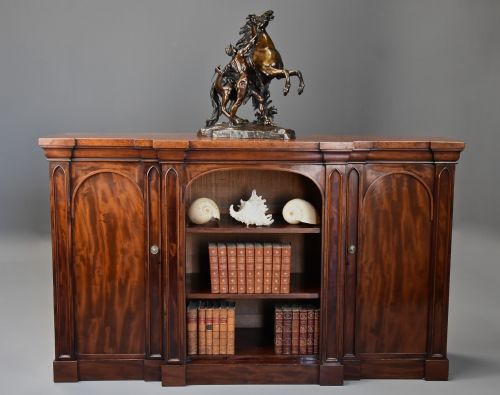
Victorian breakfront shelves form large library bookcases and credenzas with a central section that projects forward from the flanking wings. These pieces span the nineteenth century, with mid-Victorian examples appearing frequently alongside early pieces and later variations.
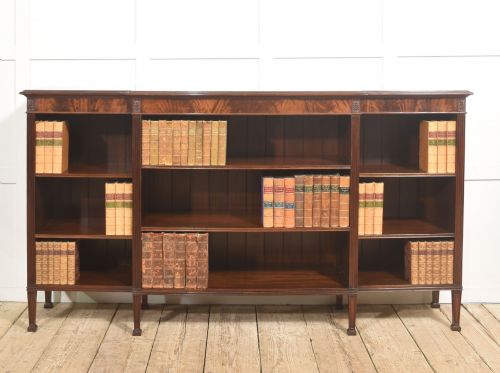
Makers built these large units to display leather-bound volumes and ornamental objects in substantial rooms. The form includes open front bookcases, glazed display cabinets, and side cabinets with adjustable shelving.
Makers adopted various stylistic influences during the period, incorporating Gothic details, French Empire mounts, and Regency lines into the standard breakfront format. Pieces range from diminutive proportions to grand library bookcases designed for institutional or domestic spaces.
Materials and construction
Cabinet makers utilised dense hardwoods including mahogany, burr walnut, rosewood, and oak for the primary carcases. Flame mahogany and figured burr walnut veneers provided decorative grain patterns across the projecting central sections and friezes.
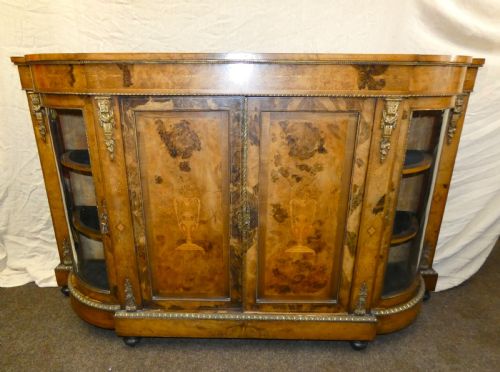
Metal mounts in ormolu, brass, and gilt metal enrich walnut and rosewood surfaces, particularly on pieces associated with notable cabinet makers. Glass doors and open front configurations accommodate adjustable wooden shelves supported by traditional ratchets or brass studs.
Victorian Breakfront Shelves Retail Price Guide 2026
Typical asking prices for victorian breakfront shelves among the pieces listed under this phrase on Sellingantiques today, from the lower quarter to the upper quarter. They describe what is for sale here now, not the wider market.
One recorded oak library bookcase carries a carved provenance linking it directly to Miskin Manor.
Assessing quality and execution
Superior execution shows in the selection of figured timber veneers and the precision of inlaid details across the breakfront facade. The depth of carved ornament, particularly on oak and mahogany library pieces, separates standard production from ambitious workshop commissions.
Hardware integration dictates the overall finish, with heavy ormolu mounts and stamped maker signatures denoting high workshop standards. The structural integrity of the projecting central break and the smoothness of adjustable shelf mechanisms demonstrate superior cabinet making.
Johnstone and Jeanes·Gillows·Robert Strahan
The Victorian Breakfront Shelves Glossary
- Breakfront
- An architectural cabinet form where the central section projects forward from the flanking ends. This layout creates visual depth in large library bookcases and side cabinets.
- Ormolu
- Gilded bronze mounts applied to furniture surfaces for decorative effect. Makers used these metal mounts extensively on walnut and rosewood pieces.
- Credenza
- A low cabinet form frequently incorporating glazed doors or open shelving. These pieces often feature marquetry inlay and gilt metal mounts.
- Ebonised
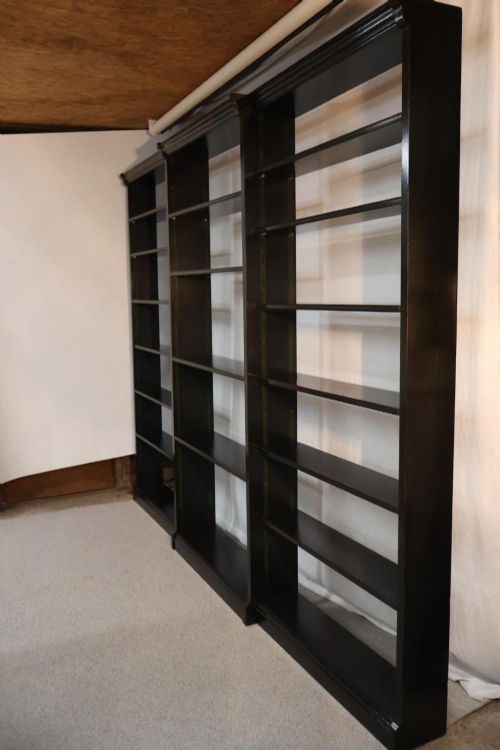
- Timber treated to imitate ebony through staining or painting. This dark finish appears on specific nineteenth century bookshelves.
Victorian Breakfront Shelves: Frequently Asked Questions
How do I adjust the shelves?
Most nineteenth century examples feature adjustable wooden shelves resting on traditional wooden ratchets, fixed pins, or vertical brass strips. Users lift the shelf slightly to reposition it within the interior slots.
Care should be taken when moving shelves in older hardwood carcases to avoid damaging the internal veneer linings.
Where were these pieces used?
These large cabinets originally stood in nineteenth century libraries, grand drawing rooms, and studies. Their substantial proportions suited high ceilings and spacious country houses.
Today, collectors place them in comparable reception rooms to house extensive book collections and display objects.
How do I identify walnut finishes?
Walnut furniture utilises plain timber or highly figured burr walnut veneers displaying distinctive swirling grain patterns. Makers often enhanced these surfaces with marquetry inlay and ormolu mounts.
Figured walnut appears prominently on mid-century breakfront cabinets and credenzas.