



Victorian Breakfront Dresser
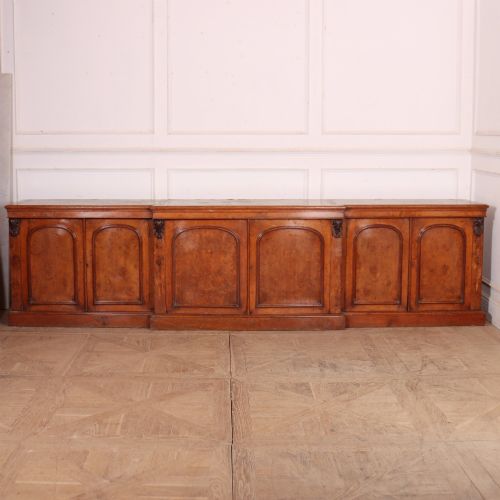
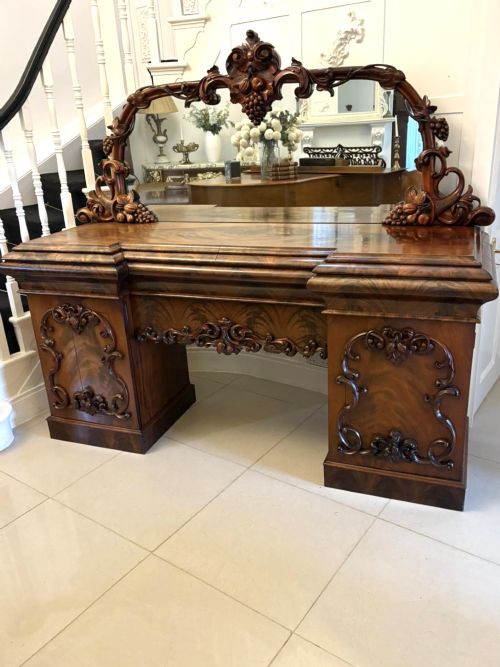
These Victorian breakfront dresser examples bring architectural presence and generous storage to a room through their distinctive projecting central sections.
Victorian Breakfront Dresser
A Victorian breakfront dresser combines the stepped forward central section characteristic of the breakfront form with the practical storage of a traditional base or sideboard. The listings and archive show these pieces appearing across the nineteenth century, running from eighteen fifty through to eighteen eighty, encompassing formal library furniture and vernacular country pieces alike.
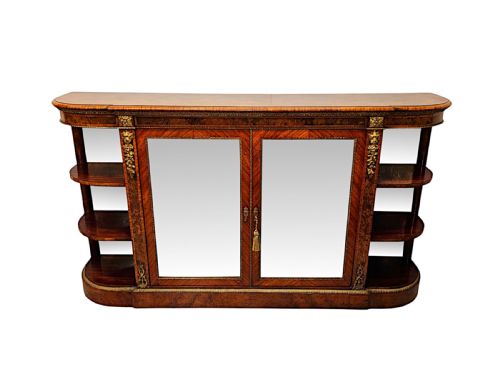
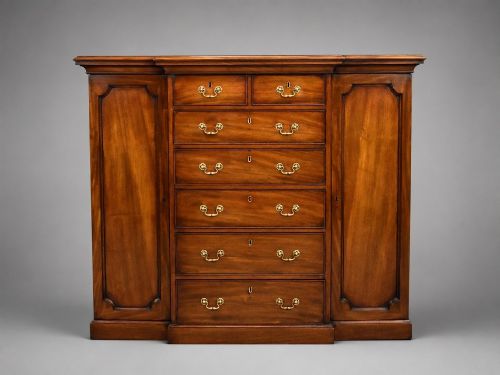
The form spans several distinct functional types rather than a single standardised design. On this page, buyers encounter sideboards, bookcases, desks, credenzas, and housekeeper cupboards that share the characteristic breakfront profile.
Makers and regional workshops produced these items in varying scales, from monumental carved oak library bookcases down to painted Irish and English country pieces. The common thread remains the tripartite division of the facade, where the central cabinet or drawer section advances ahead of the flanking wings.
Materials and construction methods
Makers relied heavily on solid hardwoods like mahogany and oak for structural integrity and formal presence, often selecting figured mahogany veneers or burr walnut to create striking visual movement across large drawer fronts and doors. Pine served widely for country pieces and carcass construction, frequently finished with original paint or left as plain timber.
Decorative detailing utilised traditional crafting techniques including intricate carvings, brass mounts, glass panels, and ormolu mounts as seen on select credenzas. Joints were hand-cut to endure heavy domestic or library use, accommodating substantial timber without warping.
Victorian Breakfront Dresser Retail Price Guide 2026
Typical asking prices for victorian breakfront dresser among the pieces listed under this phrase on Sellingantiques today, from the lower quarter to the upper quarter. They describe what is for sale here now, not the wider market.
Object types on record range from formal library bookcases and credenzas to country house sideboards, desks, and scullery cupboards.
Judging quality and craftsmanship
Quality rests in the selection of timber figures, such as highly figured mahogany or burr walnut, and the crispness of carved details like the intricate foliage found on nineteenth-century library pieces. Finer examples display meticulous attention to proportion across the projecting breakfront sections, ensuring the central doors or drawers align seamlessly with the flanking wings.
Maker attribution elevates certain pieces, with documented stamps from firms like Gillows or Howard and Sons demonstrating superior workshop standards and higher-grade hardware such as original ormolu mounts and brass fittings. Conversely, vernacular country pieces derive their appeal from honest patination, original painted surfaces, and robust utility rather than cabinet-making flourish.
Gillows·Gillow and Co·Howard and Sons
The Victorian Breakfront Dresser Glossary
- Breakfront
- An architectural cabinet form where the central section projects forward from the flanking wings. This creates visual depth and breaks up the flat facade of large sideboards and bookcases.
- Burr walnut
- A highly prized wood harvested from the wart-like growths on walnut trees, yielding turbulent, swirling grain patterns. Makers utilised burr walnut veneers on high-status Victorian cabinet doors and drawer fronts.
- Ormolu
- Finely ground high-carat gold-copper amalgam applied to bronze objects, used extensively for decorative mounts on nineteenth-century credenzas and cabinets. It provides a rich, metallic highlight against dark timbers.
- Figured mahogany
- Mahogany timber exhibiting natural pattern variations such as flame, fiddleback, or ripple. Cabinet-makers reserved these boards for prominent exterior surfaces to catch the light.
- Housekeeper cupboard
- A large, utilitarian storage piece designed for linen and provisions in large country houses. These sturdy cupboards frequently feature multiple doors and robust oak or pine construction.
Victorian Breakfront Dresser: Frequently Asked Questions
What rooms suit a breakfront dresser?
These substantial pieces anchor large dining rooms, libraries, and generous living spaces where their architectural presence and deep storage capacity can be fully appreciated.
Because the central section projects into the room, measuring floor space carefully ensures the piece maintains proper circulation and balance alongside other furniture.
How do I care for polished mahogany surfaces?
Maintenance requires regular dusting with a soft, dry cloth and occasional application of appropriate beeswax to nourish the timber and preserve the historic sheen.
Avoiding direct sunlight and excessive heat prevents the wood and underlying veneers from drying out or splitting over time.
Are painted finishes original?
Many country pieces retain early or original paint layers that provide an authentic matte surface texture developed over decades of domestic use.
Close inspection under natural light reveals the wear patterns and cumulative buildup characteristic of genuine historical paint rather than modern refinishing.