


Victorian Brass Wall Hooks
Victorian brass wall hooks bring practical utility and warm metallic character to hallways and boot rooms.
Victorian Brass Wall Hooks
Victorian brass wall hooks comprise individual mounts, pairs, and long rail racks designed for hanging garments and hats. These fixtures serve as both functional hardware and decorative elements within domestic spaces.
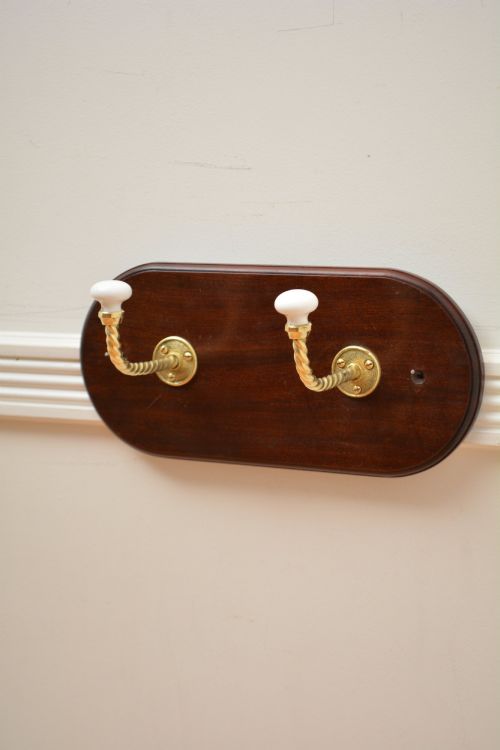
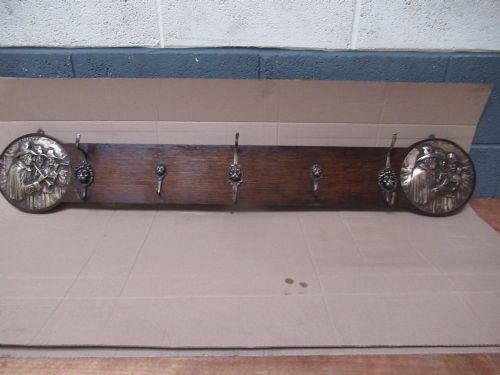
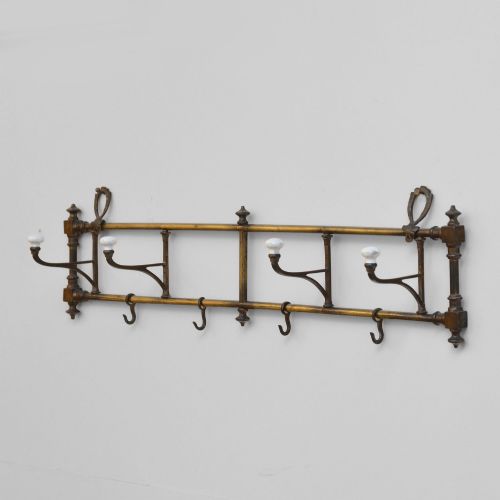
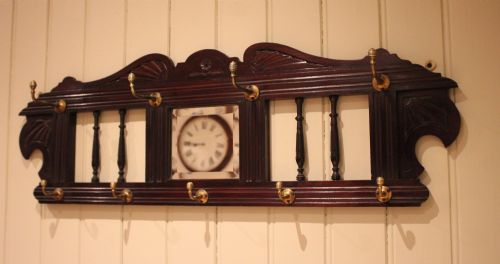
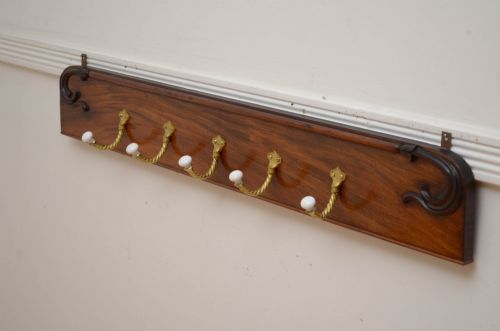
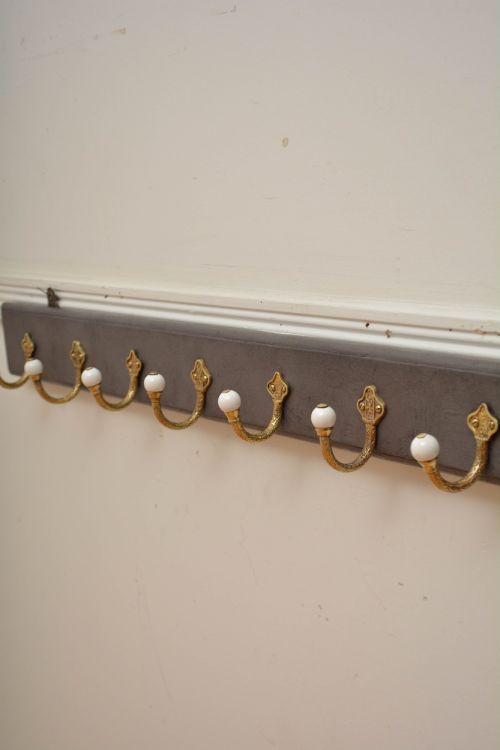
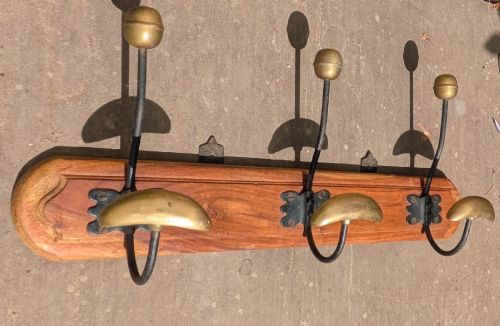
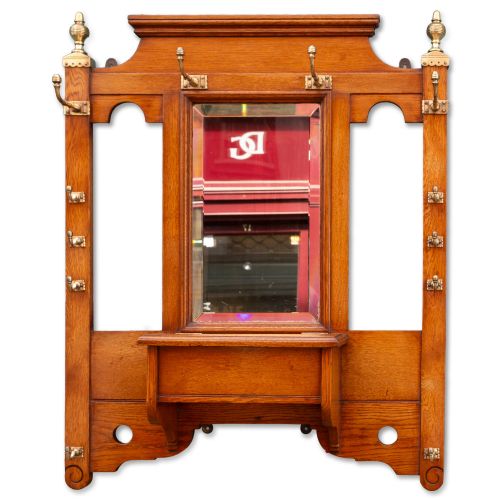
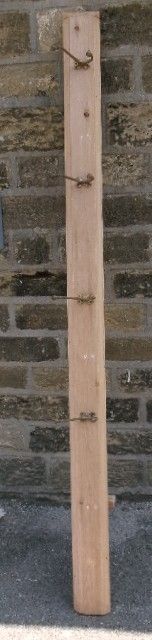
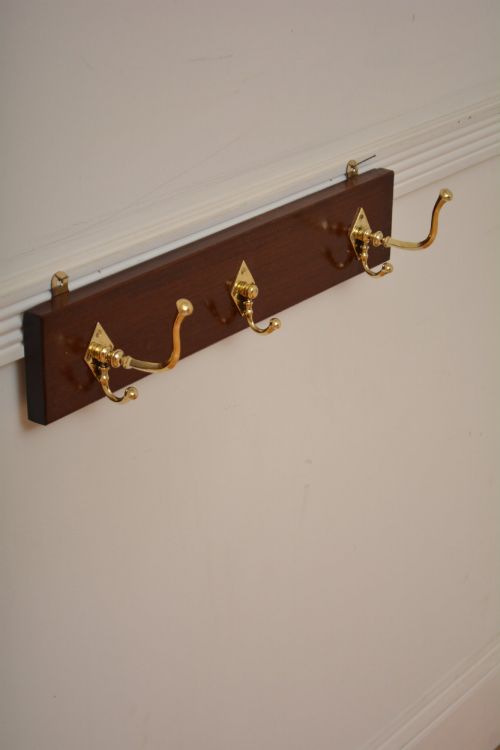
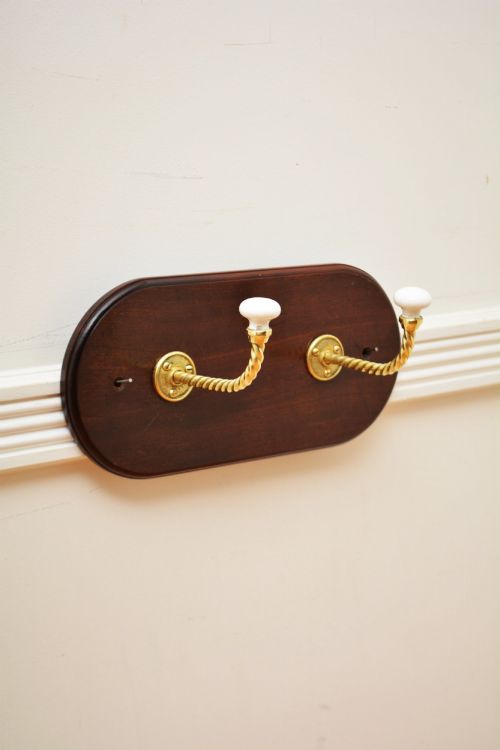
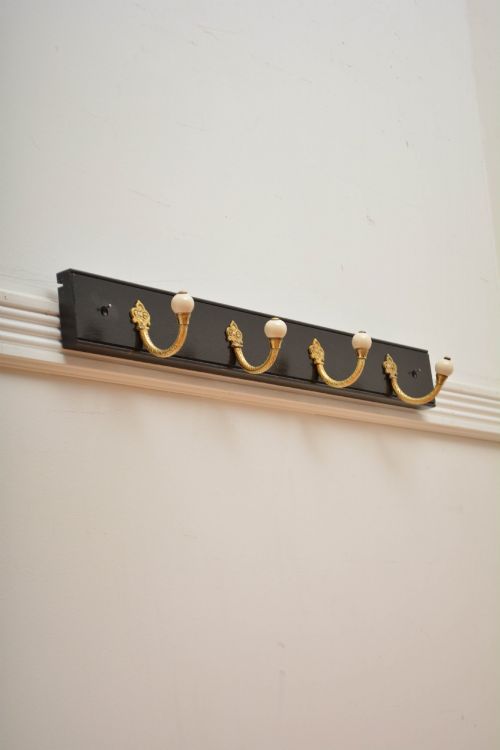
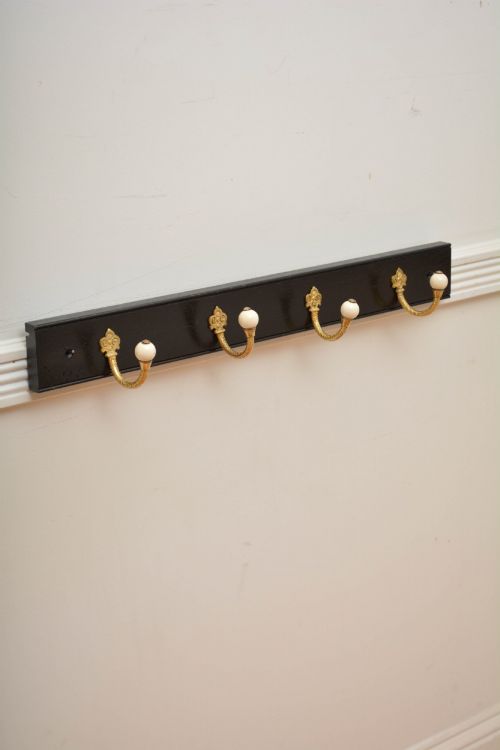
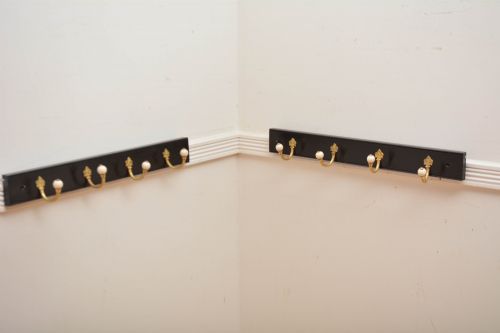
Buyers encountering this selection will find single hooks alongside substantial mahogany, oak, and pine backboards mounted with cast brass hardware. Many examples incorporate ceramic or porcelain knobs paired with the metal work.
The objects date primarily from the nineteenth century, spanning various British and continental European workshops. Regional variations include French portmanteaus and equestrian themed pieces alongside standard domestic coat racks.
Materials and Construction
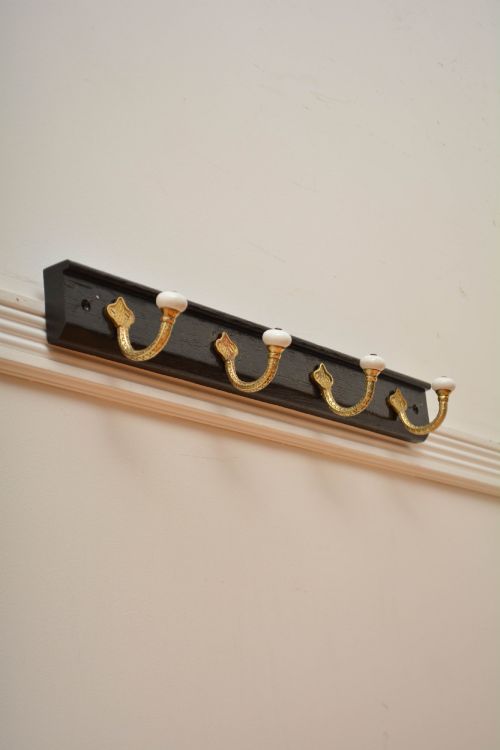
Makers cast brass and ormolu into intricate forms, often using chased detailing or sculptural motifs like dragons and horses. These metal components combine with dense timbers such as mahogany, oak, and ebonised wood.
Ceramic and porcelain elements feature prominently as terminal knobs or backplate inserts, secured directly to the metal shafts. Backboards utilise traditional joinery and mounting plates to distribute weight safely across walls.
Victorian Brass Wall Hooks Retail Price Guide 2026
Typical asking prices for victorian brass wall hooks among the pieces listed under this phrase on Sellingantiques today, from the lower quarter to the upper quarter. They describe what is for sale here now, not the wider market.
Gothic dragons grip the wall alongside everyday coat hooks and horse heads.
Assessing Quality and Craftsmanship
Superior examples display crisp casting definition in the brass work, with deep relief and well-defined chasing that remains sharp through years of use. Lesser pieces exhibit softer contours and shallower detailing from worn moulds.
The integration between the metal hooks and their supporting wooden backboards marks another distinction in standard. Original mounting plates, intact ceramic elements, and dense timber backings separate utilitarian hardware from finer decorative items.
Henri Picard
The Victorian Brass Wall Hooks Glossary
- Ormolu
- Gilded bronze applied to decorative hardware and mounts during the nineteenth century. This technique provides a rich, golden surface finish.
- Portmanteau
- A wall-mounted rack incorporating hooks and often a shelf or mirror for hallway use. These larger fixtures combine multiple brass brackets on an extended backplate.
- Ebonised
- Wood treated with a dark finish to imitate expensive ebony. This dark ground contrasts sharply with polished brass fixtures.
- Aesthetic Movement
- A late nineteenth century design style emphasising visual beauty over narrative subject matter. Pieces from this movement often feature refined brass and timber combinations.
- Chased
- Metal decorated by hammering or punching directly onto the surface to create textured patterns. This hand-finishing adds depth to cast brass hooks.
Victorian Brass Wall Hooks: Frequently Asked Questions
How are these wall hooks mounted?
Most wall-mounted racks and individual hooks utilise pre-drilled screw holes through the backplate or timber rail for secure attachment to walls.
Heavier portmanteaus and multi-hook rails require solid wall fixings to support the weight of heavy coats and hats safely.
Can these hooks hold heavy coats?
Substantial cast brass and ormolu hooks mounted on sturdy wooden backboards possess the structural strength required for heavy garments.
Single hooks fixed directly to plaster require appropriate wall anchors to ensure they remain secure under daily loads.
How do I clean antique brass?
Gentle dusting with a soft cloth preserves the natural patina accumulated over the nineteenth and early twentieth centuries.
Aggressive metal polishes should be avoided to protect any original lacquering, chased details, and adjacent wooden or ceramic components.
What is an equestrian hook?
Equestrian hooks incorporate horse heads, riding crops, or horseshoe motifs directly into the brass or wooden mounting design.
These pieces reflect Victorian sporting interests and typically served in country house boot rooms for riding gear.