



Victorian Brass Stationery
Victorian brass stationery pieces bring desktop organisation into focus with metalwork bindings, campaign boxes and correspondence cabinets.
Victorian Brass Stationery
Victorian brass stationery items encompass desktop accessories designed to hold letters, paper and writing instruments securely. Buyers encounter various forms on this page, including stationery boxes, writing slopes, letter racks and correspondence cabinets.
Most pieces date from the nineteenth century, emerging in periods such as the eighteen-fifties and eighteen-eighties. Workshops utilised domestic and exotic timbers alongside cast or bound metalwork to create functional containers for the desk.
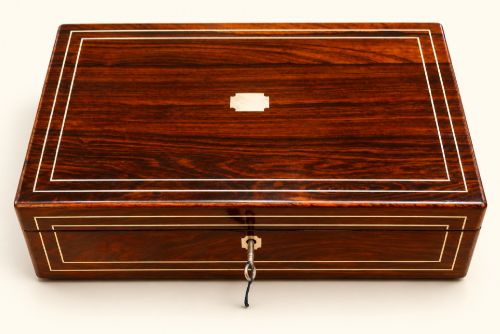
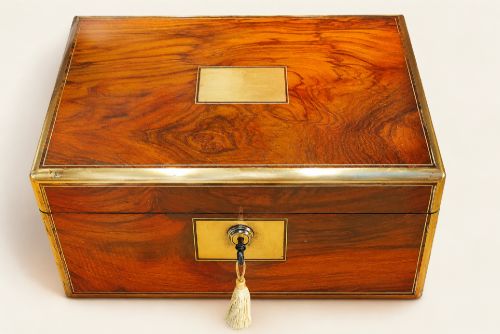
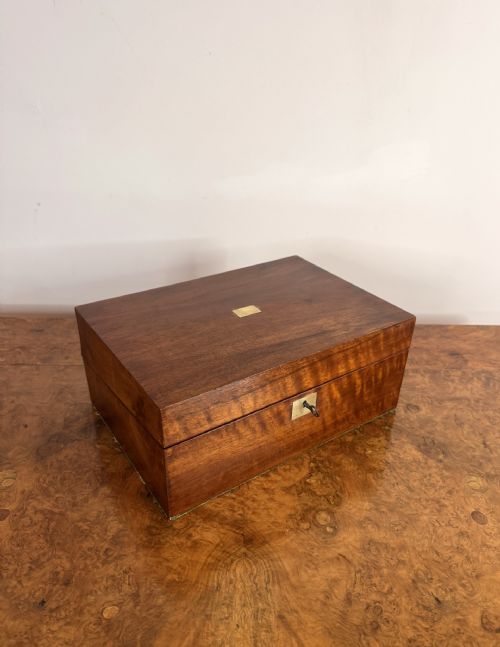
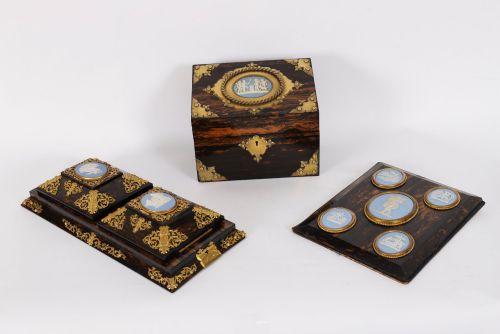
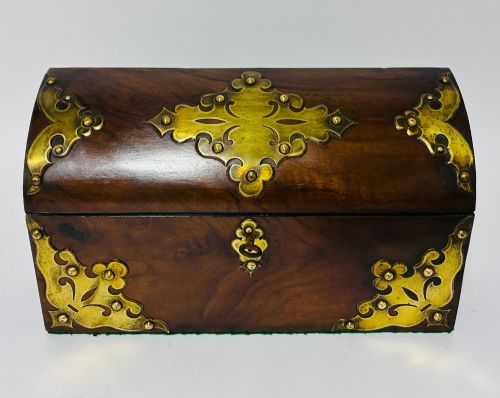
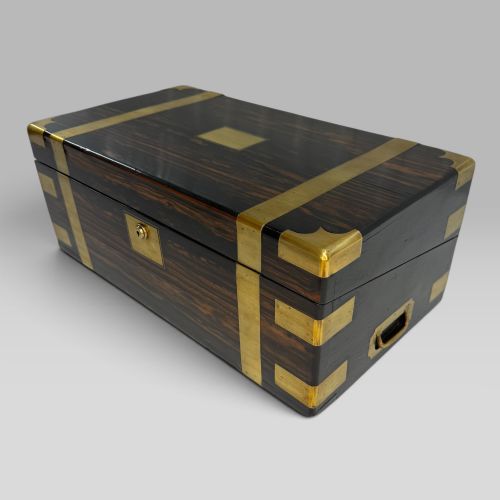
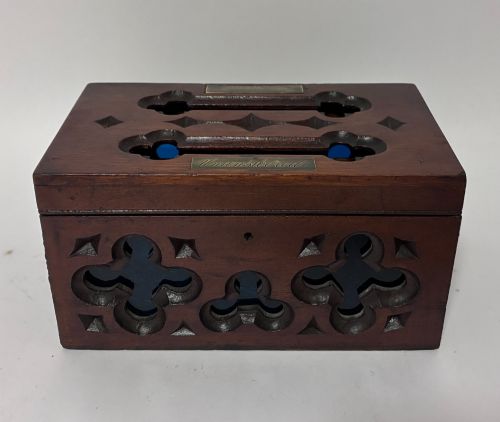
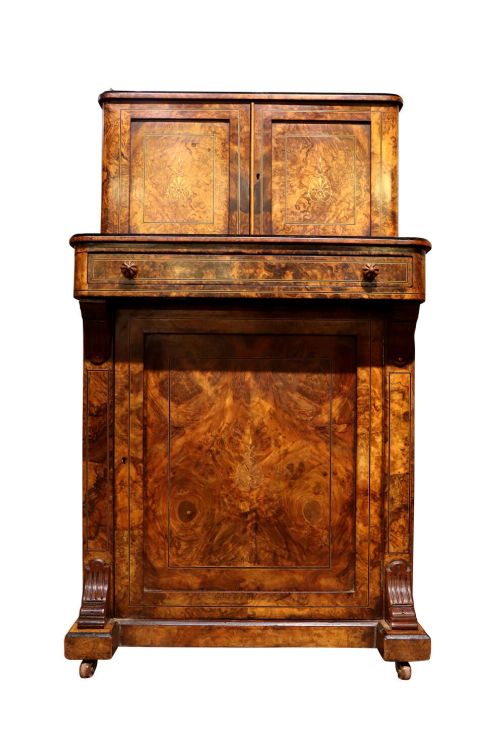
The selection includes campaign boxes, Gothic Revival correspondence boxes and bureau de dame forms. Walnut, mahogany and coromandel provide the primary wooden structures, accented with brass mounts, strapwork and inlay.
How they were made
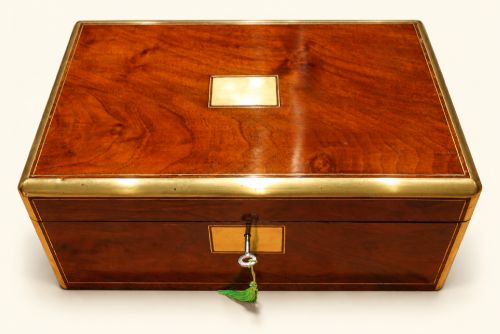
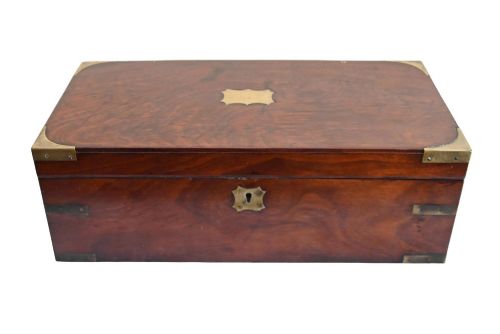
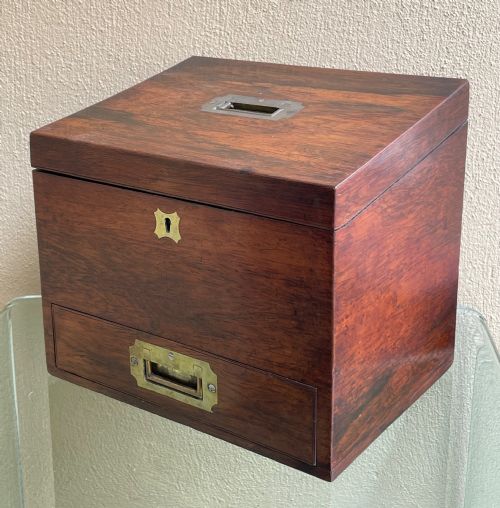
Craftsmen built these items using dense timbers like walnut, mahogany, rosewood and coromandel, often framing the bodies with solid brass corners and straps. Campaign styles utilised flush brass mounts to protect edges during transit.
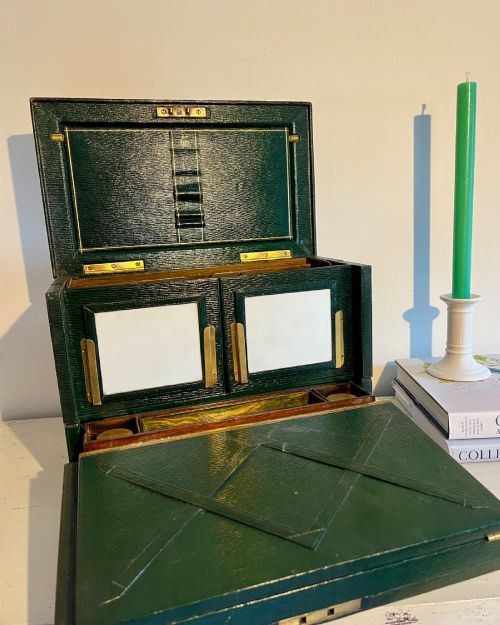
Inlayers embedded brass stringing directly into timber surfaces, while founders cast decorative elements such as ormolu mounts, perpetual calendars and letter racks in brass and bronze. Interiors frequently incorporated fitted compartments, tooled leather, glass inkwells and secret drawers.
Victorian Brass Stationery Retail Price Guide 2026
Typical asking prices for victorian brass stationery among the pieces listed under this phrase on Sellingantiques today, from the lower quarter to the upper quarter. They describe what is for sale here now, not the wider market.
Listings feature 19th-century materials including walnut, mahogany, coromandel, brass, glass, leather and camphor wood.
What varies in quality
Quality rests in the precision of the cabinet work and the weight of the metal components. Heavier cast brass mounts, substantial corner brackets and thick timber veneers distinguish superior stationery boxes and writing slopes from simpler versions.
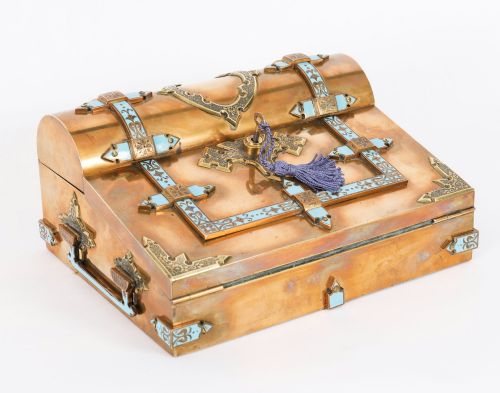
Refined pieces display complex internal fittings, secret drawers, engraved brass plaques and integrated locking mechanisms like Bramah locks. The integration of decorative details such as enamel, jasperware, agate cabochons or mother of pearl elevates the execution.
Edwards and Jones·William Tonks of Birmingham
The Victorian Brass Stationery Glossary
- Writing Slope
- A portable desk featuring a slanted writing surface that folds down to enclose compartments for paper and pens. These boxes often feature brass binding and secret drawers.
- Stationery Box
- A desktop cabinet or casket designed to store folded letters and writing paper upright. They frequently incorporate sloping tiers and hinged lids.
- Campaign
- Furniture and accessories built for travel, characterised by sturdy construction and flush brass corners designed to resist knocks. These items originated for military use.
- Ormolu
- Gilded bronze or brass mounts applied to furniture and boxes for decorative effect. This technique was popular during revival periods.
- Coromandel
- A dense, dark exotic timber with distinctive contrasting grain, frequently utilised for high-end Victorian boxes and desk sets.
Victorian Brass Stationery: Frequently Asked Questions
What is a stationery box?
A stationery box is a desktop container designed to hold writing paper, envelopes and correspondence neatly upright. These boxes often feature hinged lids and tiered wooden compartments.
Victorian examples frequently pair timber bodies like walnut or coromandel with brass mounts, campaign handles and glass or ceramic ink accessories.
How were writing slopes used?
Writing slopes served as portable desks for correspondence before the widespread use of fitted household writing tables. Users placed them on tabletops to write letters while storing stationery inside.
Inside, folding writing surfaces revealed hidden compartments, inkwells, pen trays and secret drawers for private papers.
What woods appear in these pieces?
Makers constructed these items using a variety of domestic and imported timbers suited to fine cabinet work. Mahogany, oak and walnut provide sturdy structures for campaign boxes and cabinets.
Figured grains, burr walnut, rosewood and coromandel appear on decorative items, often enhanced with brass inlay, banding and mounts.
How do you date Victorian brass pieces?
Dating relies on stylistic clues, construction methods and recorded maker details found on the pieces. Gothic Revival designs, campaign brasses and specific wood choices point to distinct decades within the nineteenth century.
Inscribed plaques, maker marks such as William Tonks of Birmingham, and patented lock types help narrow down the manufacturing period.