


Victorian Brass Post Box
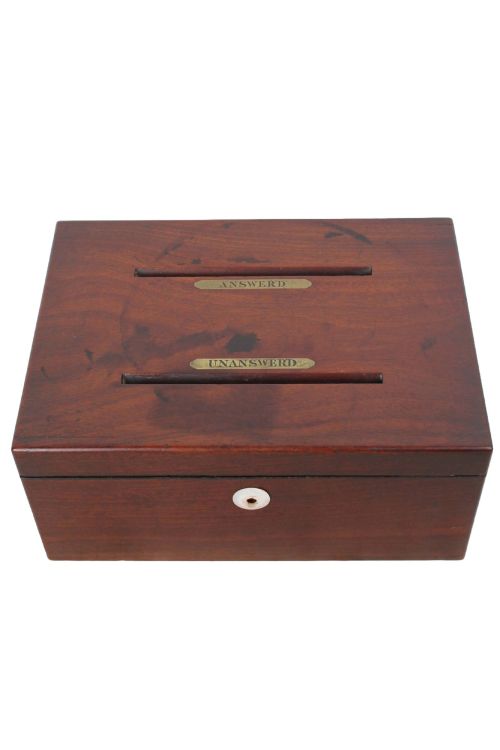
These Victorian brass post box pieces are solid domestic postal containers from country houses and hotels that bring genuine period character to a desk.
Victorian Brass Post Box
A Victorian brass post box is a functional correspondence container designed for country houses, hotels, and large households during the nineteenth century and the Edwardian era. You will most frequently encounter country house letter boxes alongside desktop accessories such as postal balance scales and stamp boxes.
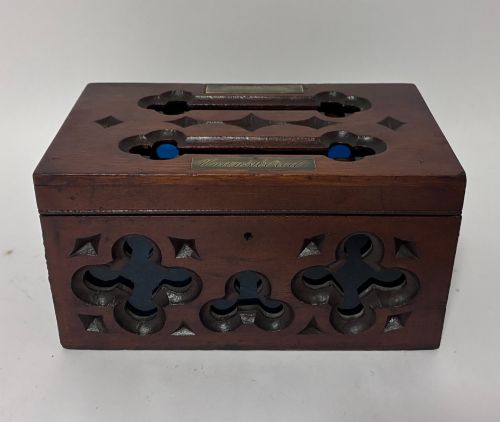
The objects span periods from the mid-nineteenth century up to nineteen hundred, encompassing Victorian, Gothic Revival, and Arts and Crafts styles. They take the form of letter boxes, correspondence boxes, and postal boxes intended for desk use or wall mounting.
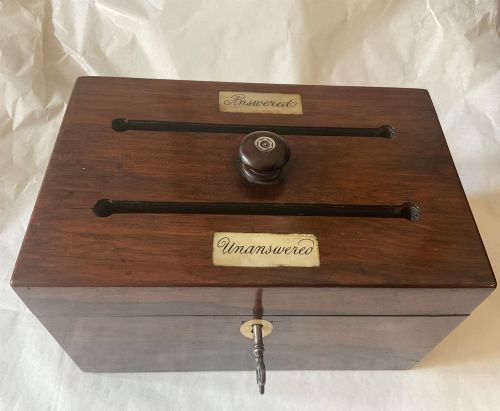
The selection ranges from simple wooden desk containers with brass mounts to substantial mahogany and golden oak house letterboxes. Each piece reflects the domestic correspondence habits of a period before daily residential postal collections became standard.
How they were made
These items are constructed primarily from timber bodies of oak, mahogany, and general wood, paired with heavy brass mountings and occasional glass panels. Craftspeople combined cabinetmaking techniques with metalworking, mounting brass plates, hinges, and slot surrounds onto the wooden carcasses.
Details include bone elements and fabric linings, alongside specialised compartments for correspondence. The brass components are cast and polished, securing the wooden structures that house the daily mail.
Listings feature items spanning the Victorian and Edwardian periods, utilising oak, mahogany, brass, glass, and bone.
What varies in quality
Quality differences lie in the selection of timber and the weight of the brass fittings, distinguishing utilitarian hotel models from decorative country house pieces. Substantial golden oak and figured mahogany bodies with integrated brass letter slots demonstrate finer workshop execution.
The architectural detailing, such as Gothic Revival influences or Arts and Crafts framing, separates standard production boxes from more ambitious desktop accessories.
The Victorian Brass Post Box Glossary
- Correspondence box
- A desktop container specifically designed to hold writing paper, envelopes, and incoming or outgoing post. These often feature internal dividers and hinged lids.
- Postal box
- An enclosed receptacle for collecting mail within a large residence or establishment before collection. It usually incorporates a slotted brass letter plate.
- Gothic Revival
- An architectural and decorative style drawing inspiration from medieval forms, visible in pointed arches and heavy metal mounts on nineteenth-century pieces.
- Arts and Crafts
- A design movement emphasising handcraftsmanship and simple, honest construction using natural materials like golden oak.
- Postal balance
- A scale designed for weighing letters to calculate correct postage, frequently found alongside desk boxes in period collections.
Victorian Brass Post Box: Frequently Asked Questions
Where were these post boxes used?
These boxes served within large country houses, hotels, and substantial Victorian residences to gather daily correspondence before collection.
They sat upon desks or hung on walls to keep household mail organised.
How do I tell Victorian from Edwardian pieces?
Victorian examples often display heavier ornamentation, Gothic Revival elements, or rich mahogany timbers dating from the mid to late nineteenth century.
Edwardian pieces leaning toward nineteen hundred frequently utilise golden oak with simpler Arts and Crafts lines.
What materials are typical?
The primary materials combine sturdy hardwoods such as oak and mahogany with heavy cast brass hardware and mounts.
Secondary elements occasionally include glass viewing panels, bone details, and internal fabric linings.
How do I care for a wooden post box?
Keep the wood conditioned with appropriate furniture wax and maintain the brass with gentle cleaning to preserve the metal finish.
Avoid placing the box in direct sunlight or near heat sources to protect the timber.