



Victorian Brass Lap Desk
A victorian brass lap desk is a portable timber writing box reinforced with metal corners and straps, built for travel and correspondence.
Victorian Brass Lap Desk
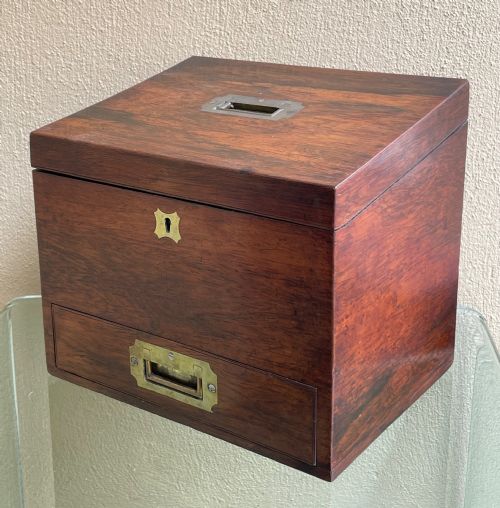
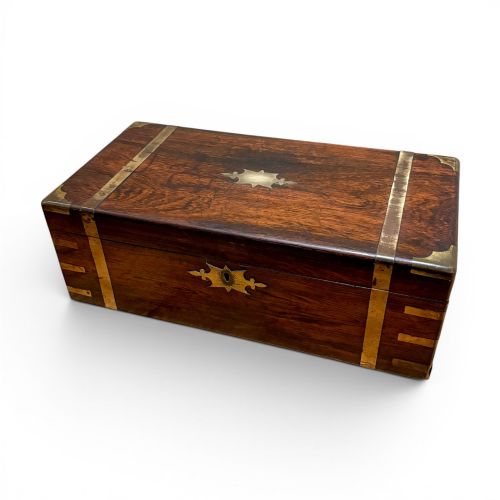
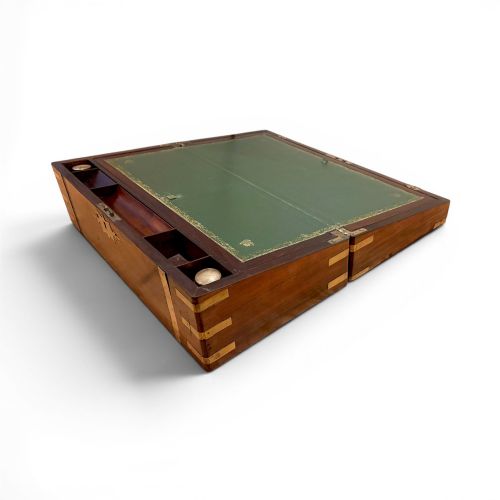
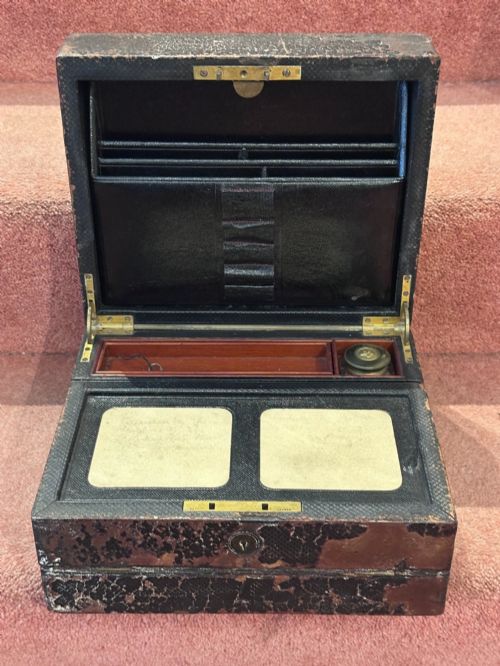
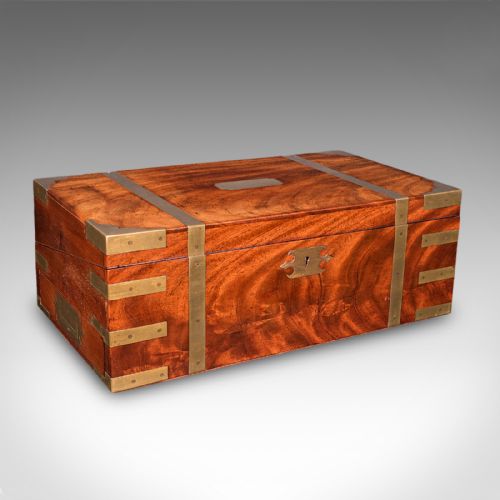
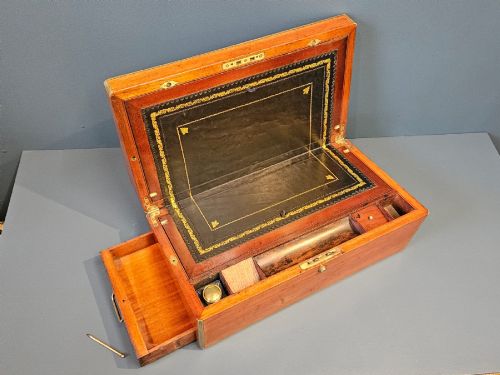
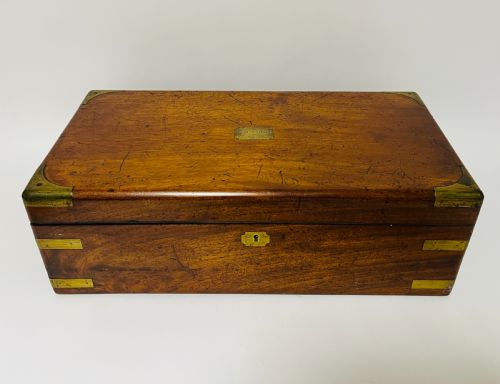
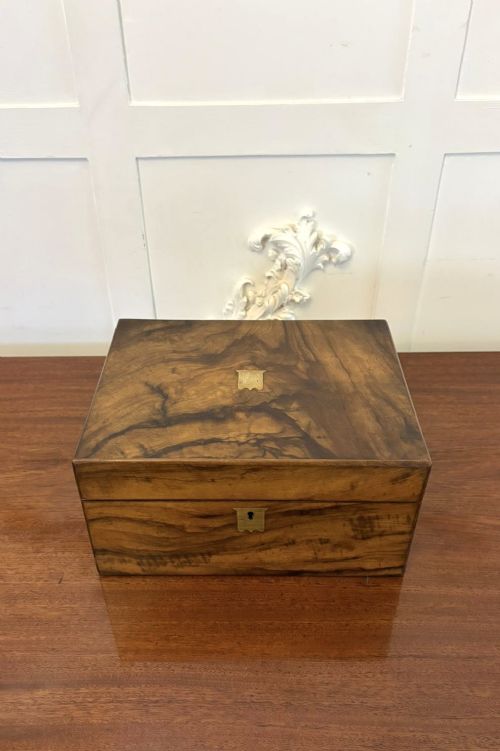
A victorian brass lap desk typically takes the form of a hinged timber box that opens to reveal a sloping writing surface lined with leather. Buyers encounter mahogany, rosewood, and walnut variants most frequently, often reinforced with brass binding and corner braces for durability during travel.
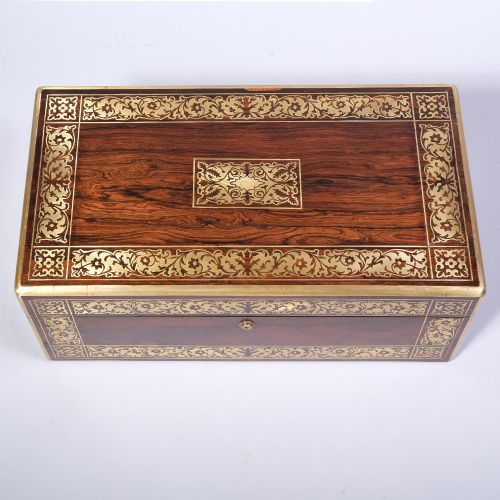
Many examples incorporate fitted interiors with compartments for inkwells, pens, and paper, alongside concealed secret drawers accessed beneath the stationery slots. The surviving pieces range from plain campaign boxes designed for military officers to highly decorative inlaid models intended for domestic use.
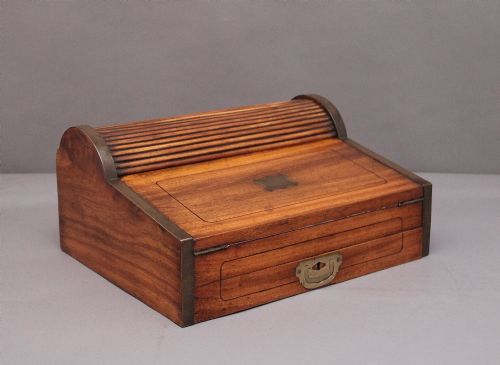
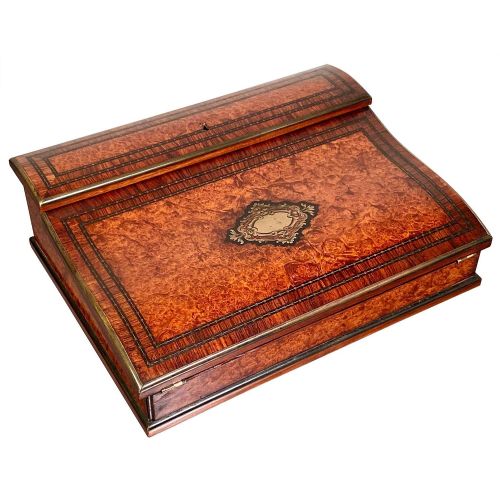
Origins span the nineteenth century, encompassing Georgian and Regency antecedents as well as later Victorian productions. The selection includes specialised forms such as correspondence boxes, stationery storage units, and metamorphic camp desks with multiple folding sections.
Assessing Quality and Execution
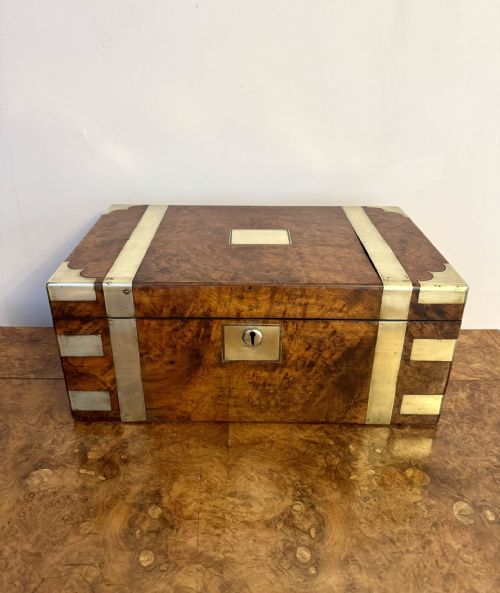
Quality reveals itself in the selection of timber grain and the precision with which brass inlay or corner banding is fitted flush to the wood. Superior boxes utilise richly figured veneers like burr walnut or pollard oak and maintain tight joints that withstand seasonal humidity changes.
The sophistication of the internal mechanism distinguishes standard utility boxes from high-status pieces. Finely made examples feature secret drawer release springs, integrated brass candle sconces, quality leather writing surfaces, and robust locks with original working keys.
The site listings feature nineteenth-century writing boxes constructed from mahogany, rosewood, coromandel, and camphor wood.
Briggs 27 Piccadilly London
The Victorian Brass Lap Desk Glossary
- Campaign slope
- A portable writing box designed for military officers on active service. These pieces usually feature recessed brass carrying handles and reinforced corners.
- Bramah lock
- A high-security cylindrical lock patented by Joseph Bramah in the eighteenth century. They were frequently fitted to superior nineteenth-century writing boxes.
- Secret drawers
- Concealed compartments hidden behind removable panels or triggered by internal spring catches. They served to secure valuables and private letters.
- Escutcheon
- A protective metal plate surrounding a keyhole. On these boxes, they are typically made of brass and countersunk into the timber lid or front.
- Metamorphic
- Describing a box or desk that transforms through folding or sliding elements. Such pieces convert from compact travel chests into expanded writing stations.
Victorian Brass Lap Desk: Frequently Asked Questions
How were lap desks used?
Travellers and officers placed the closed box on a table or their knees, then unlocked and unfolded the hinged lid to create a slanted writing surface. This provided a stable platform for writing letters away from a permanent desk.
The interior compartments held paper, envelopes, sealing wax, and inkwells, keeping all correspondence supplies together in one portable container.
What is a campaign writing slope?
A campaign slope is a sturdy travel-version of a writing desk built to withstand the rigours of military movement. They feature brass bindings to protect the timber edges.
These pieces often include flush-fitting side handles for lifting and robust locks to secure contents during transport across rough terrain.
How do I find secret drawers?
Secret drawers are usually hidden behind false partitions within the stationery compartments or beneath the pen tray. Removing specific dividers often releases a spring or reveals a sliding panel.
Cabinetmakers designed these concealed spaces to store currency, private journals, and important documents safely away from casual view.
How do I care for wood and brass?
Keep the timber conditioned with appropriate wax polish and avoid placing the box in direct sunlight or near heat sources that could split the wood or dry the leather. Brass elements can be cleaned gently with a soft cloth to maintain their lustre without abrasive chemicals.
Checking the humidity of the room prevents the hardwood carcase and internal veneers from warping over time.