




Victorian Bookends
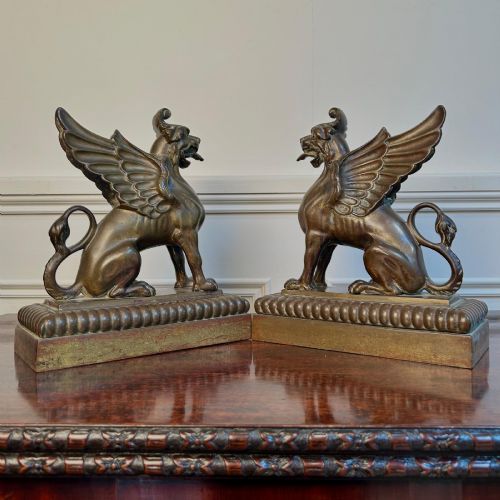
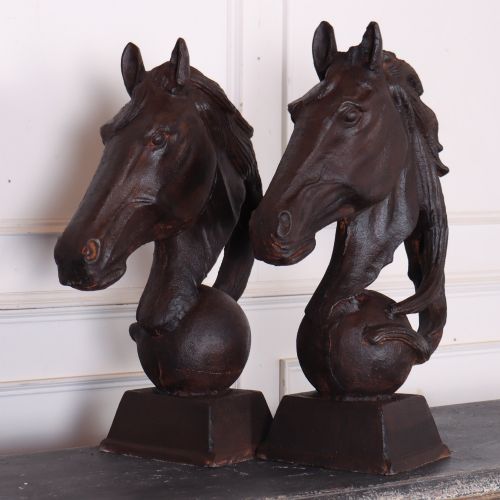
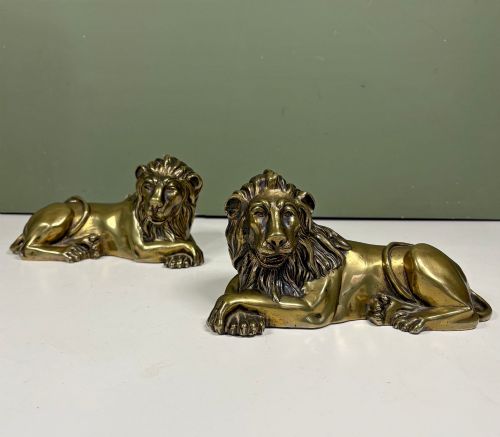
Victorian bookends steady heavy volumes with solid brass, carved wood and cast iron shaped into lions, griffins and architectural forms.
Victorian Bookends
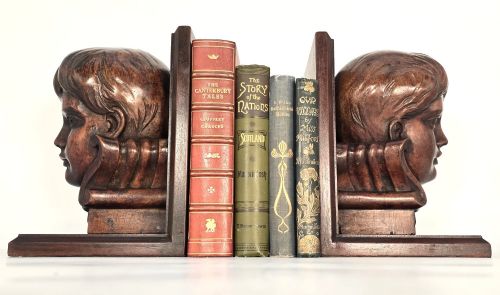
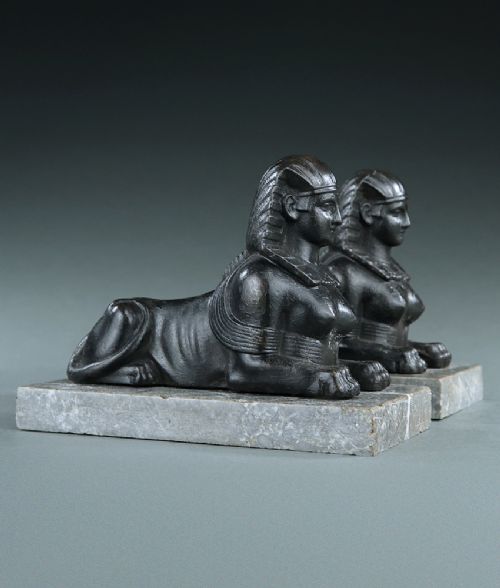
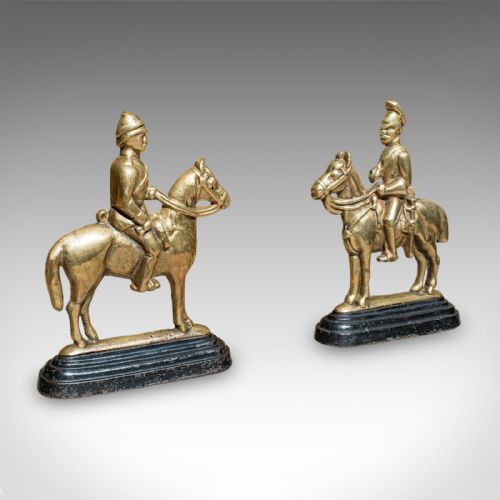
Victorian bookends include extending book slides and matched pairs of heavy objects designed to support upright rows of books on a shelf or desk. Buyers encounter cast metal figures, carved wooden animals and architectural stands dating from the nineteenth century and the Edwardian era.
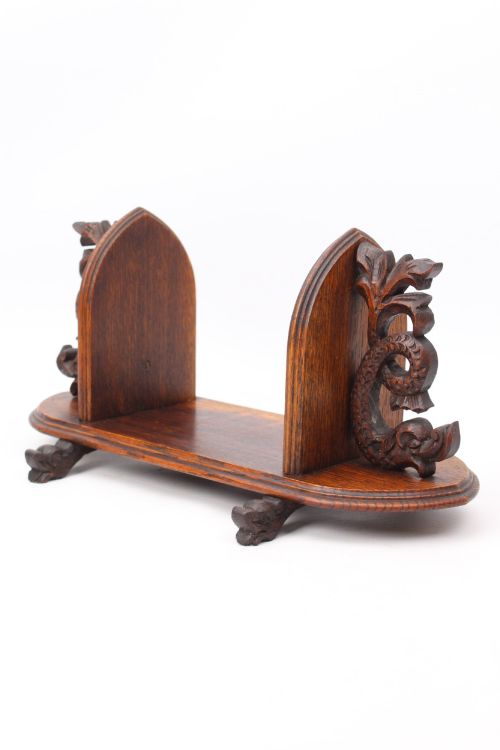
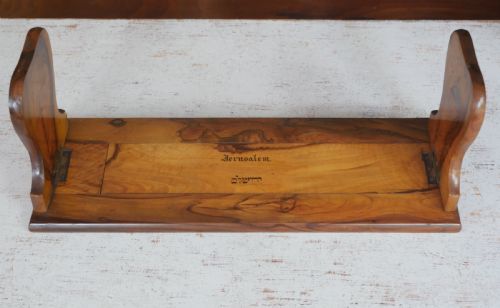
Extending book slides form a significant part of the selection, utilising hinged or sliding wooden mechanisms in walnut, olive wood and Tunbridge ware. These pieces adjust in length to hold varying numbers of volumes between decorative ends.
Materials and construction
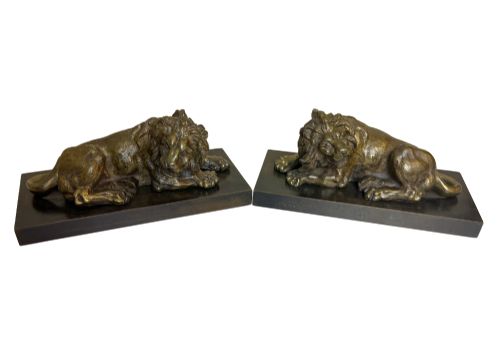
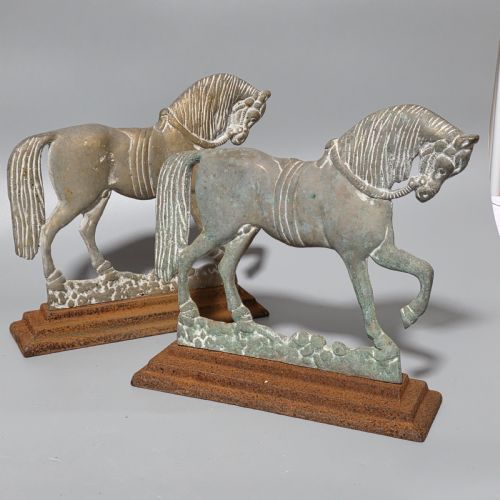
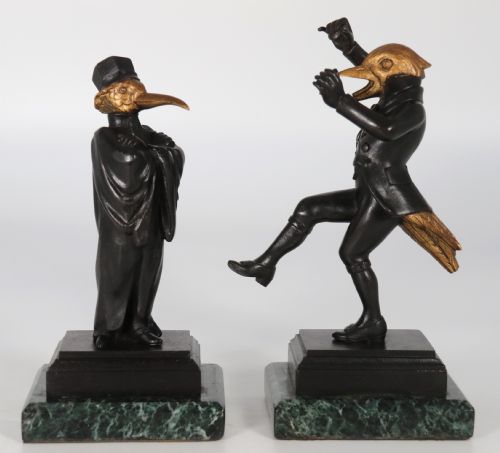
Metal items rely on bronze casting, brass mounting and cast iron fabrication to provide the necessary weight for supporting heavy books. Founders used sand casting techniques to produce detailed figures of sphinxes, horses and theatrical birds with patinated or painted finishes.
Wooden pieces combine solid timbers like oak, walnut, rosewood and exotic woods such as coromandel and olive wood with brass hinges and mounts. Tunbridge ware examples incorporate intricate micro-mosaic wood inlay to create decorative geometric patterns across the sliding book stands.
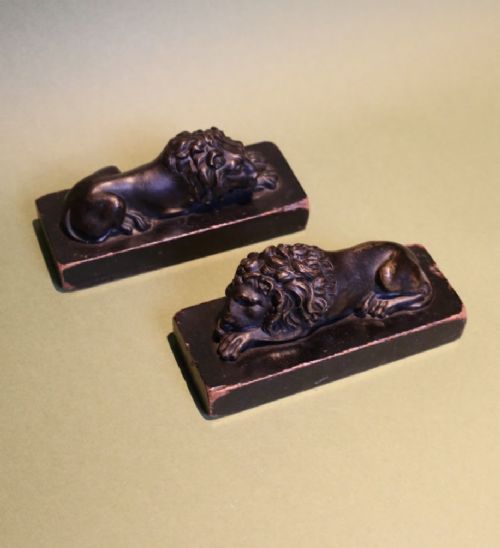
Ceramic and stone versions utilise earthenware with treacle glazes, soapstone, jade marble and terracotta. Potters and carvers shaped these materials into Staffordshire figures, Medici lions and Foo dogs, occasionally combining ceramic bodies with wooden or metal bases.
The inventory contains theatrical birds cast in bronze, proving that nineteenth-century desk accessories possessed a theatrical sense of humour.
Assessing quality
Quality depends upon the crispness of the casting in metal pieces and the depth of the carving in wooden examples. Finer items display sharp anatomical details on animal figures and precise joinery on extending book slides.
The choice of materials distinguishes standard production from exceptional work, particularly the use of dense exotic hardwoods, solid bronze rather than spelter, and high-grade brass mounts. Original mechanisms on sliding book stands that operate smoothly without binding indicate superior workmanship.
The integrity of decorative surface treatments, such as genuine micro-mosaic inlay in Tunbridge ware or hand-applied patination on bronze, separates ordinary items from those of notable manufacture.
Lancaster and Sons·Tiffany and Co·Betjemann
The Victorian Bookends Glossary
- Book slide
- An extending wooden stand with two upright ends designed to hold a variable number of volumes between them. The base expands or contracts to fit the shelf space.
- Spelter
- A zinc alloy commonly used as a cheaper alternative to bronze for sculptural figures. It takes patination well but lacks the weight and tensile strength of true bronze.
- Tunbridge ware
- Woodworking craftsmanship originating from Kent featuring minute mosaic tiles assembled from different coloured woods to form pictorial or geometric designs.
- Gothic Revival
- An architectural and decorative style drawing on medieval ecclesiastical forms. Pieces often display pointed arches, trefoils and heavy carved oak or mahogany.
- Treacle glaze
- A dark, translucent brown lead glaze applied to earthenware. It creates a glossy, reflective surface popular on nineteenth-century ceramic figures and lion bookends.
Victorian Bookends: Frequently Asked Questions
How do I use an extending book slide?
Pull the two wooden ends apart to accommodate the desired number of volumes between them. The inner sliding mechanism expands smoothly to support the row of books upright.
Place the slide on a sturdy shelf or desk where the base rests flat. Avoid extending the mechanism beyond its natural limit to protect the wooden runners.
Were these always sold as bookends?
Many items functioned originally as doorstops, door porters or decorative mantelpiece sculptures before being repurposed as bookends. Matched pairs of heavy metal animals were frequently cast for multiple domestic uses.
Book slides and dedicated book rests were manufactured specifically for domestic and institutional libraries. Their bases are designed to sit flush beneath the weight of volumes.
How do I care for wooden book slides?
Dust wooden surfaces regularly with a soft, dry cloth to prevent dirt accumulation in carved details and sliding grooves. Apply a light coat of quality furniture wax occasionally to nourish timber like walnut, oak and coromandel.
Keep wooden pieces away from direct heat sources and strong sunlight to prevent the wood from warping or cracking. Take care not to force stiff sliding mechanisms.
What is the difference between brass and bronze?
Bronze is an alloy of copper and tin that offers a heavier weight and a darker, richer patination suitable for detailed sculptural casting. It provides exceptional stability for supporting heavy volumes.
Brass is a copper and zinc alloy with a brighter golden colour. It was frequently used for mounts, hinges and cast figures, offering a polished finish that contrasted with dark woods.