

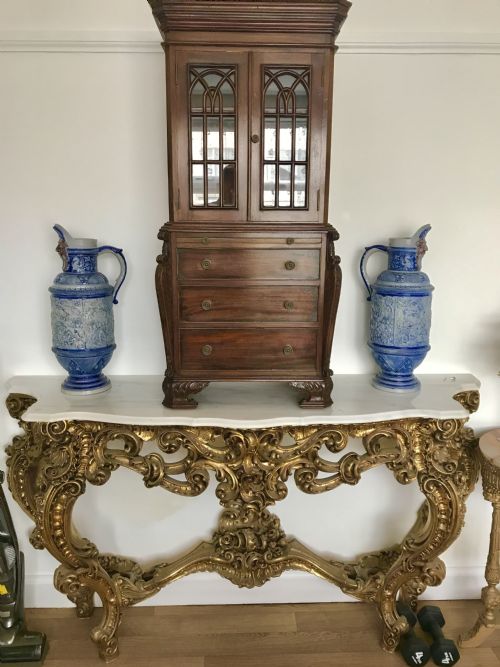

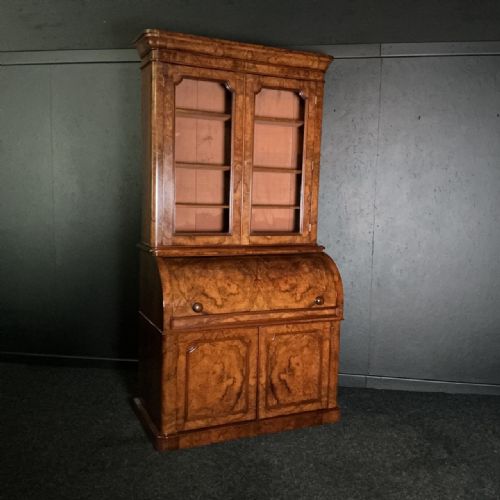


Victorian Bookcase Desk
A victorian bookcase desk combines a working writing surface with tiered shelving, offering a practical combination of study and display.
Victorian Bookcase Desk
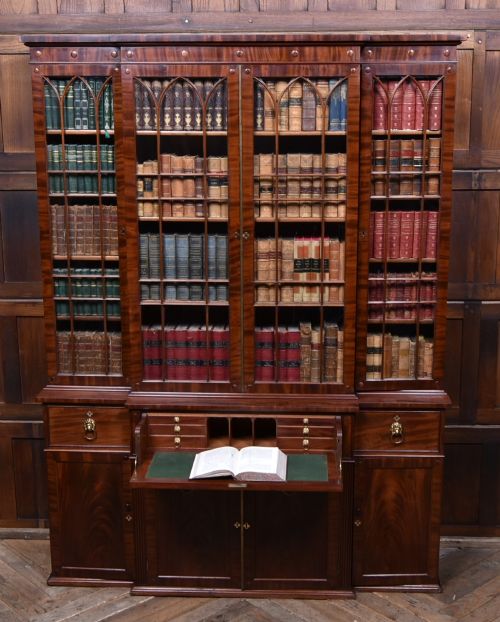
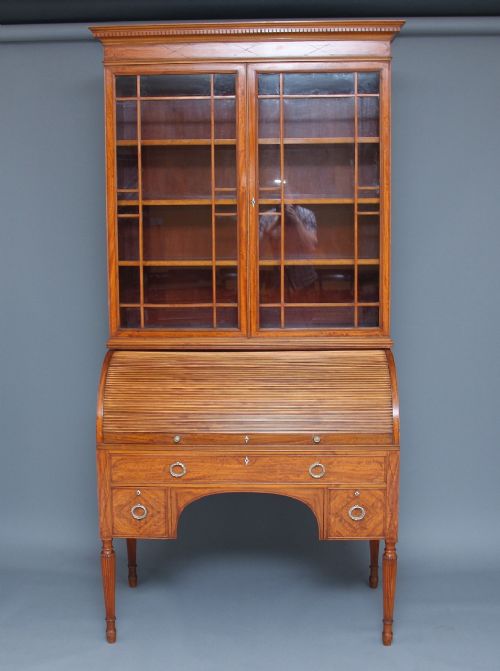
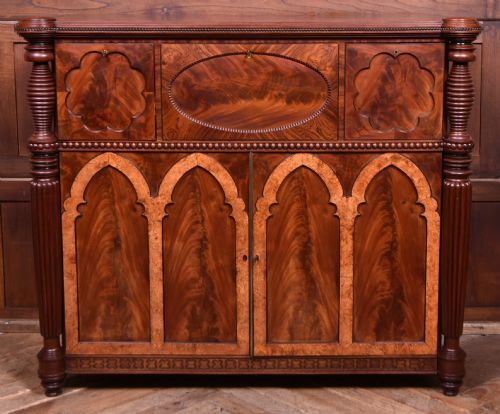
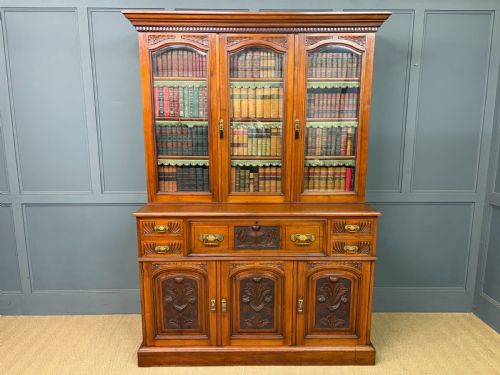
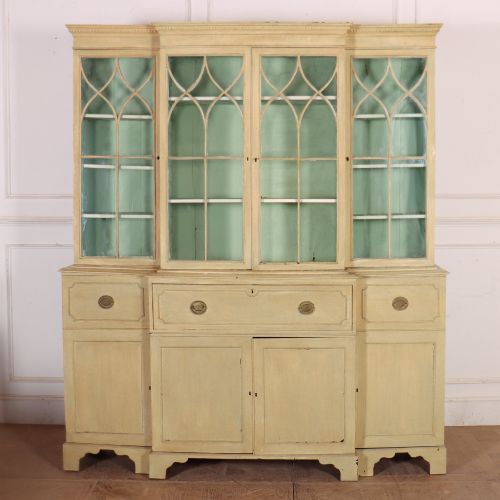
A victorian bookcase desk brings together a functional writing bureau and an upright shelving unit within a single piece of furniture. Buyers search for these items to anchor a study or library, providing concealed storage for stationery alongside glazed doors for displaying volumes. The listings show forms ranging from tall architectural cabinets to smaller cylinder-fronted variations.
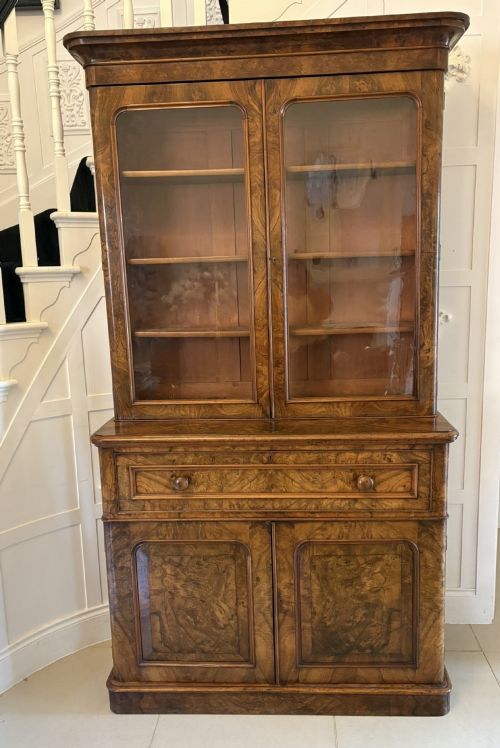
The most common formats met on this page include mahogany and walnut secretaire bookcases, alongside cylinder-fronted models and oak bureau bookcases. Many date from the nineteenth century, spanning periods from early Victorian decades through late Victorian production. Pieces emerge in styles such as Regency, Gothic Revival, and Arts and Crafts.
Materials and Construction Methods
Cabinet makers relied heavily on hardwoods such as mahogany, walnut, burr walnut, and oak to build the primary carcass and shelving. Selected veneers added decorative grain patterns across drawer fronts and cylinder lids, whilst secondary timbers formed internal drawer linings and backboards.
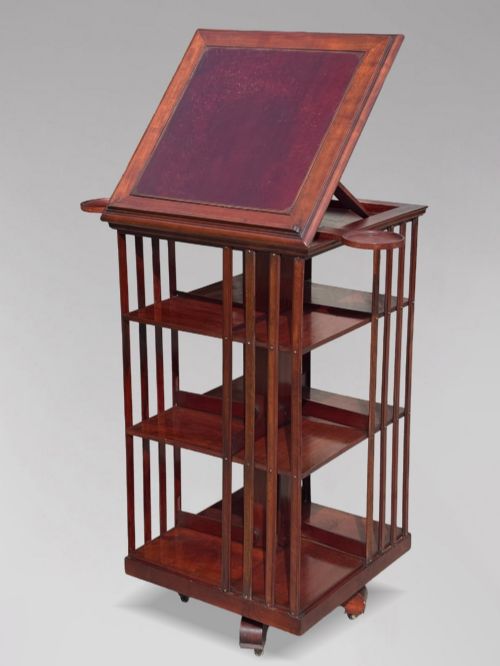
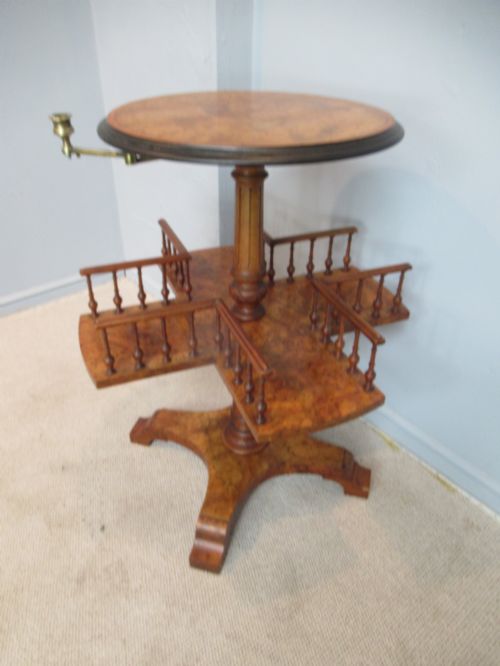
Glazing bars divided glass panels in upper bookcase sections, and brass hardware such as handles, hinges, and panels secured doors and drop-down writing flaps. Leather inserts frequently lined writing surfaces, and specialised mechanisms operated cylinder desks or revolving bookstands.
Victorian Bookcase Desk Retail Price Guide 2026
Typical asking prices for victorian bookcase desk among the pieces listed under this phrase on Sellingantiques today, from the lower quarter to the upper quarter. They describe what is for sale here now, not the wider market.
One listed item is a miniature mahogany bureau bookcase reduced to a quarter size as an apprentice furniture sample.
Distinctions in Quality
Quality rests upon the selection of timber figures, such as highly figured burr walnut or pollard oak veneers applied symmetrically across primary surfaces. Superior examples demonstrate precise cabinet joinery, smooth operation of internal cylinder mechanisms, and well-fitted secretaire drawers that slide without binding.
The architectural presence of the upper bookcase, from carved ornamentation to fine glazing bar proportions, separates standard utilitarian pieces from exceptional workshop productions. Original hardware, intact leather writing surfaces, and balanced proportions further elevate the standing of a piece.
Edwards & Roberts·Gillows·Morris & Co·George W Jack·Harris Lebus
The Victorian Bookcase Desk Glossary
- Secretaire
- A piece of furniture containing a drawer or drop-front compartment fitted with a writing surface and small pigeonholes. This drop-down flap conceals the working desk area when not in use.
- Cylinder
- A curved, quarter-circle wooden shutter that slides back into the body of the desk to reveal a pull-out writing slide and fitted interior. It operates on tracks recessed into the sides of the cabinet.
- Escritoire
- An upright writing cabinet with a fall-front desk flap, originating from French forms and serving a similar function to a bureau. It provides vertical storage paired with a writing surface.
- Ormolu
- Gilt-bronze decorative mounts applied to furniture, common in French revival pieces of the nineteenth century. These metal details accent corners, cornices, and door panels.
- Glazing bars
- The wooden strips that hold individual panes of glass within a cabinet door. Fine arrangement of these bars creates geometric patterns across the bookcase front.
Victorian Bookcase Desk: Frequently Asked Questions
How do I use a secretaire drawer?
A secretaire drawer pulls out like a standard chest drawer, but the front hinges downward to horizontal position. This action reveals an inner writing surface covered in leather or wood, backed by small compartments for letters and ink.
To close the desk, you lift the writing flap back to vertical and push the entire drawer shut. Many designs include an internal lock to secure the writing compartment while leaving the bookcase doors open.
How do I tell if a piece is Victorian?
Dating a piece to the Victorian era involves examining the timber types, construction techniques, and stylistic influences. The listings show a prevalence of mahogany, walnut, and oak timbers used across the nineteenth century, often reflecting periods like the 1850s, 1860s, or 1880s.
Stylistic cues also provide guidance, such as Gothic Revival detailing, Arts and Crafts influences, or French revival mounts. Examining internal secondary woods and hand-cut dovetails helps confirm nineteenth-century manufacture.
Where should I place a large bookcase desk?
Large bookcase desks require a stable wall with sufficient vertical clearance and floor space for doors or drop-fronts to open fully. Placing them away from direct sunlight and heat sources protects the timber and veneer surfaces from drying out.
Because these pieces combine heavy glazed upper cabinets with substantial lower desks, they benefit from level flooring. Rooms with traditional study or library layouts suit their architectural scale best.