




Victorian Bone Inlaid Box
When you search for victorian bone inlaid box, you find tactile wooden containers decorated with intricate bone or ivory geometric patterns and motifs.
Victorian Bone Inlaid Box
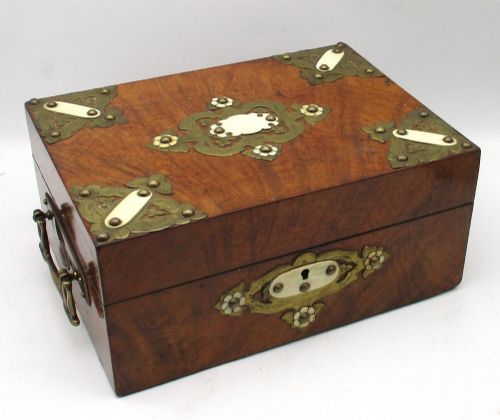
A victorian bone inlaid box takes several forms across nineteenth-century styles, including small snuff boxes, stationery boxes, writing slopes, and sewing boxes. These containers served practical purposes on desks and dressing tables while displaying decorative surface work.
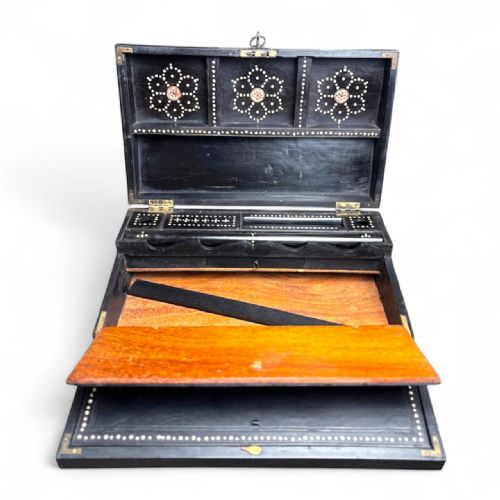
The pieces appearing here include domestic treen and foreign colonial items, notably Anglo-Indian productions alongside English folk art. Woods such as fruitwood, rosewood, and ebony provide dark contrast to the pale inlaid bone and ivory details.
What varies in quality
Quality depends upon the precision of the inlay work and the complexity of the geometric patterns. Pieces featuring tightly fitted Sadeli mosaic or extensive carved bone elements demonstrate superior craftsmanship compared to simpler linear borders.
The choice of foundational timber also influences the standing of the piece, with dense exotic hardwoods like calamander, coromandel, and ebony marking finer productions than plain fruitwood or standard softwoods.
Victorian Bone Inlaid Box Retail Price Guide 2026
Typical asking prices for victorian bone inlaid box among the pieces listed under this phrase on Sellingantiques today, from the lower quarter to the upper quarter. They describe what is for sale here now, not the wider market.
Some nineteenth-century makers fashioned small treen snuff boxes directly into the realistic form of ladies' feet wearing open-toed shoes.
The Victorian Bone Inlaid Box Glossary
- Treen
- Small handmade wooden domestic objects. These items range from snuff boxes to small treen sewing implements.
- Sadeli mosaic
- Microscopic geometric mosaic work associated with Anglo-Indian craftsmanship. Makers created these intricate patterns using bone, horn, and metal.
- Writing slope
- A portable slanted desk designed for correspondence. These boxes frequently contain fitted interiors for inkwells and pens.
- Vizagapatam
- A coastal Indian city known for luxury export boxes. Items from this region typically feature elaborate bone, ivory, and porcupine quill decoration.
Victorian Bone Inlaid Box: Frequently Asked Questions
What were bone inlaid boxes used for?
These containers held personal valuables, writing materials, sewing equipment, or tobacco products. Their decorative exteriors suited domestic display on desks, tables, and dressing chests.
Smaller versions like snuff boxes fitted easily into pockets, while larger stationery and work boxes remained stationary in the home.
How do I care for antique bone inlay?
Keep wooden boxes away from direct heat sources and sudden humidity changes to prevent the wood from shrinking and loosening the inlay. Dust gently with a dry, soft cloth and avoid chemical polishes.
Natural waxes can be applied sparingly to the timber parts if the wood appears dry, taking care not to trap wax within the bone crevices.
How can I tell Anglo-Indian boxes apart?
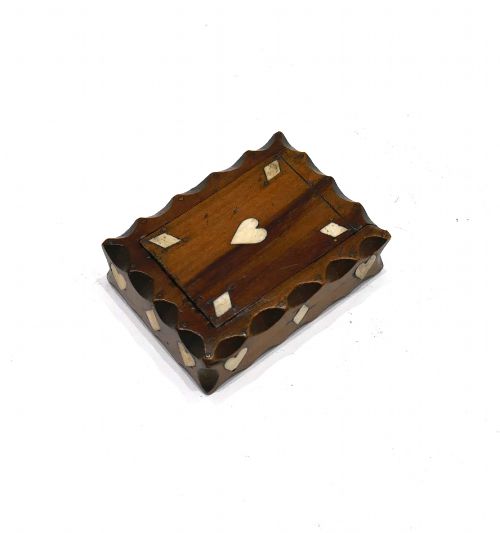
Anglo-Indian and Vizagapatam boxes often utilise exotic woods like sandalwood and ebony combined with porcupine quills, horn, and extensive bone or ivory panels. English examples tend to use native fruitwoods or rosewood with simpler inlaid hearts and diamond shapes.
The carving style and geometric complexity of the mosaic work also point towards specific regional workshops.
What is treen inlay?
Treen refers to small functional wooden objects, and when inlaid with bone, it describes domestic pieces decorated with contrasting pale geometric shapes. These items often display folk art characteristics rather than factory precision.
Common motifs on nineteenth-century treen boxes include inlaid bone hearts, diamonds, and linear stringing.