




Victorian Boat Ring
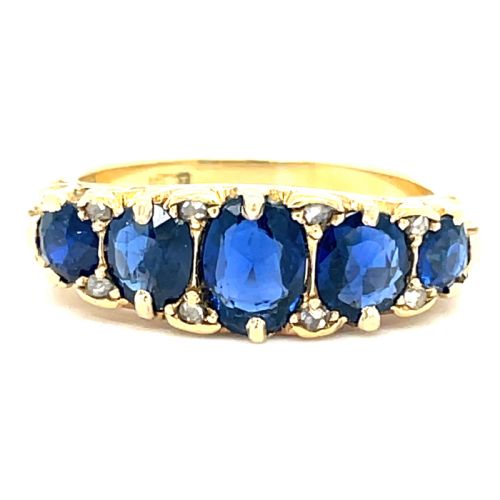
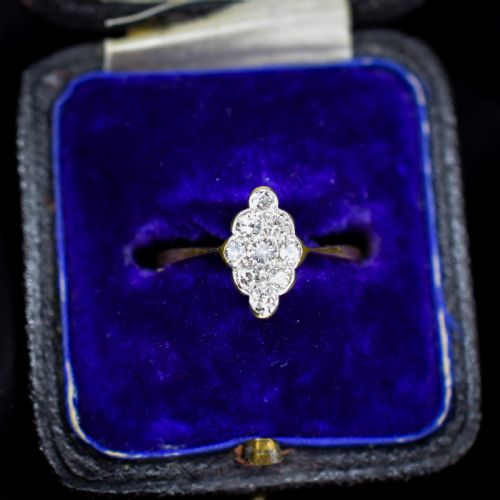
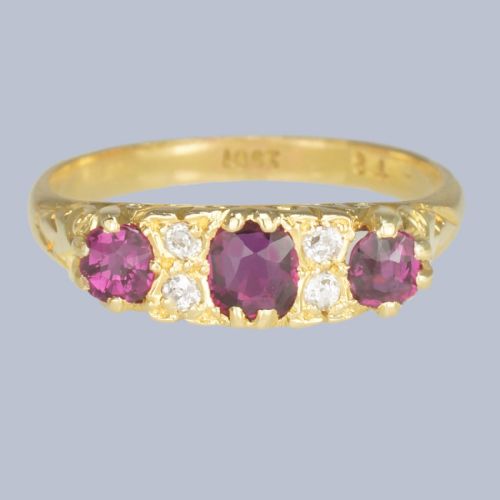
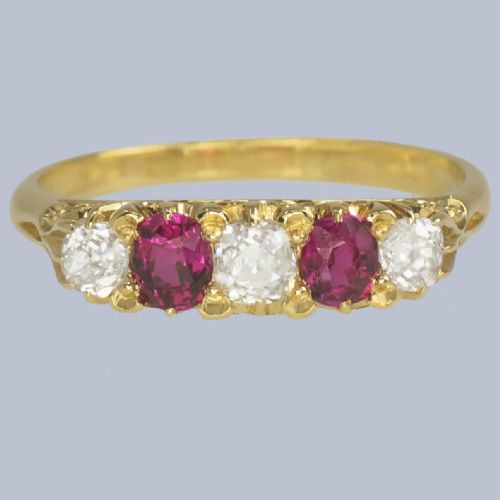
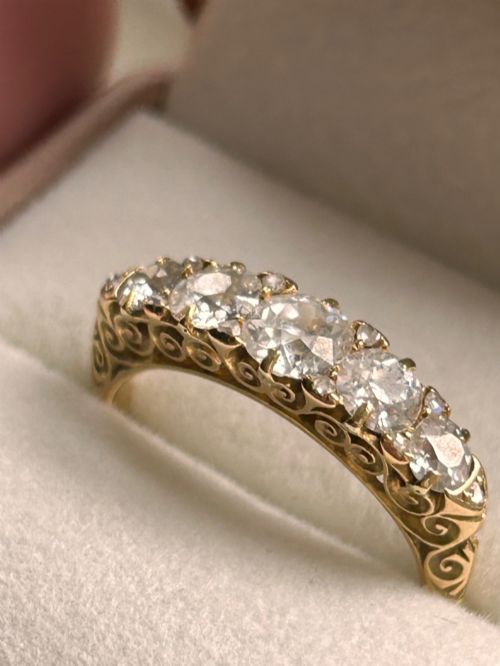
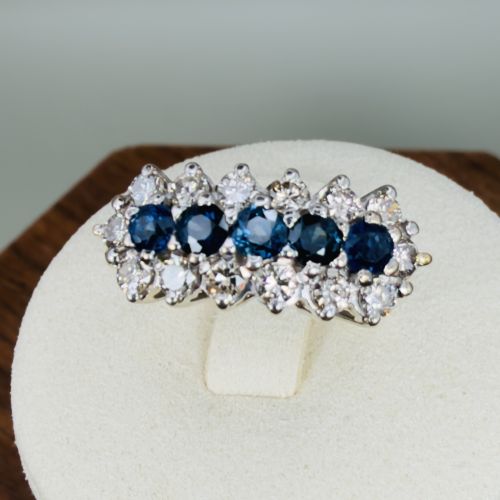
A victorian boat ring sits low on the finger, curved like a small hull and set with diamonds, rubies, or sapphires.
Victorian Boat Ring
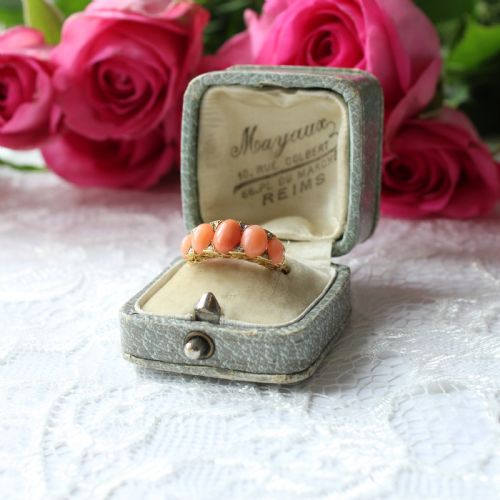
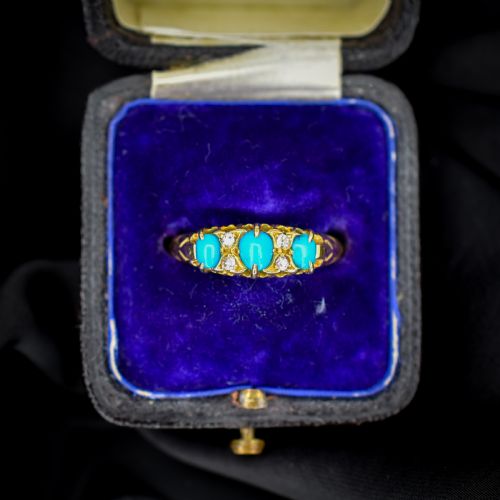
A victorian boat ring takes its name from the distinctive curved profile resembling the hull of a vessel, rising gently across the finger. These pieces frequently pair diamonds with vibrant rubies, sapphires, natural opal, turquoise, or coral.
Most examples found here date from the nineteenth century into the early twentieth century, spanning late victorian and edwardian periods. The design accommodates multiple stones in a graded setting, creating an elongated silhouette.
Makers shaped these bands primarily in 18ct yellow gold, sometimes mounting stones in platinum or silver over gold. The configuration ranges from five-stone rows to complex multi-gem clusters.
Materials and Construction
Goldsmiths utilised 18ct gold as the foundational metal for these rings, casting and hand-working the curved galleries to support the gems. Platinum and silver appear in specific mounts, particularly to enhance the whiteness around old-cut diamonds.
Gemstones including old mine cut and old cut diamonds, sapphires, and rubies were secured in claw, starburst, or flush settings. Hallmarks stamped in Birmingham and Chester record regional assay office origins.
An archive entry records a painted oil portrait of a young boy wearing a straw boater alongside antique gem rings.
Quality Variations
The distinction between tiers rests upon the choice of gemstones and the precision of the goldsmith's mounting. Fine natural rubies and sapphires with strong saturation elevate a piece above standard commercial outputs.
Structural integrity of the curved boat gallery and the matching wear of old cut diamonds define the better specimens. Hand-engraved shoulders and crisp assay hallmarks also indicate superior original manufacture.
The Victorian Boat Ring Glossary
- Boat ring
- A ring featuring a curved, boat-shaped setting that rises from the band. This silhouette accommodates a row or cluster of graduated gemstones.
- Old cut diamond
- A diamond cut by hand before modern machinery, possessing a smaller table, higher crown, and distinctively open culet. These stones catch candle or gas light with a soft, deep gleam.
- Navette
- A boat-shaped or eye-shaped silhouette that comes to points at either end along the finger. The term derives from the French word for a small shuttle.
- Gypsy set
- A setting style where stones are flush-mounted directly into the heavy gold band, hammered securely in place. This technique creates a smooth, continuous outer surface.
- Hallmark
- Official stamps struck into the metal indicating purity, assay office, and date of manufacture. British pieces frequently display town marks like Birmingham or Chester.
Victorian Boat Ring: Frequently Asked Questions
How do I wear a boat ring?
These rings sit low and long across the finger, following the natural contour of the hand. They function well worn alone as a statement piece or paired carefully with plain bands.
Because the curved setting extends along the finger, consider pairing with slim wedding bands to avoid excessive friction between adjacent rings.
Are these rings solid gold?
The listings show these rings constructed from 18ct gold, occasionally combined with platinum or silver settings for the gems. British assay marks often verify the gold standard.
Assay office stamps from Birmingham and Chester provide specific regional confirmation of the metal purity used by the maker.
How are periods identified?
Periods are determined through hallmarks, stylistic traits, and gemstone cutting techniques. Old mine cut and old cut diamonds point towards late victorian and edwardian eras.
Assay letters stamped inside the band provide exact dating codes corresponding to Birmingham or Chester office records.