

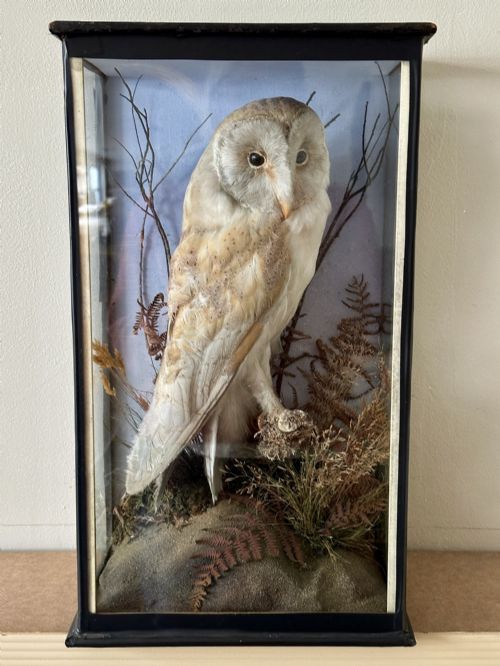
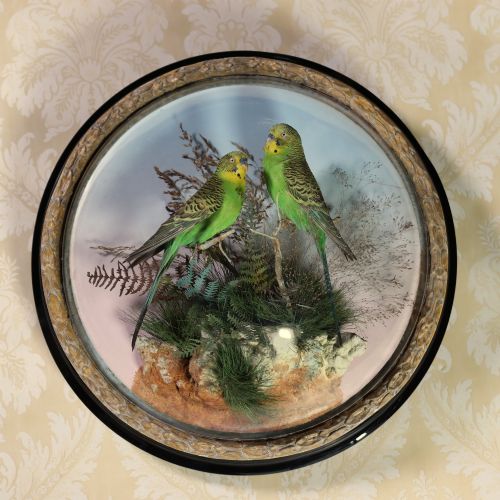
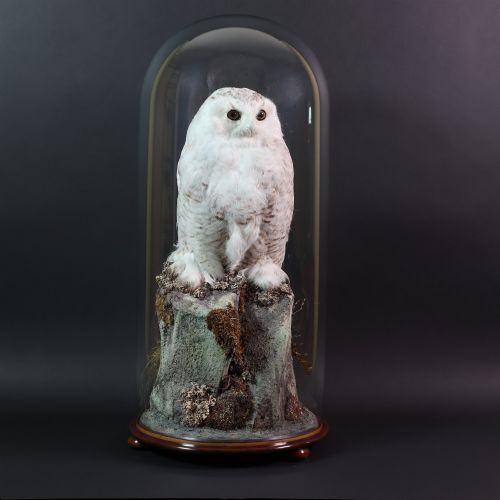

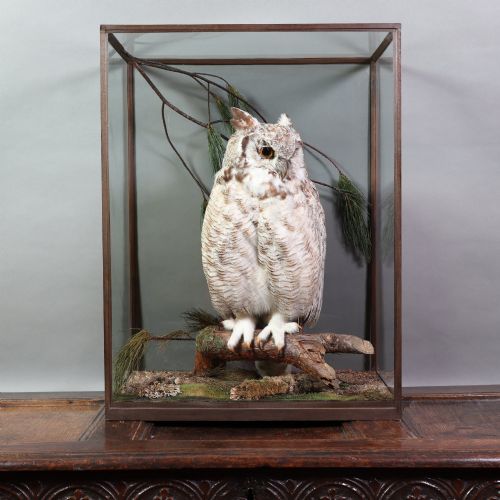


Victorian Bird Specimen
A victorian bird specimen captures the meticulous art of nineteenth-century taxidermy, preserved beneath glass domes or framed within wooden display cases to bring natural history directly into the parlour.
Victorian Bird Specimen
When you search for a victorian bird specimen, you encounter preserved creatures mounted singly or arranged in complex natural history compositions. These pieces date from the nineteenth and early twentieth centuries, spanning periods from the 1870s through the 1920s.
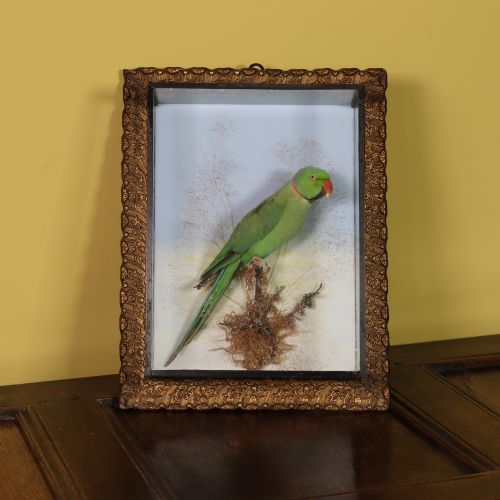
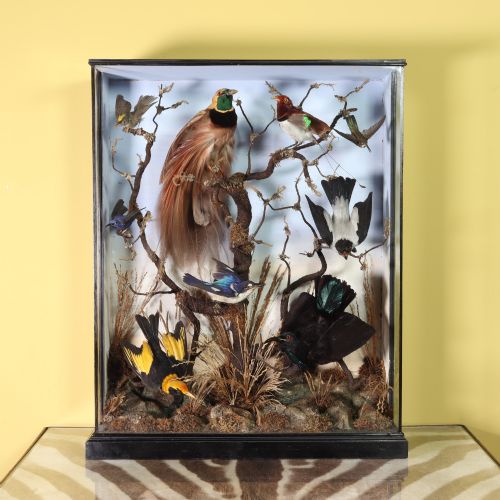
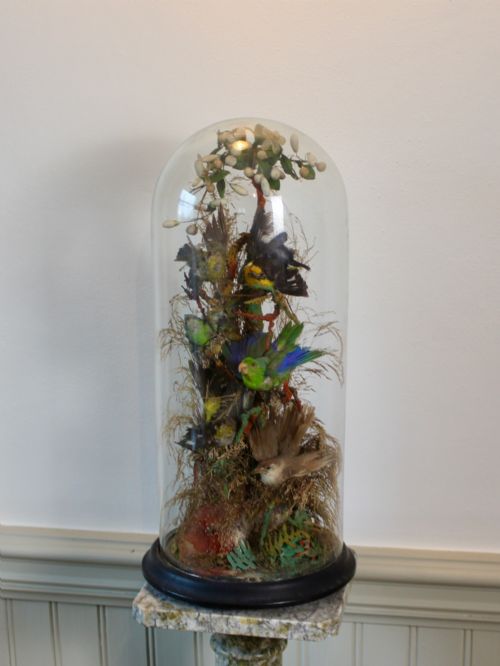
The most common formats on this page are taxidermy domes and glass display cases containing everything from single specimens like owls, pheasants, and herons to vibrant multi-bird arrangements featuring parakeets, birds of paradise, and exotic species from South America and Australia.
How they were made
Taxidermists constructed these displays using preserved specimens mounted over internal armatures, often accompanied by natural habitat elements such as moss and painted plaster. The resulting compositions were then enclosed to protect the delicate feathers from dust and decay.
Protective housings typically utilised blown glass domes resting on turned wooden bases made of mahogany, or wooden picture frame cases fitted with glass fronts. These enclosures preserved the fragile feathers and kept the staged scenes intact over decades.
Victorian Bird Specimen Retail Price Guide 2026
Typical asking prices for victorian bird specimen among the pieces listed under this phrase on Sellingantiques today, from the lower quarter to the upper quarter. They describe what is for sale here now, not the wider market.
Listings feature pieces dated across the 1870s, 1880s, 1890s, 1900s, 1910s, and 1920s, spanning the Victorian and Edwardian periods.
What varies in quality
The quality of a victorian bird specimen depends heavily on the skill of the taxidermist in rendering a natural posture and anatomical proportion. Master practitioners captured lifelike expressions and dynamic poses, whereas lesser work resulted in stiff or unnatural stances.
The complexity of the habitat composition and the clarity of the surrounding glass also distinguish pieces. Elaborate multi-species arrangements housed within large, high-quality mahogany bases represent the upper tier of this tradition.
P. Spicer of Leamington Spa·J Griffiths of Burford·Rowland Ward Ltd·William Bazeley & Sons·A Pollard·James Gardner·W.F. Homer London
The Victorian Bird Specimen Glossary
- Taxidermy Dome
- A blown glass cover resting on a wooden base that encloses a preserved animal specimen. This form protected delicate plumage while allowing clear all-round viewing.
- Display Case
- A wooden box with a glass front or top designed to house mounted birds and their artificial habitats. These protected cases were frequently hung on walls or placed on tabletops.
- Preserved Specimen
- An animal skin prepared and stuffed to mimic its living form for scientific study or decorative display. In nineteenth-century contexts, these served both educational and aesthetic purposes.
- Natural History
- The scientific study of animals and plants, which heavily influenced Victorian interior decoration. Specimens were displayed to celebrate global exploration and domestic scientific curiosity.
Victorian Bird Specimen: Frequently Asked Questions
How should I display a glass dome?
Place the dome on a stable surface away from direct sunlight, which can fade the delicate colours of the feathers over time.
Ensure the room maintains a steady temperature to protect both the antique wood base and the preserved specimens inside.
Are these specimens from the Victorian period?
The listings span the late nineteenth century into the Edwardian era and the 1920s, capturing styles that continued beyond Queen Victoria's reign.
Makers active during these decades produced both single mounts and elaborate multi-bird compositions housed in wooden cases and glass domes.
What birds appear in these displays?
Common subjects include British garden and wetland birds such as herons, moorhens, jays, and owls. Exotic additions like parakeets, budgerigars, and birds of paradise also feature prominently.
Some cases contain mixed compositions featuring species sourced from New Guinea, South America, and Australia.