



Victorian Bijouterie Box
A victorian bijouterie box brings small treasures into plain view, offering a glass-topped stage for rings, trinkets and keepsakes.
Victorian Bijouterie Box
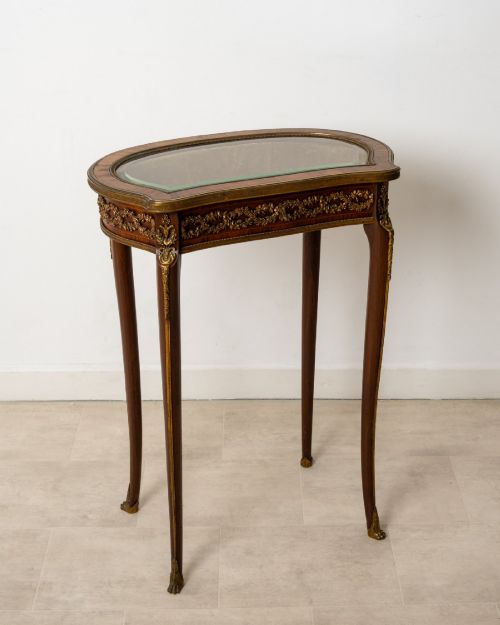
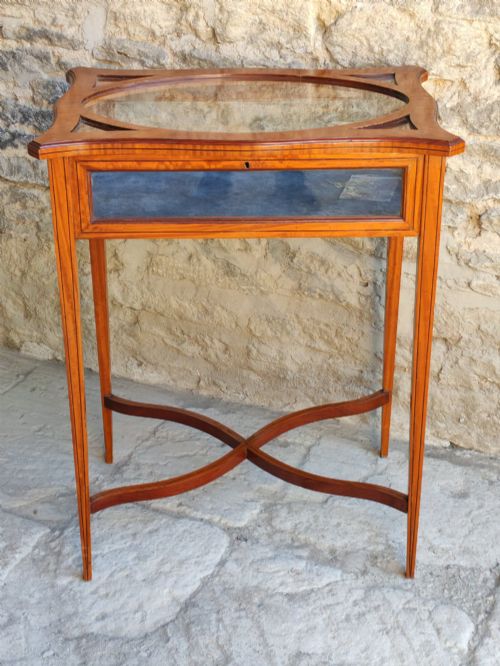
A victorian bijouterie box is primarily encountered here as a table-form display piece rather than a small portable case, raised on legs to show its contents from above. These items combine the functions of a miniature cabinet and a display surface, often built with glazed lids and sides to protect precious items while keeping them visible.
The pieces appearing on this page span the nineteenth century, including specific dates from eighteen sixty to nineteen hundred, alongside items assigned broadly to the Victorian era. Forms range from simple octagonal boxes and inlaid mahogany examples to elaborate French revival vitrines mounted in gilt bronze.
Materials and construction
Cabinet makers utilised dense hardwoods such as mahogany, rosewood, satinwood and kingwood as the structural carcass for these glazed display cases. Wood selection determined the grain character of the frame, providing a dark or golden contrast to the interior lining.
Metal mounts in ormolu, gilt bronze and brass added decorative framing to glazed panels and corners, while interior surfaces were finished in fabric and velvet to cushion displayed objects. Inlays of lighter timbers and brass lines frequently ornamented the exterior woodwork.
Victorian Bijouterie Box Retail Price Guide 2026
Typical asking prices for victorian bijouterie box among the pieces listed under this phrase on Sellingantiques today, from the lower quarter to the upper quarter. They describe what is for sale here now, not the wider market.
Listings feature mahogany, rosewood, satinwood and kingwood, paired with glass and ormolu mounts across Victorian and French revival styles.
Distinctions in quality
The calibre of a victorian bijouterie box rests upon the crispness of its cast ormolu mounts and the precision of its timber inlays. Finer specimens display complex joinery, such as octagonal geometries or intricate marquetry, executed in choice woods like kingwood and rosewood.
The integration of glass panels within sturdy frames and the quality of internal velvet or fabric linings further separate standard production from superior pieces. Scale also plays a part, with larger display tables demanding more robust framing to support their glazed tops.
The Victorian Bijouterie Box Glossary
- Bijouterie table
- A glazed display table designed specifically for showing small valuables and trinkets. These pieces elevate the display function onto slender legs for parlour use.
- Ormolu
- Gilded bronze used for decorative mounts and framing on furniture. This technique imparts a rich metallic accent to timber surfaces.
- Vitrine
- A glass-fronted or glass-topped cabinet intended for exhibition. The term denotes pieces built primarily to display contents to the viewer.
- Satinwood
- A lustrous hardwood native to the tropics, prized for its pale golden colour and fine grain. Cabinet makers utilised it for surface veneers and inlay work.
- Kingwood
- A richly figured timber with dark violet-brown markings, popular in high-end French and English cabinet making. It provides a striking contrast when paired with lighter woods and gilt mounts.
Victorian Bijouterie Box: Frequently Asked Questions
What is a bijouterie box?
A bijouterie box is a glazed container designed to hold and display small valuable items such as jewellery and trinkets. In nineteenth-century interiors, these pieces often took the form of elevated tables with glass tops.
Such objects allowed collectors to exhibit their possessions safely while keeping them dust-free in a drawing room setting.
How were these boxes used?
Owners used these glazed cases to showcase personal collections of small curiosities, medals and rings. They sat in parlours and drawing rooms as decorative furnishings that invited close inspection from guests.
The glass lids ensured that delicate items remained protected from handling while staying fully visible.
How do I date a Victorian piece?
Dating relies on observing the combination of timber choices, revival styles, and construction techniques evident in the piece. Reference points include dates and periods recorded across nineteenth-century examples, from eighteen sixty through to nineteen hundred.
Stylistic influences such as French Louis XV revival or English inlaid work provide further context for establishing a approximate decade.
Where should I place a display table?
These tables suit reception rooms and drawing rooms where their glass tops can catch natural light and reveal the items placed inside. Positioning them away from direct heat sources protects the timber carcase and interior fabric linings.
Their compact footprints allow them to sit comfortably alongside seating areas or against panelled walls.