

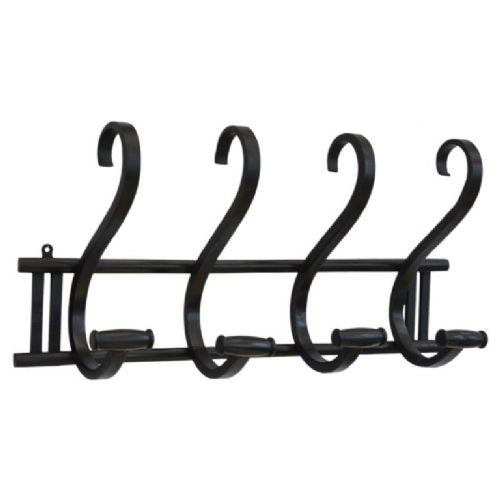


Victorian Bentwood Coat Rack
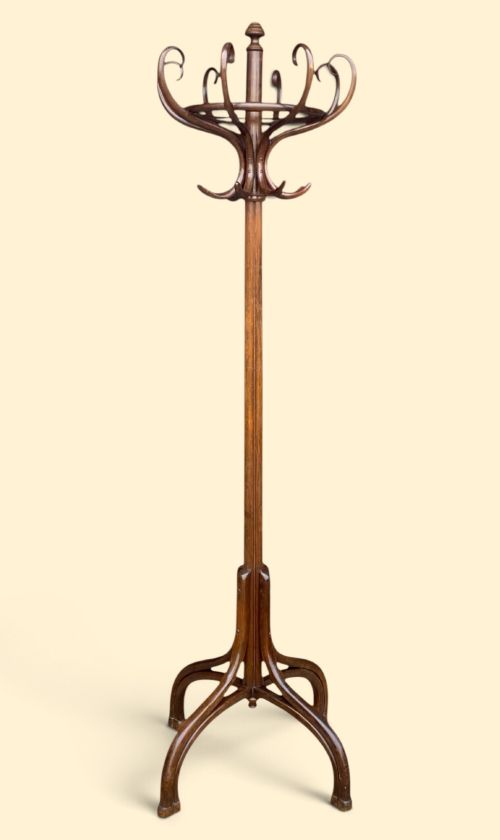
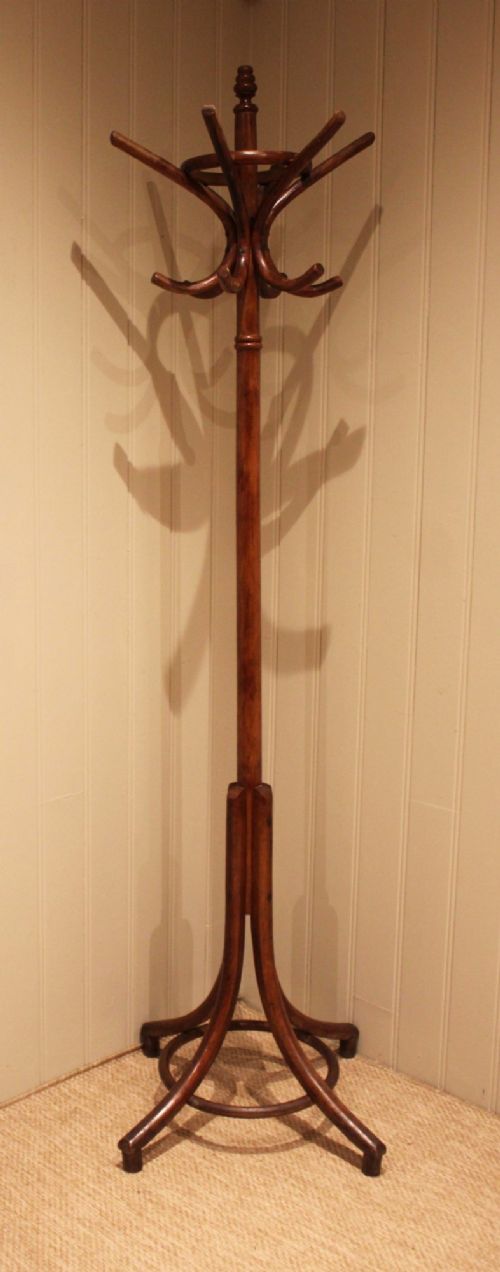
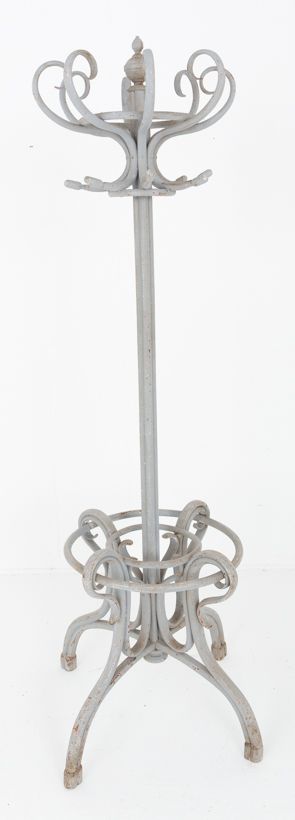
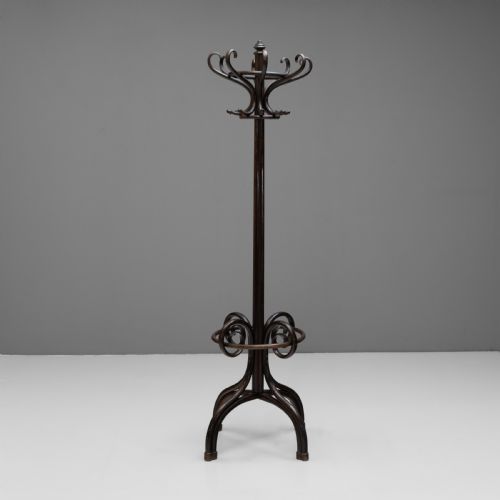
A victorian bentwood coat rack brings fluid, steam-curved timber into an entryway, offering sturdy hanging space without visual heaviness.
Victorian Bentwood Coat Rack
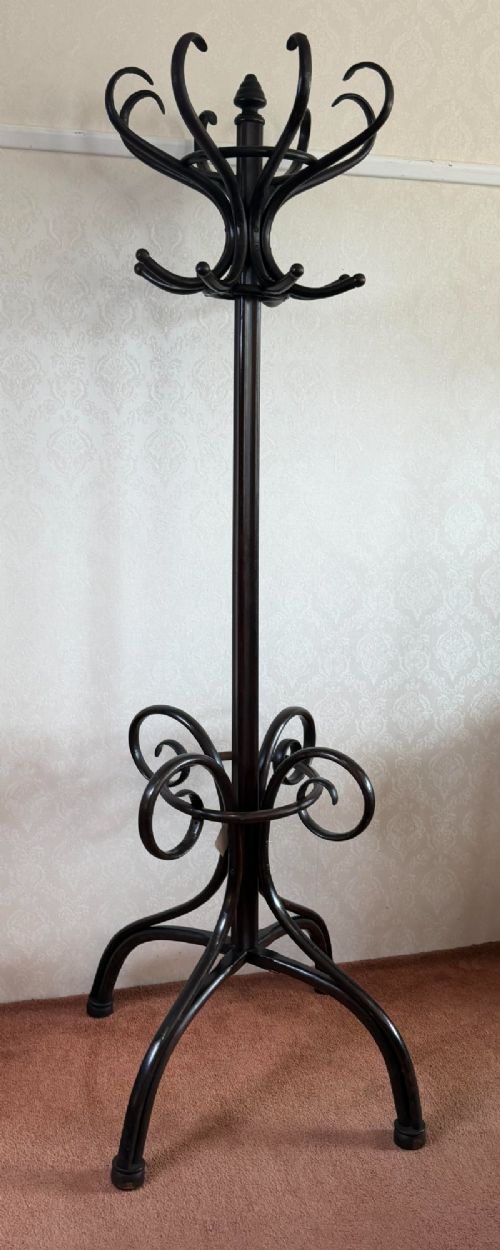
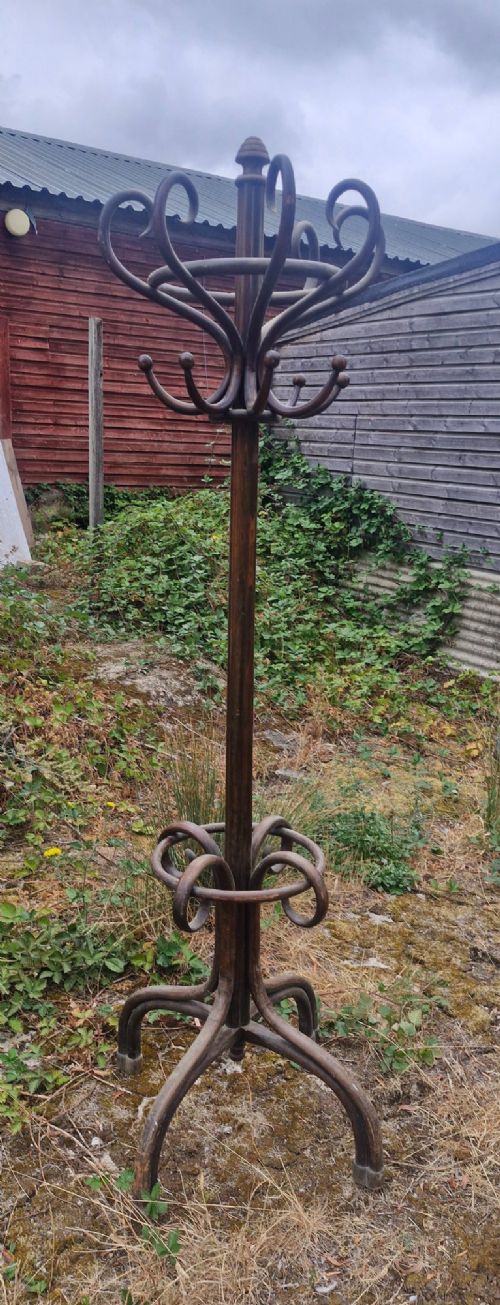
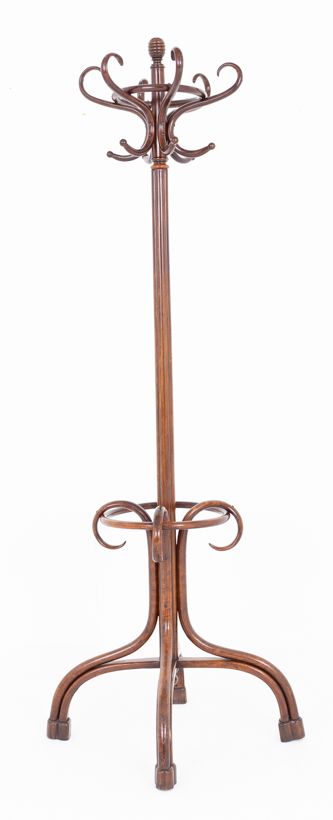
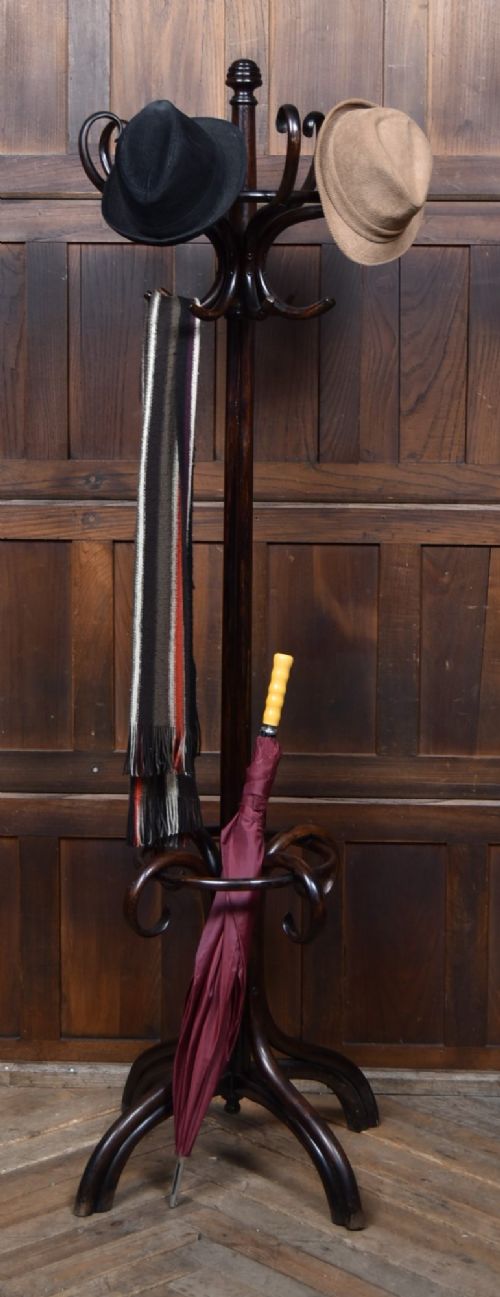
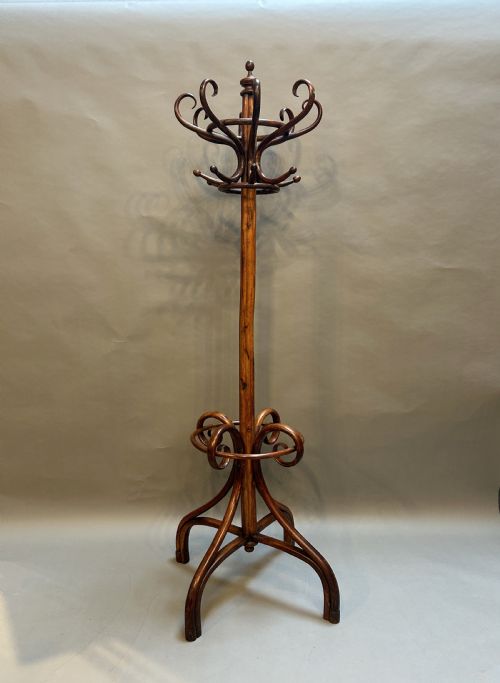
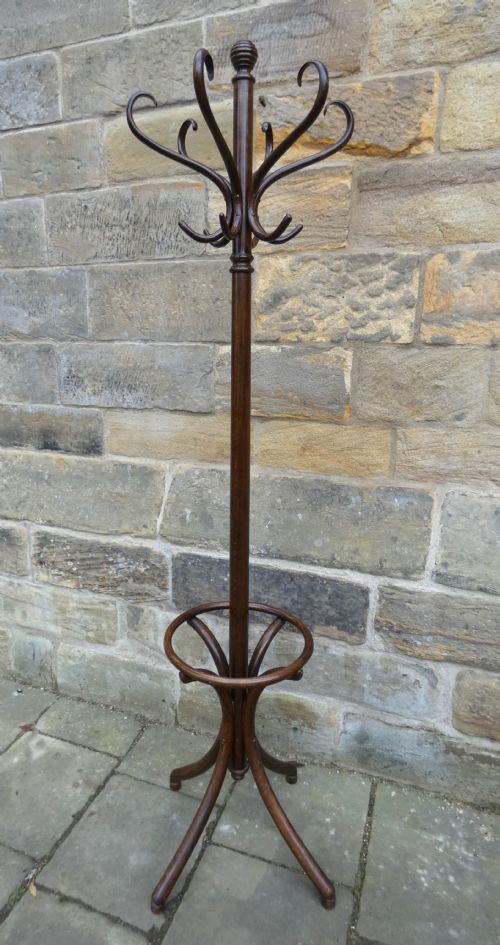
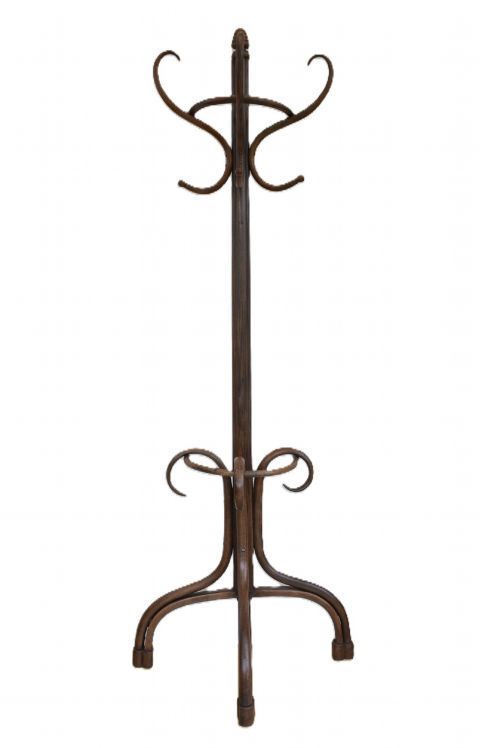
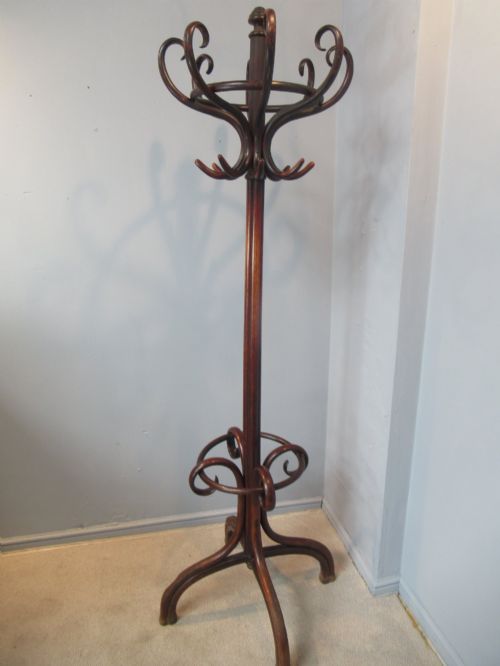
A victorian bentwood coat rack typically takes the form of a tall, vertical stand designed to hold hats, coats and garments in a hallway. The pieces gathered here span from the nineteenth century into the twentieth century, including Edwardian examples and later periods.
Most entries function as freestanding coat stands, hat stands, and hall stands, while specific variations include wall-hanging racks, half-round designs, and revolving stands. The silhouette relies on curved timber loops and arched hooks that branch outwards from a central post.
Judging quality in bentwood furniture
Quality rests in the precision of the steam-bent curves and the integrity of the joints where the branches meet the central column. Stronger examples maintain smooth, unbroken lines without splintering or distortion along the radius of the bend.
Heavier scaling, such as double top configurations and larger overall dimensions, separates standard utility pieces from more ambitious production. Retained original labels also influence how a piece is regarded by collectors.
Victorian Bentwood Coat Rack Retail Price Guide 2026
Typical asking prices for victorian bentwood coat rack among the pieces listed under this phrase on Sellingantiques today, from the lower quarter to the upper quarter. They describe what is for sale here now, not the wider market.
Some tall stands feature revolving tops, allowing a hallway coat selection to spin like a carousel.
Thonet·Fischel
The Victorian Bentwood Coat Rack Glossary
- Bentwood
- Wood that has been heated with steam and forced into curved shapes using moulds. This technique allows for lightweight yet rigid furniture frames.
- Beech
- A hard, fine-grained timber commonly utilised for nineteenth-century furniture production. It accepts steam-bending exceptionally well without losing structural strength.
- Ebonised
- Wood finished with a dark stain or polish to imitate the appearance of ebony. This treatment was popular for achieving formal, dark surfaces.
- Hall stand
- A piece of furniture placed in an entrance hall to store outerwear, hats, and sometimes umbrellas. They often integrate mirrors and small trays alongside coat hooks.
- Steamed beechwood
- Timber softened via steam injection before being manipulated into arches and loops. It forms the primary structural component of Austrian and Viennese bentwood.
Victorian Bentwood Coat Rack: Frequently Asked Questions
How do I clean a bentwood coat rack?
Dust the curved wooden surfaces regularly with a dry cloth to prevent dirt accumulation in the crevices of the bent sections. Avoid using harsh chemical sprays or excess water, which can degrade the vintage wood stain or ebonised finish.
Condition the beech timber periodically with a mild furniture wax to maintain its lustre. Apply the wax sparingly and buff gently with a soft cloth along the grain of the wood.
Are these racks stable on wooden floors?
Freestanding floor-standing pieces distribute weight through a wide base, usually supported by curved wooden feet that rest flat on the ground. Most standard designs balance coats evenly when loaded around the perimeter.
For taller variations or stands holding heavy winter garments, placement on an even surface prevents rocking. Checking the base screws periodically ensures the central post remains firmly secured to the foot.
What is the difference between a coat stand and a hall stand?
A coat stand is typically a vertical pole with branching hooks designed solely for hanging hats and coats. These circular or multi-sided configurations occupy minimal floor space in narrow hallways.
A hall stand often incorporates broader framing, sometimes including umbrella holders, mirrors, or small ledges. These larger formats serve multiple organizational purposes within an entranceway.
How can I date a bentwood piece?
Dating relies on construction methods, labels, and stylistic markers recorded across nineteenth and twentieth-century production. Early examples from the 1800s often feature specific screw-in connections and manufacturer stamps.
Later pieces from the Edwardian era or the 1920s show slight shifts in hardware and proportions. Comparing the specific curve profiles and base designs helps establish the production era.