
Victorian Bedroom Cabinet
When you search for a victorian bedroom cabinet, you are looking at nineteenth-century storage pieces built for domestic chambers, from small bedside nightstands to large wardrobes.
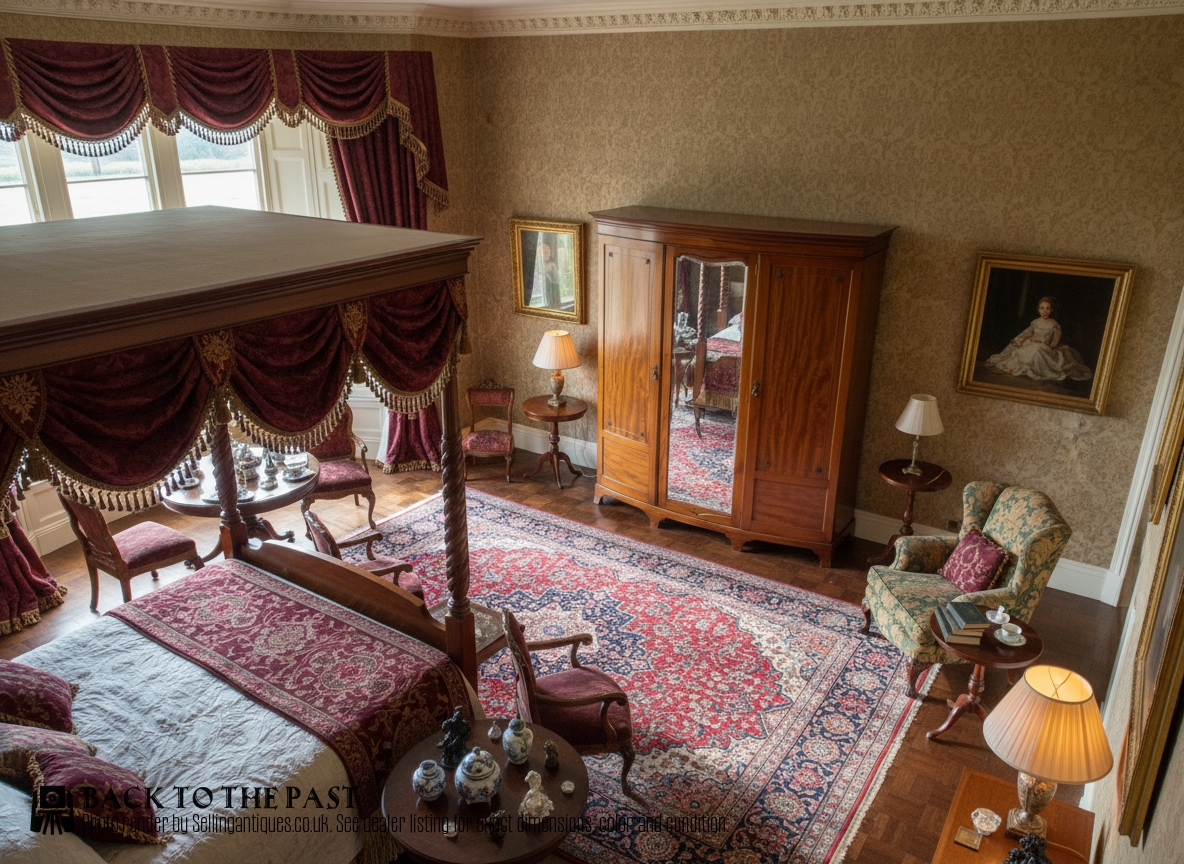
Victorian Bedroom Cabinet
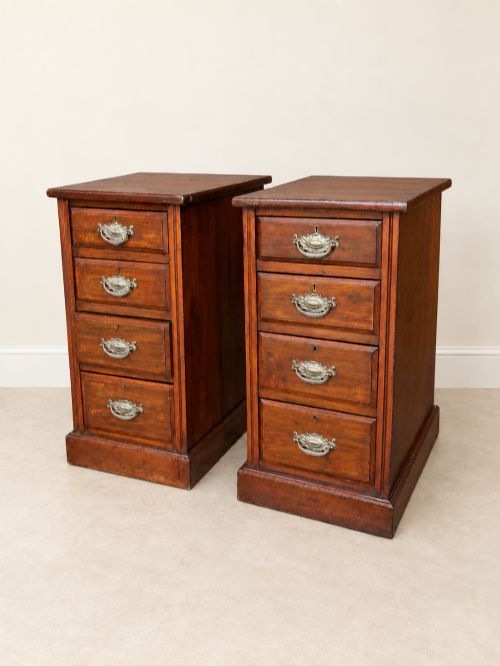
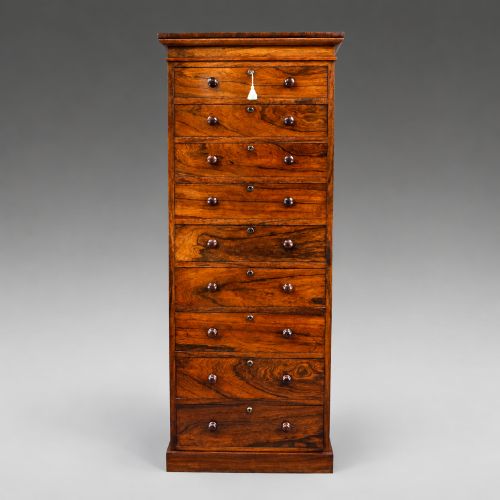
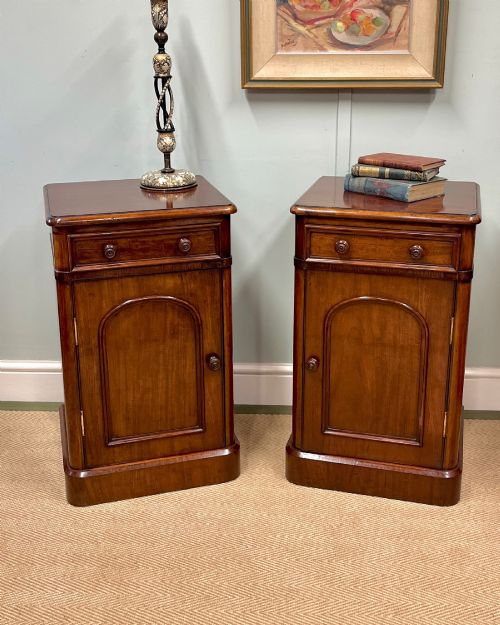
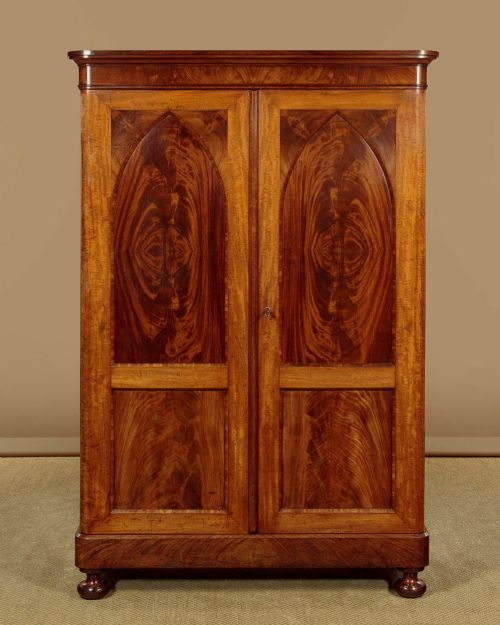
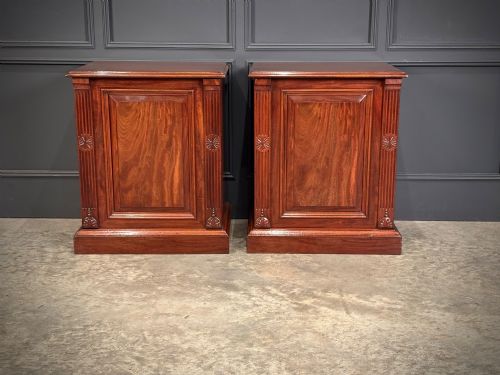
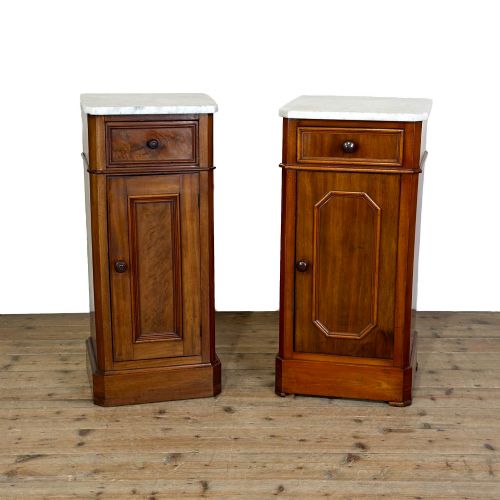
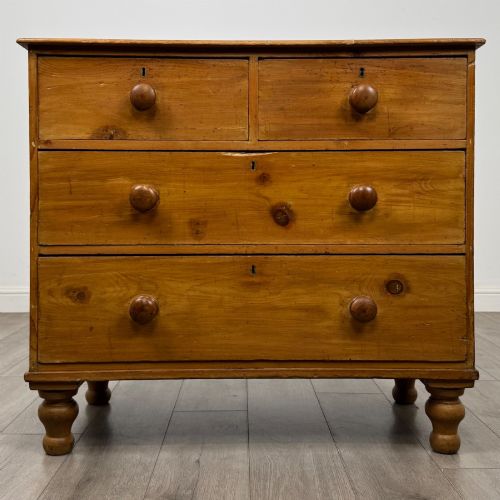
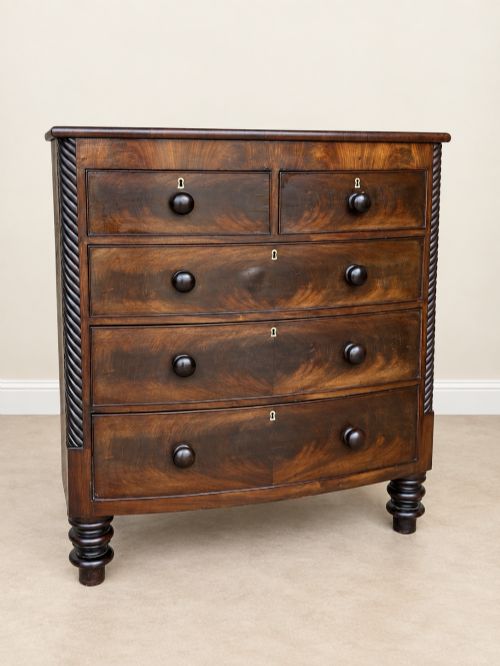
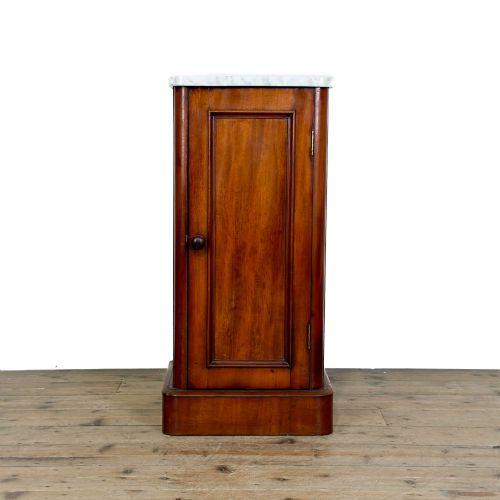
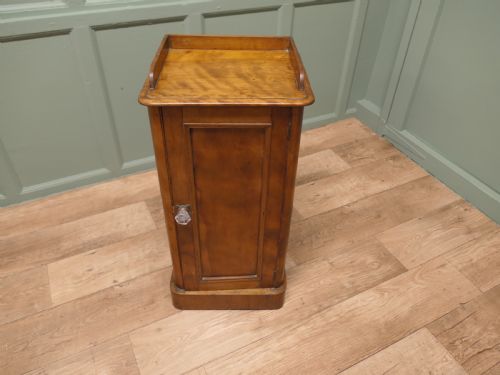
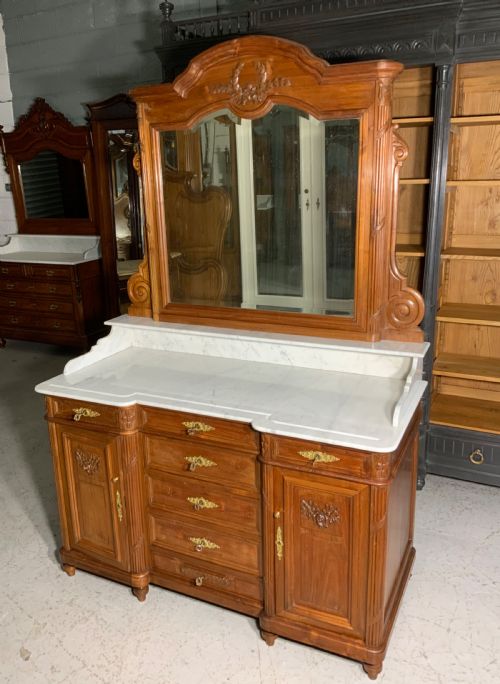
A victorian bedroom cabinet encompasses a broad variety of chamber furniture designed for private domestic spaces during the nineteenth and early twentieth centuries. The selection on this page ranges from compact bedside tables and pot cupboards to substantial linen presses, chests of drawers, and full wardrobes.
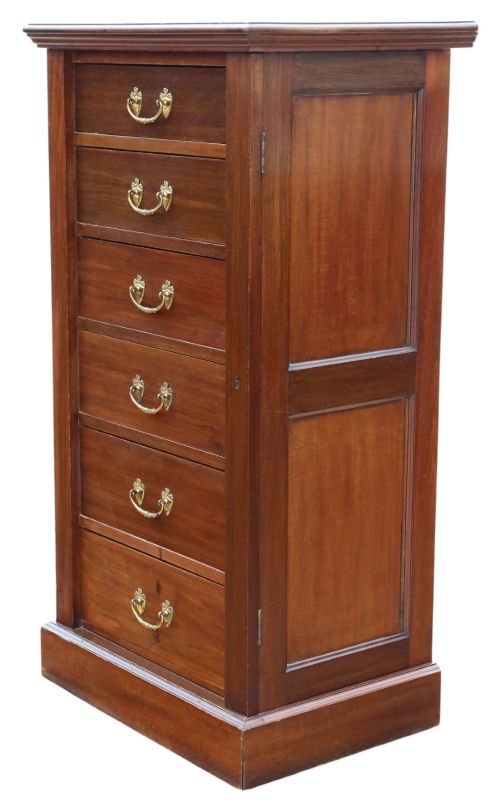
Bedside chests and bedside cabinets in pairs appear frequently alongside tall Wellington chests and large multi-piece bedroom suites. Timbers and construction reflect both English cabinet-making traditions and continental workshops, incorporating pine, walnut, and mahogany.
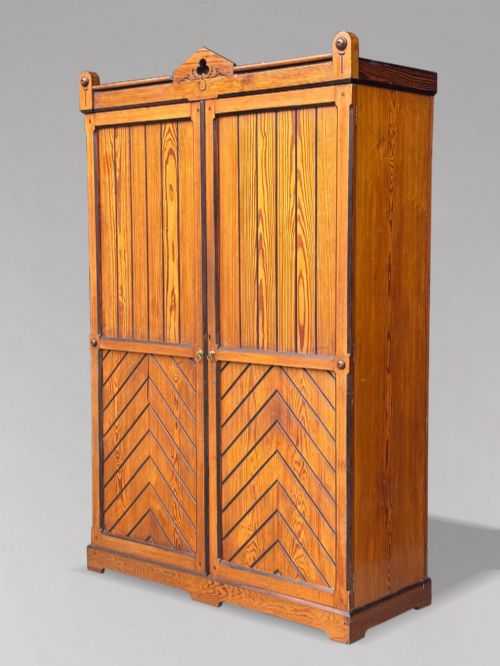
Makers and retailers such as Gillows, Maples and Co, Edwards and Roberts, and Harrods supplied these pieces to Victorian and Edwardian homes. Buyers find both formal mahogany designs and vernacular pine items suited to country houses.
Materials and Technique
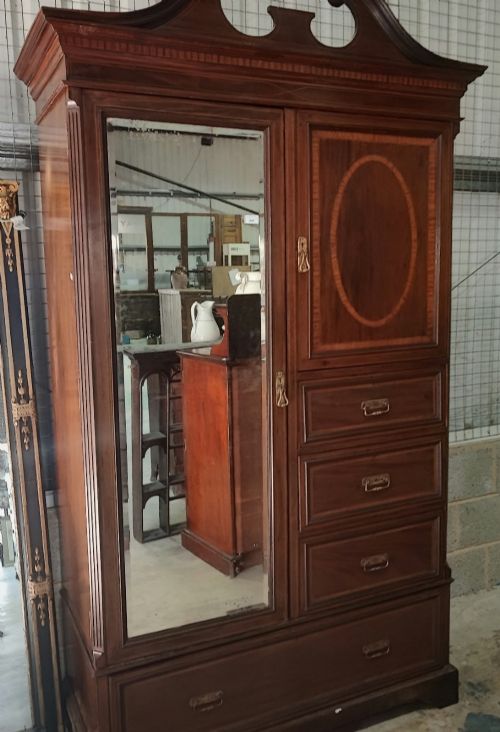
Makers utilised solid native and imported timbers, notably mahogany, walnut, pine, and ash, frequently embellished with flame mahogany veneer, burr walnut, or satinwood banding. Brass hardware, including drop handles and lock escutcheons, secures doors and drawer fronts.
Joinery techniques involve hand-cut dovetails on drawer construction and panelled door frames that accommodate seasonal wood movement. Secondary timbers such as oak and pine line the interiors of wardrobes and chests.
Pot cupboards once kept chamber pots neatly concealed from polite morning callers.
Evaluating the Pieces
Quality rests upon the selection of timber figures, such as matched flame mahogany or figured burr walnut, and the precision of the underlying joinery. Superior examples retain original brass handles, locks, and keys, whereas lesser pieces may show later adaptations or replaced elements.
Proportion and decorative restraint separate standard workshop output from pieces bearing the hallmarks of notable cabinet-makers. Crisp blind fretwork cornices and well-fitted drawer linings indicate higher standards of production.
maples & co·Edwards and Roberts·Gillows·harrods·Hindley & Son·Waring & Gillows
The Victorian Bedroom Cabinet Glossary
- Wellington chest
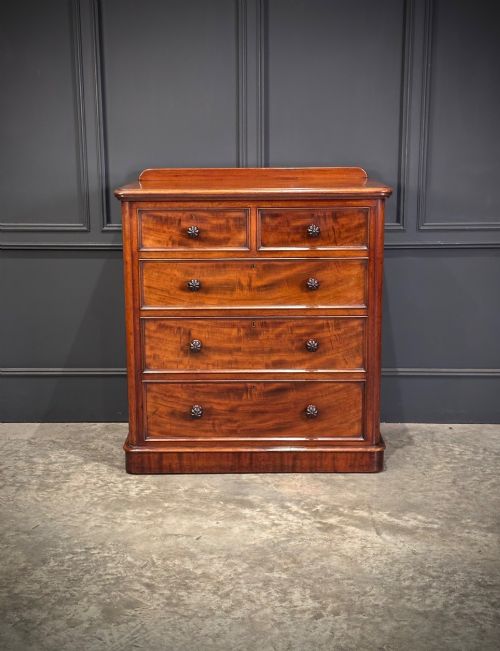
- A tall, slender chest of drawers featuring a hinged locking stile on one side that secures all drawers simultaneously.
- Linen press
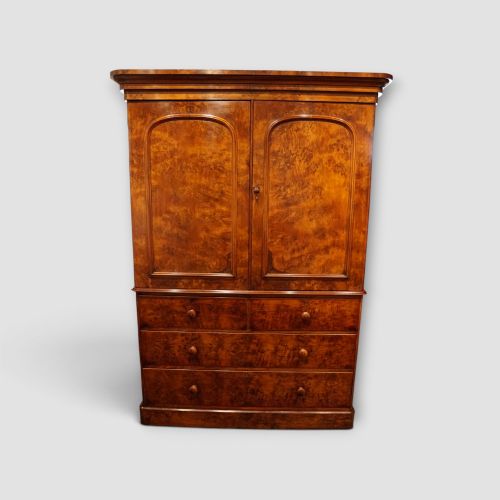
- A large storage cupboard with upper sliding trays or shelves enclosed by doors, positioned above a base section fitted with multiple drawers.
- Pot cupboard
- A small bedside cabinet designed originally to house a chamber pot behind a single door, often fitted with a marble top.
- Compactum
- A large fitted wardrobe combining hanging space, shoe lockers, and internal drawers within a single architectural structure.
- Blind fretwork
- Carved ornamentation applied to a solid surface in a flat geometric pattern that does not pierce through the timber.
Victorian Bedroom Cabinet: Frequently Asked Questions
What is a victorian bedroom cabinet?
These pieces comprise nineteenth-century chamber furniture built for storage, including bedside tables, pot cupboards, and small cabinets designed to sit beside a bed.
Craftsmen constructed them primarily in mahogany, walnut, and pine to serve domestic needs in Victorian households.
How do I identify a bedside cabinet?
Bedside cabinets typically feature a single door enclosing a cupboard space, sometimes accompanied by a small upper drawer. They often measure lower than standard chests to align with nineteenth-century bed heights.
Many examples survive as pairs, though single cabinets also appear frequently in the listings.
What is the difference between a linen press and a wardrobe?
A linen press contains interior sliding trays or shelves in the upper section for folded textiles, positioned above a chest of drawers base. A wardrobe focuses primarily on vertical hanging space behind full-length doors.
Both forms served larger Victorian bedrooms and high-status dressing rooms.
How do I date a piece of furniture?
Dating relies upon timber selection, construction methods, and stylistic cues such as hardware, veneers, and decorative motifs. Pieces marked by specific retailers or bearing period labels provide clearer chronological markers.
Nineteenth-century items often transition from early mahogany solids to later burr walnut and satinwood veneers.