

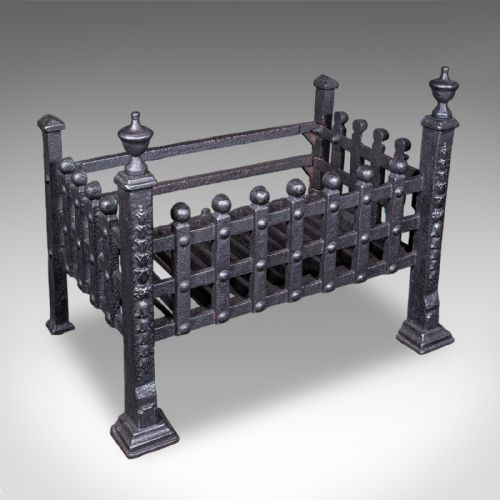


Victorian Basket Grate
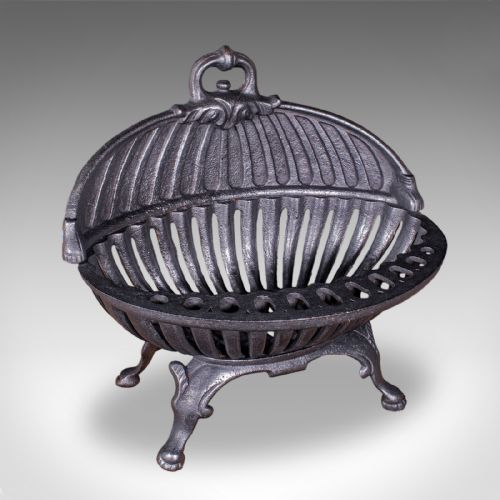
These heavy cast iron and brass fire baskets bring period warmth to a hearth, uniting structural iron with decorative brass.
Victorian Basket Grate
A victorian basket grate serves as an open hearth fire container, designed to hold coal or logs within a formal fireplace setting. The examples on this page span the Victorian and Edwardian eras, alongside later revivals from the early twentieth century.
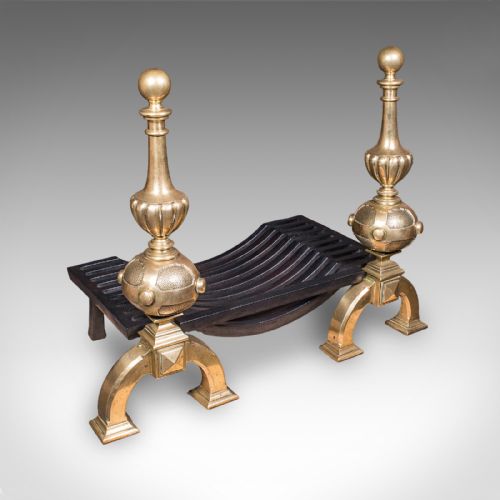
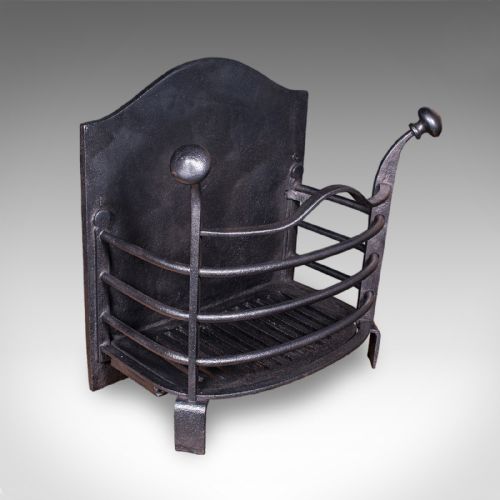
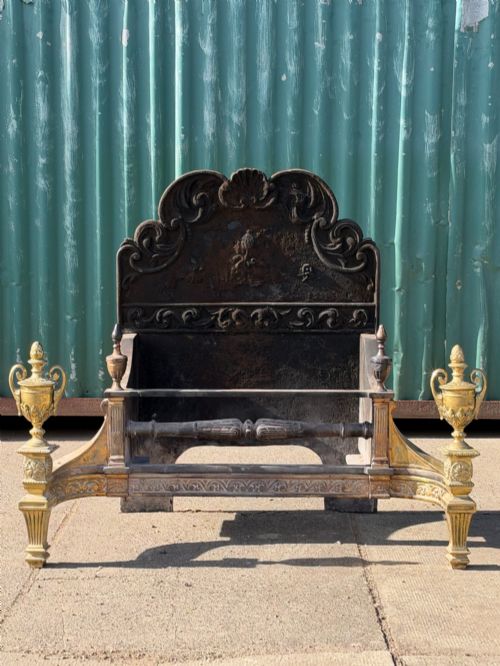
You will encounter pieces ranging from small, freestanding hearth units to large inglenook fire baskets paired with matching andirons. Many incorporate firebacks, fenders, or brass fire dogs to complete the functional arrangement.
The aesthetic draws heavily on historical revivals, featuring George III, Regency, and Neo-Gothic styles executed in sturdy iron and brass. These variations allow the grates to suit both classical and rustic fireplace surrounds.
Materials and construction
The primary structural element is cast iron, chosen for its ability to withstand intense hearth temperatures without failing. Wrought iron also appears in specific basket and andiron components, offering greater tensile strength for forged bars.
Victorian Basket Grate Retail Price Guide 2026
Typical asking prices for victorian basket grate among the pieces listed under this phrase on Sellingantiques today, from the lower quarter to the upper quarter. They describe what is for sale here now, not the wider market.
Some grates arrive with heavy iron dogs that look ready to guard the hearth long after the fire goes out.
Factors of quality
Quality rests in the weight of the casting and the crispness of decorative detailing, particularly on brass mounts and iron pierced work. Thicker metal sections and robust firebars indicate a higher grade of manufacture intended for heavy domestic use.
The harmony of matched sets, such as integrated andirons and firebacks designed specifically for the basket, elevates the piece above standard utilitarian items. Well-proportioned scaling, whether of small proportions or grand inglenook dimensions, ensures visual balance in the room.
The Victorian Basket Grate Glossary
- Basket grate
- An open metal container mounted on legs or andirons designed to hold solid fuel for a fireplace. It allows air to circulate freely around the burning logs or coal.
- Andirons
- Supporting metal fire dogs placed on either side of the hearth to hold logs or support the fire basket itself. They often feature decorative brass finials.
- Fireback
- A heavy cast iron plate placed at the back of the fireplace to protect the masonry and reflect heat back into the room. It frequently bears moulded decorative designs.
- Register grate
- A fireplace insert featuring a built-in damper mechanism to control the draft of the chimney. This type became common for regulating room warmth in Victorian homes.
- Inglenook
- A large, deep fireplace recess designed to accommodate seating or substantial fire baskets. Grates built for these spaces typically feature heavy, oversized proportions.
Victorian Basket Grate: Frequently Asked Questions
How do I choose the right size fire basket?
Measure the width, depth, and height of your fireplace opening carefully before selecting a basket.
Leave adequate clearance around the sides and back for safety and proper heat distribution.
Are these grates suitable for burning real wood?
Most of these cast iron and wrought iron grates were built precisely for burning solid fuel like wood or coal.
Check for internal firebrick linings and solid bar construction to ensure the metal can handle active fires.
What is the difference between an andiron set and a freestanding grate?
A freestanding grate stands entirely on its own base legs within the hearth space.
An andiron set relies on paired fire dogs to support the basket or hold logs independently at the front.
How do I clean and maintain a cast iron grate?
Remove ash regularly to prevent moisture retention and subsequent corrosion of the iron surfaces.
Apply traditional grate polish or black lead sparingly to maintain the dark finish on the cast metal.