
Victorian Balloon Back Dining Chairs
When you search for victorian balloon back dining chairs, you enter a world of graceful timber frames designed for nineteenth-century dining tables.
Victorian Balloon Back Dining Chairs
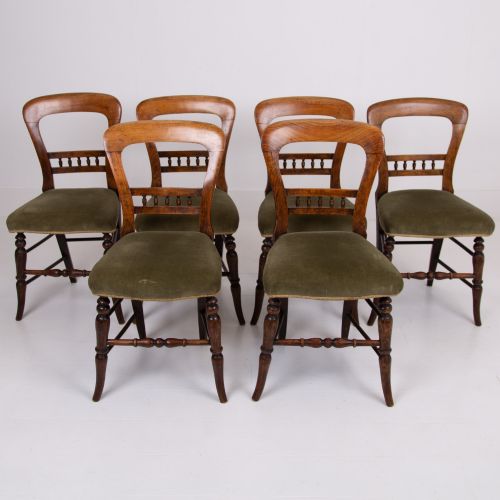
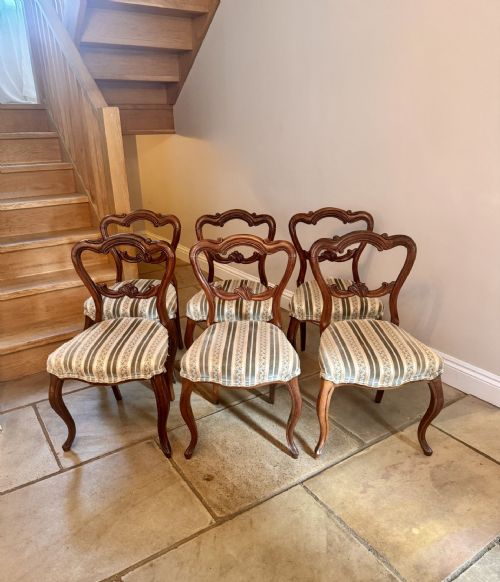
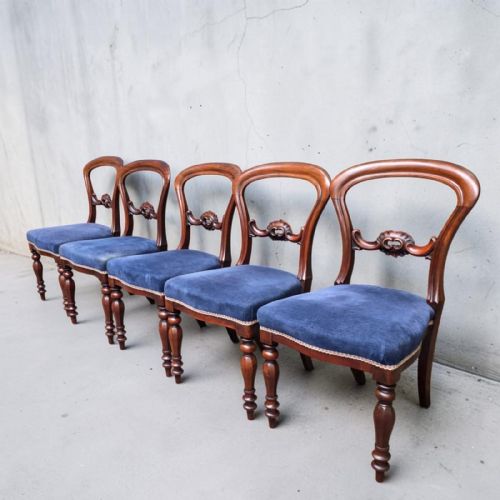
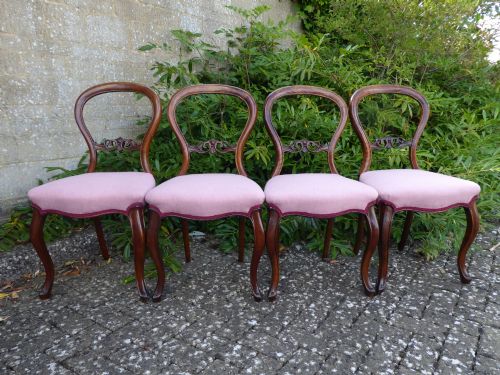
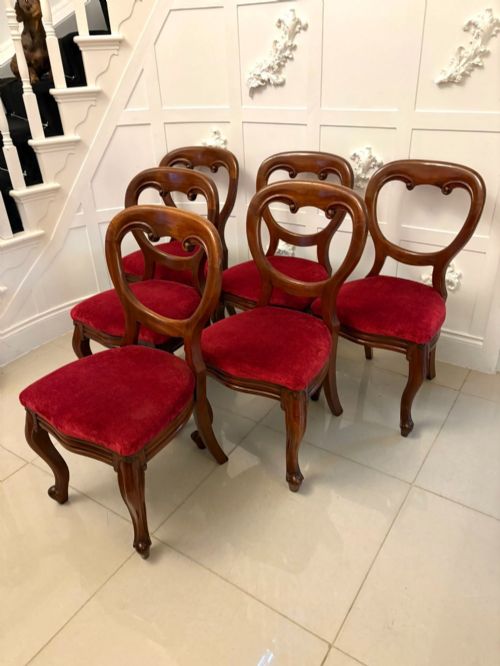
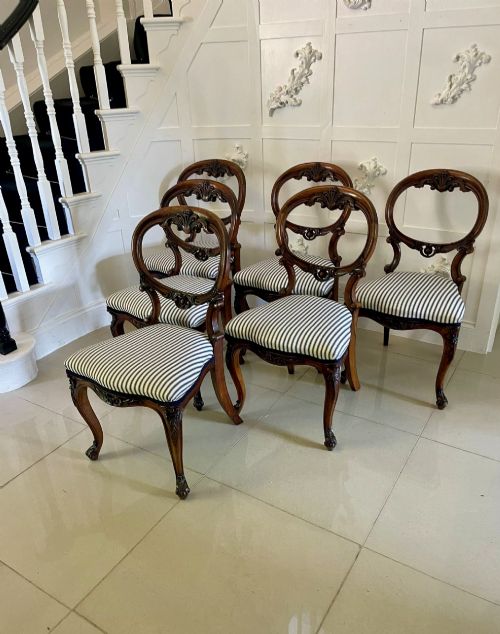
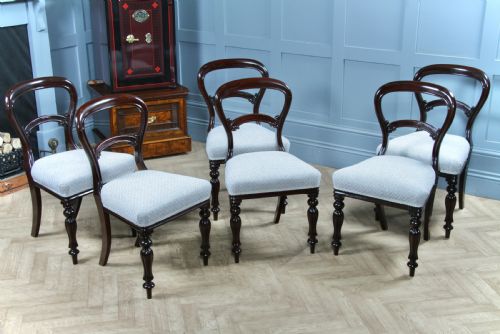
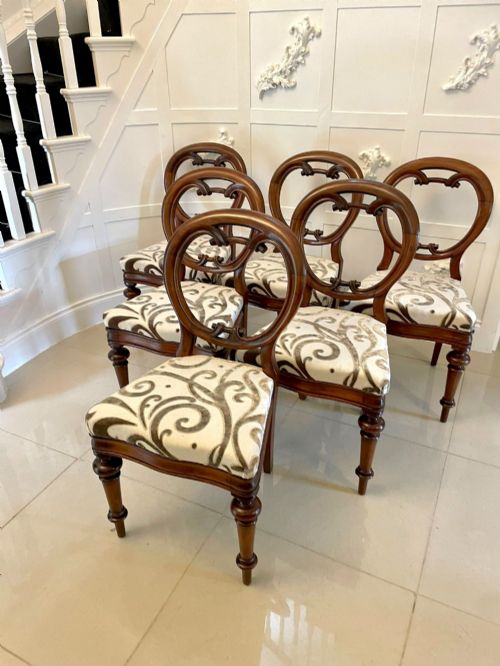
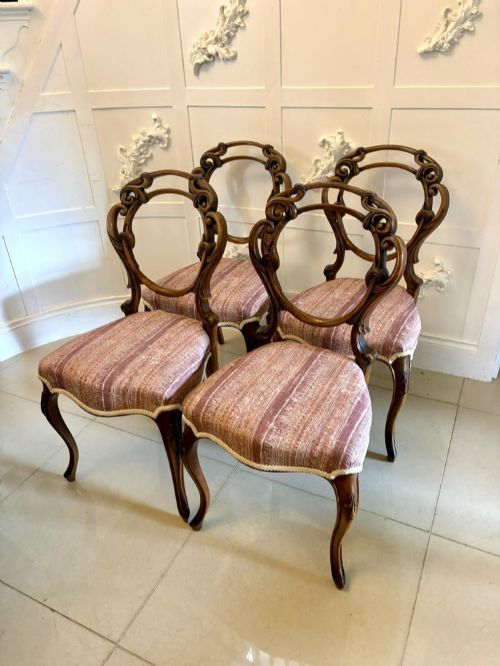
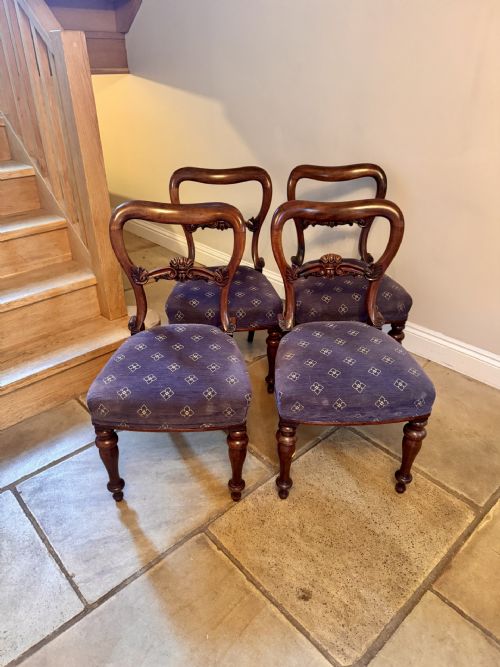
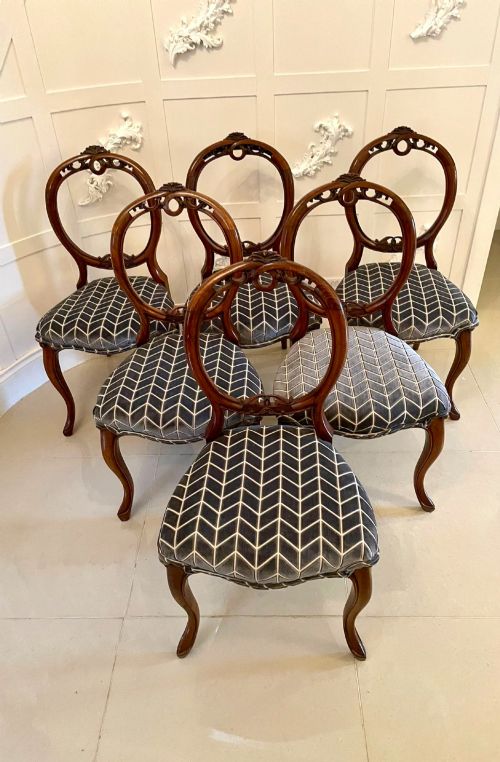
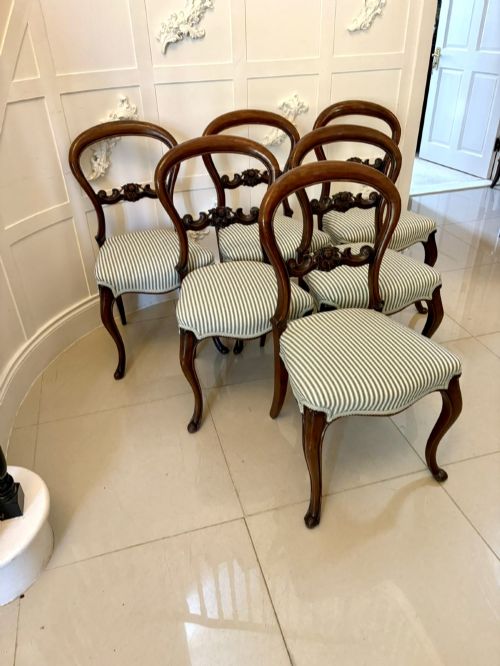
Victorian balloon back dining chairs are defined by their curved, oval backrests that resemble the silhouette of a balloon, appearing frequently in sets ranging from pairs to tens and twelves. These pieces originate primarily from the nineteenth century, spanning decades such as the 1850s, 1860s, 1870s, and 1880s, alongside related William IV examples.
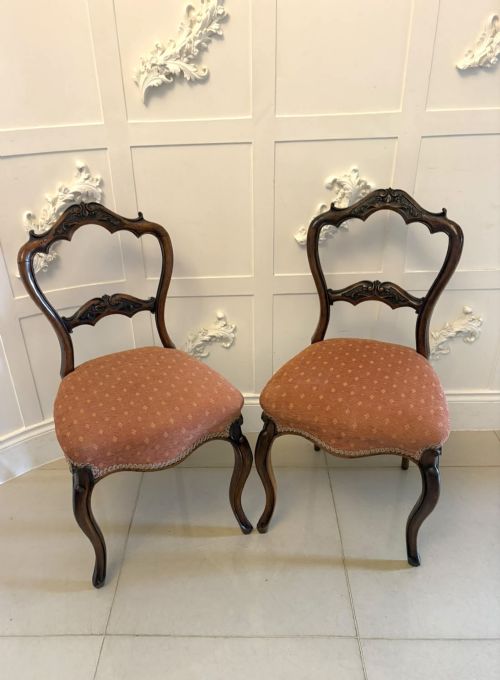
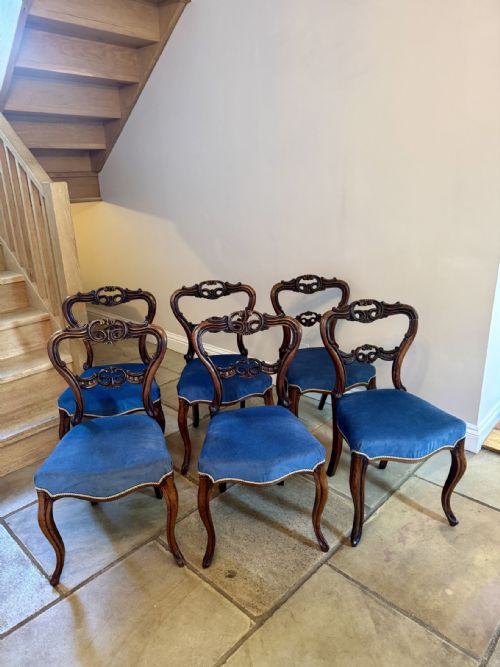
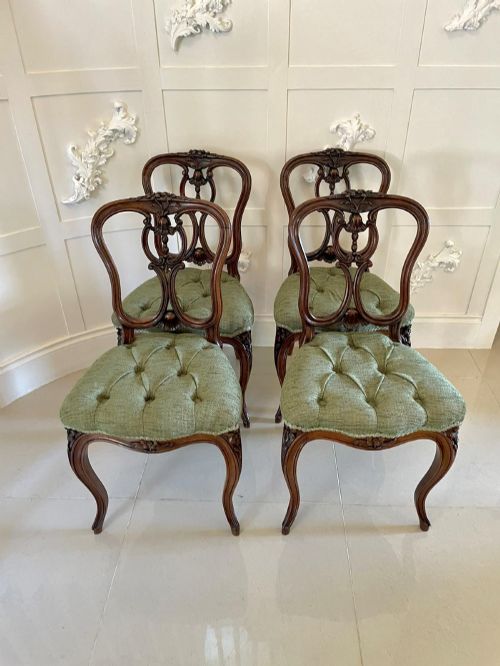
The dominant forms on this page include dining chairs and side chairs configured in sets or matched groups, often utilised around formal tables. Variations in the back shape extend from standard rounded profiles to French-influenced designs, kidney shapes, and spearpoint variations.
Materials and Construction
Cabinet makers constructed these chairs using dense hardwoods like mahogany, walnut, and rosewood, occasionally employing oak or beech for structural framing. These timbers were steam-bent or carved into the characteristic curved back rails, frequently featuring detailed scrollwork, floral motifs, or central splats.
Seats were built as drop-in or upholstered pads, secured with webbing and stuffed with traditional materials before being covered in fabrics such as velvet, wool, or various textile upholstery options. Brass fittings and castors occasionally supported the legs on select refined models.
Some nineteenth-century diners must have possessed remarkably resilient postures to endure long feasts on circular wooden loops.
Distinctions in Quality
Quality rests upon the depth of the timber carving and the fluidity of the curved balloon backrest, where crisp, hand-carved details distinguish superior workshop output from plain production. The choice of primary wood also dictates standing, with rich grain patterns in rosewood and figured walnut achieving higher refinement than standard mahogany or secondary hardwoods.
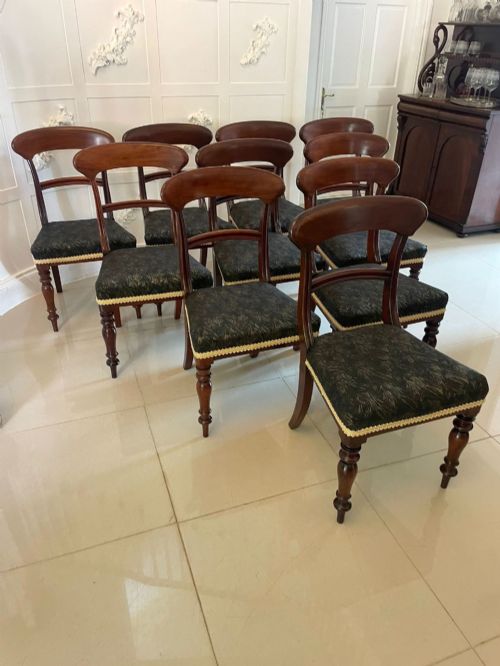
Originality of the set formation and structural integrity determine overall desirability, as matched larger groupings of ten or twelve chairs remain scarcer than smaller pairs or quartets. The cohesion of the wood patination and the precision of the joinery further separate ordinary seating from exceptional examples.
Gillows
The Victorian Balloon Back Dining Chairs Glossary
- Balloon back
- A chair back shaped in a continuous oval curve resembling an inflated balloon. This form became the defining aesthetic of mid-nineteenth-century domestic seating.
- Cabriole leg
- A furniture leg that curves out and then narrows inward, emulating an animal's leg in motion. These frequently terminate in scroll or plain feet on walnut side chairs.
- Drop-in seat
- A removable wooden frame padded and upholstered separately before dropping into a recess in the chair rails. This construction allows for straightforward reupholstery.
- Splat
- The vertical central strip of wood connecting the seat to the top rail of a chair back. On these pieces, the splat often echoes the overarching curved contour of the frame.
Victorian Balloon Back Dining Chairs: Frequently Asked Questions
Were these chairs made in large sets?
Dining chairs from this period were commonly produced in sets of four, six, eight, ten, or twelve to accommodate large dining tables. Finding larger matched sets requires careful comparison of wood grain and turning.
Smaller groupings of pairs are also common, frequently utilised as occasional or bedroom seating rather than formal dining furniture.
How do I care for antique wood?
Maintain nineteenth-century timbers by keeping them away from direct heat sources and sudden humidity changes that cause wood to split. Regular dusting with a dry cloth protects the historic polish and finish.
Avoid silicone-based sprays, opting instead for traditional beeswax applied sparingly to nourish the mahogany, walnut, or rosewood grain.
Can I reupholster the drop-in seats?
Drop-in seats lift out easily from the wooden frame, making historic upholstery updates straightforward without altering the structural timber. Many pieces feature modern fabric coverings while retaining their original webbing or stuffing underneath.
Choosing traditional textiles helps maintain the period aesthetic when refreshing the seating for daily use around a dining table.