



Victorian Area Carpet
When a search brings up a victorian area carpet, it points to heavy wool floor coverings woven during the nineteenth century, often from Persian, Indian or Caucasian workshops.
Victorian Area Carpet
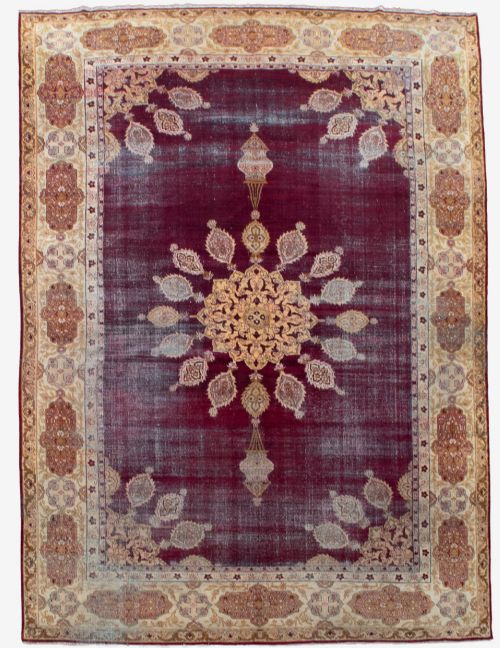
A victorian area carpet generally covers large rooms or smaller spaces with heavy floor coverings produced during the nineteenth century. The selection on this page centres on pieces woven in Persia, Turkey, India and the Caucasus around the eighteen-eighties and nineties.
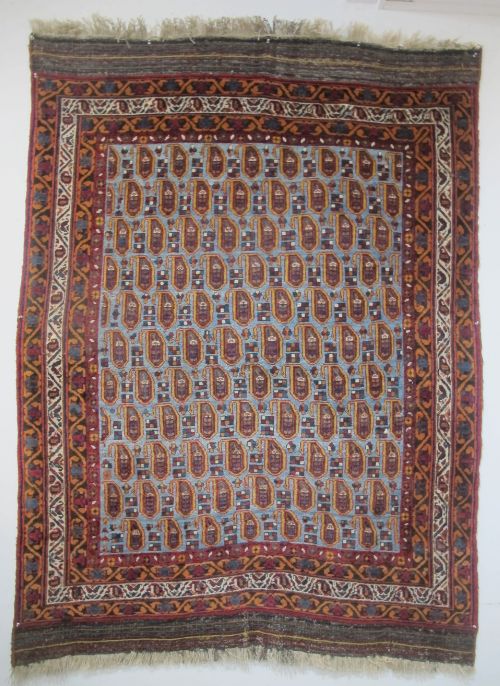
Buyers encounter country house carpets alongside smaller tribal rugs. Large examples often display room-sized formats suited to grander reception spaces, while village pieces provide compact formats for sitting rooms.
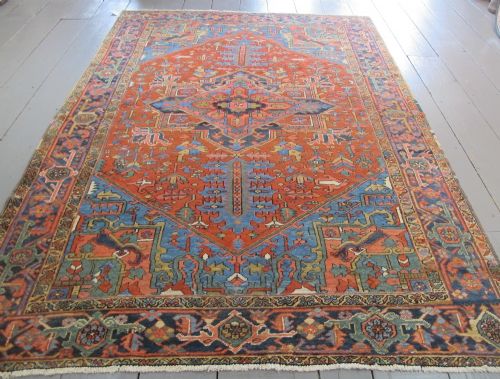
Regional designs dominate the selection, ranging from Heriz and Sultanabad weaves to Baluch and Caucasian geometric patterns. These items reflect the heavy import of oriental carpets into British homes during the Victorian era.
How they were made
Weavers constructed these carpets using wool piles knotted onto cotton or wool foundations, sometimes utilising cotton canvas for structural support. Natural dyes provided the rich palette of reds, blues and ivories seen across the pieces.
Village and tribal workshops relied on hand-tied knots and traditional upright looms. City manufactories in places like Tabriz, Kirman or Agra employed skilled teams to produce finely detailed room-sized carpets for export.
Victorian Area Carpet Retail Price Guide 2026
Typical asking prices for victorian area carpet among the pieces listed under this phrase on Sellingantiques today, from the lower quarter to the upper quarter. They describe what is for sale here now, not the wider market.
Some nineteenth-century weavers hid tiny intentional errors in their geometric prayer rugs to respect the perfection belonging solely to the divine.
What varies in quality
Knot density and structural tightness dictate the longevity and definition of the pattern. Tighter weaving allows intricate curves and sharp lines to hold their form under heavy foot traffic.
The choice of dyes influences visual depth, with natural colour sources yielding varied tones that age gracefully. Finer wool selections retain a softer handle and greater resilience across the pile.
The Victorian Area Carpet Glossary
- Pile
- The upright yarn loops or tufts that form the usable surface of a carpet. This layer bears the weight and friction of daily use.
- Natural dye
- Colour extracted from plant, insect or mineral sources rather than synthetic chemicals. These substances create complex, mellow tones that develop patina over decades.
- Warp
- The vertical foundation threads stretched tightly on the loom before knotting begins. Weavers tie the pile yarn around these parallel strands.
- Weft
- The horizontal threads passed between rows of knots to bind the structure together. This element holds the pile firmly in place.
- Medallion
- A symmetrical central ornament placed in the middle of the carpet field. Many Persian and Caucasian designs build their composition around this focal shape.
Victorian Area Carpet: Frequently Asked Questions
Where were these carpets originally made?
The pieces originate primarily from Persian centres, Caucasian regions, Turkish towns and Indian workshops during the nineteenth century. British importers brought many of these heavy floor coverings home to furnish Victorian drawing rooms and country houses.
Production varied from village tribal pieces created by confederations like the Khamseh to large commercial workshop carpets woven in cities like Sultanabad and Agra.
How do I care for a Victorian carpet?
Protect the wool pile by placing a suitable underlay beneath the carpet to prevent slipping and reduce friction against hard floors. Regular gentle vacuuming without a rotating beater bar keeps dust from settling deep into the foundation.
Rotate the carpet periodically to ensure even exposure to foot traffic and sunlight. Professional cleaning by specialists in antique textiles prevents dye bleeding and fibre damage.
What styles appear in this period?
Designs range from bold geometric Caucasian motifs to flowing floral Persian patterns. Heriz, Fereghan, Ushak and Shirvan styles represent distinct regional weaving traditions of the nineteenth century.
Tribal pieces often feature repeating boteh or animal motifs, while larger city carpets display elaborate medallions and scrolling vine borders.
How can I tell a village rug from a city carpet?
Village and tribal rugs typically exhibit more geometric designs, slightly irregular lines and spontaneous colour changes reflecting individual weaver choices. They often come in smaller formats suitable for specific residential rooms.
City carpets display balanced symmetry, precise curvilinear draughtsmanship and uniform pile density. These larger pieces required professional workshops and master designers to plan the complex layouts.