

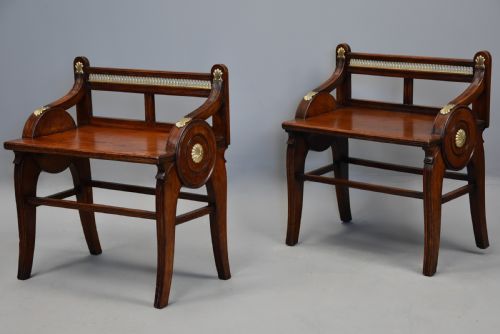
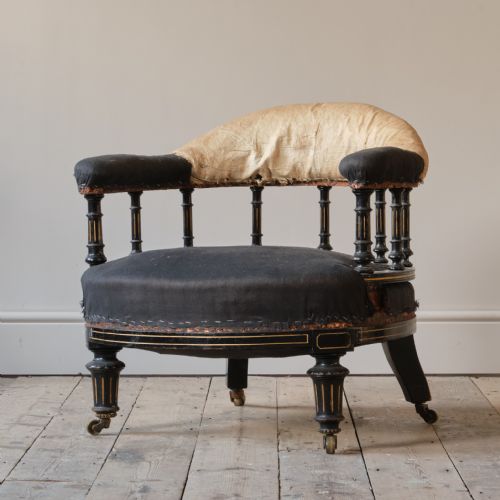

Victorian Aesthetic Seating
These Victorian aesthetic seating pieces bring together dark ebonised woods, bamboo turns, and rich upholstery to shape the distinct interiors of the late nineteenth century.
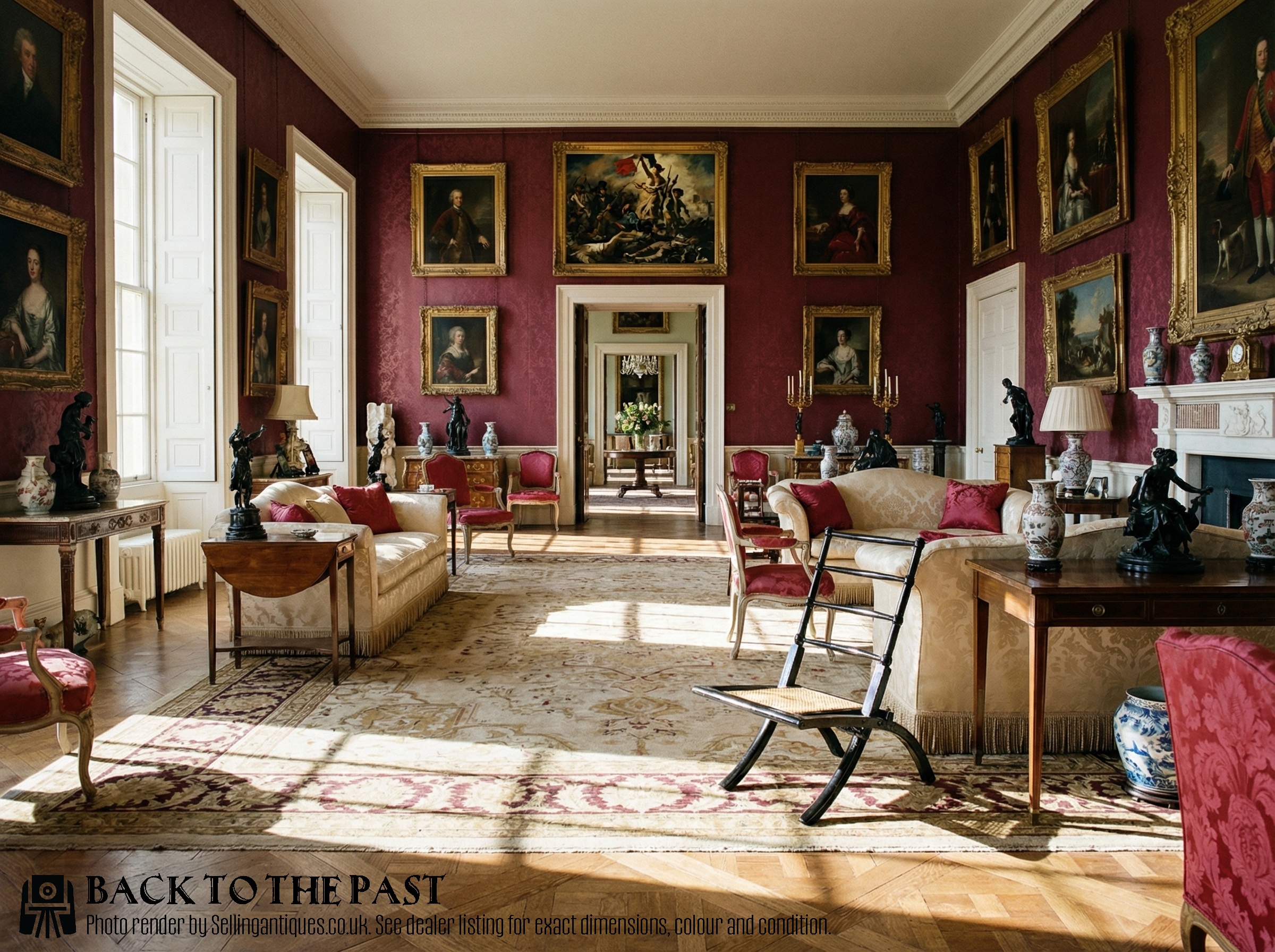
Victorian Aesthetic Seating
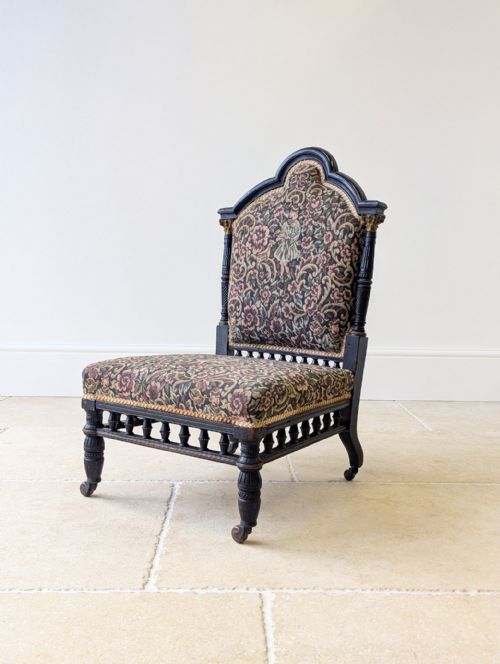
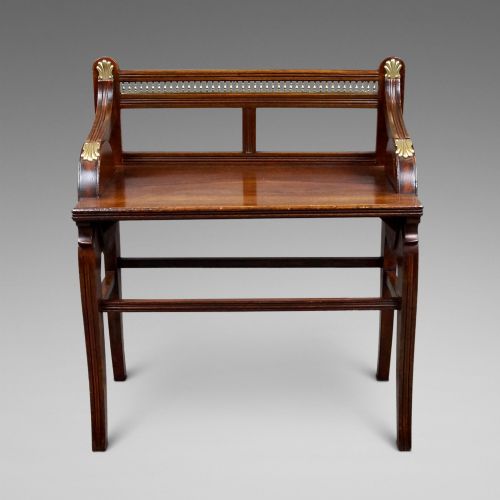
When you search for Victorian aesthetic seating, you encounter forms that span from low salon chairs and nursing chairs to sturdy hall benches and dining sets. These pieces reflect the artistic shifts of the nineteenth century, moving away from heavy Victorian upholstery toward lighter, Japanesque or Anglo-Moorish lines.
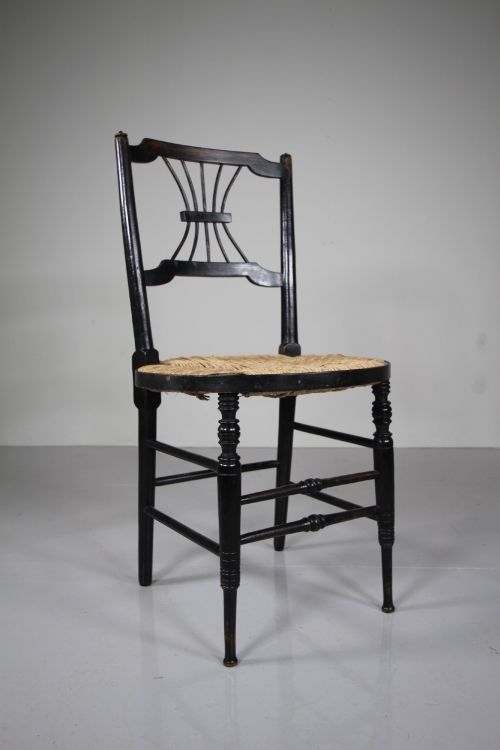
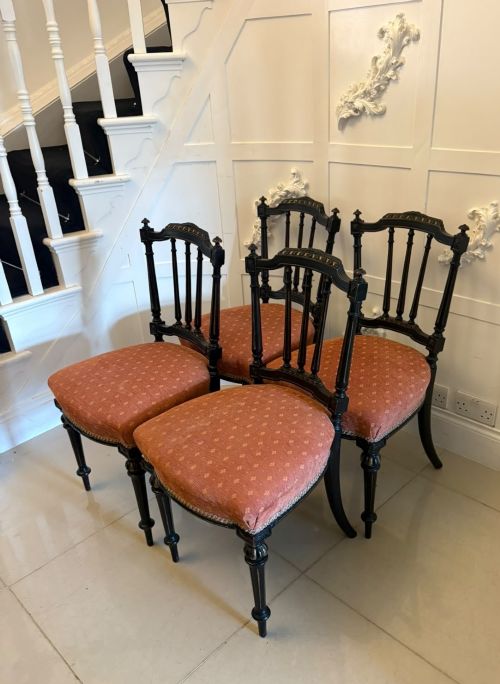
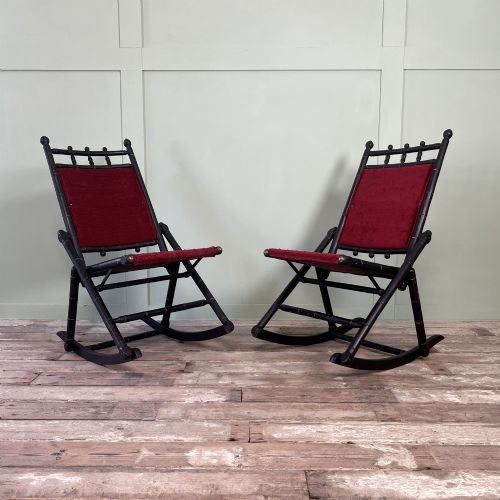
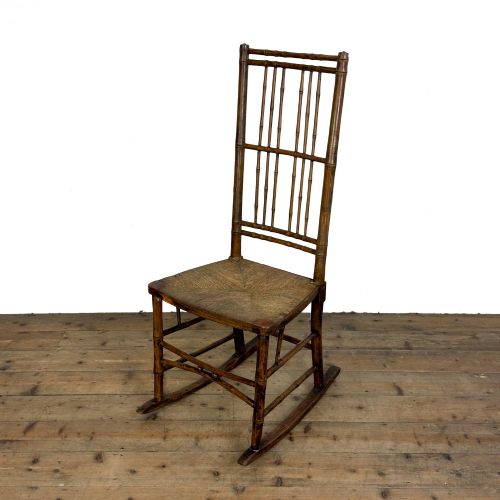
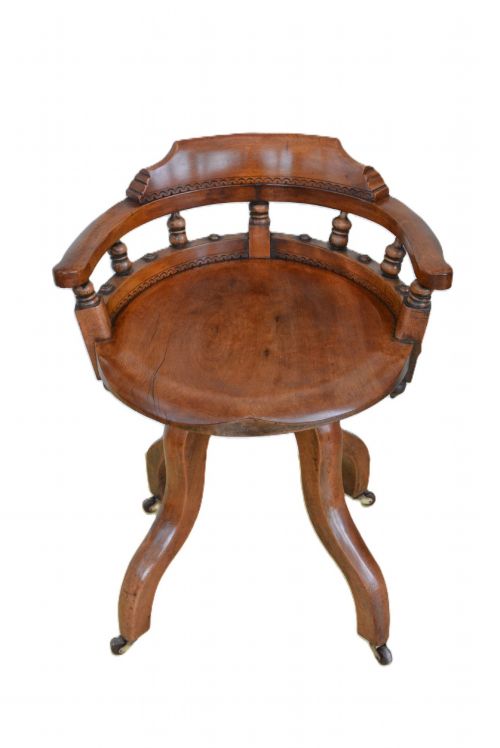
You are most likely to meet ebonised wood frames highlighted with gilt, alongside occasional oak, walnut, and mahogany builds. The selection includes specific forms like folding rocking chairs, swivel office chairs, and rush-seated Sussex chairs designed for everyday use.
The origins trace through various decades of the nineteenth century and into the early twentieth, capturing the evolution of the Aesthetic Movement and Arts & Crafts ideals. Makers and designers of the period experimented with faux bamboo, brass mounts, and inlaid panels to create functional seating with a distinct artistic identity.
Materials and construction
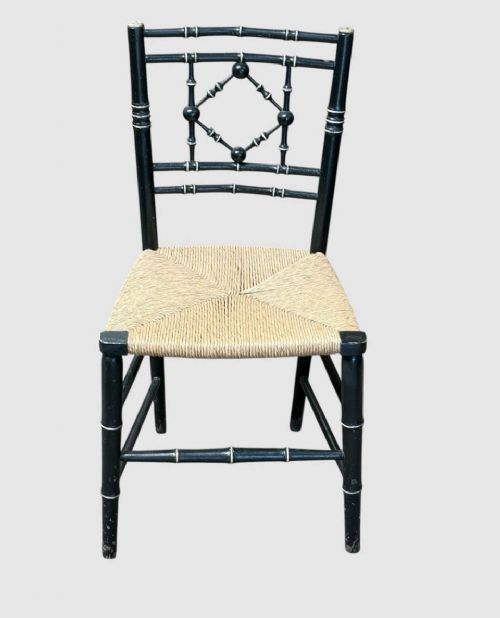
Frames rely heavily on ebonised wood, walnut, mahogany, and oak, frequently accented with subtle gilt detailing or brass mounts. Artisans also utilised natural materials like rush and bamboo, alongside faux bamboo turning, to achieve the lightweight, exotic look favoured by designers of the movement.
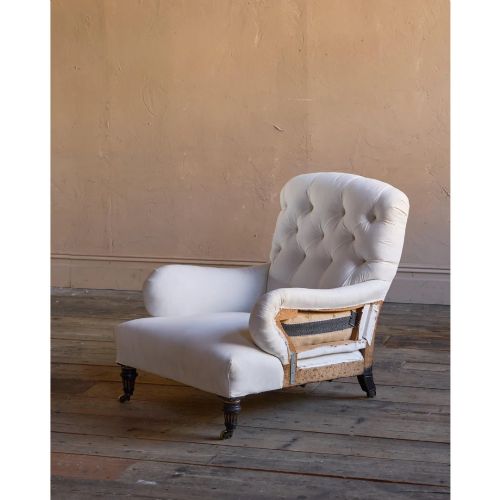
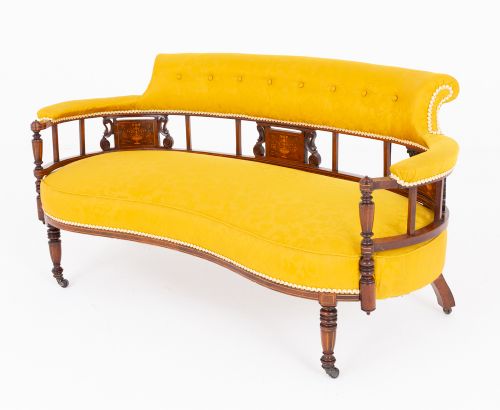
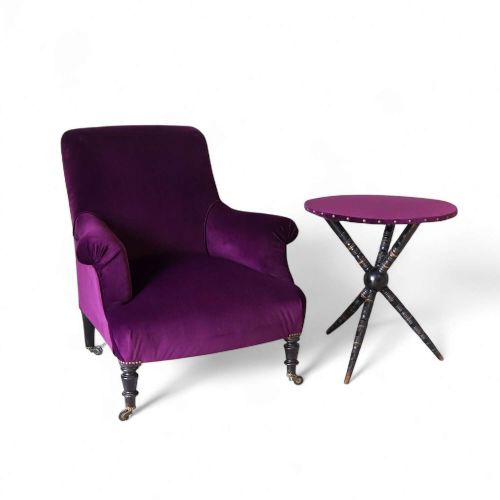
Upholstery incorporates traditional textiles such as velvet and diverse woven fabrics, often secured to low salon chairs, settees, and armchairs. Joinery combines traditional cabinet-making techniques with structural bamboo or turned woodwork to maintain stability in folding and swivelling designs.
Sunflower motifs carved into wooden settees ensure your hallway can legally stare back at visitors.
Assessing craftsmanship
The distinction between ordinary production and finer examples rests on the crispness of carved wooden details, the precision of ebonised and gilt finishes, and the integrity of the frame construction. Pieces designed by notable firms or associated with specific architects exhibit superior joinery and more refined proportions.
Materials dictate much of the character, where solid hardwoods and carefully turned bamboo elements retain their structural firmness better than simpler alternatives. The choice of upholstery fabric and the retention of original decorative elements further separate standard workshop output from exceptional commissions.
William Morris·Rossetti·James Shoolbred·Gillows·E W Godwin·Liberty and Co·Lamb of Manchester·Bruce J Talbert·Charles Bevan·Maple and Co·Holland and Son·Ford Maddox Brown
The Victorian Aesthetic Seating Glossary
- Ebonised
- Wood treated with a dark finish to resemble ebony. This technique was widely utilised on Victorian aesthetic frames to create a dramatic contrast with gilt highlights.
- Aesthetic Movement
- A late nineteenth-century design current emphasising visual and decorative beauty over narrative subject matter. It drew inspiration from Japanese art and Anglo-Moorish forms.
- Faux bamboo
- Turned wood carved or painted to imitate natural bamboo stalks. Makers used this technique to introduce exotic textures into domestic chairs and rocking seats.
- Rush
- Woven marsh plant stems used for seating pads. It provides a durable, textured surface commonly found on Sussex chairs and related vernacular forms.
- Mashrabiya
- Turned wood lattice panels used in Islamic architecture and incorporated into corner chairs and furniture by late nineteenth-century British retailers.
Victorian Aesthetic Seating: Frequently Asked Questions
What defines aesthetic movement seating?
Aesthetic movement seating breaks from standard Victorian heaviness by embracing simpler structural lines, ebonised finishes, and artistic motifs influenced by Japanese and Anglo-Moorish design.
These pieces prioritise visual harmony and decorative character, often featuring turned woodwork, faux bamboo, or subtle gilt highlights.
Where were these chairs used?
Chairs and benches from this period served various domestic spaces, from formal drawing rooms and low salon settings to hallways and bedrooms.
Specific forms like hall benches furnished entranceways, while nursing chairs and low chairs suited private chambers and intimate parlours.
How do I identify a Godwin chair?
Godwin designs typically display strong Anglo-Japanese influences, featuring clean ebonised frames, linear construction, and a distinct lack of superfluous ornamentation.
Attributions often rest on documented structural patterns, specific turnings, and documented associations with makers like William Morris.
Are these chairs comfortable for daily use?
Many forms, such as upholstered armchairs, rocking chairs, and settees, offer deep seats and supportive backs designed for relaxed sitting.
Lighter side chairs and hall benches were built primarily for upright posture and occasional use in hallways or dining spaces.
What is a Sussex chair?
The Sussex chair is a vernacular-inspired form with turned wooden uprights and a woven rush seat, popularised by Morris and Company.
Its lightweight construction and clean profile made it a staple of the Arts and Crafts interior.