
Victorian Aesthetic Movement Table
When you look for a victorian aesthetic movement table, you are seeking the dark woods, bamboo frames and Anglo-Japanese lines that defined late nineteenth-century interiors.
Victorian Aesthetic Movement Table
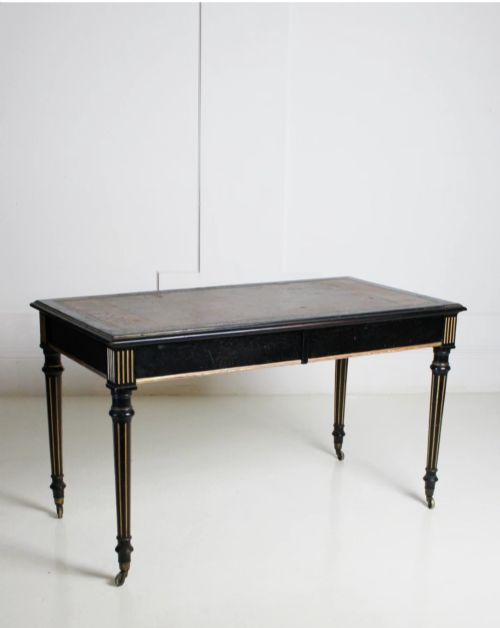
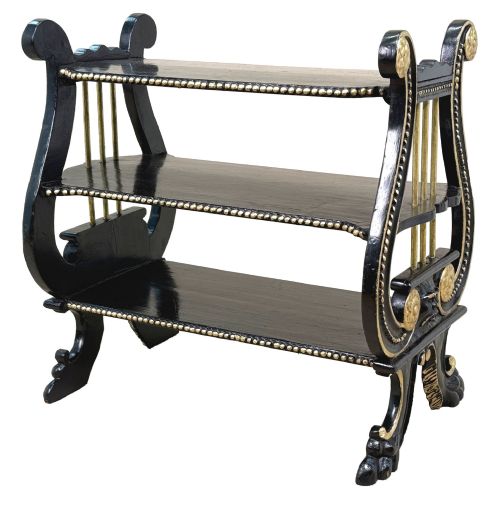
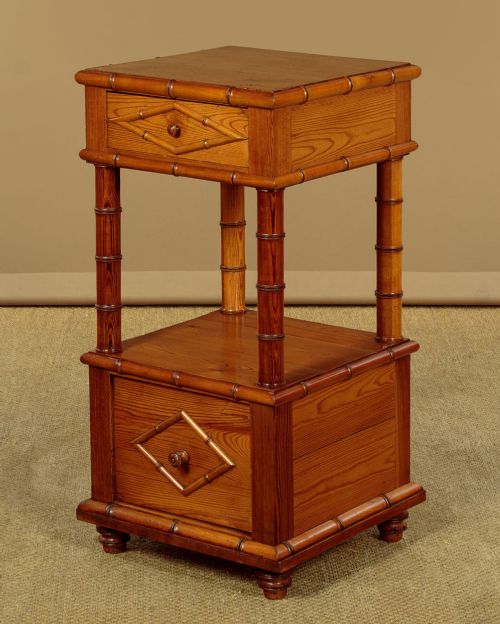
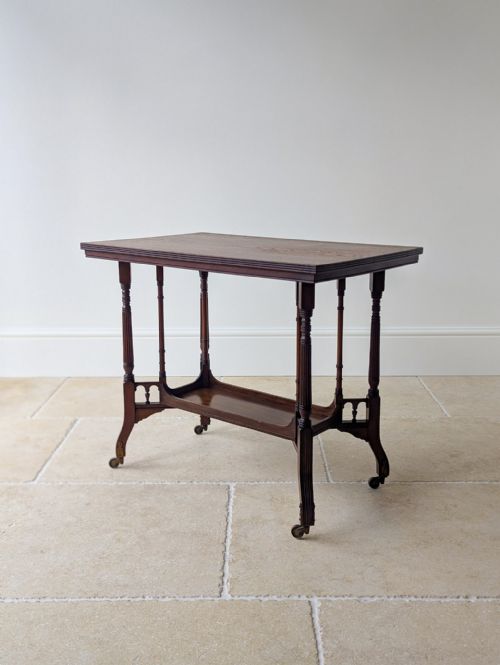
A victorian aesthetic movement table encompasses a diverse range of occasional, side, centre and writing tables produced during the late nineteenth century. These forms reflect a deliberate move away from heavy Victorian historicism toward lighter, cleaner lines inspired by Japanese design.
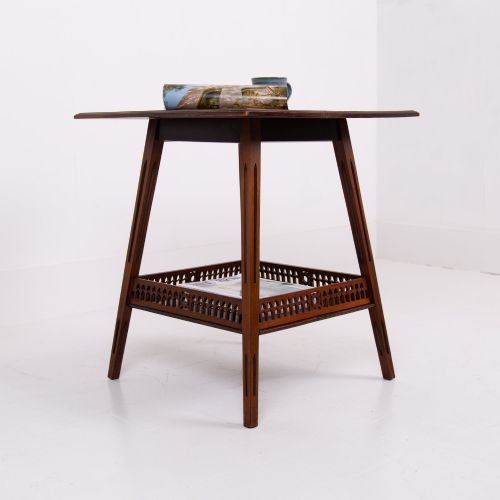
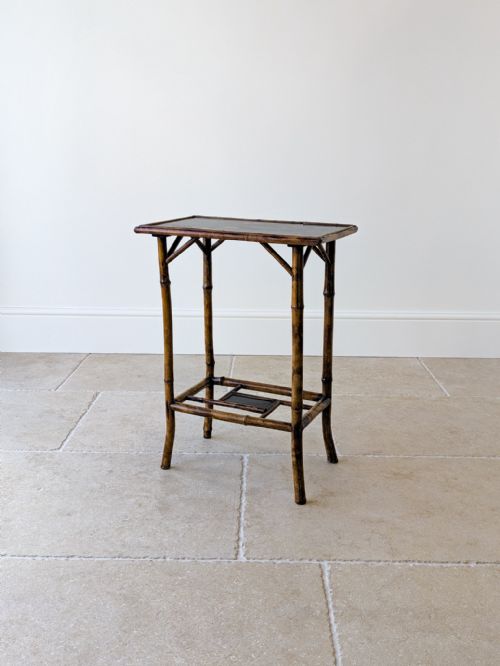
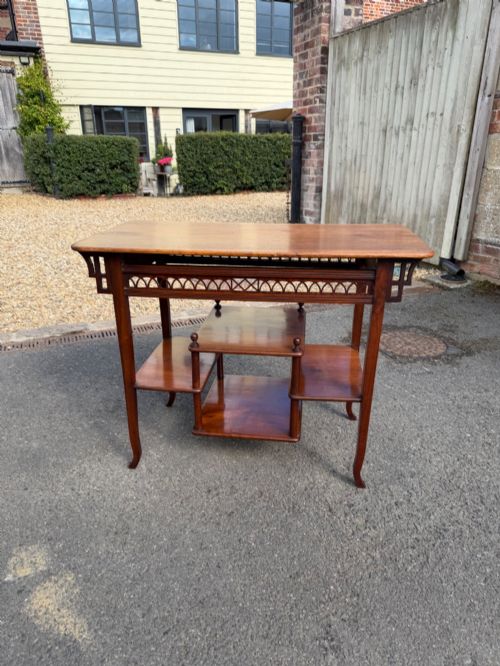
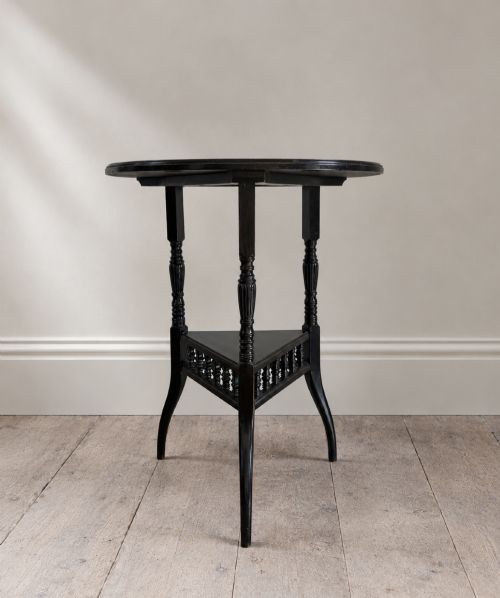
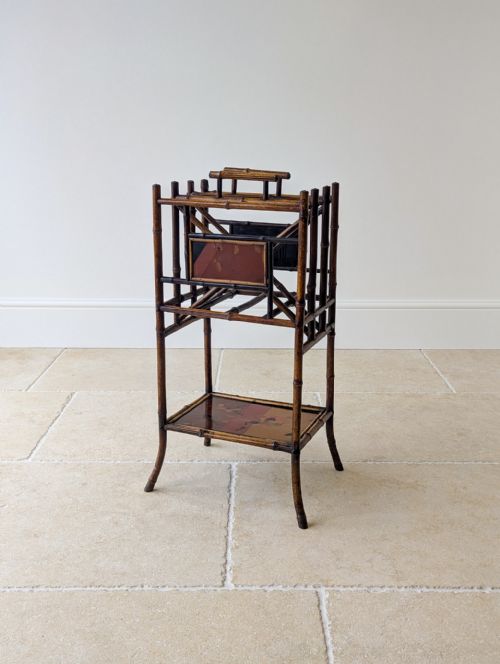
Occasional and side tables appear frequently, often taking circular, square or octagonal shapes. Examples range from simple bamboo frames to substantial ebonised hardwood centre tables inlaid with contrasting woods and metals.
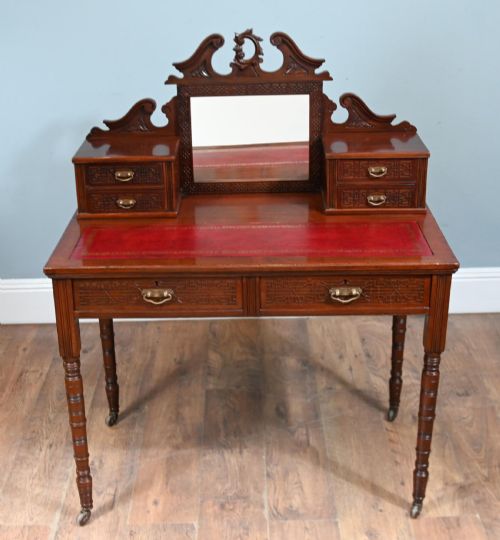
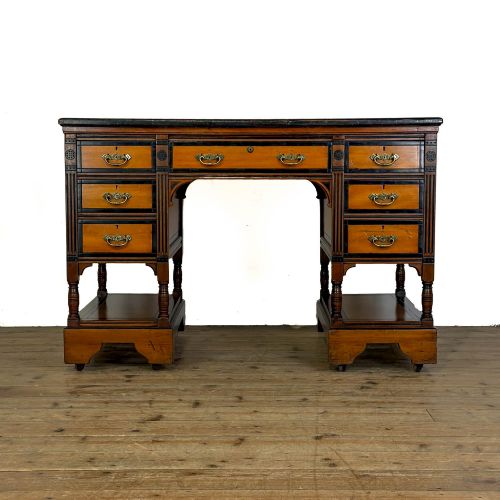
Writing tables, library tables and smaller gypsy tables round out the selection. Many pieces incorporate useful lower tiers, drop leaves or clever folding mechanisms suited to compact modern spaces.
How they were made
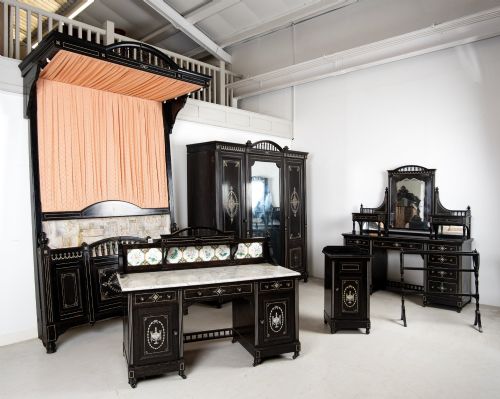
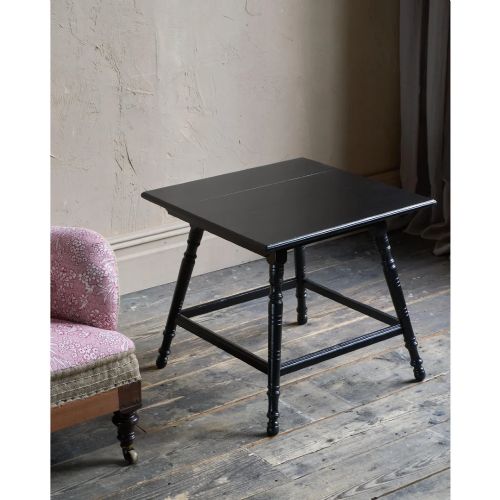
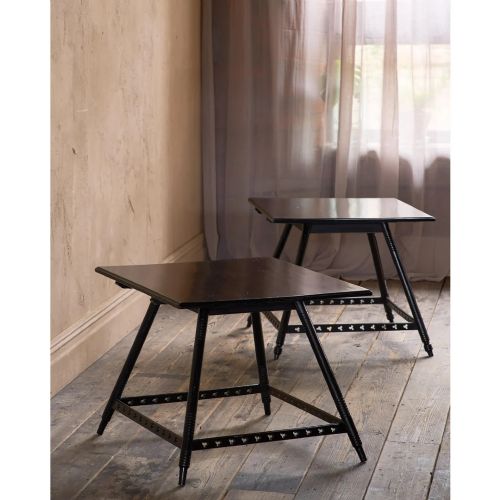
Cabinetmakers utilised ebonised hardwood, walnut, mahogany and oak to achieve the characteristic dark, uniform surfaces associated with the style. Ebonising involved staining timber to imitate costly ebony, frequently accented with parcel gilding or inlay.
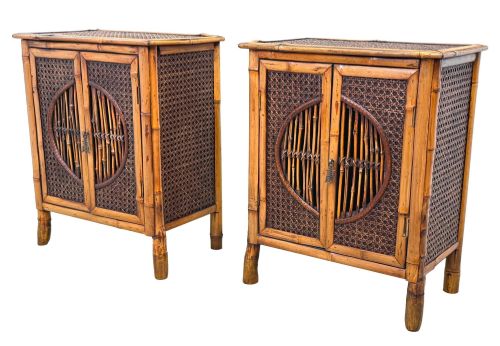
Bamboo and faux bamboo gained immense popularity, reflecting the period's fascination with Japanese goods. Artisans combined these natural canes with lacquer panels, brass hardware and ceramic tiles to create contrasting textures.
Construction techniques balanced structural integrity with visual lightness. Joinery remained precise, allowing delicate turned legs and tiers to support surprisingly robust table tops.
Listings feature 19th-century periods alongside materials like bamboo, brass, ebonised wood and mahogany across various occasional and centre table forms.
What varies in quality
The distinction between standard production and top-tier workshop output lies in the selection of materials and the execution of detail. Finer pieces employ solid amboyna, coromandel or dense mahogany rather than simpler stained pine.
Design attribution and maker stamps elevate a piece significantly. Tables bearing the marks of prominent firms or designers command greater interest due to documented provenance and superior cabinetwork.
The precision of decorative elements, such as hand-carved fretwork, intricate marquetry inlay and original brass fittings, separates standard domestic furnishings from exceptional examples.
Gregory and Co·Hindley and Sons·W.A.S. Benson·Waring and Gillows·Druce and Co·Liberty and Co·Blyth and Son·Lamb Manchester·Maple and Co
The Victorian Aesthetic Movement Table Glossary
- Ebonisation
- The process of staining timber, usually fruitwood or hardwood, to resemble true ebony. This dark finish served as a neutral backdrop for gilt highlights and inlaid motifs.
- Anglo-Japanese style
- A design movement blending British construction with Japanese artistic principles. It prioritised asymmetry, natural motifs and simplified geometric forms.
- Gypsy table
- A lightweight, three-legged occasional table often draped in fabric or kept plain. These versatile pieces gained popularity during the late nineteenth century for informal drawing room use.
- Marquetry
- The art of applying thin veneers of wood, shell or metal to a structure to form decorative patterns. High-end tables utilised contrasting timbers to create elaborate geometric or floral scenes.
- Étagère
- A piece of furniture consisting of open shelves for displaying ornaments. In table forms, this translates to multi-tiered designs offering both surface space and lower storage.
Victorian Aesthetic Movement Table: Frequently Asked Questions
What is a victorian aesthetic movement table?
A victorian aesthetic movement table is a nineteenth-century piece reflecting the artistic shift toward simplicity and Japanese design principles.
These tables utilise ebonised finishes, bamboo or rich woods like walnut and mahogany, breaking away from earlier heavy ornamentation.
How do I identify an aesthetic table?
Look for characteristic materials such as ebonised wood, bamboo frames or inlaid geometric patterns. The silhouettes are typically lighter and more refined than standard Victorian furniture.
Many examples feature Anglo-Japanese motifs, lower display tiers or distinctive turnings rather than heavy classical carving.
Were these tables used for dining?
Most pieces designed in this style served as occasional, side, centre or writing tables rather than main dining furniture. Their smaller scales suited drawing rooms, libraries and bedrooms.
Some larger library or centre tables offered sturdy work surfaces, while smaller gypsy and bamboo versions held lamps and decorative objects.
How should I care for ebonised wood?
Maintain ebonised surfaces by dusting with a soft, dry cloth and avoiding direct sunlight that can fade the dark finish. Keep humidity levels stable to protect the underlying timber and any delicate inlay work.
Avoid harsh chemical polishes and instead use mild, wax-based products specifically formulated for antique furniture.