







Victorian Aesthetic Credenza
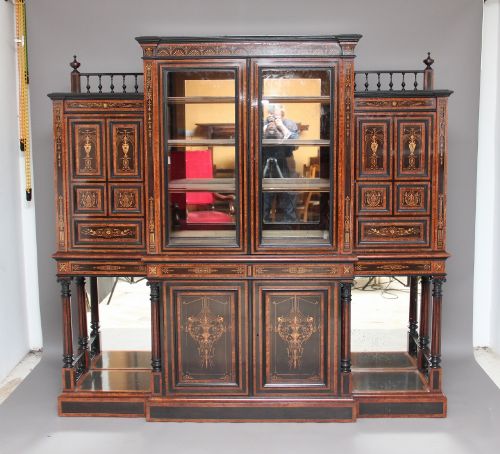
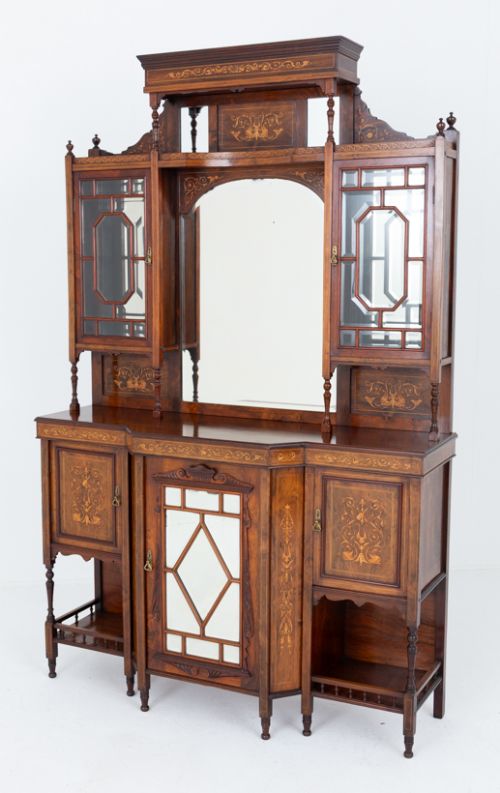
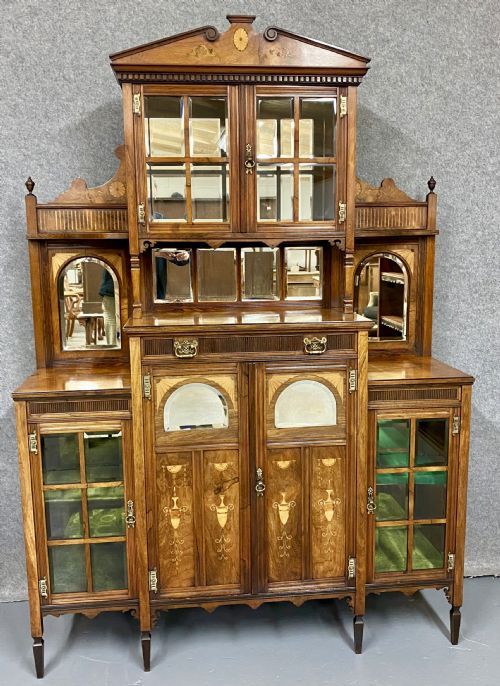
A victorian aesthetic credenza brings refined nineteenth-century design into a room through rich timber, delicate inlay, and glazed display space.
Victorian Aesthetic Credenza
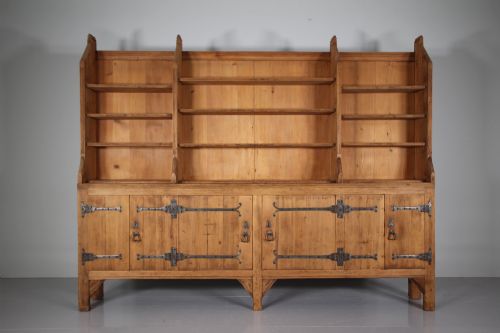
A victorian aesthetic credenza sits within nineteenth-century cabinet-making, drawing heavily on the reforms of the Aesthetic Movement for its clean lines and artistic ornamentation. Buyers searching this phrase encounter low-profile side cabinets designed to display ceramics and books while anchoring a principal room.
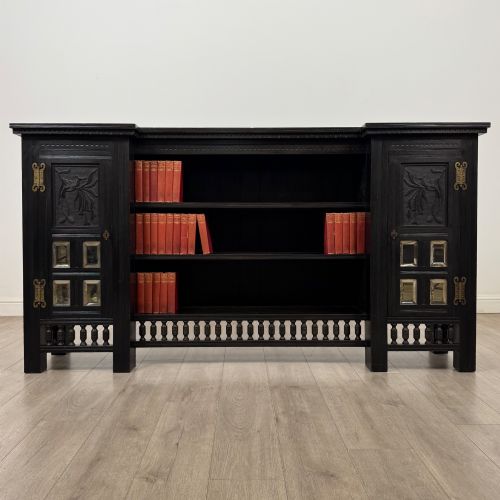
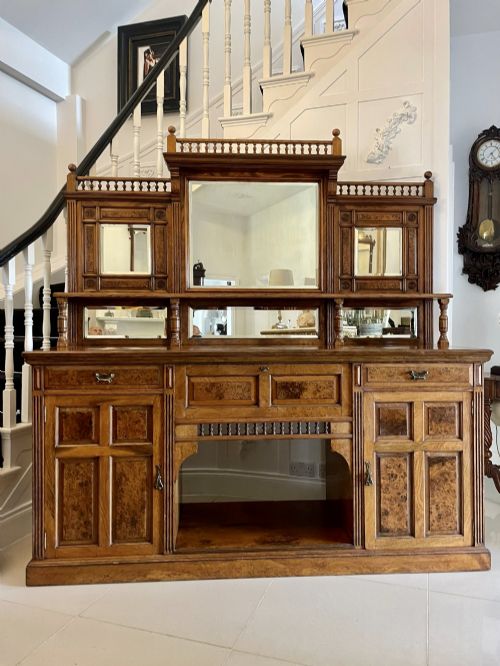
The pieces appearing on this page span the 1870s to 1900, with late Victorian and 1880s examples dominating the selection. Alongside standard credenzas, the inventory includes related forms such as mirror-back sideboards, breakfront bookcases, and ebonised display cabinets sharing the same stylistic vocabulary.
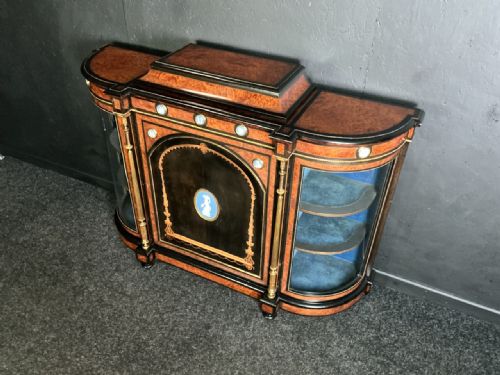
Makers working within this idiom produced sophisticated furniture that bridged domestic utility and artistic expression. These credenzas often feature glazed central doors flanked by open shelves or side cupboards, resting on plinth bases rather than tall legs.
Materials and construction methods
Cabinet-makers relied on dense tropical and native hardwoods, frequently employing rosewood, walnut, and pollard oak as primary construction materials. Ebonised wood appears extensively, often highlighted with gilt paint to emulate oriental lacquer work popular during the period.
Decoration relied on precision craftsmanship, incorporating boxwood inlay, marquetry, and contrasting veneers like amboyna and burr walnut. Brass mounts, mirrored backs, and occasional ceramic panels further enriched the surface texture of these sophisticated cabinets.
Victorian Aesthetic Credenza Retail Price Guide 2026
Typical asking prices for victorian aesthetic credenza among the pieces listed under this phrase on Sellingantiques today, from the lower quarter to the upper quarter. They describe what is for sale here now, not the wider market.
Listings feature woods like rosewood, walnut, coromandel, and burr yew alongside ebonised finishes.
Judging quality in these cabinets
Quality rests upon the crispness of the timber preparation and the fidelity of the marquetry work. Superior examples exhibit tightly secured veneers, perfectly mitred joints, and hand-chased brass hardware rather than mass-produced stamped metal.
The distinction between standard commercial output and workshop masterpieces lies in the depth of the decorative scheme, such as hand-painted panels or intricate boxwood stringing. Maker attribution to prominent nineteenth-century firms elevates both the design complexity and the structural integrity of the piece.
Collinson & Lock·Lamb of Manchester·Garnett & Sons·James Plunckett·Gillows
The Victorian Aesthetic Credenza Glossary
- Credenza
- A low cabinet originally used for displaying fine plate, adapted in the Victorian period into a principal drawing-room piece with glazed doors.
- Ebonised
- Timber treated with chemical stains or black paint to imitate expensive ebony, frequently utilised in nineteenth-century aesthetic furniture.
- Marquetry
- Decorative veneer work forming pictorial or geometric patterns using various coloured woods applied to a carcase.
- Breakfront
- A piece of furniture whose central section projects forward from the flanking wings, creating visual depth.
Victorian Aesthetic Credenza: Frequently Asked Questions
Where should I place a credenza?
These cabinets suit dining rooms, grand hallways, or principal reception spaces where their length and reflective mirrored backs can command the room.
Position them against a solid wall away from direct sunlight to protect sensitive rosewood veneers and polished ebonised surfaces from fading.
How do I clean ebonised wood?
Dust regularly with a soft, dry lint-free cloth to prevent particulate buildup on the dark finished surfaces. Avoid abrasive polishes or modern chemical sprays that can strip the historic finish or dull the gilt highlights applied by nineteenth-century makers.
Can I store heavy items inside?
The internal shelving is generally constructed from standard cabinet timbers designed for display china and books rather than heavy architectural volumes. Distribute weight evenly across the shelves to maintain the integrity of the original interior supports.
How do I distinguish aesthetic style?
Aesthetic pieces discard heavy Victorian gloom in favour of lighter proportions, ebonised finishes, and Japanese-inspired floral or geometric marquetry inlay.
Look for refined brass hardware, painted panels, and an emphasis on artistic design over purely ostentatious display.