
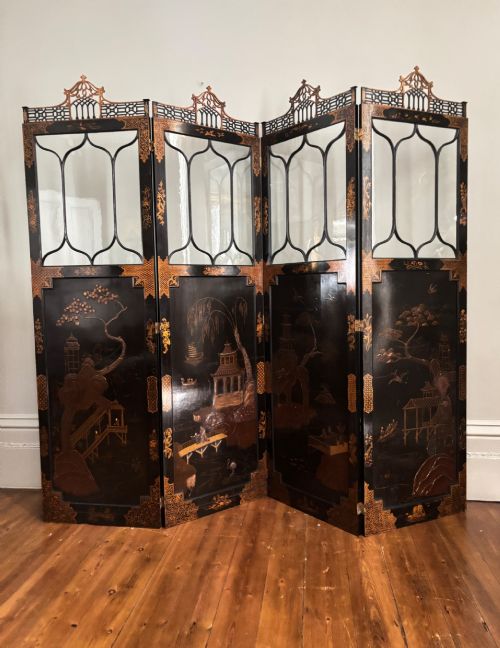


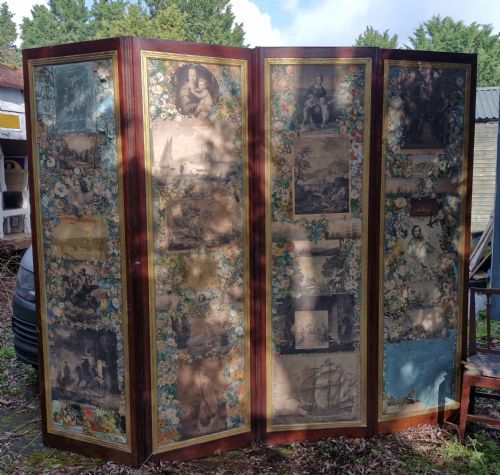

Victorian 4 Panel Screen
A Victorian 4 panel screen divides a room or frames a hearth with layered folds of fabric, wood, or metal, offering both visual warmth and privacy.
Victorian 4 Panel Screen
A Victorian 4 panel screen functions primarily as a folding room divider or a large privacy screen, articulated in multiple hinged sections. When searching for a Victorian 4 panel screen, a buyer encounters substantial timber frames housing canvas, needlework, painted leather, or decorative scraps.
The materials span mahogany, rosewood, walnut, and giltwood frames holding woolwork, silk embroidery, glass, or paper panels. Many examples originate from the nineteenth century, including specific decades such as the 1880s and 1890s, alongside pieces reflecting Regency or Arts and Crafts influences.
Beyond room dividers, the selection includes related folding screens, fire screens, and dressing screens sharing the characteristic multi-fold structure. These tall dividers operate as architectural elements that segment open spaces or conceal hearths when fires are unlit.
How they were made
Makers constructed the structural frames from dense hardwoods like mahogany, walnut, and rosewood, often joining them with hinged metal hardware to permit smooth folding across four sections. Lighter frameworks utilised brass, wrought iron, or copper, particularly for functional fire screens and spark guards.
Infill materials demanded specialised textile and decorative techniques, ranging from Berlin wool work, needlepoint, and silk embroidery to hand-painted canvas and applied scrap work. Artisans also incorporated bevelled glass, mirror glass, and lacquered papier-mâché to catch the light within domestic interiors.
Listings feature four-fold configurations in materials ranging from rosewood and mahogany to brass, iron, canvas, and wool.
What varies in quality
Quality rests heavily on the execution of the panel infill, distinguishing finely stitched needlepoint, detailed hand-painted leather, and intricate scrap work from simpler fabric inserts. The density and carving of the timber frame, whether solid rosewood, walnut, or giltwood, further separates standard production from superior pieces.
The integrity of the original hinges and the stability of the folding sections dictate structural longevity in everyday use. Superior examples maintain intact textiles and sound frames without undue sagging across the four hinged folds.
The Victorian 4 Panel Screen Glossary
- Berlin Work
- A type of needlepoint embroidered in coloured wools on canvas using charted patterns. It gained immense popularity during the nineteenth century for upholstery and decorative screens.
- Needlepoint
- Embroidery stitched through a stiff open-weave canvas mesh to form a dense decorative surface. This technique appears frequently on nineteenth-century privacy and fire screens.
- Pole Screen
- A vertical screen panel mounted on a slender wooden pole with an adjustable bracket, designed to shield a person's face from the direct heat of a fireplace.
- Scrap Work
- A decorative technique involving the arrangement and gluing of printed paper scraps or cut-outs onto a surface, often finished with a clear protective varnish.
- Spark Guard
- A protective mesh or metal screen placed before a fireplace to catch flying embers. These utilise iron, brass, or copper wire construction.
Victorian 4 Panel Screen: Frequently Asked Questions
How do you use a four panel screen?
A four panel screen stands independently to divide a large room into distinct zones or to create a private dressing area. The multiple folds allow the screen to angle around furniture or stretch flat against a wall.
In domestic interiors, they also serve to shield occupants from draughts or to conceal fireplace openings during warmer months. Their hinged design offers flexible placement wherever temporary visual barriers are required.
What is the difference between a room divider and a fire screen?
Room dividers are tall folding structures designed to partition interior spaces or provide privacy across a wider floor area. They typically measure several feet in height and incorporate heavy timber frames with fabric, canvas, or paper panels.
Fire screens are much smaller units built to sit directly in front of a domestic fireplace. They utilise metal stands or low wooden frames with heat-resistant materials like brass mesh, glass, or embroidered wool.
Are these screens stable on carpets?
Four panel screens rely on their zig-zag folding arrangement to maintain balance on various floor surfaces. Angling the panels slightly creates a self-supporting stance that resists tipping.
Deep pile carpets can reduce the friction of the lower frame edges, so adjusting the folds into a tighter accordion shape ensures greater stability in high-traffic rooms.
How are antique screens cleaned?
Wooden frames require gentle dusting with a dry cloth and occasional treatment with suitable furniture wax to nourish the grain. Textile panels benefit from careful surface vacuuming through a mesh attachment to lift embedded dust.
Avoid liquid cleaners on embroidered woolwork, needlepoint, or painted leather surfaces to prevent moisture damage or colour transfer.