
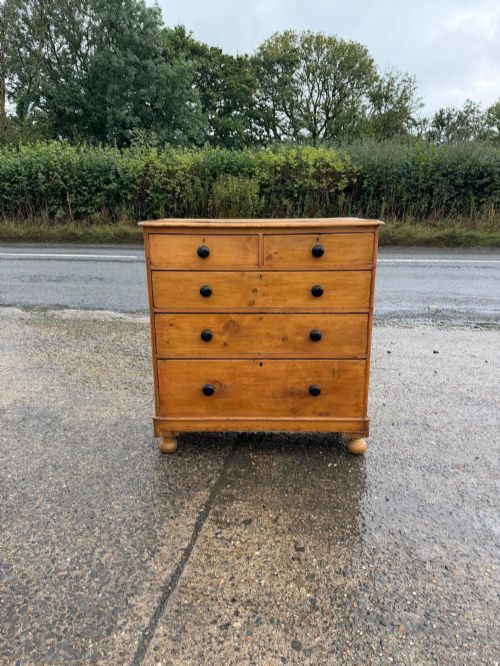
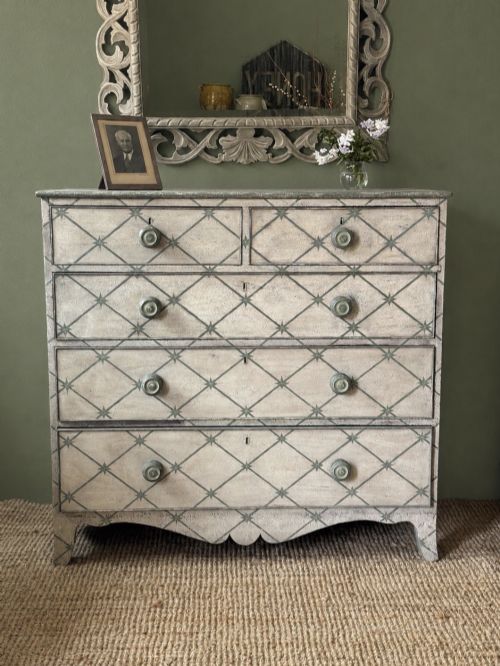
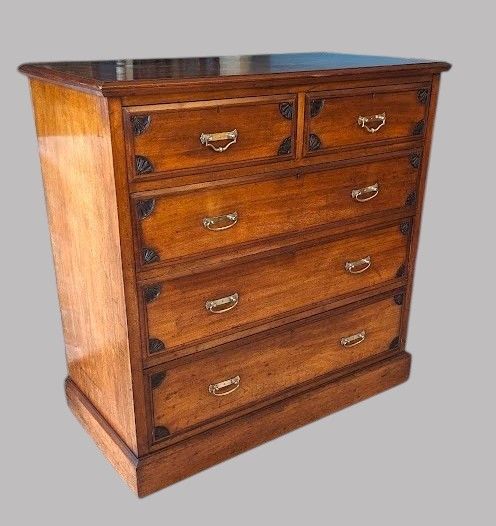
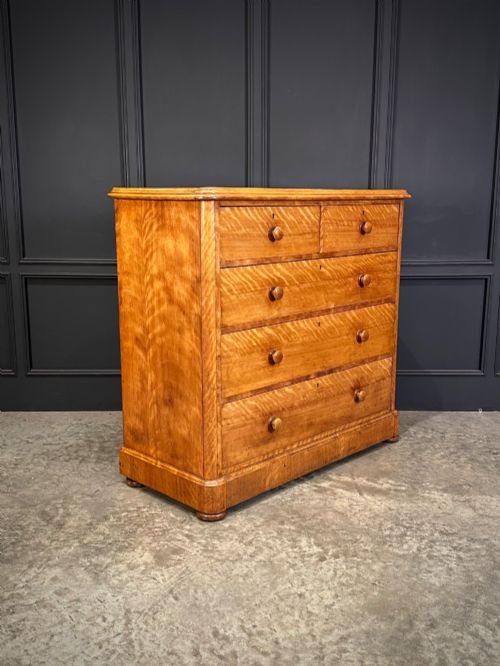
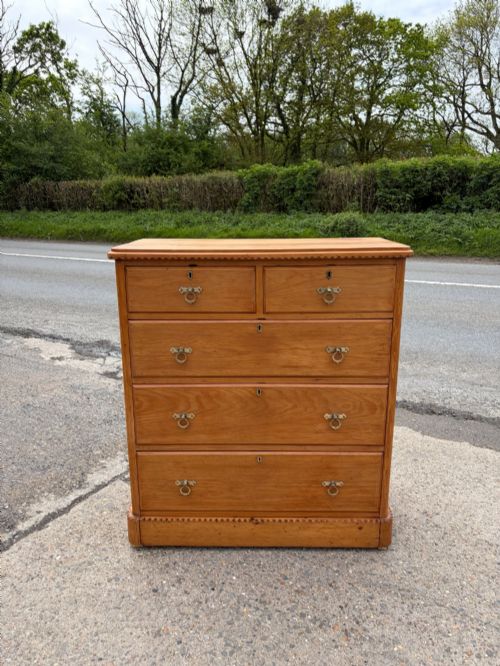
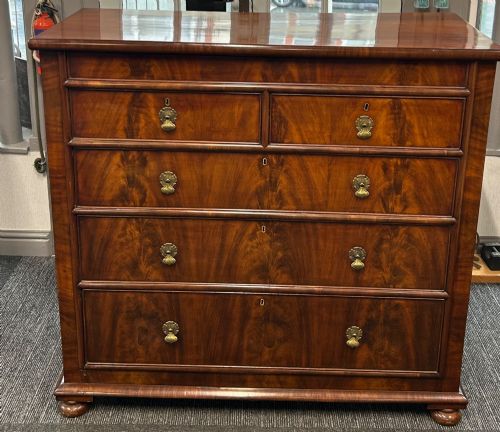
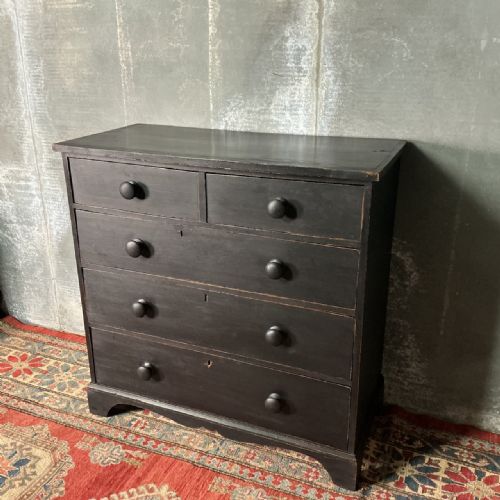
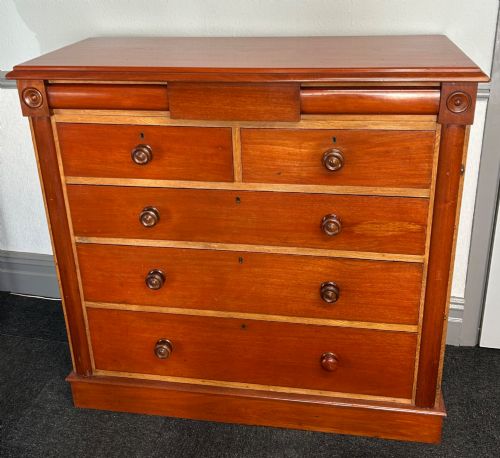

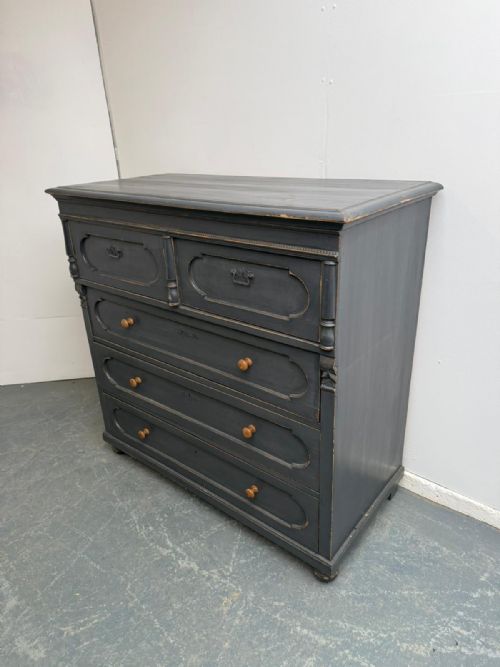


Victorian 2 Over 3 Drawers
These Victorian 2 over 3 drawers bring sensible proportion and solid bedroom storage from the nineteenth century.
Victorian 2 Over 3 Drawers
When you search for victorian 2 over 3 drawers, you are looking at nineteenth-century bedroom storage built with two smaller upper drawers positioned above three wider full-width drawers below.
The pieces appearing on this page span the Victorian and Edwardian periods, stretching from the eighteen-fifties through to eighteen-ninety, with occasional examples labelled from related nineteenth-century styles such as Georgian or Regency.
Pine and mahogany dominate the offerings, appearing in both country workshop vernaculars and formal polished finishes, alongside occasional variations in satinwood, oak, and painted pine.
Materials and construction
Cabinet makers built these carcasses primarily from solid timber like pine and mahogany, often applying decorative flame mahogany veneer to primary drawer fronts for visual depth.
Hardware details such as brass pulls, turned wooden bun handles, and porcelain knobs completed the drawer fronts, while structural joints relied on traditional carpentry methods appropriate to provincial workshops and city cabinet houses.
Listings feature pine, mahogany, satinwood, oak, and iron across Victorian, Edwardian, and Aesthetic Movement styles.
Judging the range
The distinction between standard domestic chests and finer examples rests on timber selection, such as figured flame mahogany or clean satinwood, versus utilitarian painted or scrubbed pine.
Subtleties in construction distinguish pieces, including finely turned inlaid handles, boxwood stringing, and bow front profiles, compared against straightforward straight-front carcases.
Heal & Son·Howard and Sons
The Victorian 2 Over 3 Drawers Glossary
- Bow front
- A cabinet front that curves outward in a convex shape. This curved profile requires skilled joinery and typically signals a more formal urban piece.
- Flame mahogany
- A veneer cut from the fork of the mahogany tree where branches join the trunk. It creates a distinctive rippling, flame-like grain pattern.
- Scumbled pine
- A decorative paint technique simulating the grain of more expensive woods. Artisans applied a translucent glaze over a lighter base coat and manipulated it with brushes or combs.
- Bun handle
- A rounded, protruding wooden knob shaped like a small bun. These turned pulls are commonly found on nineteenth-century pine and mahogany chests.
- Linen press
- A tall storage piece traditionally used for flat textiles, featuring upper cupboard doors enclosing sliding trays above lower storage drawers.
Victorian 2 Over 3 Drawers: Frequently Asked Questions
How were these chests used?
These pieces served primarily in bedrooms for folding clothes, linens, and personal apparel. The smaller top drawers held accessories while the deeper lower drawers accommodated bulkier garments.
Over decades of domestic use, they moved between principal chambers and secondary rooms as household layouts shifted.
What woods were commonly used?
Makers constructed these carcases using native and imported timbers suited to regional availability and workshop tradition. Mahogany and satinwood appeared in polished urban townhouses, while various grades of pine served country settings.
Secondary woods like oak or deal often appeared internally for drawer linings and back panels.
How do I date a piece?
Dating relies on observing construction characteristics, wood types, and decorative styles recorded across the nineteenth century. Mid-century examples often display simpler proportions, while later Victorian and Edwardian pieces frequently incorporate applied stringing or alternate hardware.
Archival listings show production spanning from eighteen-fifty through the eighteen-nineties.
How do I care for the surface?
Maintenance involves gentle cleaning using soft cloths and traditional wax polishes suited to historic timber. Avoiding direct sunlight and maintaining stable room humidity protects veneers and prevents wood movement.
Original painted and scumbled surfaces require particular care to preserve the historic finish without abrasive treatments.