





Vernacular Oak Chairs Set
Vernacular oak chairs set groupings bring sturdy country character to a room, offering robust timber construction built for everyday farmhouse life.
Vernacular Oak Chairs Set
A vernacular oak chairs set gathers country dining and kitchen seating originating primarily from eighteenth-century and nineteenth-century English, Welsh, and regional workshops. These groupings typically comprise matched or harlequin sets of four, six, eight, ten, or sixteen dining chairs designed for heavy domestic service.
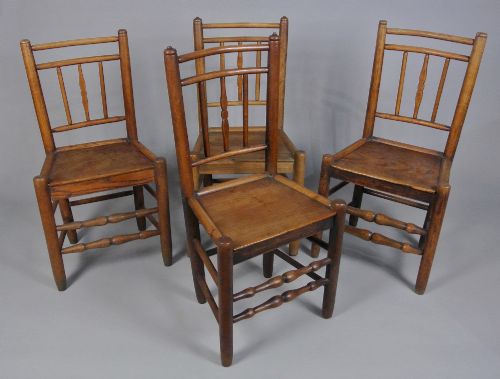
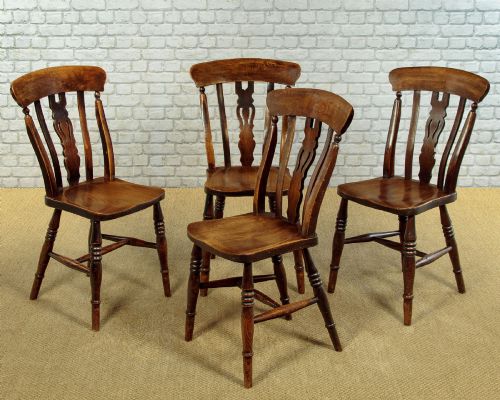
The evidence shows forms ranging from Georgian ladderback and spindleback designs to penny seat Windsor chairs and Shropshire farmhouse seating. Buyers meeting these pieces on this page will encounter sturdy wooden seats and regional country styles spanning the Georgian era through to the late nineteenth century.
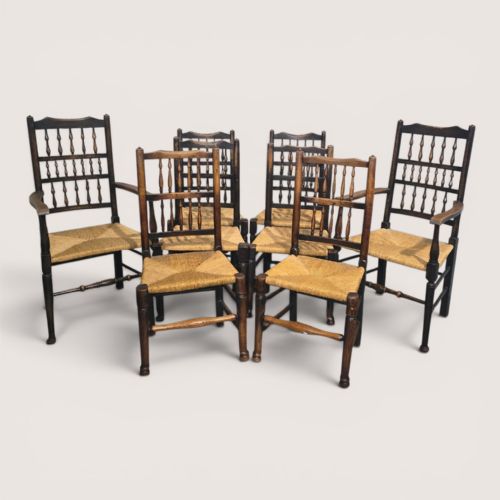
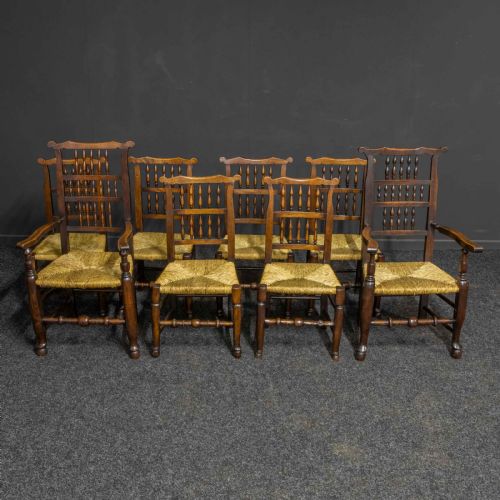
Regional variations shape these groups, encompassing Welsh country chairs, Lancashire spindlebacks, and English vernacular dining chairs. Each set reflects the utilitarian traditions of local makers who prioritized practical timber construction over metropolitan refinement.
Materials and construction methods
Makers constructed these chairs primarily from solid oak, complemented by elm, ash, beech, and assorted hardwoods for turned spindles, legs, and structural framing. Rush seating also appears alongside solid timber penny seats within these country sets.
Joinery relied on traditional pegging, mortise and tenon joints, and Windsor-style bodging techniques that secured turned components into thick wooden seats. These robust methods ensured the chairs could withstand generations of daily farmhouse use without losing structural integrity.
Vernacular Oak Chairs Set Retail Price Guide 2026
Typical asking prices for vernacular oak chairs set among the pieces listed under this phrase on Sellingantiques today, from the lower quarter to the upper quarter. They describe what is for sale here now, not the wider market.
Listings span the eighteenth and nineteenth centuries, featuring regional country styles including Georgian, Victorian, Shropshire, and Welsh vernacular designs.
Quality variations across sets
Cohesion within a set determines its standing, separating carefully assembled harlequin groupings from uniform matched suites of chairs. The balance of proportion, matching timber grain, and the uniformity of turned spindles dictate the visual harmony of the group.
The integrity of the original construction and the survival of early surface patination distinguish finer examples from heavily restored or altered pieces. Original timber seats and uncompromised structural joints carry greater historical weight than replaced components.
The Vernacular Oak Chairs Set Glossary
- Vernacular
- Everyday furniture made by local craftsmen for regional use rather than high-style urban production. These pieces reflect local traditions and available timbers.
- Harlequin set
- A collection of chairs that match in general style, period, and material but vary slightly in minor details. Such sets were often assembled over time rather than purchased together originally.
- Ladderback
- A chair back featuring horizontal arched slats between the upright rear posts. This traditional form was common in country workshops across Lancashire and Wales.
- Spindleback
- A chair back constructed with a series of turned vertical wooden rods. These slender members provide resilient support while keeping the seating lightweight.
- Penny seat
- A solid wooden chair seat shaped with a central saddle indentation resembling a large coin. This shaping enhances comfort for daily dining use.
Vernacular Oak Chairs Set: Frequently Asked Questions
What is a harlequin chair set?
A harlequin set is a collection of chairs that share a common style, period, and material while possessing subtle individual variations in turning or proportion. These groupings were frequently gathered together over time for large farmhouse tables.
Such sets offer a less formal appearance than strictly matched suites while maintaining a unified country aesthetic across the dining room.
How do I care for antique oak chairs?
Maintain these chairs by keeping them away from direct heat sources and extreme humidity fluctuations that can cause timber to split. Regular dusting and occasional application of appropriate wax help preserve the natural patination of the wood.
Avoid harsh modern cleaning chemicals which can strip the aged surface finish and diminish the historic character of the timber.
Where were vernacular chairs made?
These chairs were produced in regional workshops across England and Wales, utilising locally sourced timbers such as oak, elm, and ash. Rural joiners and bodgers supplied farmhouses, cottages, and provincial dining rooms.
Regional preferences often dictated the specific framing style, such as the ladderbacks of Lancashire or the distinctive vernacular builds of Shropshire and Wales.
How do I date an old chair?
Dating relies on examining construction techniques, tool marks, timber shrinkage, and the evolution of regional styles from the eighteenth to the nineteenth century. Hand-turned spindles and pegged joinery provide clues to the period of manufacture.
Comparing the wear patterns and structural details against documented examples helps narrow down whether a piece dates from the Georgian era or the late nineteenth century.