
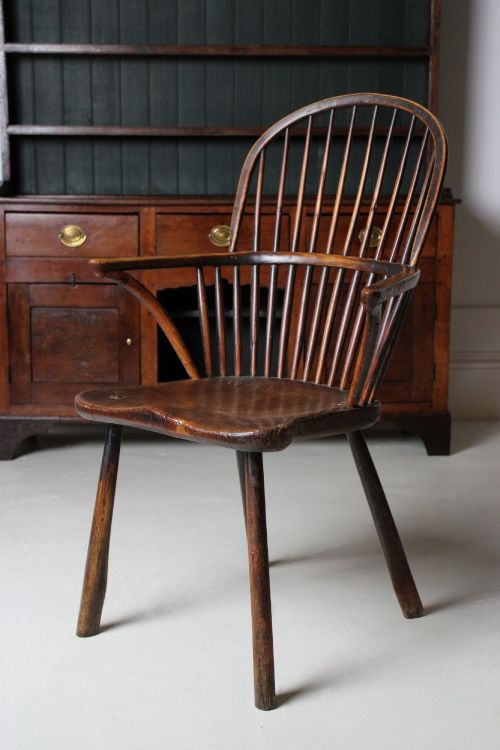
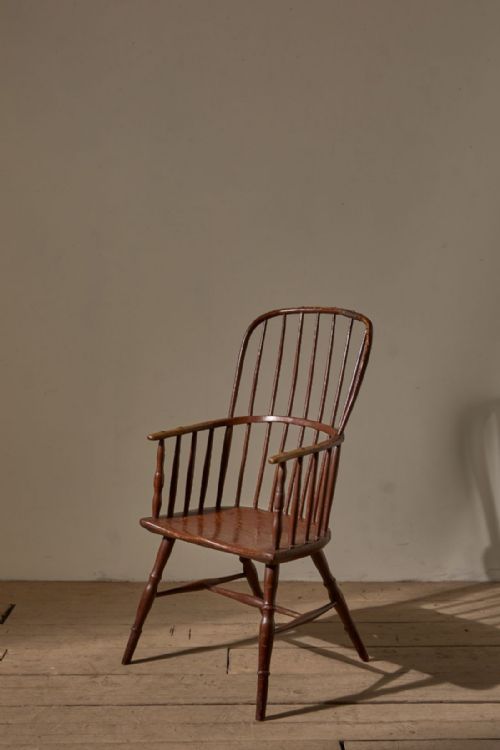
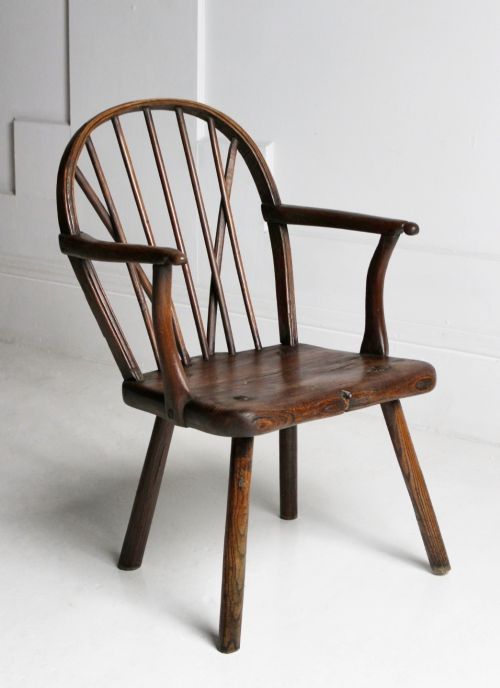


Vernacular Hoop Back Chair
A vernacular hoop back chair brings organic rural warmth into a room through honest timber construction and time-tested country craftsmanship.
Vernacular Hoop Back Chair
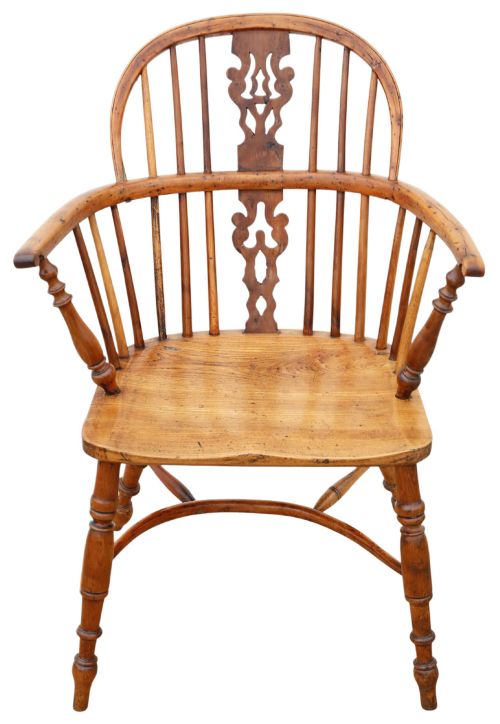
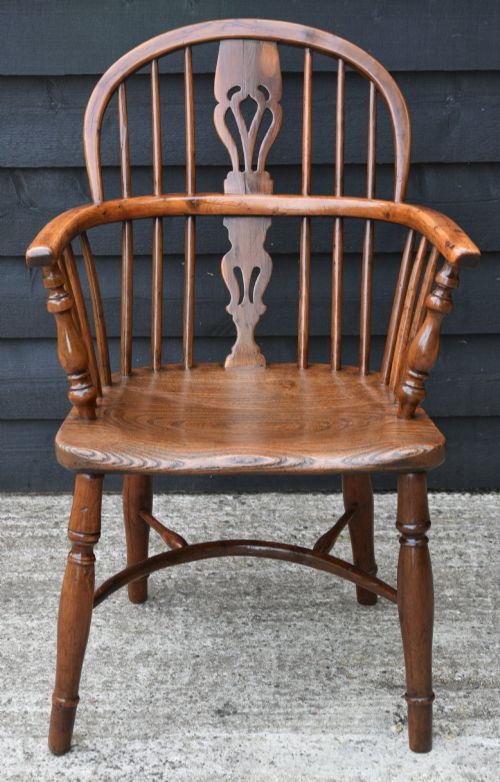
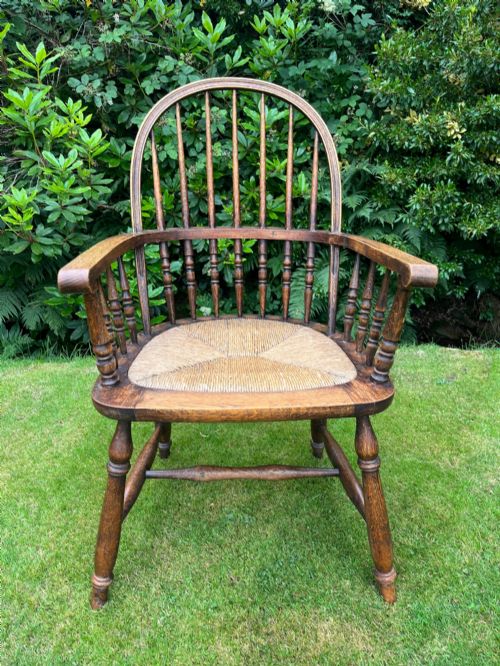
A vernacular hoop back chair is a robust seating form rooted in rural traditions, most commonly found here as Windsor armchairs and stick back chairs from the eighteenth and nineteenth centuries. These pieces emerge from regional English workshops, spanning Georgian, Victorian, and Regency periods.
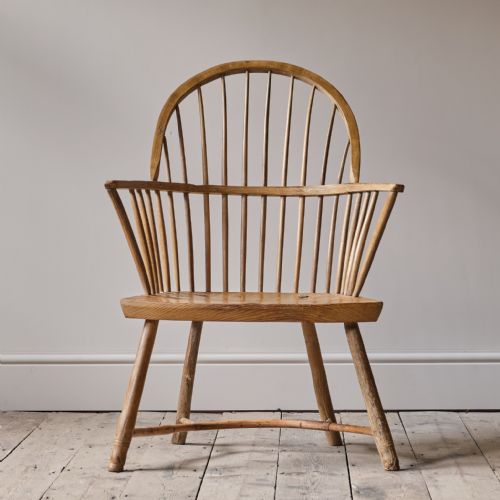
The most typical example you will encounter is a Windsor armchair featuring a continuous bentwood hoop back, often paired with an elm seat and ash or yew spindles. Variations range from low back and high back formats to broadarm designs and child-sized iterations.
Makers shaped these utilitarian seats for everyday domestic and kitchen use, relying on local resources rather than urban fashionable standards. Regional traits distinguish them, from Thames Valley and West Country origins to Yorkshire broadarm construction.
Materials and Construction
The construction relies on contrasting timbers selected for their specific mechanical properties, pairing dense elm for carved saddle seats with flexible ash or richly figured yew for bent hoops and spindles. This mixed-wood approach ensures structural resilience where stress occurs most.
Makers formed the iconic hoop back by steam-bending green timber into a continuous arch, secured directly into the solid wood seat using wedged tenon joints. Surface treatments vary from natural waxed grain and burr yew patination to original brown paint.
Listings feature eighteenth and nineteenth century periods, utilising elm, ash, yew, oak, beech, and paint across armchair and Windsor chair forms.
Markers of Quality
Quality rests in the balance of the proportions, the crispness of the spindle turning, and the depth of the sculpted elm seat. Superior examples display carefully selected timbers, such as highly figured burr yew or rich grain matching across the components.
The integrity of the original joints and the presence of honest surface patination elevate a piece significantly. Lesser examples show clumsy replacement parts or heavy-handed modern stripping that removes the historical skin of the wood.
Rockley maker
The Vernacular Hoop Back Chair Glossary
- Hoop back
- A continuous bentwood frame forming the upper backrest and arm support of the chair. This curved member distributes weight and provides sturdy ergonomic support.
- Windsor chair
- A chair built with a solid wooden seat into which the legs and back spindles are separately bored and wedged. It represents a cornerstone of vernacular seating design.
- Broadarm
- A chair featuring exaggerated, flattened wooden armrests designed for writing or comfort. This regional variation is particularly associated with Yorkshire workshops.
- Stick back
- A chair design utilising plain turned or cleft spindles rather than a solid central splat. This construction method offers lightweight strength.
- Saddle seat
- A wooden seat base carved into a concave, contoured shape to mimic a saddle for comfort. It is typically fashioned from thick elm.
Vernacular Hoop Back Chair: Frequently Asked Questions
How do I identify a vernacular hoop back chair?
Look for a solid carved wooden seat that receives independently fitted legs and back components, combined with a steam-bent continuous rail.
Regional details, such as the wood species used and the shape of the arm supports, help point toward specific origins like the Thames Valley or West Country.
What woods were used to make these chairs?
Maker traditions typically combined multiple timber types to maximise strength and comfort within a single piece.
Elm provides a heavy, split-resistant seat base, while ash and yew supply the flexible tension needed for bent hoops and slender spindles.
Are these chairs comfortable for daily seating?
The sculpted wooden saddle seats and raked back spindles were originally engineered for long hours of practical use in kitchens and farmhouses.
Adding a simple loose cushion can easily adapt these historic seats for modern living without altering their structure.
How do I distinguish eighteenth and nineteenth century chairs?
Earlier eighteenth-century examples often feature heavier timber scantlings, deeper saddle seats, and distinct regional turning styles on the undercarriage.
Nineteenth-century production tended toward slender components and standardised regional patterns as workshop output increased.