
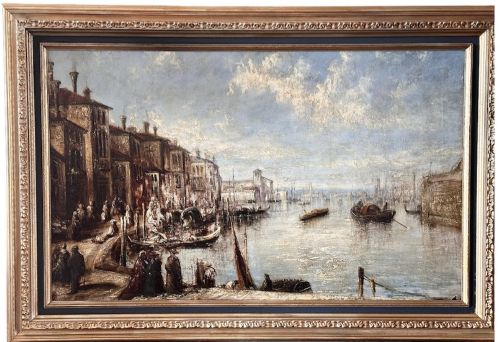


Venice Canal Scene Picture
A venice canal scene picture captures the timeless light and water of the lagoon, offering a window into historic Italian waterways for any room.
Venice Canal Scene Picture
A venice canal scene picture brings the historic waterways, gondolas, and palazzos of the lagoon directly into domestic spaces. These works capture the changing light on the water and the weathered facades of Venetian architecture.
Buyers will encounter various interpretations spanning from nineteenth century views to mid twentieth century impressions. The selections range from detailed nineteenth century oils to looser early twentieth century watercolours and pastels.
Common subjects include the Grand Canal, quiet side canals, and moonlit lagoon vistas. Many pieces preserve the distinct atmosphere of old Venice mansions and bustling waterways through different artistic mediums.
How these works were created
Artists utilised oil paint on canvas to build rich textures and deep tones for grand architectural scenes. Canvas supports provide durability and allow for expressive brushwork that mimics the shimmer of water.
Watercolour and gouache on paper were frequently employed for lighter, more fluid depictions of atmospheric light. These water based media capture the translucent quality of the lagoon and hazy skies.
Frames often consist of giltwood and gilded wood, adding a traditional decorative border that complements the period aesthetic. Wood supports and stretchers maintain the integrity of the canvas over time.
Framing materials include traditional giltwood and gilded wood alongside various wood supports.
What separates the finest examples
Quality rests in the artist's ability to render the distinctive light and atmosphere of the Venetian lagoon rather than merely recording architectural details. Superior works demonstrate confident brushwork and a sophisticated handling of colour.
The choice of medium and the condition of the paper or canvas influence the overall presence of the piece. Well preserved surfaces and appropriate period frames contribute to the enduring appeal of higher tier works.
Francis Moltino·Claude Jousset·Jane Vivian·William Raymond Dommersen·William Knox·Helen Donald Smith
The Venice Canal Scene Picture Glossary
- Oil on canvas
- Pigment suspended in drying oil applied to a woven fabric surface stretched over a wooden frame. This technique allows for blending and rich colour saturation.
- Watercolour
- A painting method where fine pigment is suspended in a water soluble vehicle on paper. It creates transparent washes that suggest light and air.
- Giltwood
- Wood carved and covered with a thin layer of gold leaf or gold paint. It provides an ornate and reflective border for traditional paintings.
- Gouache
- An opaque water based paint consisting of pigment and binder. It offers heavier coverage than standard watercolour for solid highlights.
- Impressionism
- An art style focused on accurate depiction of light in its changing qualities. It utilises small, thin yet visible brush strokes.
Venice Canal Scene Picture: Frequently Asked Questions
How do I hang a framed oil painting safely?
Ensure the wall hooks match the weight of the wooden frame and canvas. Use two fixing points to keep the piece level.
Keep the painting away from direct sunlight and heat sources to protect the oil paint and giltwood frame from damage.
How do I care for antique watercolours on paper?
Display watercolours behind glass away from direct sunlight to prevent the paper from yellowing and the pigments from fading. Maintain stable room humidity.
Avoid hanging paper works in damp spaces like kitchens or bathrooms where moisture can degrade the paper and encourage mould growth.
What is the difference between oil and watercolour views?
Oil paintings on canvas offer heavier textures, deeper colour saturation, and a robust surface that suited grand nineteenth century interior displays.
Watercolours on paper provide a lighter, more transparent feel, capturing the hazy atmosphere and open skies of the Venetian lagoon with delicate washes.
How can I tell the period of a canal scene?
Examine the materials, framing style, and the handling of paint or paper to estimate the era of production. Nineteenth century works often feature detailed architecture and heavy giltwood frames.
Twentieth century pieces frequently show looser impressionistic brushwork or modernist tendencies in depicting the familiar Venetian canals and gondolas.