



Venice Canal Landscape
Venice canal landscape works capture the light, water and architecture of the lagoon through 19th-century and mid-century paintings.
Venice Canal Landscape
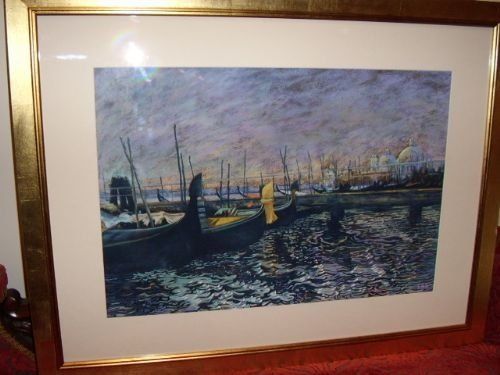
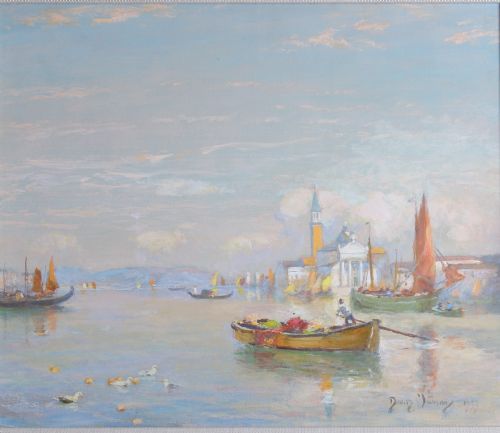
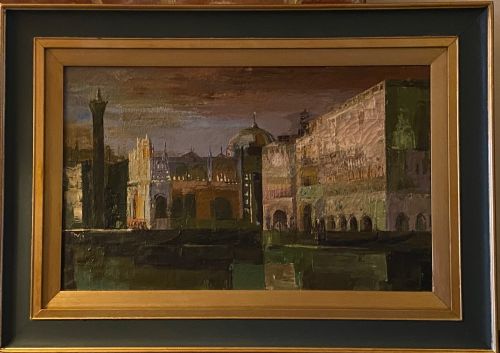
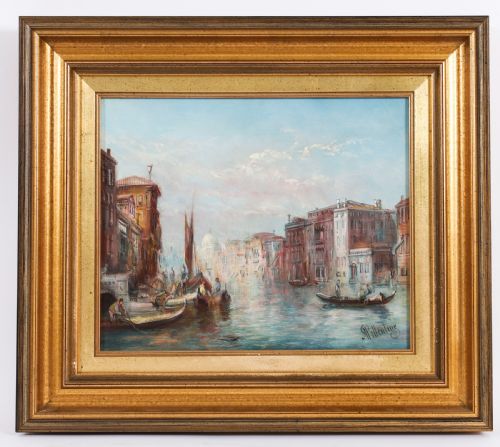
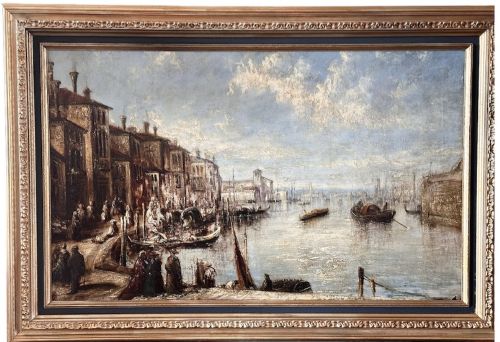
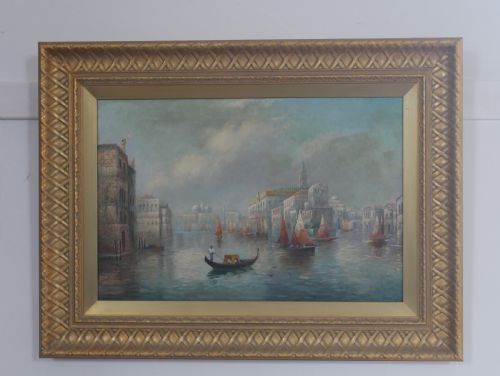
A venice canal landscape brings the historic waterways, palaces and landmarks of Italy into a room through oil and watercolour.
The most common examples on this page are 19th-century oil paintings on canvas and framed watercolours depicting the Grand Canal and Santa Maria della Salute.
These works bridge Victorian academic observation and impressionist handling, recording the changing atmosphere of the lagoon across different decades.
Materials and Methods
Artists painted these scenes using oil paint on canvas or board, alongside delicate watercolour and gouache applied to paper.
Many of the period oils are housed in giltwood frames that complement the warm tones of the Venetian palazzos depicted within.
Venice Canal Landscape Retail Price Guide 2026
Typical asking prices for venice canal landscape among the pieces listed under this phrase on Sellingantiques today, from the lower quarter to the upper quarter. They describe what is for sale here now, not the wider market.
Listings include works in oil on canvas, watercolour, gouache, and pastel, spanning the Victorian era to mid-century impressionism.
Judging the Work
Quality rests on the artist's handling of light upon the water and the structural accuracy of architectural landmarks such as the Doge's Palace.
Fine brushwork and confident watercolour washes distinguish the most accomplished depictions from standard topographical records.
Alfred Pollentine·Antonio DeVity·Francis Moltino·F J Aldridge·Claude Jousset·Antonietta Brandeis·Antoine Bouvard Senior·E. Perez Senet·Jane Vivian·William Raymond Dommersen·Hercules Brabazon Brabazon·Frank Wasley·David Law·William Knox·Wilfred Knox·Henry Wimbush·Charles Clement Calderon·Helen Donald-Smith
The Venice Canal Landscape Glossary
- Grand Canal
- The main waterway of Venice, lined with historic palazzos. It is a frequent subject for 19th-century topographical artists.
- Giltwood
- Wood carved and covered with a thin layer of gold leaf. Frames of this material often accompany period oil paintings.
- Gouache
- An opaque water-based medium. Artists combined it with watercolour and ink to add highlights to paper works.
- Impressionism
- An art style focused on accurate depiction of light in its changing qualities. Several mid-century works on this page reflect this approach.
Venice Canal Landscape: Frequently Asked Questions
What periods do these paintings come from?
The works span the Victorian era, the 19th century, and various decades of the 20th century up to the 1960s.
Most pieces belong to the 19th century and the early 20th century, reflecting periods of strong British and European travel to Italy.
How should I hang a framed oil painting?
Select a wall with stable humidity away from direct sunlight to protect both the canvas and the giltwood frame.
Ensure the hanging fixings match the weight of the frame and securely anchor into the wall structure.
How do I care for a watercolour on paper?
Keep watercolours behind glass and out of direct daylight to prevent the paper from yellowing and the pigments from fading.
Maintain consistent indoor temperatures to avoid humidity changes that affect paper and card mounts.
How do I distinguish oil paintings from watercolours?
Oil paintings use thick paint applied to canvas or wood, showing distinct texture and brushwork under close inspection.
Watercolours are painted on paper, often showing transparent washes and requiring protective glazing.