



Venetian Chair
Venetian chairs carry the theatrical flair of the lagoon, offering elaborate carving and painted finishes that elevate any room.
Venetian Chair
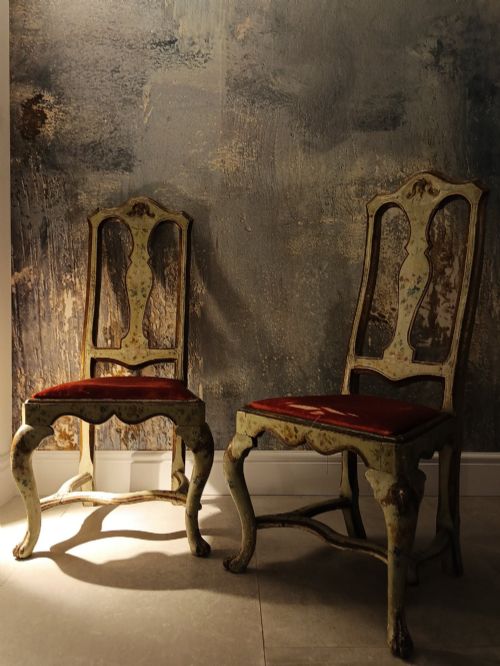
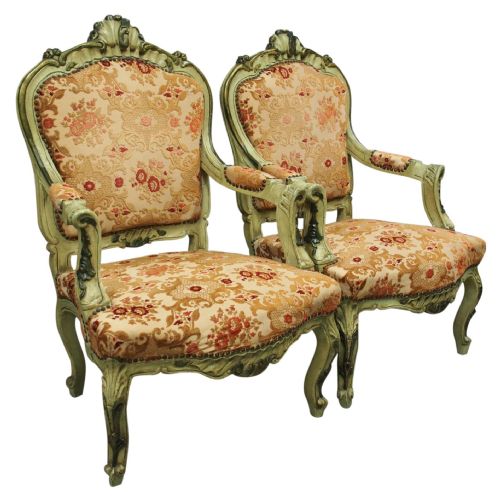
A venetian chair brings centuries of Italian craftsmanship into a modern interior, taking forms such as armchairs, side chairs, dining chairs, and stools. Buyers searching for a venetian chair encounter pieces spanning the eighteenth and nineteenth centuries, including revival iterations from the eighteen-fifties, eighteen-seventies, and nineteen-twentieth.
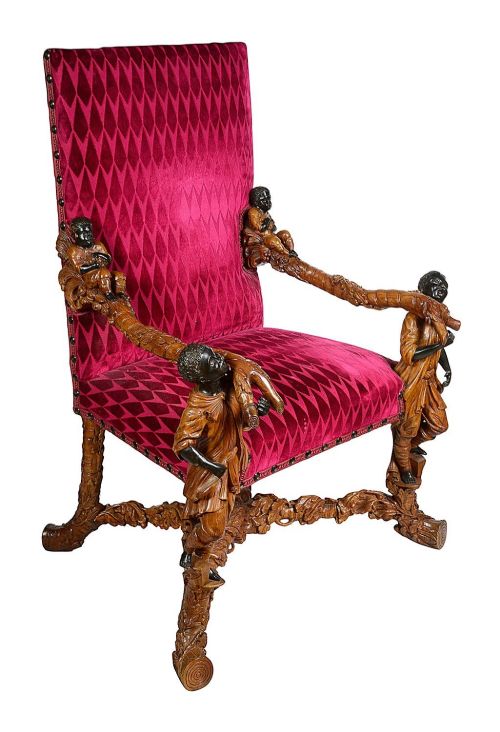
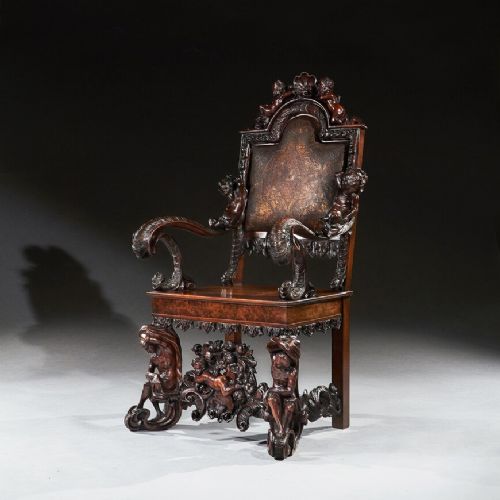
The selection here encompasses distinct regional expressions, notably North Italian side chairs and grander armchairs influenced by Venetian Rococo, Venetian Baroque, Italian Baroque Revival, Renaissance Revival, and Victorian Grotto Revival styles.
Forms range from standard seating to specialist pieces like gondola chairs, revolving grotto stools, and X-shaped Savonarola chairs. These objects present diverse structural silhouettes, from painted wood frames to silver gilt finishes and carved walnut constructions.
Construction and materials
The physical evidence shows these seating pieces rely heavily on carved wood, mahogany, and walnut as structural foundations. Artisans shaped these timbers into elaborate scrolls and figures, often applying gesso to create smooth surfaces for decorative detail.
Surface decoration frequently involves paint and silver gilt, giving objects their characteristic luminous or polychrome appearance. Upholstery elements incorporate fabric, notably red velvet, secured with metal tacks along the edges.
Venetian Chair Retail Price Guide 2026
Typical asking prices for venetian chair among the pieces listed under this phrase on Sellingantiques today, from the lower quarter to the upper quarter. They describe what is for sale here now, not the wider market.
Listings feature eighteenth and nineteenth-century periods, utilising carved wood, gesso, painted surfaces, fabric, and metal tacks.
Judging quality in design
Quality reveals itself in the depth and crispness of the carved wood details, where the hand of the artisan remains evident in every curve and flourish. Exhibition quality works demonstrate sculptural ambition, such as complex figural motifs after Andrea Brustolon.
The treatment of surfaces distinguishes standard seating from exceptional examples, particularly in the application of silver gilt and painted finishes that retain their richness over centuries. Coherence of style, whether Venetian Baroque or Rococo revival, dictates how successfully the piece holds its historical character.
Andrea Brustolon
The Venetian Chair Glossary
- Gesso
- A plaster-based mixture applied to wood surfaces to create a smooth base for painting or gilding. This preparation allows artisans to achieve fine relief details.
- Gondola chair
- A curved-back seating form originating in Venice, often associated with the waterways and elegant interiors of the city. Its enveloping shape provides distinct ergonomic support.
- Savonarola chair
- A folding chair constructed from intersecting curved wooden slats, named after the sixteenth-century Florentine friar. This Renaissance form offers portability alongside architectural presence.
- Silver gilt
- A technique where a thin layer of silver is applied to a wooden or gessoed surface and treated to resemble solid precious metal. It creates a shimmering finish typical of baroque aesthetics.
Venetian Chair: Frequently Asked Questions
What defines a Venetian chair?
These seating pieces are defined by their Italian origins, incorporating styles from Venetian Rococo to Baroque revival alongside painted finishes and carved woodwork.
They reflect the theatrical design traditions of Italy, utilising materials like walnut, mahogany, and gesso to achieve elaborate decorative effects.
Where were these chairs used?
Historically, such seating occupied grand palazzos, salons, and civic interiors across Venice and Northern Italy, serving both functional and display purposes.
Today, they function as focal points in residential settings, bringing historic character to living rooms, studies, and hallways.
How do I care for painted wood?
Painted and silver gilt surfaces require gentle dusting with a soft, dry cloth to protect the historic finishes from abrasion and moisture damage.
Keeping them away from direct sunlight and stable environmental conditions preserves the delicate gesso and paint layers over time.
How are different periods distinguished?
Eighteenth-century originals display authentic period carving techniques and wear patterns, while nineteenth-century revival pieces often emulate these historical styles with heavier sculptural ambition.
Stylistic markers such as Rococo asymmetry or Baroque grandiosity help align pieces with specific eras like the eighteen-fifties or eighteen-seventies.