
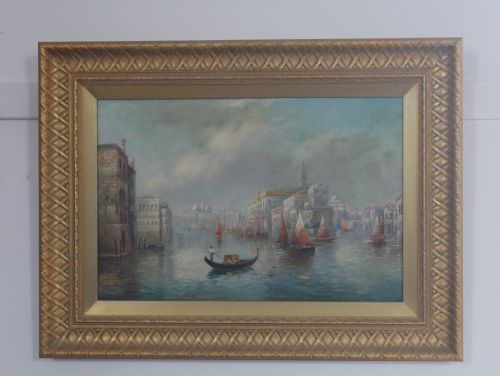


Venetian Canal Landscape
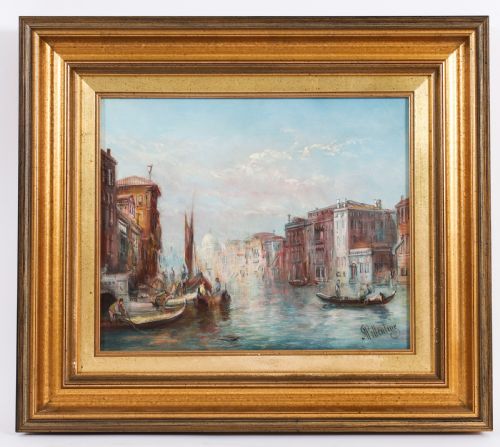
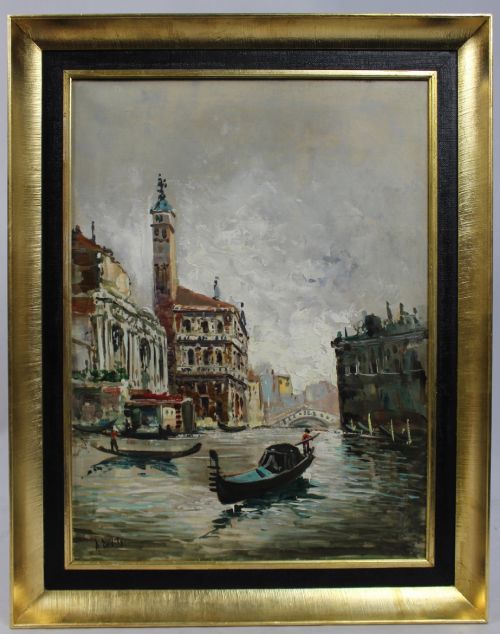
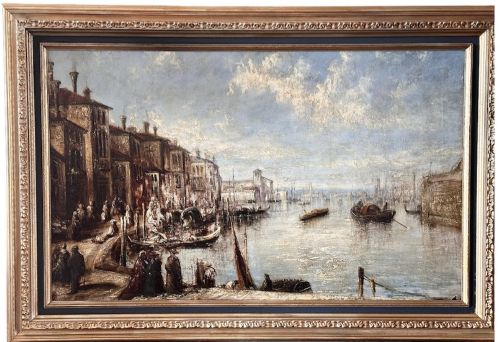
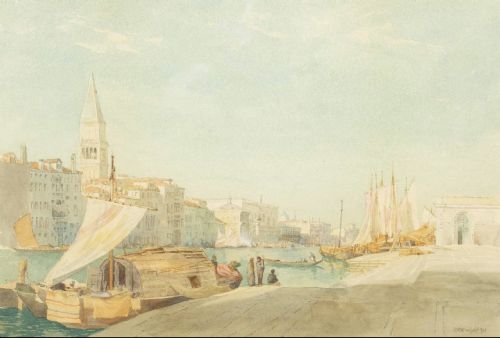
When you search for a venetian canal landscape, you find oil paintings and watercolours capturing the architecture and waterways of Venice from the nineteenth and twentieth centuries.
Venetian Canal Landscape
A venetian canal landscape depicts iconic cityscapes, waterways, and historic buildings such as the Grand Canal, the Doge's Palace, and Santa Maria della Salute. These works record the changing light and architectural grandeur of Venice through various artistic interpretations.
The pieces you meet on this page span from the Victorian era into the mid-twentieth century. They include detailed oil paintings on canvas and panel, alongside atmospheric watercolours, pastels, and gouache drawings.
Makers and painters represented range from recognised nineteenth-century topographical artists to twentieth-century impressionists. Their subjects frequently feature gondolas, historic palazzos, and bustling lagoon scenes.
How they were made
Artists painted primarily in oil on canvas or board, utilising oil paint to build rich textures and deep tones for water and sky. Others worked in watercolour and gouache on paper, applying washes to capture the luminous atmospheric quality of the Venetian lagoon.
Works often feature framing in wood, giltwood, or gilded wood, which complements the period aesthetic of the paintings. Ink pen and pastel also appear in mixed media pieces depicting gondolas and canal views.
Venice inspired artists so deeply that several painters signed multiple different names to their own canvases.
What varies in quality
Quality rests upon the artist's ability to render light, perspective, and architectural detail convincingly. Works by listed nineteenth and twentieth-century painters demonstrate superior handling of composition and atmospheric depth compared to unsigned or unrecorded studio pieces.
The preservation of the paint surface and the paper or canvas support influences the visual integrity of the work. Original framing in period giltwood also contributes to the overall cohesion and historical context of the piece.
Alfred Pollentine·Antonio DeVity·Francis Moltino·Richard Henry Wright·F J Aldridge·Claude Jousset·F.D. Campo·Antonietta Brandeis·Marc Aldine·Antoine Bouvard Senior·E. Perez Senet·Jane Vivian·William Raymond Dommersen·Benedetto Salviati·Hercules Brabazon Brabazon·Frank Wasley·David Law·William Knox·Wilfred Knox·Henry Wimbush·Charles Clement Calderon·Helen Donald-Smith
The Venetian Canal Landscape Glossary
- Oil on Canvas
- A painting technique where oil paint is applied to a stretched canvas support. This medium allows for rich blending of colours and durable longevity.
- Watercolour
- A painting method where paint is made of pigments suspended in a water-based solution on paper. It creates translucent washes that suit luminous skies and water.
- Giltwood
- Wood that has been coated with a thin layer of gold leaf or gold paint. It frequently forms the decorative frame surrounding a historic painting.
- Impressionism
- An art style focused on capturing the visual impression of the moment, particularly regarding shifting light and colour. It influenced many twentieth-century depictions of Venice.
- Gouache
- An opaque water-based paint that provides heavier coverage than standard watercolour. Artists used it to add solid highlights to works on paper.
Venetian Canal Landscape: Frequently Asked Questions
What periods do these paintings cover?
The works span from the nineteenth century through the Victorian period and into the mid-twentieth century. They document shifting artistic styles from romanticism and impressionism to mid-century interpretations.
Most pieces date between the 1850s and the 1960s, reflecting changing perspectives on Venetian topography.
What subjects appear in these scenes?
Common subjects include the Grand Canal, the Doge's Palace, Santa Maria della Salute, and the Bridge of Sighs. Gondoliers and lagoon views also feature prominently across both oils and watercolours.
Artists frequently painted recognizable palazzos and historic waterfronts under varying conditions of daylight and moonlight.
How do I care for an oil painting?
Keep oil paintings away from direct sunlight and fluctuating humidity to protect the canvas and paint layers. Dust the surface gently with a soft, dry brush without using liquid cleaners.
Ensure the painting hangs securely on a stable wall away from direct heat sources to preserve the wood and canvas.
How should I display a watercolour?
Watercolours require framing behind glass with acid-free mounts to prevent paper degradation and fading. Position them away from direct sunlight to maintain the integrity of the pigments.
Stable indoor temperatures help protect both the paper support and any historic wooden frame.