

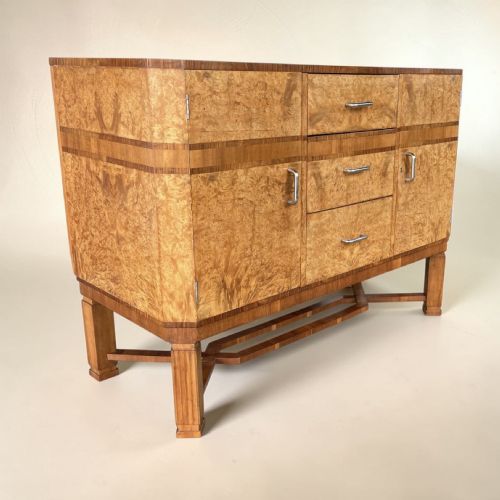
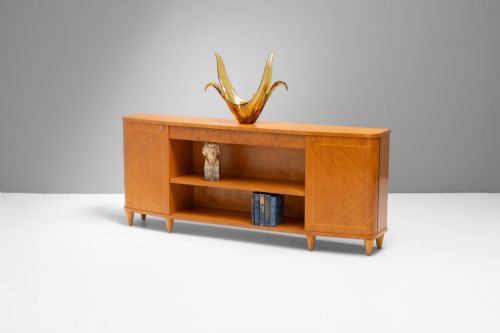
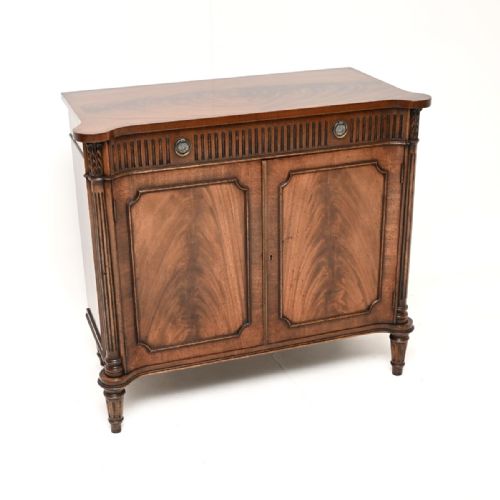
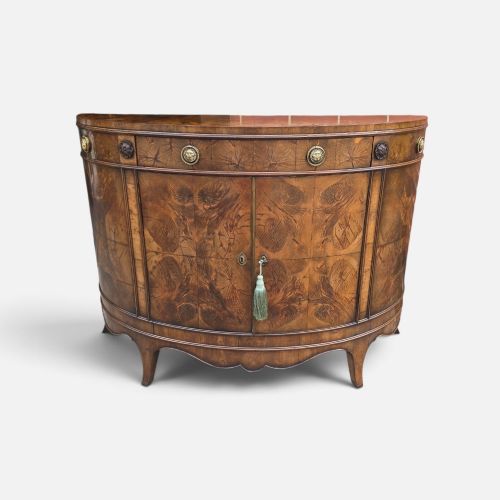


Veneered Wood Sideboard
These veneered wood sideboards bring striking grain patterns and substantial storage to a room, offering both practical function and strong decorative presence.
Veneered Wood Sideboard
A veneered wood sideboard is a substantial storage piece defined by decorative surface timbers rather than solid construction, bringing together cabinets, cupboards, and serving surfaces. When buyers search for a veneered wood sideboard, they encounter forms ranging from early nineteenth-century Regency and Victorian examples to streamlined Art Deco and Swedish Grace pieces from the nineteen-thirties.
The pieces appearing on this page span several distinct eras and stylistic traditions, including Georgian, Grand Regency, French Provincial, and nineteenth-century French designs. Alongside traditional sideboards and credenzas, the selection includes side cabinets, console tables, cocktail cabinets, chests of drawers, and chiffoniers.
Buyers are most likely to meet twentieth-century Art Deco and nineteen-thirties interpretations, alongside earlier mahogany and walnut specimens from the Victorian and Regency periods. Each form utilises fine timber veneers to create decorative patterns across the front doors, drawers, and top surfaces.
How they were made
Cabinet makers applied thin slices of decorative timber veneers over stable secondary woods, arranging grain patterns to create symmetrical designs on drawer fronts and cabinet doors. Timbers such as mahogany, walnut, burr walnut, birch, flame birch, satinwood, amboyna, yew wood, and palisander provided the visual character of each piece.
Construction techniques frequently incorporated structural elements of brass and marble, particularly for hardware, gallery details, or durable inset tops. Surface finishes were carefully polished to highlight the natural figures and tonal variations inherent in each chosen veneer.
Veneered Wood Sideboard Retail Price Guide 2026
Typical asking prices for veneered wood sideboard among the pieces listed under this phrase on Sellingantiques today, from the lower quarter to the upper quarter. They describe what is for sale here now, not the wider market.
Listings feature pieces spanning from the mid-nineteenth century through the nineteen-thirties, incorporating materials from standard mahogany and walnut to exotic flame birch and palisander.
What varies in quality
The quality of a veneered wood sideboard rests primarily on the selection and matching of the timber veneers across the visible surfaces. Finer pieces demonstrate careful grain alignment and book-matching, where symmetrical patterns flow naturally across doors and drawers.
Construction standards also set examples apart, visible in the precision of the joinery, the weight and finish of brass or marble additions, and the structural integrity of the underlying carcase. Superior cabinet work ensures that doors hang true and drawers operate smoothly within their frames.
Bowman Brothers
The Veneered Wood Sideboard Glossary
- Art Deco
- A design style prominent in the nineteen-thirties characterised by sleek geometric forms and streamlined shapes. Pieces from this period often feature dramatic exotic wood veneers.
- Regency
- An English design period spanning the early nineteenth century known for classical restraint and elegant proportions. Furniture from this era frequently incorporates rich mahogany and brass mounts.
- Chiffonier
- A low nineteenth-century cabinet equipped with doors enclosing shelves and often a small shelf superstructure on top. It served as a compact sideboard or serving piece in dining rooms.
- Amboyna
- A highly prized exotic wood known for its rich warm colour and dense, swirling burr patterns. Cabinet makers utilised this timber for luxury side cabinets and decorative panels.
Veneered Wood Sideboard: Frequently Asked Questions
What is a veneered wood sideboard?
A veneered wood sideboard is a large storage furniture item finished with decorative wood slices over a sturdy carcase.
These pieces combine cupboards and drawers with a flat top surface designed for serving or display.
How do I identify an Art Deco sideboard?
Art Deco sideboards typically date from around nineteen-thirty and feature streamlined geometric forms with dramatic wood veneers.
They often incorporate exotic timbers like macassar or birch arranged in bold, symmetrical grain patterns.
Where were these sideboards used?
These pieces were traditionally placed in dining rooms to store tableware, cutlery, and linens.
They also functioned as serving stations during meals and provided display space for decorative objects.
How do I care for wood veneer?
Wood veneer surfaces require protection from excessive moisture, direct sunlight, and sudden temperature changes.
Regular dusting with a soft cloth and occasional polishing help maintain the condition of the finish.