

Veneered Storage Chest
A veneered storage chest brings decorative wood figures and substantial proportion to a room, spanning periods from the seventeenth century onward.
Veneered Storage Chest
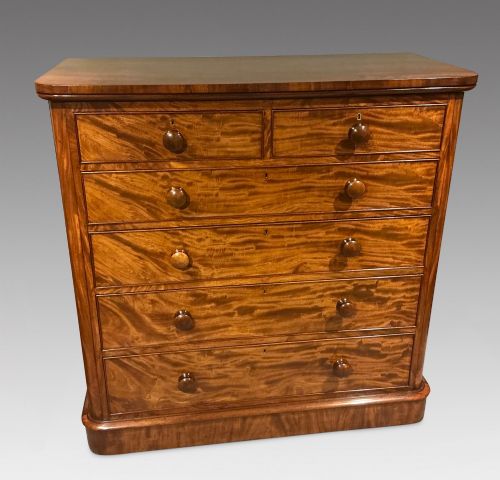
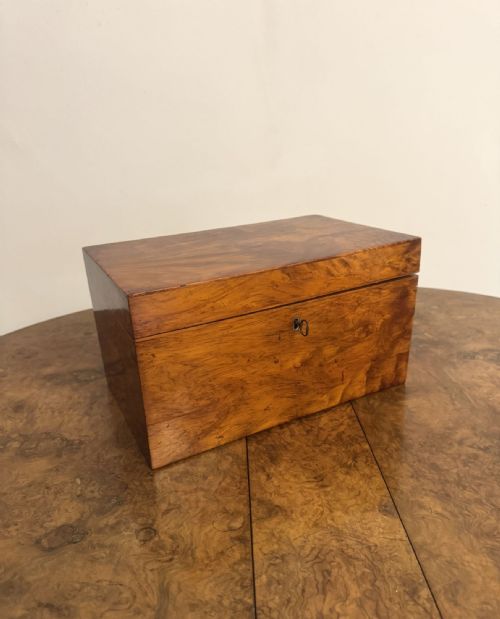
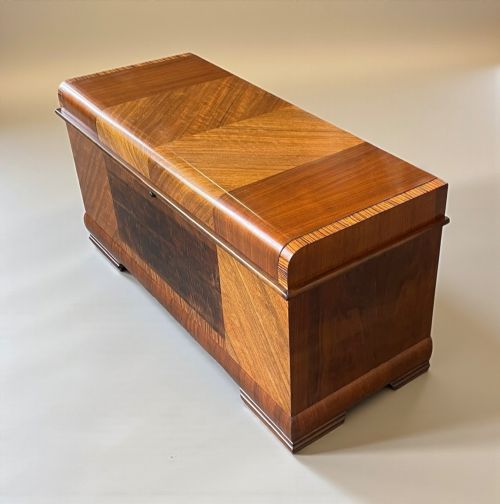
A veneered storage chest encompasses forms such as chests of drawers, linen presses, cabinets on stand, commodes, and tea caddies dating from the seventeenth century to the twentieth century. These pieces derive from periods including William and Mary, Regency, Victorian, and Art Deco, reflecting diverse regional cabinetry.
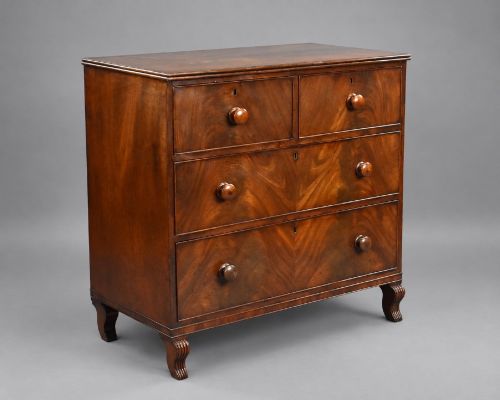
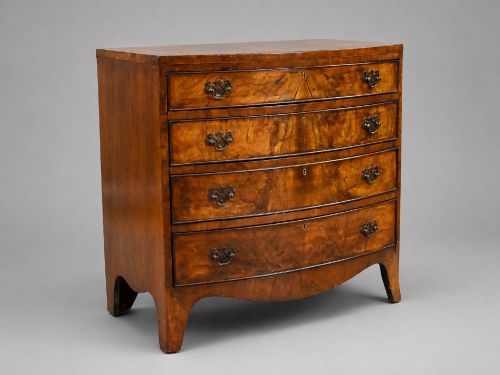
The version most frequently met on this page is the mahogany or walnut chest of drawers, alongside smaller tea caddies and larger linen presses. Makers utilised timber veneers to create striking surface patterns across various domestic forms.
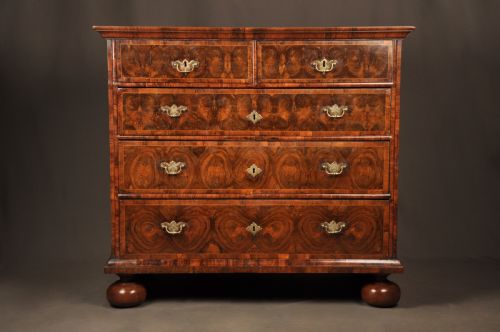
Examples range from early seventeenth century olive and laburnum oyster pieces to nineteenth century flame mahogany and twentieth century Biedermeier or Art Deco designs. Each form serves practical storage while displaying the grain characteristics favoured by period craftsmen.
Materials and construction
Cabinetmakers applied thin slices of decorative timber veneers such as walnut, flame mahogany, kingwood, and laburnum onto secondary foundational woods like oak, pine, or general wood. This technique allowed workshops to display intricate grain configurations that solid timber construction could not achieve economically.
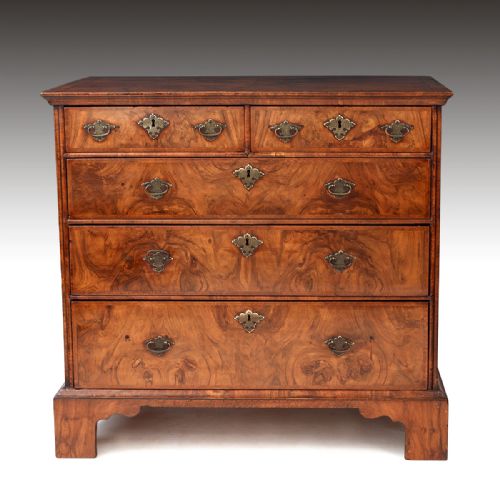
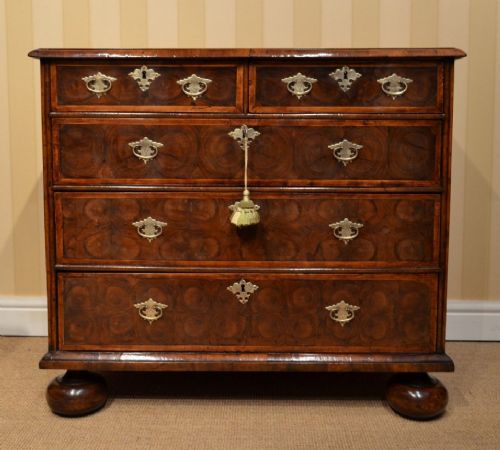
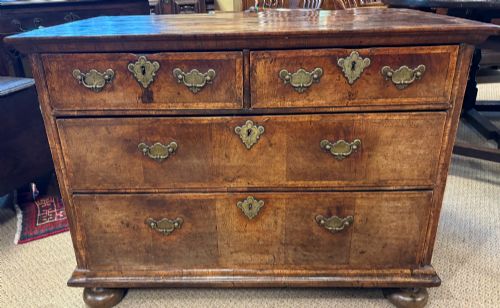
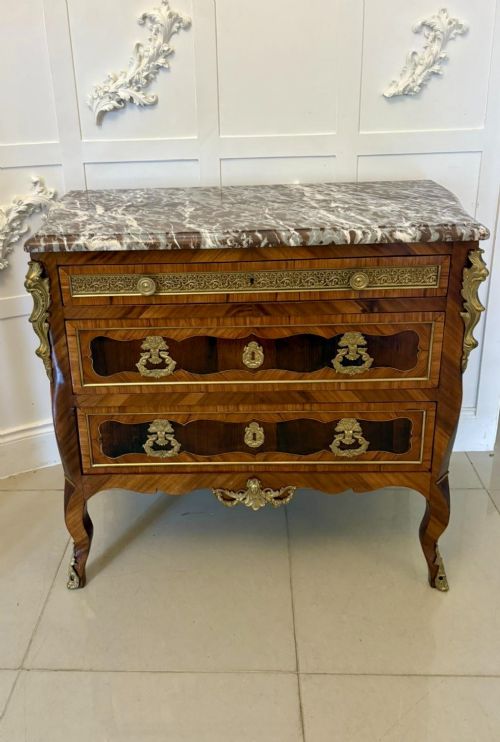
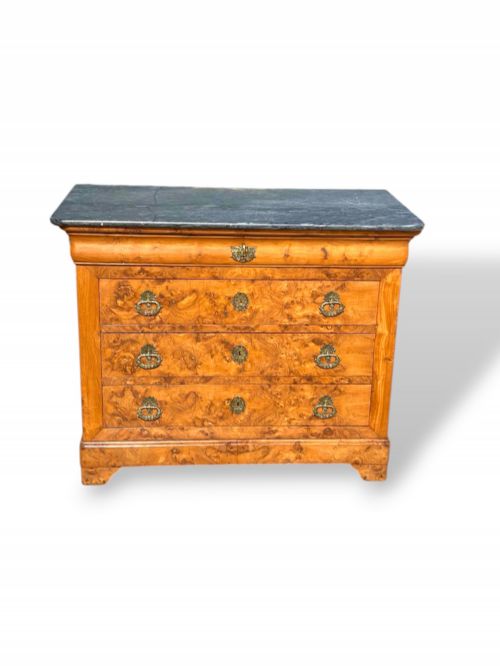
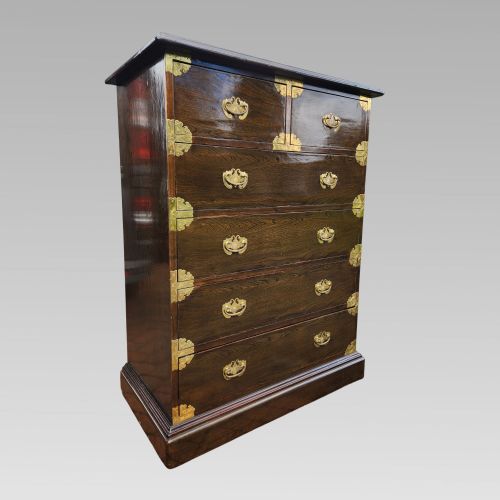
Surface ornamentation often utilised oyster cutting, where small circular cross-sections of branches were arranged in geometric patterns, or parquetry and marquetry layouts using contrasting woods like amboyna and partridge wood. Brass handles, escutcheons, and occasionally marble tops completed the construction of these refined storage items.
Materials recorded across the inventory include brass, marble, pine, and diverse wood veneers such as flame mahogany, burr ash, and laburnum.
Judging execution and finish
The standard of a veneered storage chest rests upon the precision of the veneer matching and the integrity of the underlying timber carcass. Superior examples demonstrate harmonious grain continuity across drawer fronts and sides without disturbing shrinkage or lifting.
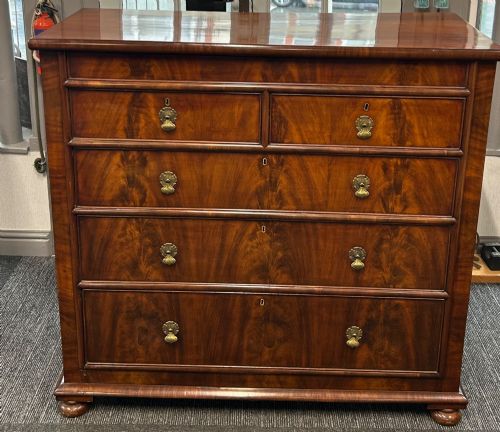
Subtlety in the choice of wood figure - such as well-selected flame mahogany, burr ash, or figured walnut - separates standard pieces from exceptional ones. The crispness of internal drawer construction and the retention of original brass hardware further distinguish finer period examples.
The Veneered Storage Chest Glossary
- Oyster veneer
- Circular slices cut transversely from small branches and arranged to resemble oyster shells. It appears frequently on seventeenth century walnut and olive pieces.
- Linen press
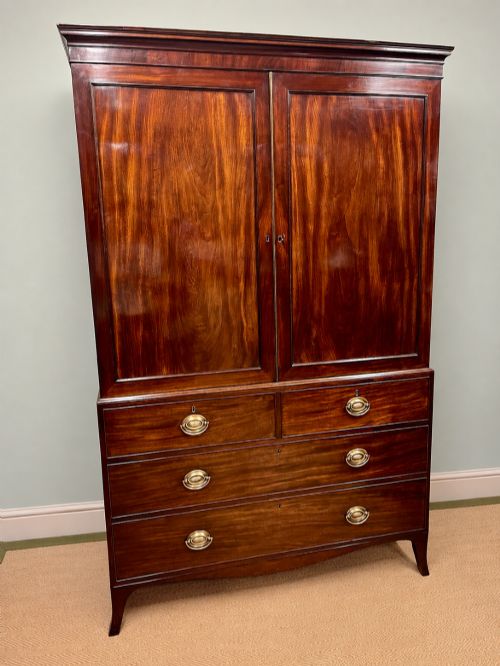
- A tall storage piece combining upper cupboard doors with lower drawers, traditionally used for textiles. Many surviving examples feature flame mahogany.
- Parquetry
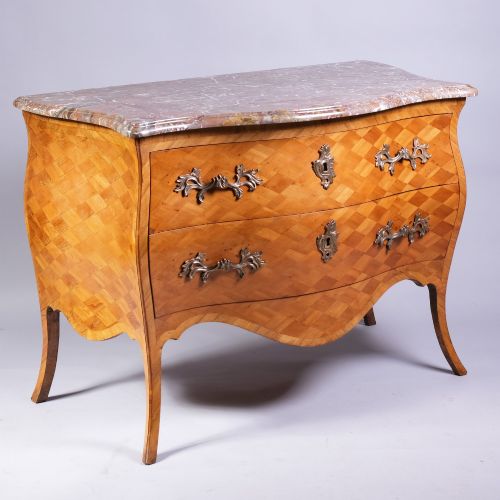
- Geometric mosaic woodwork formed by small pieces of veneer fitted together. It creates patterned surfaces on tabletops, cabinets, and bedside tables.
- Commode
- A decorative low chest of drawers or cabinet, often topped with marble. French and Biedermeier examples frequently adopt this designation.
Veneered Storage Chest: Frequently Asked Questions
How do I clean a veneered surface?
Dust regularly with a soft, dry cloth to prevent particulate accumulation on the delicate wood surfaces. Avoid abrasive cleaners or excess moisture which can lift historic veneers from their underlying carcass.
Apply specialised wax polish sparingly only when the wood appears dry, buffing gently to maintain the natural lustre. Professional conservation is recommended if any lifting timber requires securing.
Where were these chests made?
These storage pieces originate from various European and international workshops, including British, French, Swedish, and Asian cabinetmakers. Regional preferences dictated the choice of timber and structural proportions.
For instance, nineteenth century Biedermeier pieces typically hail from Germanic regions using blonde woods, while commodes often reflect French styling with marble tops.
Can I use a tea caddy for storage?
Historic tea caddies function well today as compact decorative boxes for small personal items or jewellery. Their lidded compartments were originally designed to keep expensive loose tea leaves dry and secure.
Placed on a desk or table, they add a touch of figured mahogany, amboyna, or walnut to modern interiors while remaining entirely practical.