





Veneered Storage Cabinet
A veneered storage cabinet brings together timber grain and interior capacity across centuries of cabinet making.
Veneered Storage Cabinet
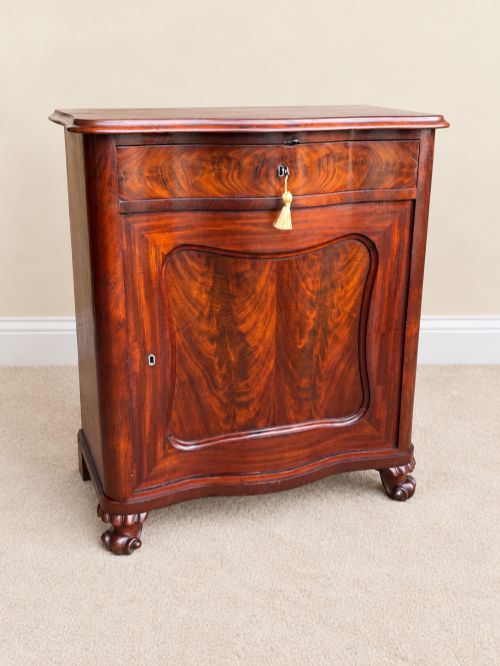
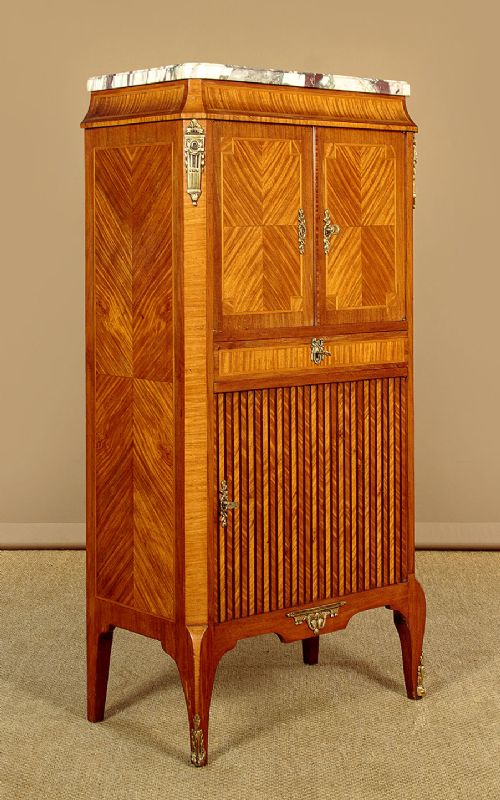
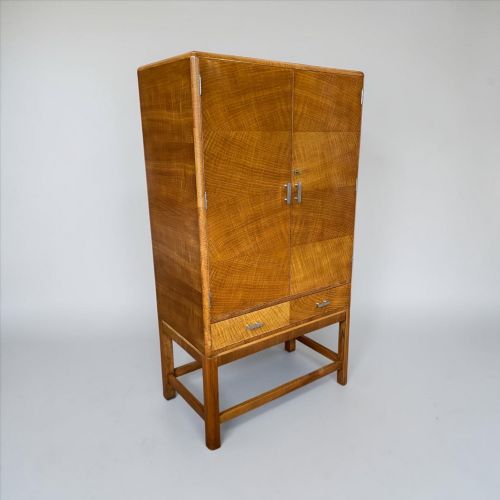
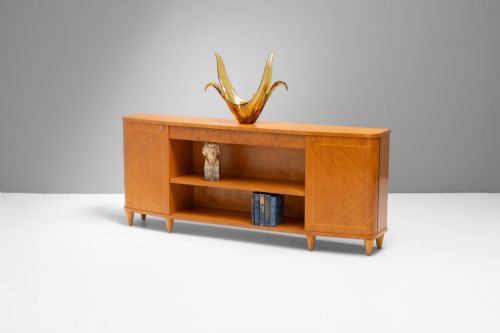
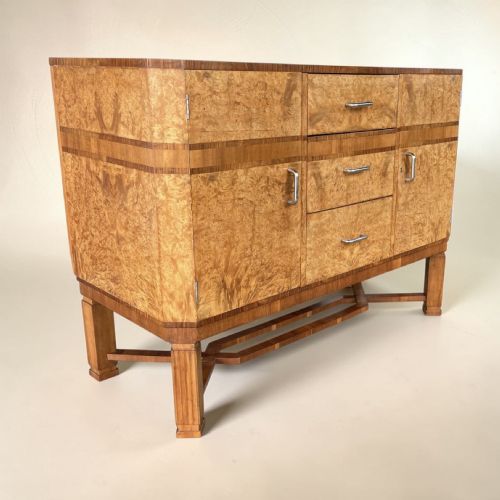
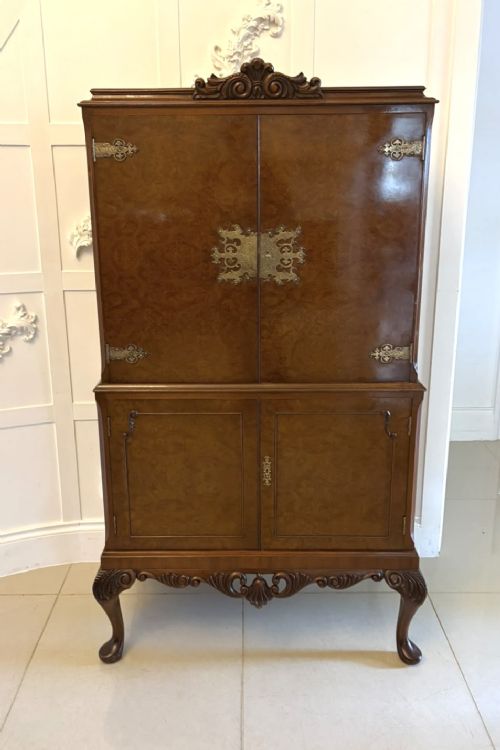
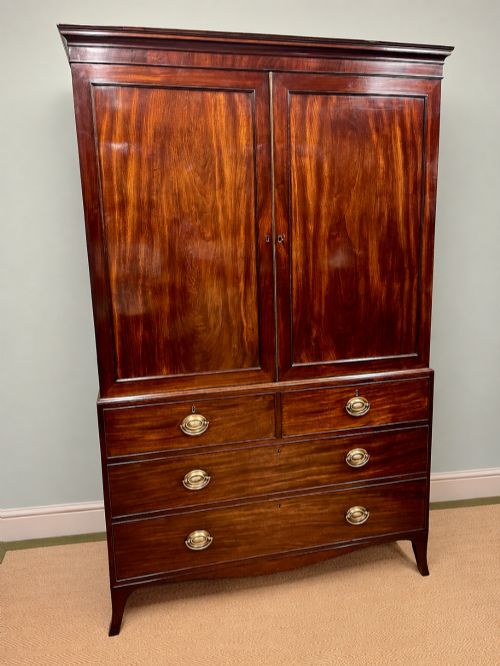
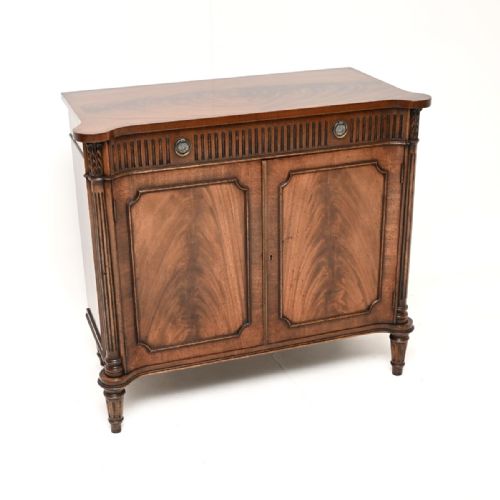
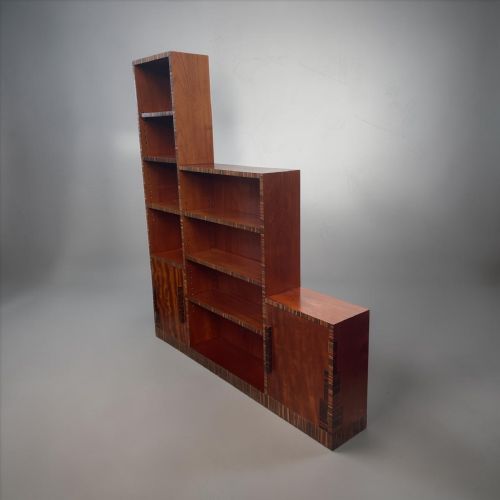
A veneered storage cabinet spans functional domestic furniture from seventeenth-century chests on stands to nineteen-thirties cocktail cabinets and sideboards. These pieces present storage solutions through disciplined exterior timber faces, ranging from low linen presses to tall bookcases.
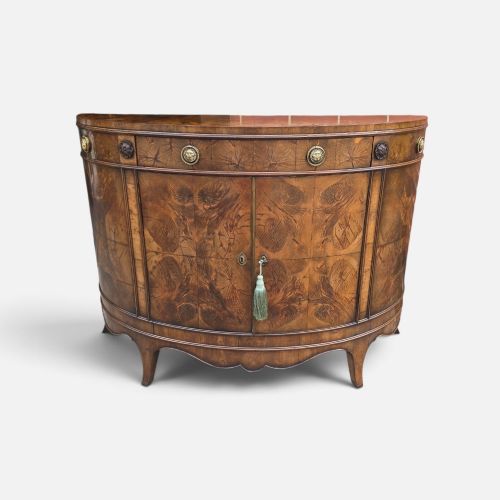
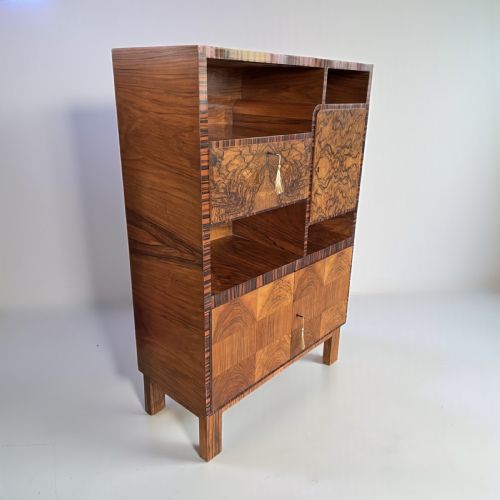
The material surface defines the visual weight of each piece, whether displaying oyster veneer circles or symmetrical burr walnut figures. Makers utilise timber cuts to decorate doors and drawer fronts while maintaining internal shelving or hanging space.
Examples on this page draw from periods including the Regency era, the nineteenth century, and nineteen-thirties modernist design. Forms vary from simple two-door cupboards to complex cabinets with stands and marble tops.
Construction and materials
Cabinet makers apply thin slices of decorative woods such as walnut, mahogany, laburnum, and olive wood onto secondary carcase timbers like oak or pine. This technique allows workshops to display dramatic grain patterns without relying entirely on solid construction.
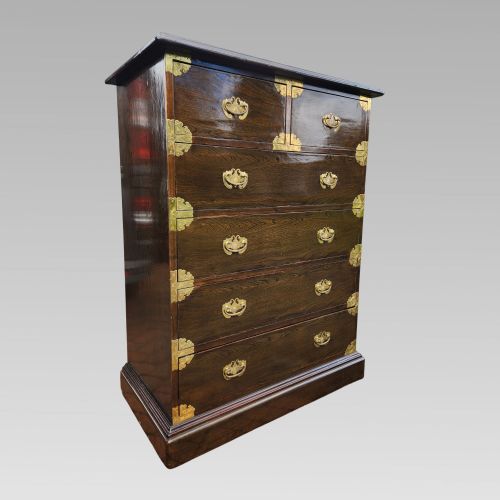
Geometric parquetry and oyster cutting demonstrate specialised joining methods where timber sections fit closely together to form patterned surfaces. Brass handles, glass panels, and marble tops integrate with the wooden structures to finish the pieces.
Veneered Storage Cabinet Retail Price Guide 2026
Typical asking prices for veneered storage cabinet among the pieces listed under this phrase on Sellingantiques today, from the lower quarter to the upper quarter. They describe what is for sale here now, not the wider market.
A BBC-labeled oak bookcase cabinet reminds us that even broadcasting giants needed a tidy spot for paperwork.
Judging execution and finish
Quality rests in the precision of the veneer matching across doors and drawers, where continuous grain patterns demonstrate planning by the workshop. Superior execution ensures stable application without lifting or bubbling across complex curved and flat surfaces.
The refinement of internal fitting, drawer construction, and structural timber selection separates standard utility pieces from exceptional commissions. Hardware attachment and the integrity of applied parquetry further indicate the level of craftsmanship involved.
Heal s·E Gomme·Bowman Brothers
The Veneered Storage Cabinet Glossary
- Veneer
- A thin layer of figured wood applied to a structural carcase timber. This method highlights decorative grain patterns.
- Oyster veneer
- Small circular or oval sections cut across branches or small trunks. These pieces arrange closely to form repeating patterns.
- Parquetry
- Geometric wood mosaics applied to furniture surfaces. Artisans arrange contrasting timbers to create decorative patterns.
- Linen press
- A tall storage piece designed for folded textiles and garments. Upper cupboard sections typically enclose sliding trays.
- Chiffonier
- A compact sideboard or low cabinet featuring shelves or drawers. These items developed during the nineteenth century for principal rooms.
Veneered Storage Cabinet: Frequently Asked Questions
What is a veneered storage cabinet?
A veneered storage cabinet is a piece of furniture featuring thin decorative wood slices applied to exterior surfaces. These items provide enclosed shelving, drawers, or hanging space.
They appear across multiple historical periods, utilising timber grains to decorate the outward appearance while keeping contents concealed.
How do I care for my cabinet?
Maintain stable indoor humidity levels and keep wooden surfaces away from direct sunlight. Dust regularly with a dry cloth.
Avoid liquid polishes that can penetrate old finishes or lift delicate veneer edges over time.
How do I identify the period?
Examine the structural timber, hardware, and overall silhouette against known design styles. Twentieth-century pieces often show geometric lines, while seventeenth-century examples rely on oyster cutting and stands.
Secondary woods and construction methods inside drawers also help determine the era of manufacture.
Where were these cabinets used?
These cabinets served in principal rooms, bedrooms, and dining spaces for organising household goods, textiles, and drinks. Cocktail variants became popular during the nineteen-thirties for entertaining.
Smaller bedside tables and music cabinets fulfilled specific storage requirements in private quarters.