

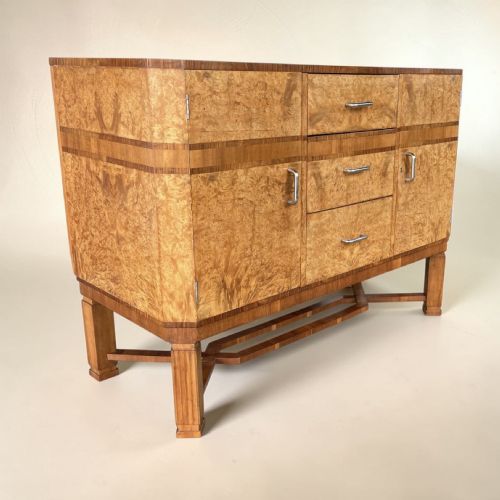
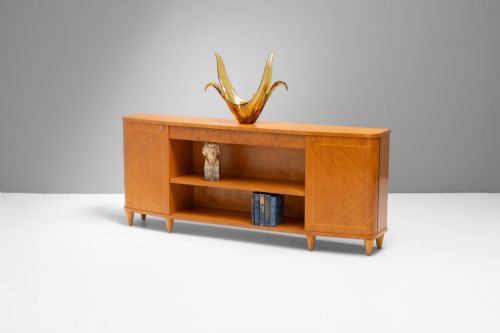
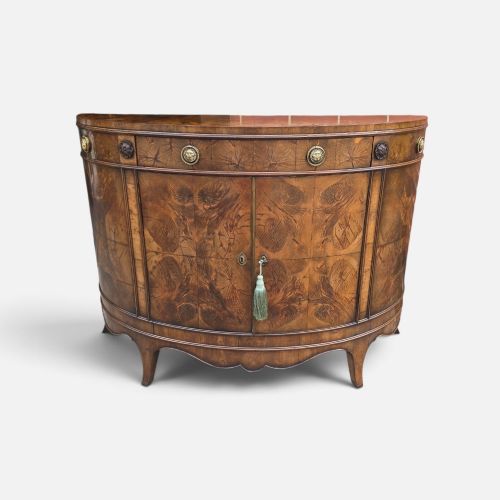
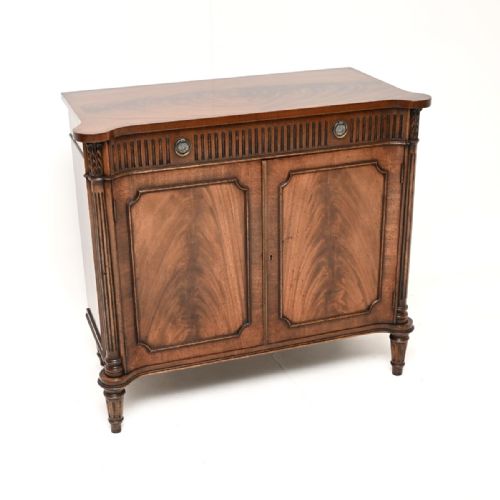


Veneered Sideboard
A veneered sideboard offers a disciplined surface of figured grain, uniting utility and decorative presence in rooms that value timber.
Veneered Sideboard
A veneered sideboard provides substantial storage across diverse historical periods, appearing frequently in Art Deco interpretations and nineteenth century mahogany designs. These pieces span formal dining room furniture, serving tables, and specialised storage cabinets.
The selection ranges from Swedish Grace and Art Deco geometric cupboards to Regency flame mahogany pedestal pieces and Victorian walnut credenzas. Each format utilises figured timber surfaces to anchor the room.
How they were made
Cabinet makers laid thin slices of decorative timber such as burr walnut, flame mahogany, macassar, or satinwood over stable secondary woods. This technique displayed intricate grain patterns without risking the structural movement inherent in solid timber slabs.
Makers integrated structural metals and stone, combining brass mounts, gilt metal, and marble tops with timber carcases. Polished finishes protected the delicate veneers while deepening the visual contrast of the grain.
Veneered Sideboard Retail Price Guide 2026
Typical asking prices for veneered sideboard among the pieces listed under this phrase on Sellingantiques today, from the lower quarter to the upper quarter. They describe what is for sale here now, not the wider market.
Current listings feature walnut, flame mahogany, birch, and satinwood across periods from the eighteenth century to nineteen thirty.
What varies in quality
The choice of veneer determines visual hierarchy, distinguishing symmetrical book-matched burr walnut and geometric macassar arrangements from plain utility surfaces. Grain selection dictates the rhythm and balance of the primary facade.
Secondary construction standards separate high workshop production from standard output. The alignment of doors, stability of internal shelving, and integration of mounts govern the lasting integrity of the piece.
Bowman Brothers
The Veneered Sideboard Glossary
- Veneer
- A thin layer of figured wood applied to a stable secondary timber carcase to display decorative grain patterns. This method allowed craftsmen to utilise expensive woods economically.
- Flame mahogany
- Timber cut to reveal a distinctive flickering, flame-like grain pattern. It was favoured by Regency and nineteenth century cabinet makers for prominent surfaces.
- Credenza
- A low cabinet or sideboard, often featuring glazed doors and decorative mounts. Victorian examples frequently incorporated gilt metal mounts and marble tops.
- Chiffonier
- A compact sideboard or cabinet developed during the nineteenth century, typically featuring shelves or drawers beneath a tiered superstructure.
- Demi-lune
- A half-moon shape characteristic of console tables and side cabinets designed to sit flush against a wall.
Veneered Sideboard: Frequently Asked Questions
What periods do these sideboards come from?
The selection spans the nineteenth century through to Art Deco and Swedish Grace pieces from nineteen thirty. Georgian and Regency examples sit alongside later Victorian and Edwardian iterations.
Each period brings distinct stylistic priorities, shifting from formal classical proportions to geometric modernism.
How do I care for veneered timber surfaces?
Keep timber pieces away from direct heat sources and strong sunlight to prevent the underlying glue from drying and the veneer from lifting. Dust regularly with a dry cloth and apply occasional specialist wax.
Avoid excessive moisture on polished surfaces to maintain the integrity of the finish.
What is the difference between a sideboard and a credenza?
Sideboards traditionally served dining rooms for storing cutlery and serving food, while credenzas emerged as lower, highly decorative display cabinets often fitted with glass doors and metal mounts.
Nineteenth century iterations often blurred these distinctions as room layouts evolved.
How can I identify Art Deco pieces?
Art Deco examples from nineteen thirty display streamlined geometric forms, exotic timbers like macassar ebony, and disciplined symmetry. They frequently incorporate contrasting birch, elm, or mirrored elements.
Maker attribution and distinct modernist proportions set these apart from earlier Victorian and Regency designs.