

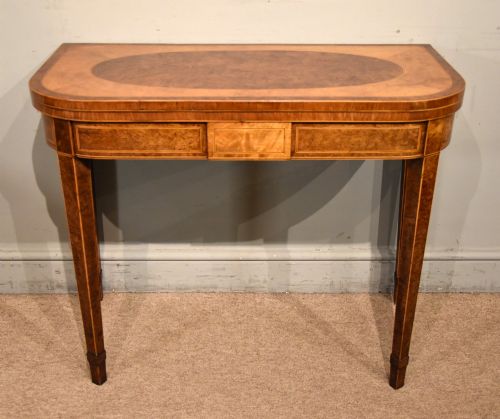
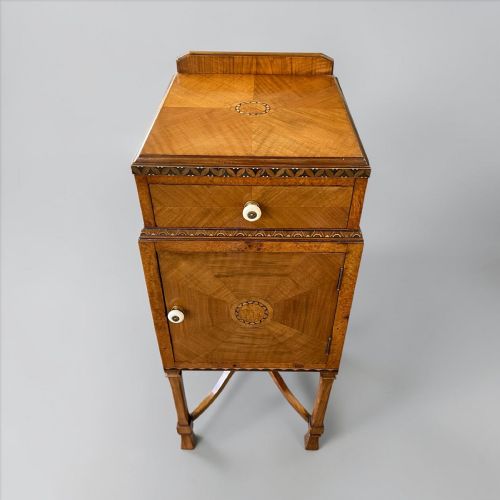
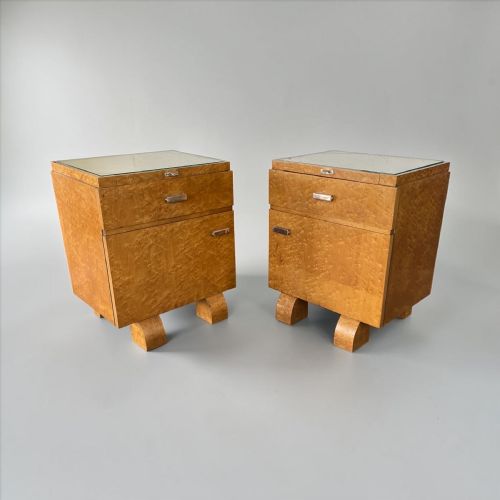
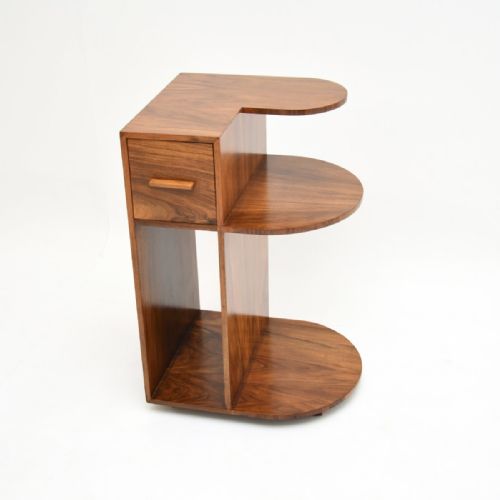
Veneered Side Table
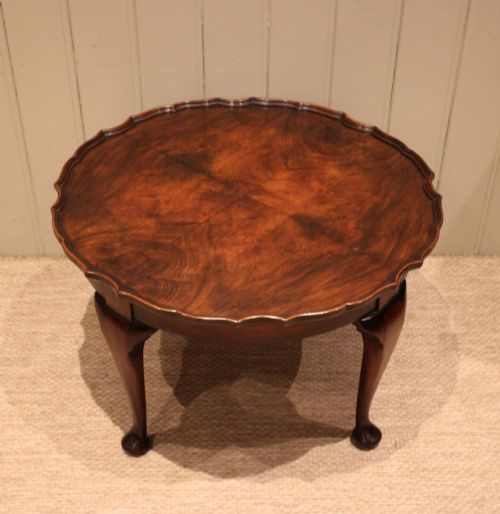
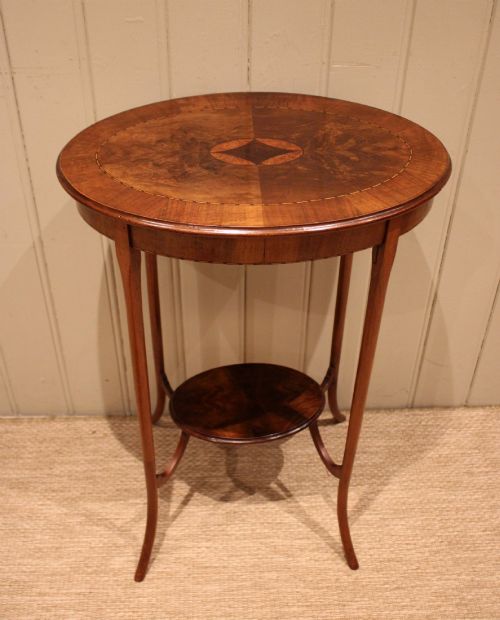
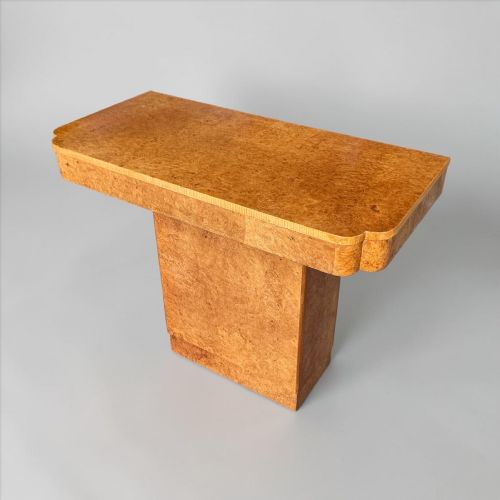
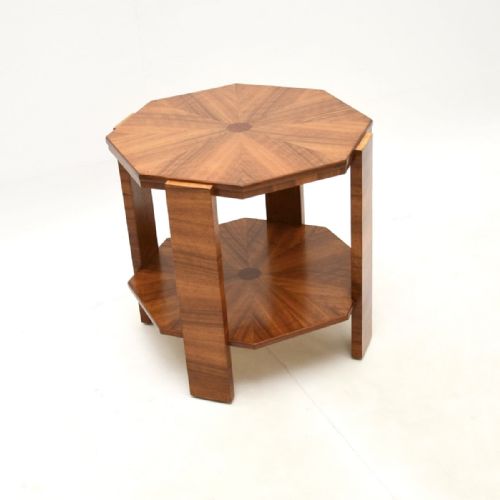
A veneered side table brings rich grain patterns and compact utility to a room, led largely by Art Deco walnut designs.
Veneered Side Table
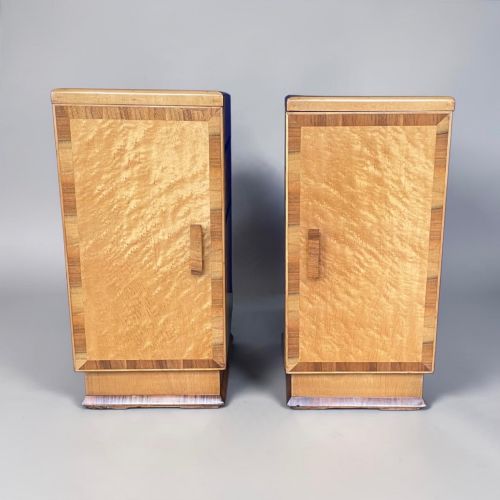
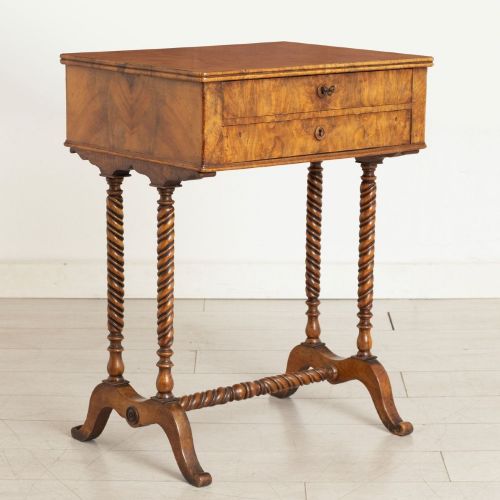
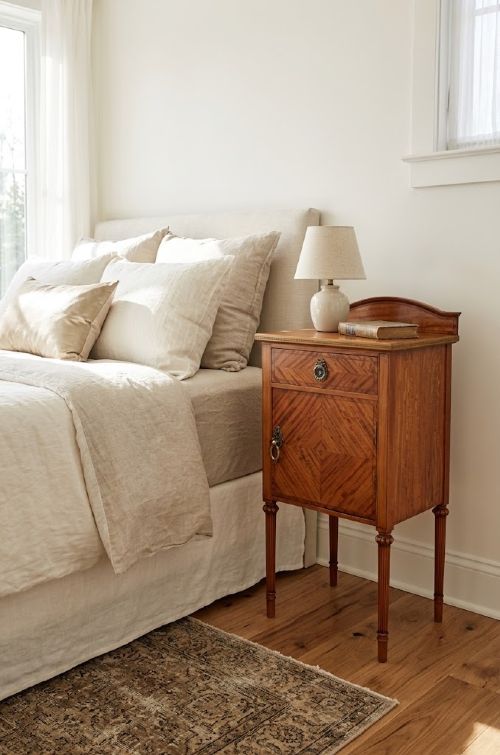
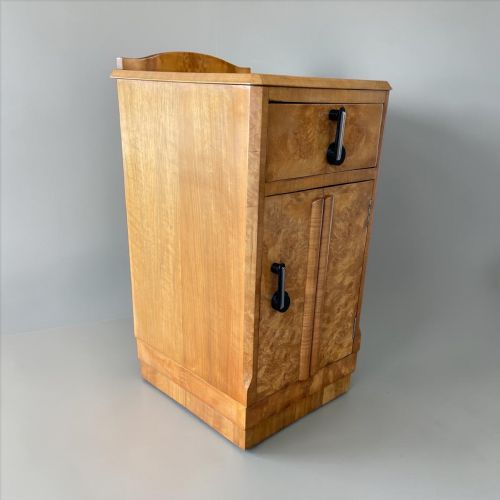
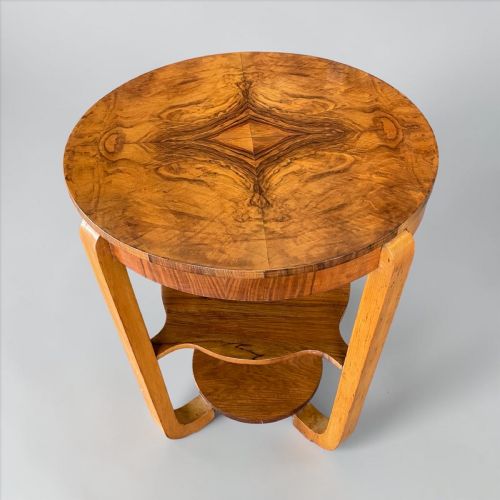
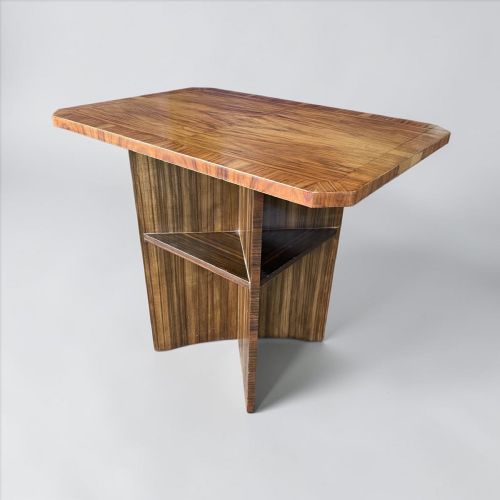
A veneered side table satisfies the need for a practical surface combined with decorative timber grain, appearing across forms such as occasional pieces, lamp tables, and bedside cabinets. The selection leans heavily toward the 1930s, where Art Deco makers utilised the bold patterns of walnut, maple, and birch.
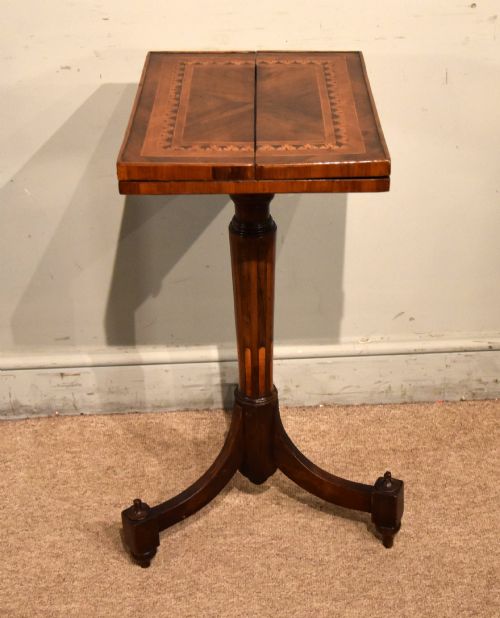
Beyond the interwar years, examples stretch from nineteenth-century sewing and console tables to earlier Georgian and Regency pieces. These diverse forms serve well beside a sofa or chair, offering a stable top and often drawers or lower tiers without dominating the floor space.
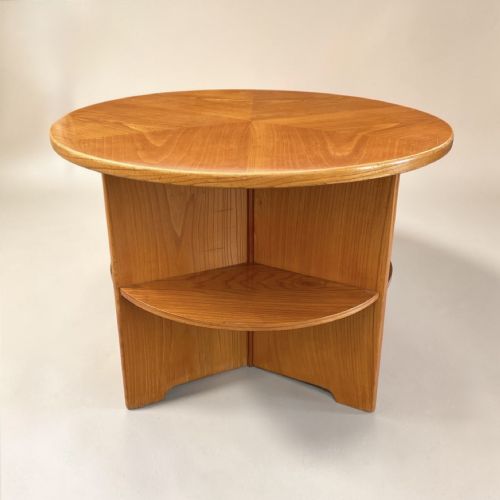
The profile ranges from simple circular and octagonal tops to kidney-shaped and tiered configurations. Buyers meet numerous pairs intended for bedside use, alongside singular occasional tables designed to highlight specific exotic timbers.
Materials and technique
Cabinet makers construct these pieces by applying thin slices of decorative wood over a stable secondary timber core. This technique allows workshops to display dramatic figures like burr walnut, burr birch, and birds-eye maple across flat surfaces without warping solid boards.
Inlaid stringing, contrasting crossbanding, and sometimes ormolu mounts enhance the primary veneers. Workshops often combine woods such as satinwood, rosewood, kingwood, and tulipwood to create geometric panels or borders that frame the top.
Veneered Side Table Retail Price Guide 2026
Typical asking prices for veneered side table among the pieces listed under this phrase on Sellingantiques today, from the lower quarter to the upper quarter. They describe what is for sale here now, not the wider market.
Maltese tables of the nineteenth century introduced olive and satinwood veneers specifically to serve card players engaged in the game of patience.
Judging the execution
Quality rests upon the selection of the veneer and how symmetrically the grain figures are matched across the top. Superior examples show thoughtful placement of book-matched veneers, creating balanced patterns that elevate simple geometric forms.
The integrity of the underlying construction and the neatness of edge banding separate standard production from finer cabinet work. Clean joints, well-fitted drawers, and stable secondary timbers ensure the piece endures daily use without the surface lifting.
Maurice Adams
The Veneered Side Table Glossary
- Veneer
- A thin slice of decorative wood applied to a solid secondary core. This method allows makers to utilise striking grain figures that would be unstable if used as solid timber.
- Burr wood
- Growth deformities in trees that produce intricate, swirling grain patterns. Cabinet makers prize these sections for highly decorative table tops.
- Book-matching
- A technique where adjacent slices of veneer are opened like a page to mirror each other. This creates symmetrical patterns across the surface of the table.
- Crossbanding
- A border of veneer laid with the grain running perpendicular to the central panel. It frames the main surface and provides a neat visual edge.
- Stringing
- Thin inlay lines of contrasting wood used to outline geometric shapes or table borders. It adds definition and subtle elegance to plain fields of veneer.
Veneered Side Table: Frequently Asked Questions
What is a veneered side table used for?
These pieces function primarily as compact surfaces for lamps, books, and drinks beside seating or beds.
Many designs also incorporate drawers or lower tiers to provide discreet storage in smaller rooms.
How do I identify Art Deco tables?
Art Deco examples, largely dating around the 1930s, feature geometric forms, stepped profiles, and highly figured walnut or maple veneers.
They frequently appear as bedside tables, coffee tables, or two-tier occasional pieces with clean lines.
What are burr veneers?
Burr veneers are cut from tree growths that produce dense, swirling patterns rather than straight grain lines.
Cabinet makers use these sections to create visually striking table tops that catch the light.
Are these tables sturdy enough for daily use?
The underlying construction of secondary timbers provides the necessary strength for everyday placement in a home.
Careful maintenance of the surface keeps the thin wood layers stable and secure over time.