






Veneer Accent Table
A veneer accent table brings grain and geometry together in a small footprint, offering a surface for a lamp or a cup without dominating the room.
Veneer Accent Table
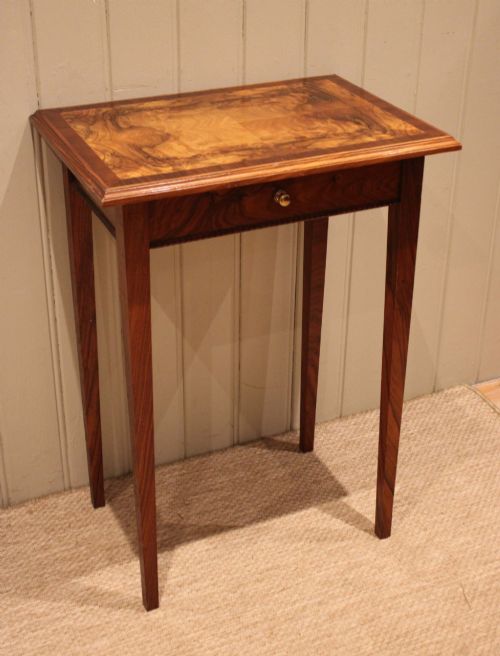
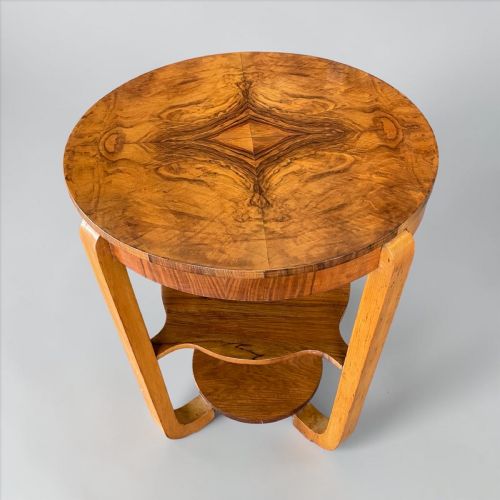
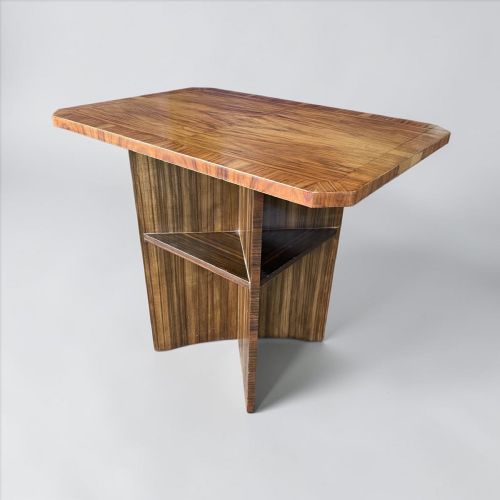
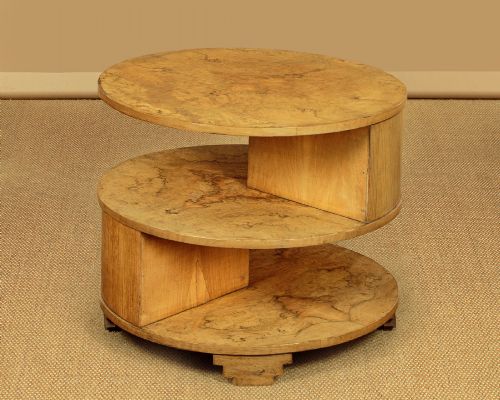
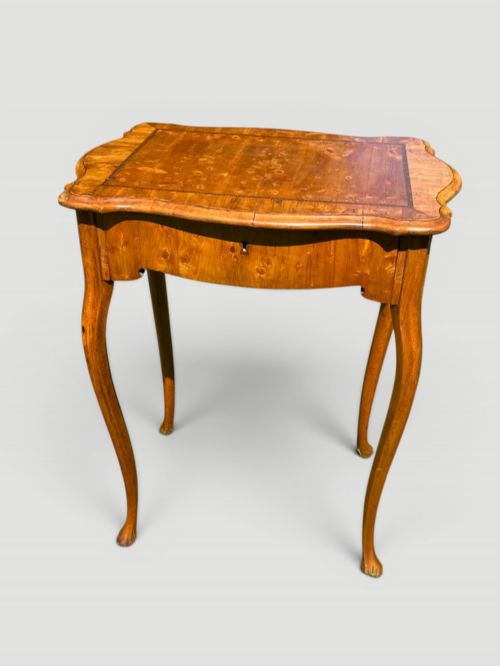
When you search for a veneer accent table, you encounter small furnishings designed to sit beside seating or against walls, spanning periods from the seventeenth century through the Art Deco era. The selection draws heavily on occasional tables, coffee tables, and side tables produced in walnut, mahogany, and burr timbers.
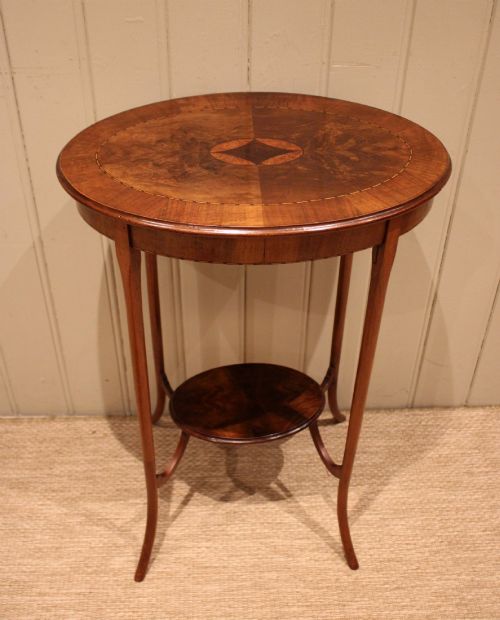
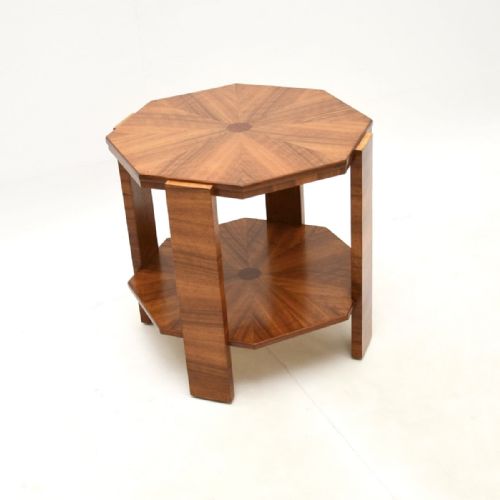
The most common examples on this page date from the Art Deco period and the Edwardian era, often taking circular, octagonal, or oval forms. Alongside these stand nineteenth-century pieces and earlier works utilising distinctive timber grains like olive wood and satinwood.
Makers and workshops across Britain, France, and Scandinavia produced these items to serve domestic spaces as lamp tables, centre tables, and nests of tables. Their primary role remains practical, yet the decorative timber surfaces elevate them beyond simple utility.
Materials and construction
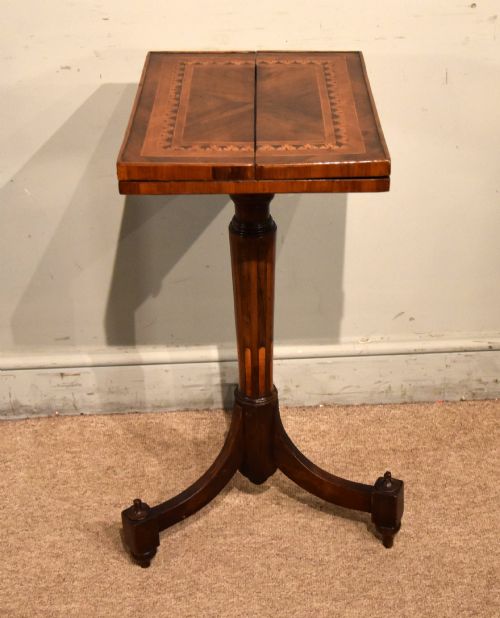
Inlayers added further detail using contrasting timbers like satinwood, maple, ebony, and boxwood to create geometric banding, borders, and central motifs. Brass fittings and mounts appeared on specific pieces, particularly during the Regency and Art Deco periods, framing the timber work.
Veneer Accent Table Retail Price Guide 2026
Typical asking prices for veneer accent table among the pieces listed under this phrase on Sellingantiques today, from the lower quarter to the upper quarter. They describe what is for sale here now, not the wider market.
Listings feature walnut, mahogany, and burr timber surfaces across periods spanning from the seventeenth century to Art Deco.
Distinctions in quality
The sophistication of the timber selection and the precision of the grain matching define the upper tier of these tables. Master craftsmen arranged quartered veneers to create symmetrical patterns that radiate outward from the centre of the top.
The integration of secondary details, such as inlaid stringing or finely turned supports, separates standard production from exceptional examples. The integrity of the underlying structure and the preservation of the original surface finish determine the enduring character of each piece.
Hille
The Veneer Accent Table Glossary
- Veneer
- A thin layer of figured wood applied to a solid secondary timber base. This method allows makers to display decorative grain patterns that would be unstable or too costly if used for solid construction.
- Burr walnut
- A prized timber harvested from walnut tree growths, characterised by swirling, knotted grain patterns. It forms striking circular and quartered designs on table tops.
- Inlay
- A technique where pieces of contrasting wood, such as satinwood or ebony, are fitted into recesses in the primary surface. It creates geometric borders and decorative motifs.
- Nest of tables
- A set of graduated tables designed to slide neatly beneath one another when not in use. They provide flexible surface space in compact rooms.
- Oyster veneer
- Slices cut transversely from small branches or roots, revealing circular rings resembling oyster shells. This technique appears on seventeenth-century pieces.
Veneer Accent Table: Frequently Asked Questions
Where should I place a veneer accent table?
These pieces suit positions beside armchairs or sofas to hold lamps, drinks, or books, while smaller nested versions tuck away until needed.
Their compact forms also allow them to function as display surfaces in hallways or against unused wall spaces.
How do I care for walnut veneer surfaces?
Keep these tables out of direct sunlight to prevent the timber from fading and protect the finish from heat and moisture.
Regular dusting with a soft, dry cloth maintains the lustre of the polished wood without the need for heavy chemical polishes.
What is the difference between an occasional table and a centre table?
An occasional table is typically built for light, mobile use in various corners of a room, including lamp tables and side tables.
A centre table is designed to stand free in the middle of a space, finished on all sides to be viewed from any angle.
How can I tell an Art Deco table from an Edwardian one?
Art Deco tables from the nineteen-thirties favour bold geometric shapes, octagonal tops, and unadorned walnut or maple veneers that emphasise modern clean lines.
Edwardian pieces from the early twentieth century often feature delicate inlaid stringing, mahogany frames, and traditional oval or circular top designs.