

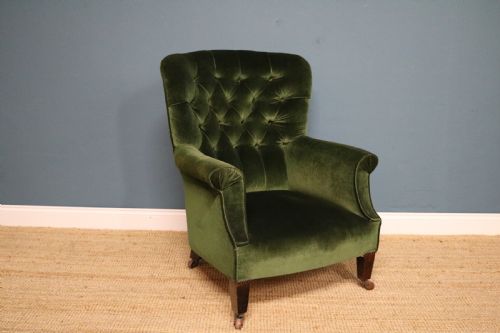
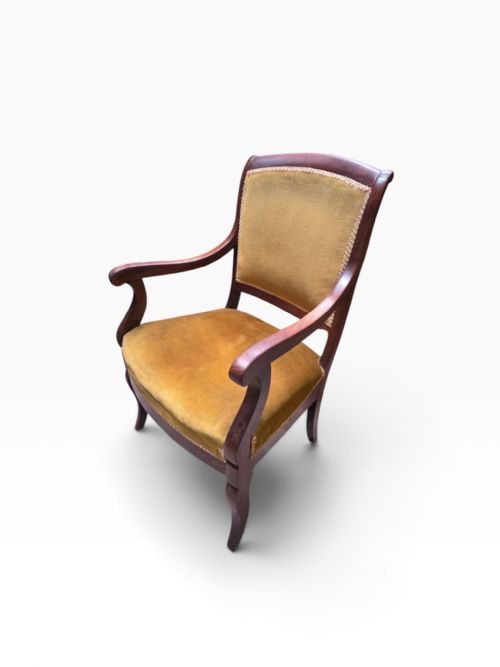
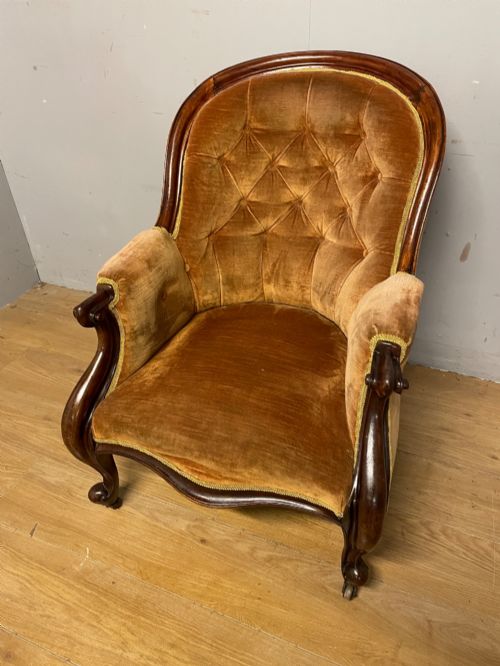
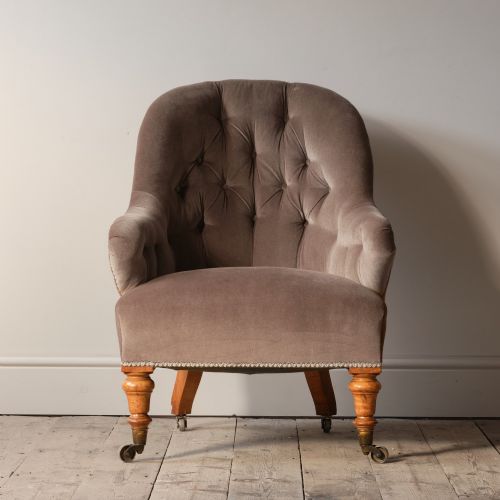
Velvet Upholstered Accent Chair
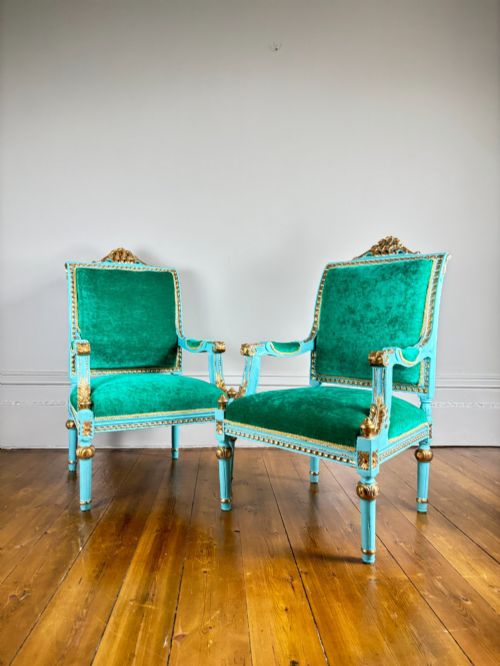
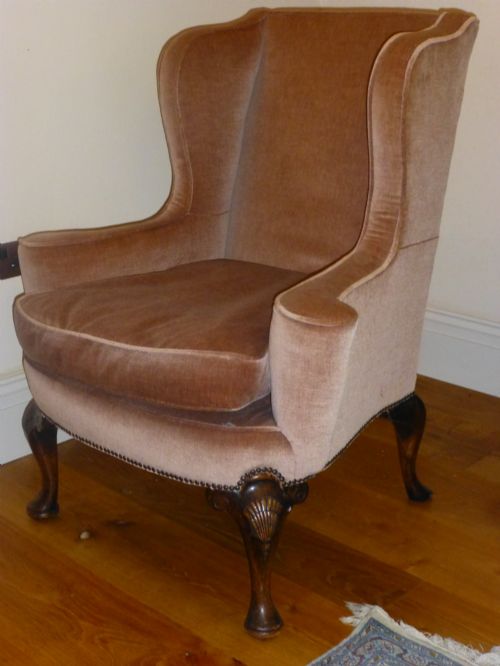
These velvet upholstered accent chair selections bring tactile warmth and period character to a room, spanning Victorian, Regency, and revival styles.
Velvet Upholstered Accent Chair
A velvet upholstered accent chair encompasses varied seating forms from the eighteenth, nineteenth, and early twentieth centuries, designed to provide both comfort and decorative presence in a parlour, bedroom, or library.
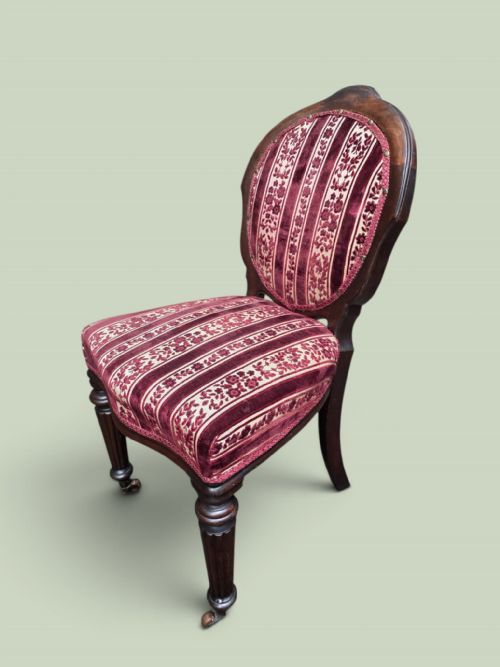
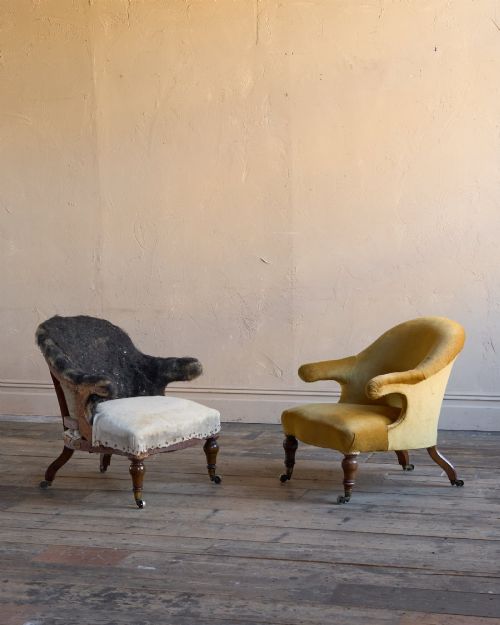
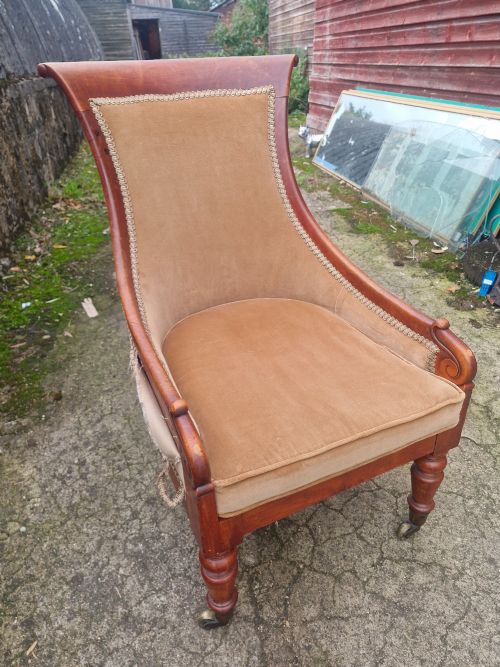
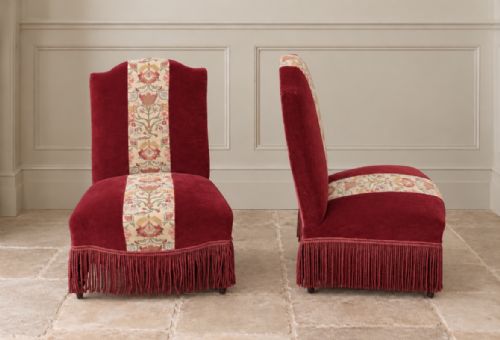
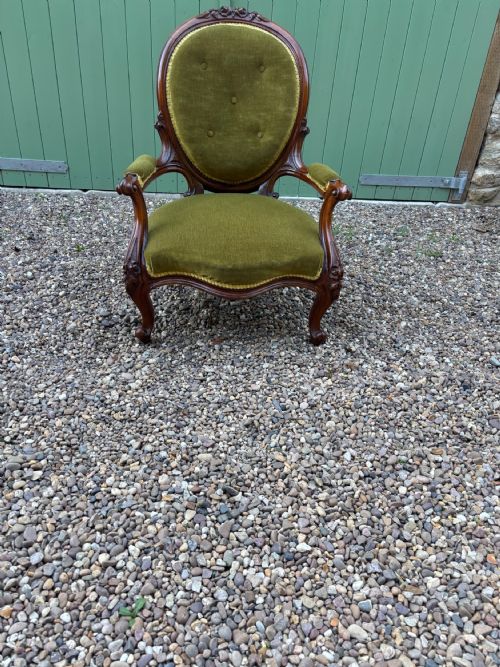
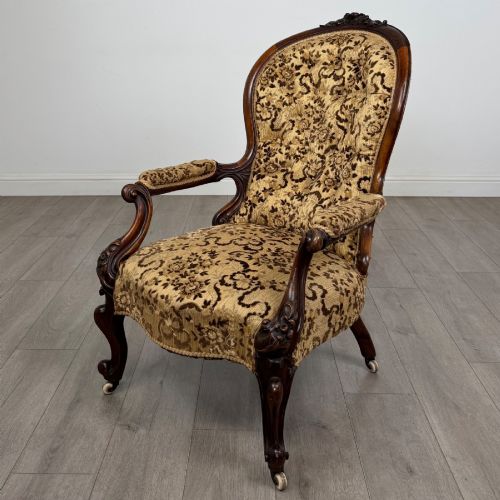
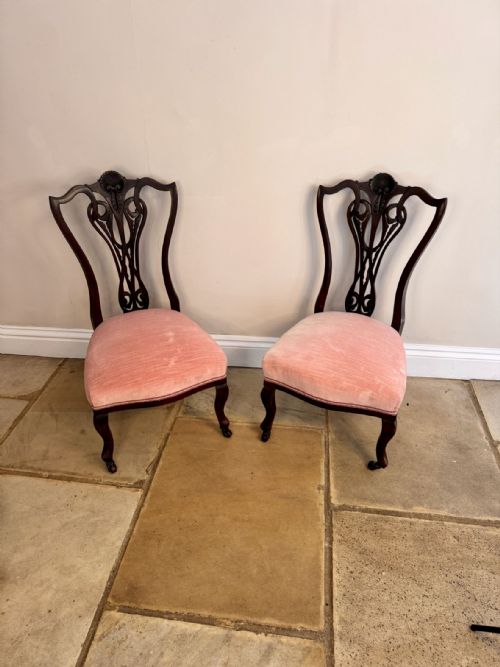
The selections on this page appear predominantly in Victorian guises, including balloon back parlour chairs, low-slung nursing chairs, slipper chairs, and open-armed library armchairs.
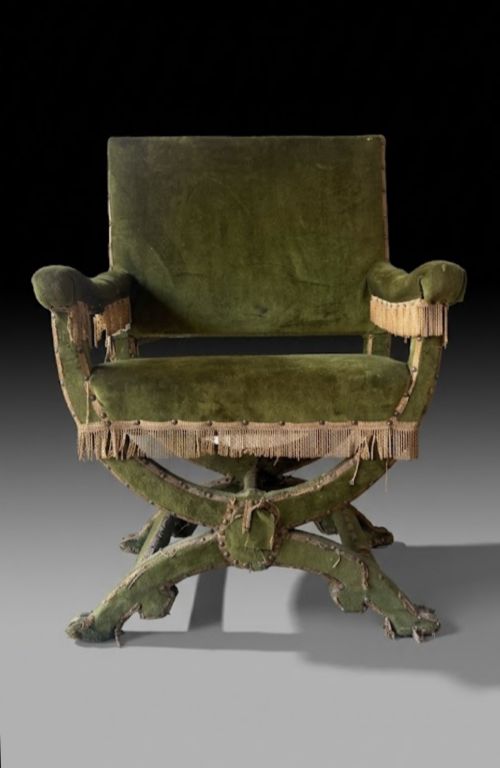
Alongside these domestic British forms sit continental pieces, including Napoleon III slipper chairs, French painted bergères, and Baroque throne chairs, constructed in walnut, mahogany, rosewood, and oak.
Construction Materials and Techniques
Carved timber frames form the structural foundation, utilising dense hardwoods such as mahogany, walnut, rosewood, and oak, alongside occasional ebonised or painted finishes.
Upholstery relies on traditional textile coverings, integrating velvet alongside subsidiary fabrics like floral prints and patterned wovens, supported by brass details and wooden joinery.
Velvet Upholstered Accent Chair Retail Price Guide 2026
Typical asking prices for velvet upholstered accent chair among the pieces listed under this phrase on Sellingantiques today, from the lower quarter to the upper quarter. They describe what is for sale here now, not the wider market.
Swans make an unexpected appearance carved into the woodwork of several Victorian tub chairs.
Distinctions in Quality and Execution
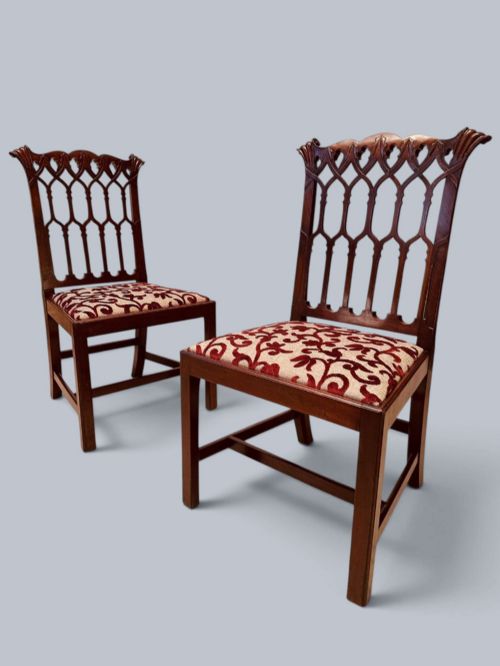
The refinement of the carved wooden frame dictates the distinction between standard utilitarian seating and high-status pieces, seen in the depth of floral or scroll carving on mahogany and rosewood.
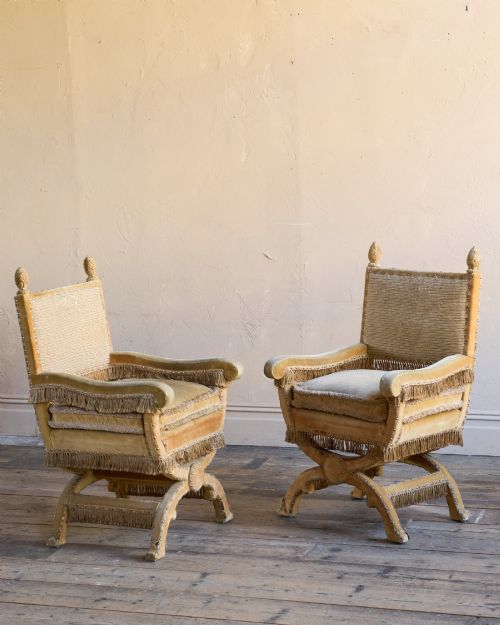
The integrity of the timber joinery and the retention of original structural elements, such as X-frames or swan motifs, separate workshop-attributed seating from mass production.
Hindley & Sons
The Velvet Upholstered Accent Chair Glossary
- Slipper chair
- A low-seated upholstered chair originally designed for bedrooms to allow ladies to dress comfortably. These pieces typically lack arms and sit close to the floor.
- Tub chair
- A rounded seating form where the back and arms merge into a continuous semicircular rail. The enveloping shape provides a compact profile for domestic spaces.
- Balloon back
- A chair back shaped in a continuous oval loop resembling an inflated balloon. This outline is frequently found on Victorian parlour and bedroom seating.
- X-frame
- A structural furniture support formed by two intersecting diagonal members resembling the letter X. This geometric base appears on revival armchairs.
Velvet Upholstered Accent Chair: Frequently Asked Questions
Where should I place a velvet upholstered accent chair?
These chairs suit quiet corners of a living room, bedroom, or study where they function as a reading seat or decorative focal point.
Their compact footprints, particularly for slipper and nursing chairs, allow them to fit into smaller spaces without dominating the room.
How do I care for antique velvet upholstery?
Protect the fabric from direct sunlight to prevent fading of the pile, and brush the velvet gently with the grain to maintain the nap.
Professional textile cleaning is recommended for antique fabric to preserve the integrity of the fibres and internal stuffing.
Are these chairs comfortable for daily sitting?
Victorian and nineteenth-century seating was built with sprung or stuffed upholstery designed for upright support during formal entertaining or resting.
While functional for daily use, the lower seat heights of nursing and slipper chairs offer a more relaxed posture than standard dining furniture.
How can I date a Victorian velvet chair?
Examine the timber frame, carving style, and upholstery configuration to determine the period, noting that balloon backs and buttoning became prevalent during the mid-to-late nineteenth century.
Revival pieces often incorporate earlier stylistic motifs such as Jacobean or Baroque carving while retaining later nineteenth-century construction methods.