


Velvet Topped Table
A velvet topped table brings rich texture to a room, offering a tactile surface framed in mahogany, rosewood or brass.
Velvet Topped Table
A velvet topped table covers a surprising variety of forms, from Victorian and Edwardian bijouterie display tables to Aesthetic Movement and 1890s gypsy tables. When searching for a velvet topped table, buyers frequently encounter side tables, occasional tables and glazed display pieces designed to showcase small treasures.
The materials span mahogany, rosewood, hardwood and ebonised timber, paired with glass and brass details. These pieces originate across the nineteenth and twentieth centuries, encompassing Victorian, Edwardian, 1930s commercial and French revival styles.
What varies in quality
Quality rests in the precision of the timber framing and the refinement of the joinery, distinguishing sturdy hardwood structures from simpler constructions. The choice of primary timber, whether figured mahogany or rich rosewood, dictates much of the initial presence.
The treatment of the upper surface and secondary materials defines the tier of execution. Integrated brass inlay, finely glazed display compartments and well-fitted textile inserts reveal the maker's hand more clearly than plain, utilitarian builds.
Listings feature pieces spanning the Victorian and Edwardian eras, alongside 1930s commercial examples and French revival styles.
John Taylor Edinburgh
The Velvet Topped Table Glossary
- Bijouterie table
- A glass-topped display table specifically designed for showing small ornaments, jewellery and curiosities. These pieces often feature velvet-lined interiors to cushion the items on display.
- Gypsy table
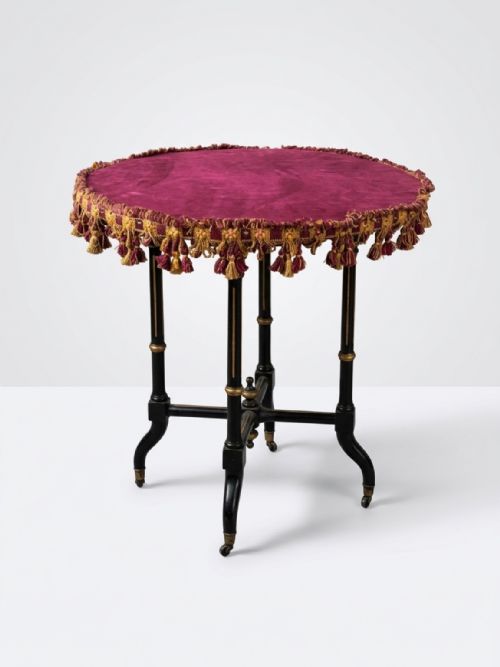
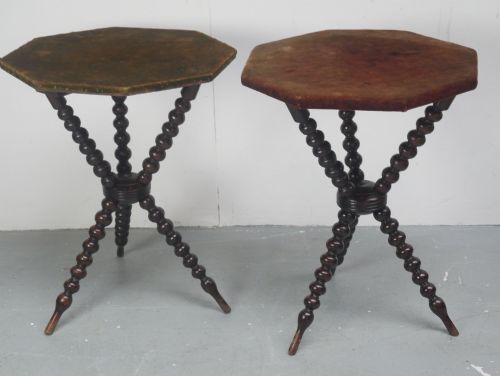
- A lightweight occasional table traditionally featuring a draped fabric top or textile cover over three wooden legs. Examples from the late nineteenth century frequently utilise patterned or tasseled velvet.
- Aesthetic Movement
- A late nineteenth-century design style prioritising visual beauty over narrative meaning, often seen in ebonised finishes and dark woods. Pieces from this movement lean towards simple yet striking silhouettes.
- Ebonised
- Timber treated with a dark stain or finish to imitate ebony wood. This technique was popular during the nineteenth century for accentuating fine details.
- Occasional table
- A small, movable table intended for specific, intermittent use within a room. They appear across Victorian and Edwardian periods in various shapes and timbers.
Velvet Topped Table: Frequently Asked Questions
What is a velvet topped table used for?
These tables served various decorative and practical purposes in period homes, functioning as side surfaces, display vessels or occasional furniture. Glazed bijouterie versions held delicate ornaments, whilst draped gypsy tables offered a softer surface for a parlour.
Today, they suit similar roles in living spaces, holding small objects or simply adding textual contrast against wood floors and walls.
How do I date a velvet topped table?
Dating relies on observing the combination of timber, style markers and structural assembly. Victorian and Edwardian pieces often display distinct revival influences or characteristic turning, such as bobbin legs.
Looking closely at the hardware, glass bevelling and wood choice helps place a piece within the nineteenth or early twentieth-century timeline recorded in the listings.
Are velvet topped tables fragile?
The structural frames are typically built from solid hardwoods like mahogany and rosewood, making them reasonably robust for daily placement. However, the fabric surfaces and glass display lids require gentle handling.
Keeping them away from direct sunlight protects the textile pile from fading, whilst careful placement prevents accidental knocks to glazed compartments.
What is an Aesthetic Movement table?
Aesthetic Movement tables embrace the late nineteenth-century philosophy of art for art's sake. They frequently feature ebonised wood surfaces paired with contrasting textile tops, such as tasseled red velvet.
These pieces break away from heavy Victorian ornamentation in favour of leaner, more artistic silhouettes that remain distinct within the period.