
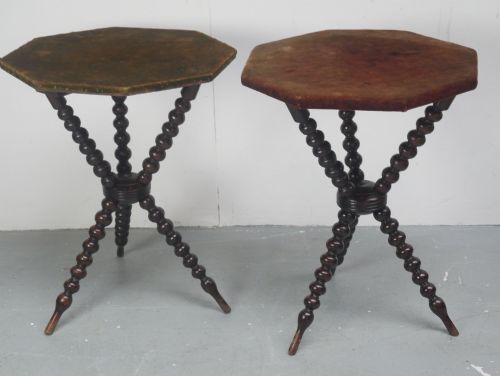


Velvet Top Table
A velvet top table brings tactile warmth and period character to a room, offering a soft surface suited to displaying cherished objects.
Velvet Top Table
A velvet top table encompasses a variety of occasional, display, and side tables designed with upholstered surfaces from the nineteenth and early twentieth centuries. These pieces span Victorian, Edwardian, and later decades, frequently appearing as bijouterie tables, display cabinets, and gypsy tables. Buyers searching for a velvet top table will encounter forms ranging from glass-topped display pieces with fabric-lined interiors to draped occasional tables.
The selection includes distinct regional and stylistic variations, such as Scottish Victorian gypsy tables and Aesthetic movement ebonised kidney tables. Alongside traditional tables, the listings include occasional footstools and vanity cases incorporating fabric elements. This mix reflects how domestic spaces utilised upholstered and fabric-accented furniture for both utility and display across different periods.
Makers and makers' marks occasionally identify specific pieces, such as the Scottish Victorian gypsy table attributed to John Taylor Edinburgh. Most examples, however, rely on their distinctive stylistic markers, material combinations, and construction details to indicate their age and origin. Understanding these various forms helps identify which specific type of table best suits a given interior.
What varies in quality
Quality in these pieces depends heavily on the selection of primary timbers, such as figured mahogany or rich rosewood, compared to simpler hardwoods. Finer examples display meticulous inlay work, precise brass details, and robust structural joinery that withstands daily use. The execution of the textile elements, including the weave of the velvet and the neatness of trim, further separates standard production from superior craftsmanship.
Design sophistication also distinguishes the range, with Aesthetic movement or French revival pieces showing greater sculptural ambition in their frames and leg forms. The integration of functional elements, such as smoothly operating glazed display lids and secure hinges, marks the distinction between utilitarian items and finer cabinetmaking. Ultimately, the harmony between the wooden structure and its fabric upholstery determines the overall standard of the piece.
Some ebonised tables wear their tasseled velvet skirts with quiet theatrical flair.
John Taylor Edinburgh
The Velvet Top Table Glossary
- Bijouterie table
- A display table featuring a glazed top and a velvet-lined interior designed for showing small trinkets and jewellery. These pieces often stand on slender legs and date from the Victorian and Edwardian eras.
- Gypsy table
- A lightweight occasional table traditionally draped with fabric or velvet, often featuring bamboo or bobbin-turned wooden legs. They became popular during the late nineteenth century as versatile decorative accents.
- Aesthetic movement
- A late nineteenth-century design style that emphasised artistic visual qualities over traditional moral narrative in decoration. Pieces from this movement often utilise ebonised wood and contrasting velvet upholstery.
- Bobbin turning
- A form of woodturning characterised by a series of rounded, spool-like shapes carved along the length of a leg or stretcher. This technique appears frequently on nineteenth-century side and occasional tables.
- Occasional table
- A small, movable table designed for specific, temporary uses rather than a fixed central placement in a room. They take many forms, including kidney shapes and draped tripod designs.
Velvet Top Table: Frequently Asked Questions
What is a bijouterie table?
A bijouterie table is a specialised display piece featuring a glass-inset top and a fabric-lined interior. It was designed to showcase small valuable items, medals, and curiosities.
The interior is typically lined with velvet or silk to cushion the displayed objects safely while keeping them visible from above.
How do I clean velvet on antique tables?
Cleaning antique velvet requires gentle handling to avoid crushing the delicate pile or disturbing historic fibres. Light brushing with a soft-bristled brush can remove surface dust.
Moisture and commercial cleaning agents should generally be avoided unless handled by a professional textile conservator to prevent water spotting.
What is a gypsy table?
A gypsy table is a small occasional table from the late nineteenth century, originally characterised by a fabric or velvet drape over the top and legs. Surviving examples often showcase turned wooden structures.
These pieces brought a bohemian aesthetic into Victorian drawing rooms and functioned as flexible decorative surfaces.
How do I date an Edwardian display table?
Dating an Edwardian display table involves examining the timber species, inlay patterns, and overall lightness of proportion typical of the early twentieth century. Mahogany and satinwood frequently appear in these refined pieces.
Construction methods, such as machine-sawn components combined with hand-finishing, also help distinguish Edwardian cabinetmaking from earlier Victorian work.