



Velvet Jewellery Box
A velvet jewellery box provides a tactile and elegant resting place for small treasures, drawing on Victorian and Edwardian craftsmanship to protect precious items.
Velvet Jewellery Box
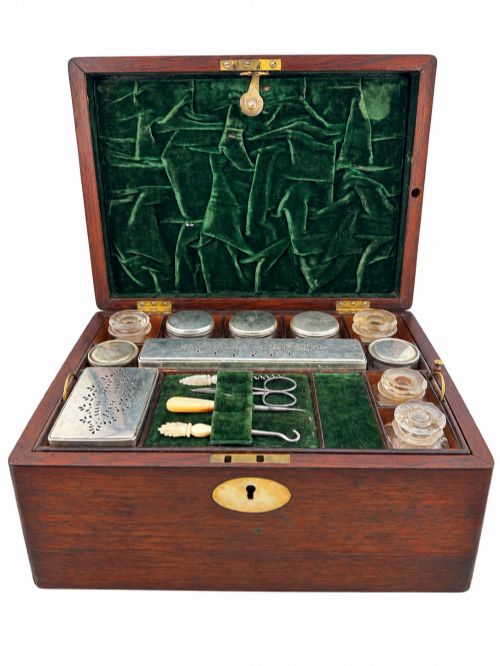
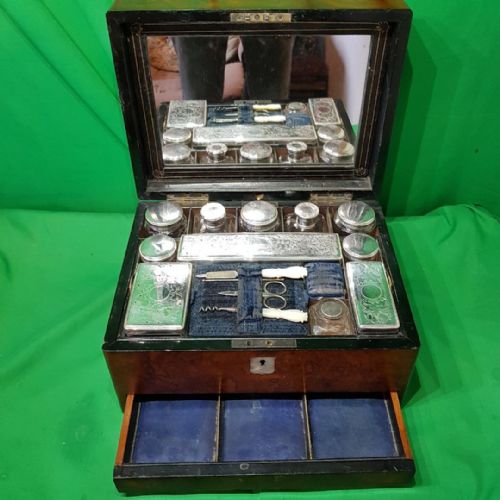
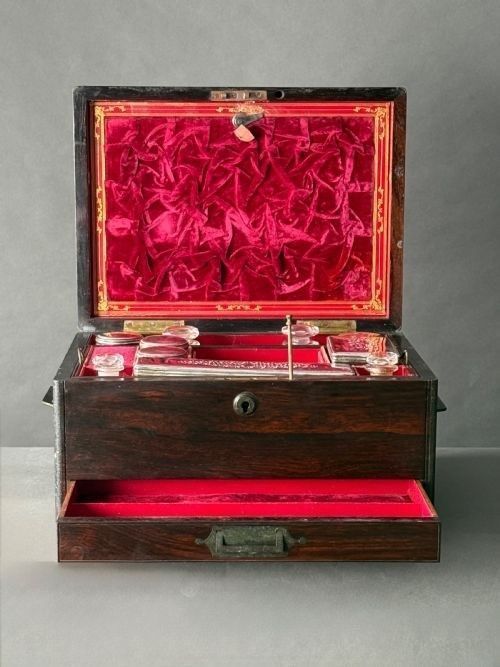
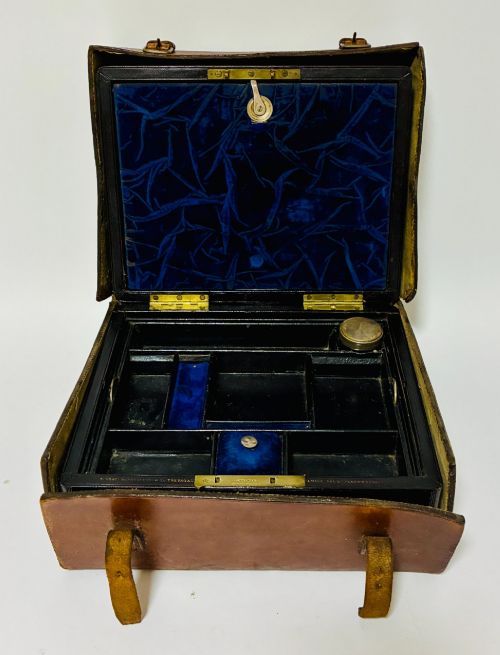
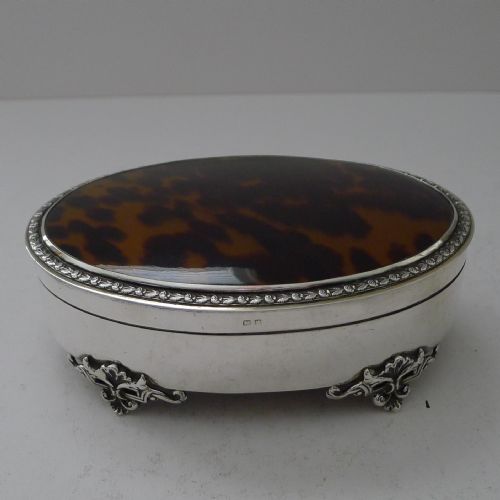
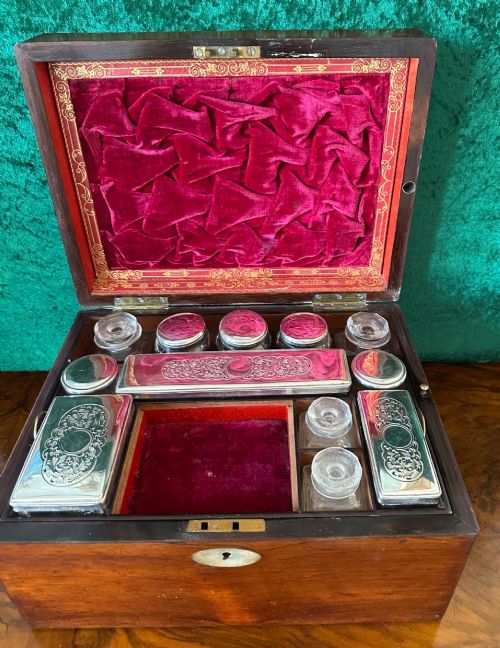
A velvet jewellery box takes several forms across the periods, appearing as portable dressing cases, travelling sets, tabletop display bijouterie tables, and lidded chests designed to hold rings, trinkets, and tiaras.
The pieces on this page span the Georgian, Victorian, Edwardian, and later periods, utilising rich timbers like mahogany, rosewood, burr walnut, and coromandel alongside fitted velvet interiors.
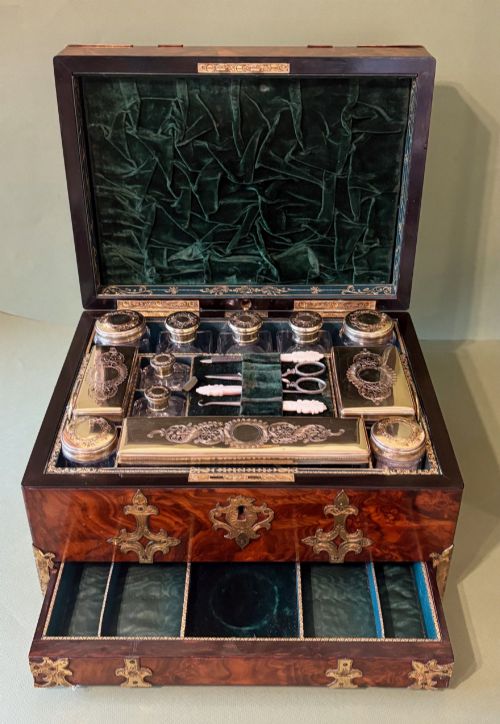
Buyers encountering these items will find both compact personal boxes and larger fitted cases, some mounted in brass or French ormolu, reflecting the varied social habits of past centuries.
Materials and construction
The construction of these pieces relies on solid cabinet woods such as mahogany, rosewood, and walnut, often finished with delicate inlay or veneered in burr walnut to create striking exterior surfaces.
Interiors are typically lined with velvet, silk, or satin, designed to cushion delicate metals and stones, while metal mounts in brass, sterling silver, or ormolu provide structural reinforcement and decorative clasps.
Velvet Jewellery Box Retail Price Guide 2026
Typical asking prices for velvet jewellery box among the pieces listed under this phrase on Sellingantiques today, from the lower quarter to the upper quarter. They describe what is for sale here now, not the wider market.
Assessing quality and craftsmanship
Quality reveals itself in the tightness of the cabinet joints, the selection of figured wood veneers, and the original preservation of the internal velvet lining and compartments.
Superior examples incorporate fully fitted silver or glass accessories, working locks with original keys, and refined cast brass or ormolu mounts rather than mass-produced replacement hardware.
J C Vickery·F. West·H. Matthews
The Velvet Jewellery Box Glossary
- Bijouterie table
- A glass-topped display table designed to exhibit small valuable items and jewellery within a velvet-lined interior.
- Ormolu
- Gilded bronze or brass mountings applied to decorative boxes and furniture, popular in French and English pieces.
- Coromandel
- A dense, dark cabinet wood with contrasting light grain, highly prized for luxury Victorian dressing and jewellery cases.
- Burr walnut
- Wood sliced from the gnarled growths of a walnut tree, creating a swirling, highly decorative grain pattern used on high-end boxes.
- Hallmark
- Official stamps on silver elements that indicate the assay office, standard of purity, and year of manufacture.
Velvet Jewellery Box: Frequently Asked Questions
How do I care for antique velvet?
Keep velvet jewellery boxes away from direct sunlight and damp conditions to prevent the pile from fading or rotting.
Dust gently with a soft dry brush rather than liquid cleaners to preserve the historic fabric.
Were these boxes meant for travel?
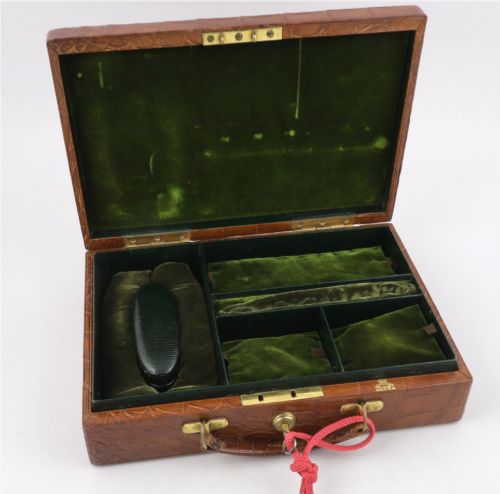
Many Victorian and Georgian examples functioned as travelling cases or vanity boxes equipped with secure locks and leather outer covers.
Larger stationary boxes and bijouterie tables remained on dressing rooms or parlour surfaces rather than moving with the owner.
How do I date a velvet box?
Examine the timber, construction style, and any associated silver hallmarks to narrow down the period of production.
Victorian pieces often feature robust burr walnut or mahogany carcasses, while Edwardian items frequently show lighter inlaid mahogany.
What is a bijouterie table?
A bijouterie table is a raised display case with glass panels and a velvet-lined floor intended for showing off collections.
These pieces allowed owners to view their trinkets without opening the lid.