


Velvet Chaise Longue
A velvet chaise longue is a seat designed for reclining, offering a mix of formal elegance and comfort through periods from Regency to Victorian.
Velvet Chaise Longue
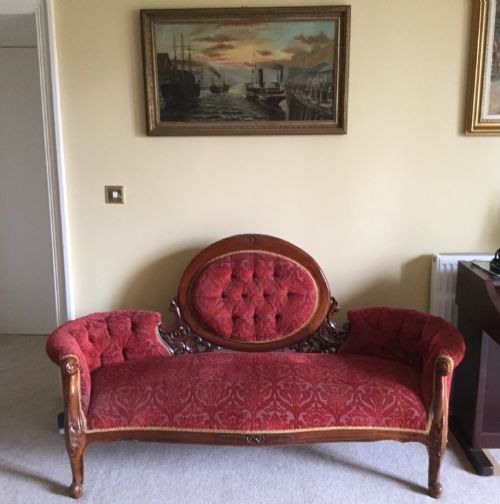
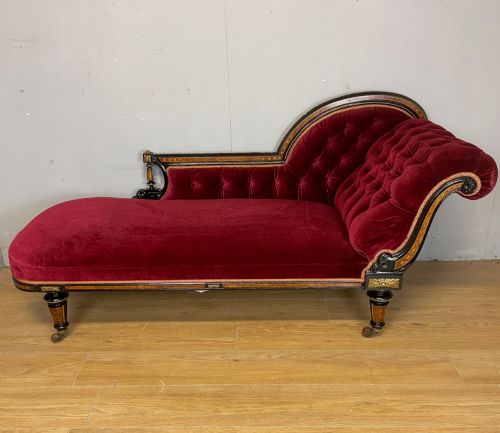
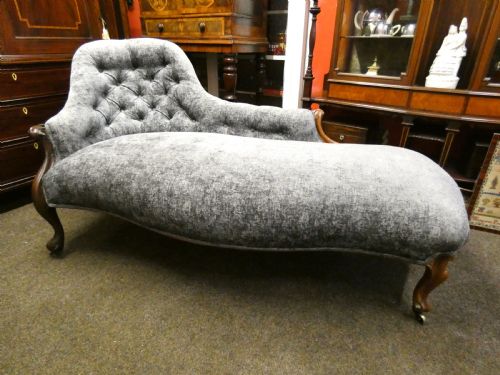
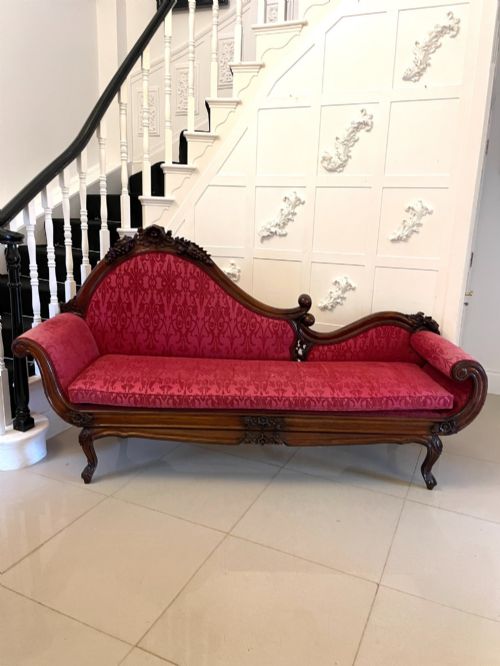
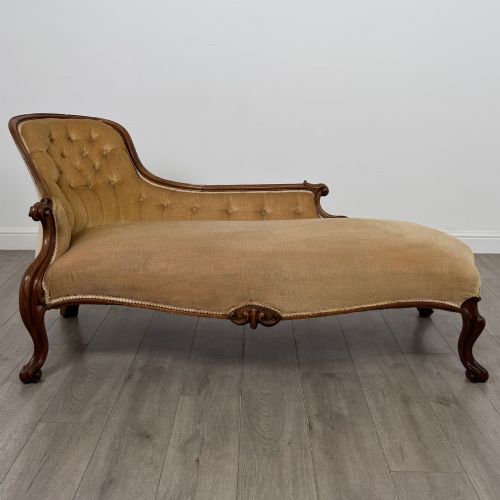
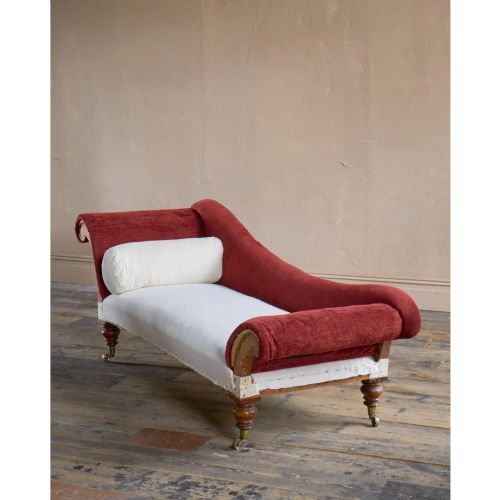
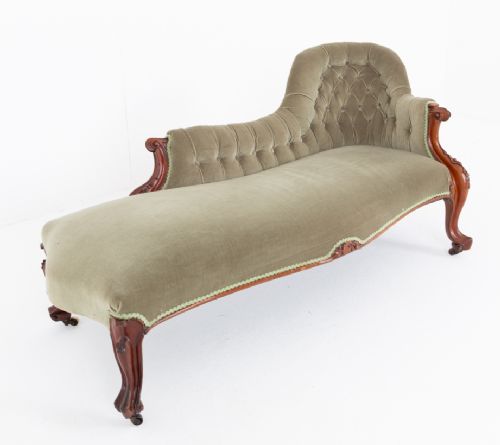
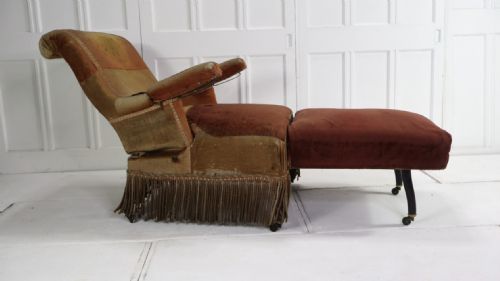
A velvet chaise longue combines a traditional day bed with an upholstered backrest designed for reclining in a grand room. These pieces appear across the nineteenth century, taking forms such as double-ended sofas, conversation seats, and French-inspired recliners. Mahogany, walnut, and rosewood frames provide the structural support beneath deep fabric upholstery.
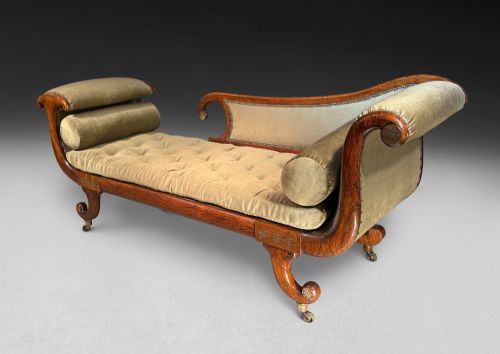
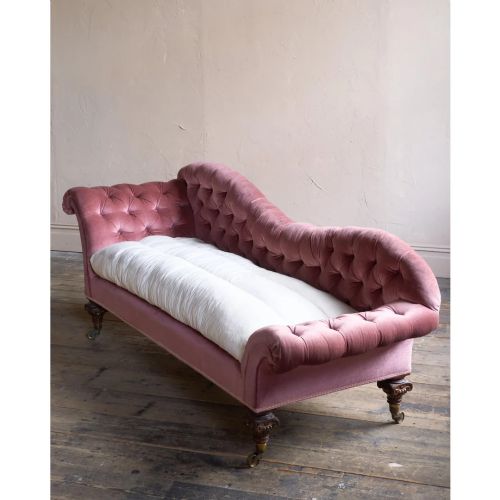
The Victorian examples dominate the selection, featuring carved wooden frames, buttoned upholstery, and scrolling ends. Regency pieces bring classical lines with brass inlay and simulated rosewood, while later nineteenth-century items introduce walnut panels and ormolu mounts. Buyers select these long seats to anchor a salon or boudoir with period character.
The markers of quality
Quality rests in the crispness of the timber carving and the architectural balance of the frame, from ionic column legs to double spoon backs. Dense hardwoods like rosewood and walnut indicate a higher grade of manufacture than secondary woods. Finer examples display precise brass inlay or well-cast ormolu decoration integrated smoothly into the wood.
The execution of the upholstery work defines the finish, particularly in the regularity of buttoning and the choice of deep pile velvet or brocade. Frames attributed to known workshops show superior joinery stability and sophisticated proportional design in the scroll ends and backrests.
Conversation seats let two people sit close while facing opposite directions.
Holland and Sons·William Birch·Howard and Sons
The Velvet Chaise Longue Glossary
- Ormolu
- Gilt bronze ornamentation applied to furniture frames. This decorative metal technique adds a bright metallic highlight to dark wood.
- Barley twist
- A type of turning shaped like a spiral rope. It appears frequently on nineteenth-century chair and settee frames.
- Brocade
- A rich shuttle-woven fabric often used for upholstery. It provides a heavy textured surface alongside velvet coverings.
- Double-ended sofa
- A settee with raised headrests at both extremities. This form allows a user to recline facing either direction.
Velvet Chaise Longue: Frequently Asked Questions
How do I use a chaise longue today?
A velvet chaise longue functions well as a statement reclining seat in a bedroom, library, or large drawing room. Its elongated form suits spaces where you want a dedicated spot for reading or resting.
The piece also serves as a visual anchor when placed away from the walls, allowing the carved wooden back and scrolled ends to be seen from all angles.
What is the difference between Regency and Victorian styles?
Regency pieces tend to draw on classical motifs, featuring clean lines, simulated rosewood, and precise brass inlay. They reflect an earlier nineteenth-century taste for ancient architectural forms.
Victorian designs are heavier and more elaborately carved, often utilising rosewood or walnut with deep buttoned velvet upholstery and complex scrollwork.
How do I identify the wood beneath the velvet?
You can examine exposed areas of the frame around the legs, rails, and backrest supports to see the grain and colour of the timber. Mahogany shows a reddish-brown tone, walnut has a darker figured grain, and rosewood displays distinct dark streaking.
Some pieces utilise ebonised wood, which is painted or stained black to imitate costly ebony.
Were these seats made for sleeping?
These day beds and chaises were primarily intended for daytime resting, lounging, and reclining in formal rooms rather than overnight sleeping. The single raised end supported the head while seated or lying semi-recumbent in day dress.
Double-ended versions allowed the user to shift position without getting up from the seat.